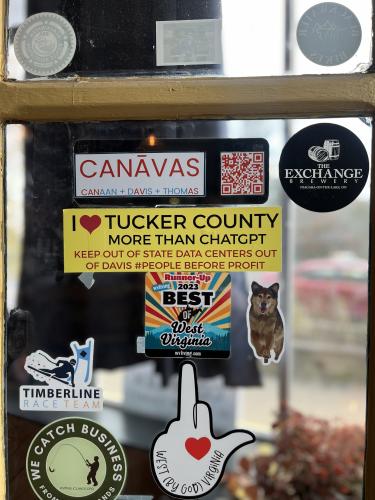
In the latest episode of Reimagine Rural, Tony Pipa revisits Thomas and Davis, West Virginia, sister cities whose transformation from coal and timber towns into a destination known for its arts-and-outdoor recreation economy he profiled in the podcast’s first season in 2023. A recent proposal to build a gas-fired plant, which would presumably power a massive data center, has raised questions and passions about how such industrial development might affect the tourism economy and the area’s natural beauty. In this expert Q&A, Tony speaks with Nicol Turner Lee, a senior fellow in Governance Studies at the Brookings Institution, director of Brookings’ Center for Technology Innovation, and founder of the AI Equity Lab. The conversation revolves around what’s driving the AI-era data center revolution, how federal and state policies shape siting and local control, and how rural communities can secure transparent, durable benefits without sacrificing what makes them distinctive.
This conversation has been lightly edited for clarity and brevity.
Tony Pipa (TP): Can you give us a sense of your background and how it led to your research on data centers?
Nicol Turner Lee (NTL): As a technologist, I’m interested in how technology is accelerating innovation and economic development for communities. That is the basis of the book I wrote last year, “Digitally Invisible, How the Internet is Creating the New Underclass,” exploring what it means to be connected in a society where pretty much everything is moving online—and who is being left behind.
I’m also interested in data centers because of my interest in artificial intelligence. Artificial intelligence is transforming so many sectors, from financial services to healthcare to education to housing, and it’s at the heart of the increasing demand for data centers. You need infrastructure that is going to support the trillions of moments in which people are engaging artificial intelligence, places that are able to process, store, and analyze all this information. I also have an interest in this infrastructure of the internet, what data centers represent as part of this rapidly developing AI, and what the implications are for communities on the ground.
This culminated in a recent paper I co-authored with Darrell West, which serves as an explainer on data centers, who the stakeholders are, and what the policy implications might be.
Related Content
TP: Stepping back, what’s the state of U.S. data center development?
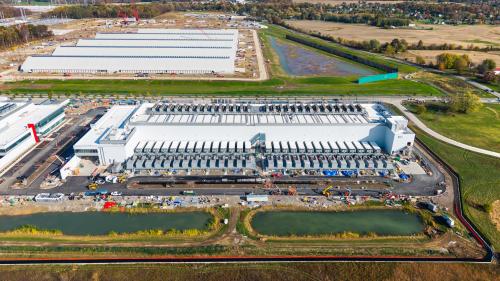
NTL: The major data centers that we’re seeing today are being built and invested in by five major companies: OpenAI, Microsoft, Amazon, xAI, and Google. What’s so interesting about the current data centers conversation compared to early internet policy conversations is that both were supported by a primarily deregulatory government, dating back to President Clinton, that allowed the commercial market to create technology that we know very little about.
Through this policy, we saw the emergence of the mobile phone, the “internet of things,” and 5G technologies. This occurred because the government not only offered a deregulatory environment, but also the type of infrastructure that was necessary for these technologies to advance themselves.
You look at the AI conversation now, and some would argue that the data center revolution is similarly initiated by the private sector. However, they have put out the notice that they do not have enough power and capability to do the type of AI innovation that they’d like to pursue. That’s a big conversation right now: How much infrastructure investment does the U.S. need to make to support these private initiatives?
Generative AI is a high-compute technology requiring high levels of energy and centralization of the technology, and companies are hyper-scaling the amount of power needed to generate all these searches that are happening. There are separate data centers for the military, because it’s got confidential information, and there are fully commercial enterprises.
These AI infrastructure investments come with the assumption that we have a modernized energy grid and available resources like 24-hour water for cooling, and that isn’t always the case. We are way behind from a policy perspective, in terms of creating a more modernized energy grid and having the irrigation resources available to accommodate the growing demand of AI.
The White House has a particular vested interest in data centers, as outlined in the July 2025 AI Action Plan, where they’ve directed attention to this issue to find ways to expedite permitting and other resourcing needs. I’ve spoken about the private-sector market and their particular interests, but there are also new actors, like local officials who have an interest in getting data centers to their communities.
We’re also seeing state governments across the country trying to attract data center business, counting on agreements with big tech companies making trillions of dollars, to get some portion of that revenue. I believe they’re doing it to plug some of the gaps in funding that states and local governments have experienced over the years. Right now, the United States has the most data centers of any country. The doors are being swung wide open by elected and appointed officials who see some type of benefit to their community by having a data center in their backyard.
TP: What geopolitical factors are shaping the buildout of data centers?
NTL: Across the world, there are about 12,000 data centers. Of those, the United States has about 5,000. Part of the reason why this issue has gained a lot of traction has to do with the United States positioning our artificial intelligence leadership against China.
There is an AI race that’s going on, and the United States is much more competitive than the Chinese in developing AI systems that spread across a variety of sectors, from finance to healthcare to education. There are also national security concerns that come with China outpacing the United States when it comes to integrating AI into military operations.
It’s also important to note that AI may spark scientific breakthroughs for so many global challenges, including climate change, that we’ve not been able to solve.
We need to accommodate these infrastructure demands and do it in a way that makes sense to compete against China. But China did something in the AI revolution that is worth noting. DeepSeek, which is the alternative to many of the generative AI models here in the United States, came out with a possibly lower energy model, which has gotten the United States’ attention, but has not changed our path. My point is that the Chinese are finding ways to preserve energy and land use and to do this in a way that is efficient for their country.
In the United States, we’re trying to go so big and deep that we may not be competing with China in a fruitful way. I think that’s something that we need to look at as part of the geopolitical conversation. As the U.S. builds these data centers, we need to think through how this fits the global geopolitical environment and how it’s going to accrue benefits or challenges at the local or regional level. It requires more research to think about how the U.S. and our acceleration in data center development compare to global competitors, and how it makes sense for local communities.
TP: Why are rural locations attractive to data center developers, and what trade-offs should local leaders and residents consider?
NTL: It’s clear that data centers require a few components essential to their productivity. One of those is land. Rural communities provide this attraction based on available and scalable land, compared to dense urban areas. They also provide, in some instances, the other relevant ingredients of data centers, including the ability to connect to existing electrical grids. Much of our country’s electricity generation infrastructure sits in rural communities. Some rural areas are also attractive because their terrain makes line-of-sight transmission easier, as well as access to natural resources like water. In some instances, the transmission lines and broadband built for data centers can actually help grow a rural community.
On the other side of this, some rural communities have experienced traumatic deterioration and consequences of past economic development. Many rural communities have found data centers attractive because one, it brings them into the broader conversation of connectivity, and two, it can potentially provide jobs and opportunities they have lost over the years, all of it connected to the global development of technology. It promises to open up revenues for rural communities to begin to invest in other resources where they’ve had significant lags.
At the same time, rural communities are torn because these are highly technical centers and may not provide the type of economic benefits that they’re used to. So rural communities are opening their doors, but they’re not quite sure what’s walking in. These local conversations in rural areas are important, as they’re tethered to a debate as to whether or not this is going to be the next economic development engine and revival tool for rural America.
TP: West Virginia has enacted legislation to centralize approval of data center projects and distribute most tax revenues to the state. Do you see other states adopting similar laws to attract data centers?
NTL: Well, West Virginia is its own case. It has a history as a formerly coal mining state that was pretty much the driver for the American energy system. Now they have had to retool, which has an impact on jobs, economic development, and housing. So, it doesn’t surprise me that they would be open for business. I mean, Northern Virginia is over here killing it with the data center expansion. People are probably looking at Northern Virginia and see a possibility for additional revenue back to the state, and they want to make it easier.
The West Virginia bill is interesting because it does a couple of things that are opportunistic as well as challenging and potentially have long-term consequences, if not carefully checked. They’re opening the state for business through an expedited permitting process, suggesting that they’re going to make it easy to build. In the governor’s statement talking about what they were doing with that bill, he said that West Virginia is going to be the go-to place for data centers.
Part of the challenge is if you expedite permitting, it doesn’t give you the time needed to calibrate what the environmental consequences are. For a state like West Virginia, which has already gone through the trauma and health consequences from coal mining, it would appear to me that the governor should want to ensure environmental protections are in place for the people who live or work around those data centers.
The White House said the same thing, about streamlining some of the permitting processes, which many tech lobbyists are advocating for. It raises a red flag, the extent to which clean energy or environmental practices are being thrown out, and policymakers are not paying attention to the consequences and risks.
There’s also this sense that there will be great job creation and economic development opportunities. But we’re not necessarily seeing states that host these data centers bring better broadband and AI-related experiences to their communities. People need to realize that data centers are not necessarily serving individual local constituents and residents. It’s serving the company, so they can maintain the infrastructure they need for their cloud and processing services. West Virginia has to think carefully about what they are actually providing and giving up to host these companies, and think carefully about this relationship, to ensure that it’s not one-sided, and that there will be returns to residents.
TP: In light of the lack of local control and visibility over the proposed data center project, residents in Thomas and Davis have pushed back. How are rural communities elsewhere reacting to data center proposals?
NTL: West Virginia is an instance where the lack of transparency has led to many problems, given what you’ve spoken about—the community was not involved. In my opinion, West Virginia is basically following the playbook that the White House has initiated. This actually affects various levels of government, from the governor to local officials, including city councils, counties, and public utility commissions, to name a few. They’re not necessarily all on the same page when it comes to data centers coming to the community. The White House has tried to avoid this collision between local communities and these tech companies when it comes to building AI infrastructure.
There have been instances recently where a data center was proposed in Prince George’s County in Maryland, and the community opposed it. And what those legislators did at the local level was get together, create a task force, and have town halls with the technology companies to discuss, “What are you bringing to our community?” They also raised other questions about a data center’s efficacy and safety.
In Loudoun County, where most Northern Virginia data centers are built, we’re finding that data centers were a big deal in the elections last month. In fact, John McAuliff won a state legislative position after running against data centers and in favor of bringing back farms to Loudoun County. I think we’re going to see this uneven support across the U.S., and there might not be agreement among state and local officials, as well as community residents. A lot of that will have to do with the type of transparency that legislators bring to the process. And whether communities will be able to bring their questions to these tech companies.
These data centers are related to a national discussion that we’re having around the future of AI. They’re not necessarily the future of rural. If we don’t have communities engaging in ways that ensure that some type of reciprocity, economically or socially, is going to come out of this, it will be very difficult to move forward—and you might have national policymakers or the White House seek to diminish the role of other levels of government.
TP: What jobs do data centers create, and to what extent are those jobs created locally?
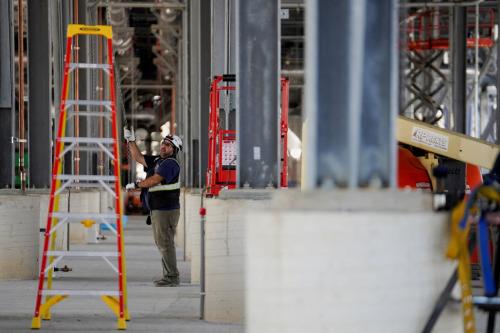
NTL: That’s another challenge with the data centers. Most of the jobs will come at the construction stage. You’ll see local work for surveyors and inspectors.
Data centers will also have a variety of opportunities for the trades, including electricians, plumbers, laborers, and so on. The problem is that we’ve had a long-standing challenge of filling trade jobs. Not enough people have been going into the trades to make apprenticeship models really efficacious at the scale we need for data centers. One of the community benefits that tech companies could provide is to invest in more local programs around the trades. That way, when the building is done, you have vetted local plumbers and electricians who have the capacity to engage in work across their region.
Once the facility is done, it’s projected that you probably don’t need more than several dozen jobs to run a data center. Many of those aren’t necessarily engineering jobs and don’t require technical expertise. There will definitely be a janitor or some cleaning service that’s making sure the floors are clean, security to ensure that these centers are not breached, and probably a person with technical expertise in case there’s a flaw in the way the information is being transmitted. But I don’t see much beyond that. That’s why people want more transparency on what the jobs look like and who gets them.
For rural communities, economic development is always centered around job creation and improvements in quality of life. I’m not sure that the data centers themselves deliver that type of economic value outside of the ancillary benefits that come with having technology nearby. Without community benefit agreements, it’s hard to see what the value would be.
TP: With many data center proposals, there seems to be a lot of secrecy—NDAs, closed-door negotiations, and projects that feel out of the blue for locals. Why is there so much confidentiality around data centers? Do you think it is being used to bypass community input or environmental concerns?
NTL: Let’s start by thinking about a typical economic development project. Say a mall was proposed in a community. There would be conversations about land use, how many jobs would be created, and who would get jobs, zoning, traffic and transportation, who would be building the mall, what type of tax incentives would be available—all sorts of questions.
Rural communities are no different. When a fire station is built, it’s not just about the fire station itself, but how it was going to be the anchor for the community. It was going to be a place for workers, but also a food pantry, a community marketplace, a multipurpose institution within a rural community that they had the power to shape.
Data centers, by contrast, are very opaque. A huge global real estate market is poised to make a huge profit. Boston Consulting Group estimates that hyperscale data centers will need about $1.8 trillion between 2024 and 2030 to meet AI and cloud infrastructure demand. Most of those deals happen quietly, and most real estate transactions are done through NDAs, and little public understanding of the actual investment.
Communities are not clearly told what the social and economic benefits of data centers are, or how they will enhance the local community. If you’re going to a rural community that has a poor irrigation system and you know that you need to upgrade and build, why are we not putting together community benefit agreements and upgrading and modernizing the system that exists, as opposed to building an adjacent water system for the data center alone?
We’ve seen this elsewhere. We’ve known for years that we’ve had to modernize the power grid. Now we have data centers that are being built in places with frail systems that haven’t been modernized for over 25 years, and there are proposals by some of these companies to build their own nuclear sites or micro sites to be able to provide power. That’s not a community benefit.
Policymakers, before they open the doors for business, need to think about ways in which the federal government and companies are pushing local communities out of the way to accommodate this accelerated demand.
Most Americans are aware of geopolitical concerns and the AI race against China. But if I’m living in West Virginia, I also might be experiencing poverty, or live in a food desert, or can’t drink my local water because of contamination. It’s incumbent upon these tech companies to go through a more open, accountable process, so we don’t foreclose opportunities for real, shared economic development. It’s important that we don’t create long-term consequences we’ll be paying for because we didn’t get this right the first time.
TP: What are the long-term risks of data centers, and how should host communities weigh those?
NTL: I’ve been thinking about a community checklist that allows communities to gain more transparency as data centers are prioritized in their backyard.
First, people have to understand that these data centers are being built at a very volatile economic time: The cost of chips and semiconductors is increasing; we’re reshoring chip and semiconductor production and seeing the threat of export controls and tariffs. This means facilities are harder to build because we don’t have the essential components. That worries me. We’re accelerating construction assuming that the key ingredients are on the table, while trade and tech policies are still being hashed out. So, it‘s unclear whether or not the state itself will get what AI promises.
Second, in terms of the AI bubble, data center success will be predicated on adoption. AI trustworthiness, ethics, and responsibility are a huge bet at a time when we’re seeing headlines on the rejection of AI tools and concerns over privacy vulnerability. These will matter for the usage levels predicted by tech companies. I spend a lot of time on the trustworthiness and adoption of AI, which lends itself to a potential bubble if people retreat from their dependence on these technologies.
Third, tech companies are counting on a big bet from the government to assist them in building data centers, like accelerating the permitting processes so data centers can be built quickly. The government’s ability to stay on top of its commitment to the buildout is crucial to the ecosystem. Like the dot-com bubble, a big bet can lead to a speculative meltdown.
Communities should know these data centers are coming, particularly where locations are ideal, and ask how they will impact energy, housing, and their community’s future. They need to ask informed questions about what these investments are and how they will affect their place. Rural communities that have been exploited in the past need to be protected, and companies need to acknowledge how the investment will play a role in reordering how communities function. If we sat down and did that without skirting the process, we would see rural innovation that makes sense for the people who live there, while maintaining their dignity.
Authors


-
Acknowledgements and disclosures
Support for this Q&A is provided by Ascendium Education Group. The conclusions and recommendations of any Brookings publication or podcast are solely those of its authors and speakers, and do not reflect the views or policies of the Institution, its management, its other scholars, or its funders. Brookings recognizes that the value it provides is in its absolute commitment to quality, independence, and impact. Activities supported by its donors reflect this commitment.
Amazon, Google, and Microsoft are unrestricted donors to the Brookings Institution. The findings, interpretations, and conclusions posted in this piece are solely those of the authors and are not influenced by any donation.
The Brookings Institution is committed to quality, independence, and impact.
We are supported by a diverse array of funders. In line with our values and policies, each Brookings publication represents the sole views of its author(s).


Commentary
Data centers in rural America: Nicol Turner Lee on the global race for AI, local impacts and trade-offs, and community oversight
December 10, 2025