



There have been massive changes in children’s health—both physical and mental—over the last generation. In this episode of No More Sidewalks: Parenting Today, CEO of ParentData and Brown University economist Emily Oster joins host Abby McCloskey to discuss what new factors could be driving these shifts, as well as what can be done at the household and government levels to improve the health of children.
About the Host
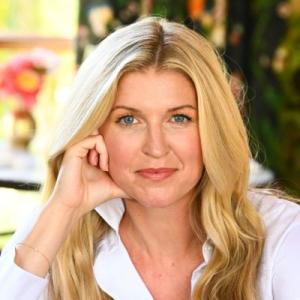 Abby M. McCloskey is a columnist for Bloomberg Opinion and the Dallas Morning News. She is a nonresident fellow in Economic Studies at the Brookings Institution. She is founder and principal of McCloskey Policy LLC, a research and consulting firm serving business and political leaders across the country.
About the Guest
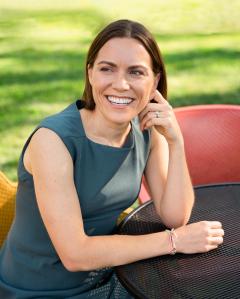 Emily F. Oster is the Esposito Family Goldman Sachs University Professor of Economics at Brown University. Her research focuses on health and statistical methods, as well as educational recovery from the COVID-19 pandemic. Emily is the founder and CEO of ParentData, a data-driven guide to pregnancy, parenting, and beyond. She is also a New York Times best-selling author, whose books include Expecting Better, Cribsheet, The Family Firm, and The Unexpected.
- Listen to No More Sidewalks on Apple, Spotify, or wherever you like to get podcasts.
- Watch episodes on YouTube.
- Learn about other Brookings podcasts from the Brookings Podcast Network.
- Sign up for the podcasts newsletter for occasional updates on featured episodes and new shows.
- Send feedback email to [email protected].
Transcript
[music]
MCCLOSKEY: Welcome to No More Sidewalks, where we discuss parenting today. I’m Abby McCloskey. As a parent the baseline you want for your child is good health, and yet that’s become harder to come by. Things I’m sure my own mother spent approximately two minutes thinking about in her whole life like tap water or microplastics or Tylenol, now live in a never-ending doom scroll for parents.
Prominent social media feeds are filled with stories about pesticides on our fruits and vegetables, the food dyes in our children’s favorite cereal, and cancer-causing chemicals in basically everything. Overnight, it feels like it’s become a full-time job in twenty-first century America for moms and dads to avoid seemingly poisoning our kids starting in pregnancy.
There’s a sense of urgency underlying all of it. That’s because kids are objectively less healthy today than they’ve been in previous generations on a large number of core metrics, and this despite never spending more money on healthcare or having more information at our fingertips.
Some parents are wondering if the healthcare system itself is the culprit. Are vaccines leading to an uptick of autism or autoimmune disorders and early puberty? Are kids overmedicalized, over-therapied, overvaxxed?
Joining us to discuss all of this is Emily Oster. Emily is not a physician; she is a distinguished economist at Brown University. She is also the founder of the immensely popular website ParentData, which I highly recommend, and a New York Times bestselling author of several books, including Cribsheet. How many books is it now—five?
OSTER: There are four.
MCCLOSKEY: Which in my opinion should be given out right in the maternity ward. If you are a parent, Emily is who you want to talk to, and this is the conversation you’ve been waiting for to understand what has changed in children’s health in our country. Emily, welcome.
OSTER: Thank you for having me.
[1:45]
MCCLOSKEY: Well, I’m so grateful for your friendship, and I know that millions of parents wish that they had you on speed dial as a friend and ask all of the questions that you’re so good at answering, and we’ll talk about a lot of those today. But I think at the base of it is this fear that today’s children are the sickest generation of children in American history.
SEC. KENNEDY: We stand at a generational turn point. Our children are the sickest generation in modern history, and decades of failed policies, captured agencies, and profit-driven systems have caused it. Parents across the country demanded change and we are delivering.
MCCLOSKEY: That was the conclusion of the MAHA report, the Make America Healthy Again report last summer. And I just want to start by asking you, is that true?
[2:32]
OSTER: I think that’s a complicated question, and there are some dimensions it’s true on and some that it’s not, which is of course how academics start every answer.
But I think there are some things for which that is true. So obesity rates, for example, are higher now than they have ever been. If you look at metabolic disease, Type 2 diabetes, that was virtually unheard of in kids, you know, 50 years ago, and it is now fairly common. So there are some of these kind of chronic disease conditions which certainly have gone up.
There are other places where I think the data’s a bit more nuanced, so something like autism. That is diagnosed at much higher rates now than it was in the past, but a huge share, perhaps all, certainly a very large share of that increase is in fact diagnostic, not about differences in actual illness, but more about how we recognize things. And it’s more complicated to say that that’s an increase in illness.
And then there are some places, and I actually think this is a really important point, where, like, things have gotten much better, okay? So, like, think about lead. Parents are very worried about lead. Heavy metal exposure.
Kids are getting so much lead paint, lead in food. Every week there’s a thing, it’s like there’s lead in this food or that food.
Okay. Let me just be straight with you. You and I, Abby, we have so much lead in us, okay? When we were kids, it was just so much lead. The threshold for diagnosing a kid and being worried about a kid’s lead level used to be, like, 60. And now it’s something like 3.
So over, over time, because we stopped lead in gasoline, we started thinking about this, kids’ lead levels have just come down and down and down. And so, you know, zero lead would be the best, but fundamentally, kids are way better on that dimension than they once were, and there are many other examples of that.
So I think the picture is more complicated. Certainly not everything has gotten better, but not everything’s gotten worse either.
[4:27]
MCCLOSKEY: Yeah. Or think of, like, teenage pregnancy, which would’ve been a big deal in, you know, the ‘90s when you and I were in school. Right. That’s gotten better.
[4:35]
OSTER: Yeah, we’re not having that, yeah. Nobody’s getting pregnant. I mean, teen pregnancy has really, really collapsed in a way that… yes, in the 1990s, that was all we were concerned about, was constant discussion of teen pregnancy. There were TV shows.
MCCLOSKEY: Totally. And I get that it’s a mixed bag. It’s very hard to make a blanket statement like, “This is the sickest generation of kids in American history,” and obviously if you went back even further, that would become an even more ridiculous—
OSTER: Infant mortality rates used to be 50% before the age of five, so that’s gotten better.
[5:06]
MCCLOSKEY: Yeah. But I still think as a mom myself, you’re a mother, when I think back to growing up in the ‘80s and ‘90s, I’m not sure we ever had a piece of salmon or an avocado, or there was any talk about eating organic foods. And yet, again, I was a child, so I don’t exactly know if my memory serves me well, but there weren’t these types of chronic conditions and allergens and all of the health problems, obesity rates that we see today, and yet I don’t really remember hardcore organic nutrition being a feature of my childhood.
[5:42]
OSTER: One of the issues with all of this discussion is it has gotten us focused on sort of too many things rather than the relatively small number of things which I do think are problematic about the way the health environment has changed.
Probably the most significant of which is the ultra-processed food, high energy density foods. So the the food environment, while in some ways organic salmon is more available, the thing that is really a lot more available is snacks.
[6:12]
MCCLOSKEY: So that’s a change. That’s a change from you and I growing up. Okay.
[6:16]
OSTER: That is a change. Yeah, I mean, our, our ability to process food, like over the course of the last five decades, has really improved. We’ve gotten much better at making hyper-palatable, high-energy density foods that you can eat a lot of without feeling full. We just got a lot better at doing that. And that means that people are eating a lot more of that, and that means we are seeing an increase in obesity. And many of the kinds of issues that we’re citing in terms of health issues for kids are really about metabolic disease and about sort of increases in obesity rates and then therefore the increase in Type 2 diabetes and other issues that we have typically only seen with older people.
So that, that piece of it, the kind of ultra-processed food piece, I do think is quite different and is something to be concerned about for sure.
[7:06]
MCCLOSKEY: Are there other big pieces that you feel like have changed in the environment around kids’ health?
[7:12]
OSTER: Well, for me, there is nothing as large as that in terms of just basic health. There is probably more sedentary behavior relative to the past. There’s more fun stuff to do inside, and so exercise is important, and people aren’t probably doing as much of that as they should. But those are the two things I think are the biggest changes. I don’t know what you’d put on that list.
[7:40]
MCCLOSKEY: Well, I want to kinda dig into the list, because especially on the ultra-processed foods, that is such a core part of the MAHA movement. And I don’t think I’ve ever seen, with the exception of, like, screens and tech in kids, such a dynamic political movement among parents as MAHA. And I feel like it’s framed not just that there’s been this uptick in our ability to create highly processed, ultra-processed foods, but that actually there is kind of a conspiracy between big pharma, big food, big government, that it’s actually not this stuff is more available, but somehow it’s almost being forced upon us.
And so I’m I’m just curious your sense if if you’re in agreement kind of identifying that this is one of the major issues impacting kids’ health. It’s a it’s a change this generation to previous ones. Like, is the attention on this from MAHA, and we can talk more about what MAHA’s specifically doing, a net benefit?
[8:39]
OSTER: I don’t agree with everything the MAHA movement does. I do think this is a net benefit, although I think that maybe some of the motivational understanding is confused. Mm-hmm. So some of this from the MAHA movement ends up sounding, as you say, sort of like a conspiracy. Like, Big Food and Big Pharma are in cahoots, and Big Food is trying to give your kids diabetes so Big Pharma can sell them a GLP-1.
I hear this kind of story a lot. I don’t think it’s as complicated as all that. I think a much simpler understanding is that the people who make food want to sell food. That’s their job. Their job is to make foods that you want to buy so they sell more of them, because that’s what capitalism is.
MCCLOSKEY: Right.
OSTER: And so they are incentivized to make foods that are delicious and that you want to eat a lot of because that’s how you get people to buy your foods. I don’t think you need anything more complicated than that. They don’t need to be cahooting with somebody else. It’s enough to say just the market incentives have pushed into a space where a lot of the foods that are produced are kind of hyper-palatable—
MCCLOSKEY: —yeah, delicious—
OSTER: —high energy density foods that people eat a lot of, just because people like to eat delicious food. And then I think the question is, okay, with that, how can we then understand, you know, what needs to push back in the other direction? And that’s a harder thing, and it’s not so much that I think there’s a conspiracy, it’s just this is something we are fighting against, and it’s a real, it’s a real market incentive.
[10:11]
MCCLOSKEY: Right. Well, I think where the conspiracy part bleeds over, so to speak, is there’s all sorts of delicious, fun things in a capitalist society that we don’t allow, or we put punitive taxes on, or we regulate against. And so why is it the case that so many more of those things seem to be, you know, if it’s at the root of this health crisis, seem to be getting through in our system, especially considering in other places they have limitations and rules against these types of things?
[10:39]
OSTER: And I think it would be great to have more of those, but I don’t think that’s so much about, like, I guess maybe I just am a person with no faith in the regulatory environment, but, like, Congress can’t get anything done. The fact that they can’t get, like, regulations on ultra-processed food just strikes me as they don’t seem to be able to do anything.
[10:56]
MCCLOSKEY: Well, and, and the ultra-processed food thing, which is a nice kind of bundle to put it all up in, because it’s also, it’s the food dyes and the tap water and the pesticides, and it’s like it’s all this stuff that kind of exists in this universe of our kids have never been more chemically exposed. There’s never been more additives in food than there are right now, and no one seems to be doing anything.
[11:17]
OSTER: Yeah, but again, I think what makes this complicated is a lot of those things you just said, I usually don’t think that we have a lot of evidence that those are—
MCCLOSKEY: —yeah—
OSTER: —problematic per se. So this, like, you know, Red Dye 40. You know? We’ve done experiments with that. That itself does not cause kids to have problem.
MCCLOSKEY: It’s not ADHD linked?
OSTER: Nope. It’s not. And similarly, you know, I don’t think microplastics are great. Nobody’s saying that we need to have more microplastics.
MCCLOSKEY: I don’t really want a spoonful of them in my brain, but they’re there just like the lead.
OSTER: There’s not a credit card… it turns out there’s not that much microplastics in your brain. Those studies are pretty problematic.
MCCLOSKEY: That’s great news.
[11:56]
OSTER: there’s not that much in your brain, but there is some microplastic in you, and that’s not great. On the other hand, the doses that people are exposed to are way, way, way lower than we probably need for for health issues.
So we’re kind of conflating many things together, when in some sense I think there’s a very simple thing, which is just people are eating too many calories. You give people hyper-palatable foods that are high energy density, and they eat a tremendous number of more calories. That we know from experimental lab-based data, and that is not good, period.
You don’t need any of this other stuff, and then that’s really hard to regulate though, because how are you, like… what is the thing you’re putting a regulation on? Is it the, like, energy density of the food? Is it the processing? But a lot of things are processed that are actually fine for you. Like, what about whey protein? A lot of healthy people eat whey protein. Super highly processed food.
[12:48]
MCCLOSKEY: What about… Okay, we’ll just going down the list. What about tap water and fluoride? Is there more fluoride than when you and I were growing up? Like, why is that spiking as a concern?
[12:56]
OSTER: People have always been worried about fluoride. It’s like a weird conspiracy theory, like back to Dr. Strangelove.
MCCLOSKEY: Okay. So we don’t have to worry about it.
OSTER: You don’t need to worry about fluoride. The fluoride levels in your tap water are much lower than the level of fluoride that would cause concern, and if we take fluoride out of the tap water, people are gonna have cavities.
[13:15]
MCCLOSKEY: Okay, and what about pesticides? Because I feel like in my kids’ school lunches, and they’re looking around the table, why everyone has organic raspberries and organic strawberries, and they’re coming in, you know, hot at every meal, and there’s just a lot of pressure, like if you don’t buy organic, like, you’re poisoning your kids.
But is there also research that shows it’s a lot better to have organic? And do people need to be having berries all the time? Kinda what’s going on there?
[13:38]
OSTER: There is not any reliable research that organic foods would be better for your children. Certainly very high exposures to pesticides, like you would get in farm workers, can be dangerous, and that is a policy issue of some concern. But it’s very different than the question of what kind of strawberries go in your kids’ lunch, and the nutrients there are very, very similar.
[14:00]
MCCLOSKEY: Okay. Helpful. What about shifting to the medical system and kind of the role… Again, this gets wrapped up in why are kids sicker? Maybe there’s a conspiracy to make kids more sick. And this, again, takes a number of different forms. Arguably, no one is bigger than the role of vaccines. And I think we saw this obviously during COVID, and then with the measles vaccine, and then with the vaccination schedule in general.
But how do you respond to the accusation or the hypothesis that a change in the vaccination schedule, again, from when you and I were children, when you look back in the ‘70s, ‘80s, ‘90s to today, is leading to more health problems among kids?
[14:43]
OSTER: There is simply no evidence for that. So I think the first thing to say is even the way that question is asked, which is like, how do you prove? And this is a lot of how they say, “Well, can you prove that it’s not causing more health issues?” I don’t know what that proof would look like. We have many, many, many studies with millions of people showing, for example, no link between vaccines and autism.
Proving a negative, there is no infinitely large study. You know, what it seems like sometimes what people want is an infinitely large, randomized trial that follows people for 100 years and shows every possible outcome that you could have with every possible different vaccination schedule.
MCCLOSKEY: That would be really nice, though, you have to admit.
OSTER: By the time we get the answer to that, I will be dead, and so it’s not gonna be super helpful. All of the evidence we actually have shows that these concerns are not valid. And at the same time, it’s worth saying there’s a reason that we vaccinate people against diseases. It’s because people used to die of those diseases. And now they’re gonna die of them again if we’re not getting vaccinated, and that seems pretty bad to me.
[15:50]
MCCLOSKEY: What about spreading them out? What about just the fact it’s like, you know, I’ve had kids. I mean, within those first couple months, you’re getting a lot of shots.
[15:58]
OSTER: Okay, so first of all, one thing I want to say is that one of the concerns people raise is, oh, this is a lot of, like, immune challenge at the same time. Right? Your child has has many orders of magnitude more immune challenge every single day than they get from vaccines. You’re constantly being exposed to viruses and other shit out in the world that your immune system is fighting. That’s the world.
Spacing out vaccines is better than not getting them at all. But if we encourage people to space out vaccines, they will get many less of them, and the people who will mostly get many less of them are people with a limited exposure to the medical system who are already not well-served by our medical system, and I think that that’s, that’s tricky.
MCCLOSKEY: Or it’s hard to take time off from work to go to the doctor or what have you.
OSTER: Exactly. Yeah. There’re a lot of moms on Medicaid. They don’t have a lot of time away from work. Having them come in five different times for different vaccines rather than having them all at once means lost wages, or you’re just not gonna come back for the third, fourth, and fifth vaccine.
[17:01]
MCCLOSKEY: Yeah. What about the kind of over-medicalizing? And you’ve done a, you did a great piece on this in The Times, but with Tylenol, for example. Like, not only are we giving too many shots, but, you know, we’re passing out kind of Tylenol, and it turns out maybe even during pregnancy, that’s hurting your baby. I just feel like there’s so many things that become a source of deep fear.
And then when you go underneath to the data and what’s actually happening, it’s small. Which again, is why I think there’s kind of this underlying feeling of, is there a conspiracy or why are, why is everything seeming bigger than it is?
[17:35]
OSTER: Yeah. I mean, I, I think one, one issue that we’re having is that particularly around autism, but also around these more general issues about health
MCCLOSKEY: ADHD
OSTER: ADHD, yeah, particularly around neurodivergence of various sorts, people would like an explanation. People do not like the explanation, like, this is a situation with your kid and, you know, we don’t really know why it happened. They’re looking for something for themselves, for other people. This is, like, a very human need, and many of our policymakers promised an explanation. You know, RFK Jr. came in, said, ‘I’m gonna figure out what causes autism.”
And the reality is that the answer, like we’ve changed the diagnostic criterium and, you know, people need a diagnosis to get an IEP, is actually a super boring explanation, even if largely true. The evidence pretty strongly suggests something between, you know, 80 and 100% of the increase in diagnosis is a result of a combination of, you know, better universal screening, changes in the way that the sort of things that we count as autism or or ADHD, and some very strong incentives from the public school system towards diagnosis because it unlocks resources.
[18:52]
MCCLOSKEY: And I guess even from the parent side, you can have longer test times or, you know, sit at the front of the class or there’s a bunch, so why wouldn’t you pursue it?
[19:00]
OSTER: In the case of, of ADHD, a lot of kids who in the past would have been just sort of vaguely labeled as, like, this kid’s having a little bit of a hard time sitting still, in our current school environment, which prioritizes sitting still for longer, which has more academic work early on, there’s more of a push for, like, “Well, what’s wrong with your kid? Why can’t they sit still for six hours in a row because they’re five?”
It’s not that they’re five, it’s that something else is going on. I think we’re seeing a lot of those features. That’s like what’s really going on, but people don’t want that. They want an answer, and then you have, okay, it’s Tylenol, and there’s no evidence that Tylenol causes any of these issues in the best data, but there’s also seemingly no punishment for just saying things which turn out not to be true.
[19:43]
MCCLOSKEY: And just hanging for one more minute on this point before going into kind of the government’s role in it. So we’re having a more accurate and obviously a higher level of diagnoses of neurodivergent type things. Do you think that’s in general been good for kids’ health, or is that creating, again, a bit of a, an arms race towards, well, my child should also be on these things, and all of a sudden we’re kind of tipping over the other side again? Do you think this has been an improvement relative to having an autistic kid in the 1980s or not?
[20:19]
OSTER: I think broadly, yes, but not, you know, and this is, this is a complicated question. I would say on, on broad terms, yeah. And I think in particular for many things like autism, there are a set of kids who would not have been diagnosed in the past, students of color, girls who present in a, in a sort of atypical way, but who would really benefit from resources and a different approach, who are now being diagnosed because screening is universal in pediatricians’ offices. And so I think those things are are good changes.
I think there are places probably particularly around ADHD where I see more merit to some of the arguments about over-diagnosis, especially when we talk about diagnosis that comes in school environments when kids are younger than their peers, and we’re diagnosing something which in a previous generation might have been seen really as a more age-typical behavior and might have grown out.
And we know that once kids are diagnosed, they they sort of stay with that diagnosis and sometimes with medication that could have otherwise potentially been avoided. But it’s very complicated and very individually specific.
MCCLOSKEY: Yeah. Hard to make blanket statements about.
OSTER: Absolutely.
[21:34]
MCCLOSKEY: Well, this podcast is being put out through Brookings, so I want to make sure we talk about kind of the public policy angles and the government’s role in all of this. So Secretary Kennedy, who’s the head of HHS, was on Joe Rogan, I don’t know, some time ago, and he said, this is the quote:
SEC. KENNEDY: So we are taking the 63 million poorest kids in our country, giving them taxpayer-funded diabetes, and and 78% of them end up on Medicaid.
MCCLOSKEY: And he was talking about how taxpayer funds are used to subsidize food stamps or SNAP, which actually, like, one in four kids use some level of food stamps, so it’s not just kind of a, a very marginal problem. What’s your take on that? Like, are… again, has the government kind of created the problem that now we’re trying to come back in and solve?
[22:20]
OSTER: The government has not created the problem that we are trying to come back in and solve. I think it’s sort of ridiculous to say that availability of food stamps, a program which in the past, you know, fixed like rickets and other, other very significant issues that children had.
I mean, food stamps’ an incredibly important policy program for many people. As you said, it’s like 25% of kids, and in fact, at some point in their life cycle, like, 40% of American households will be on, on SNAP. People cycle in and out of it. It’s a really, really big and important, and important program.
And there are some places where the government funding of food is very beneficial. So for example, for most kids, the healthiest meal, at least in intention, that they will see every day is school lunch. So school lunches, for all the stuff people complain about, school lunches are actually pretty healthy. We could do better, but they are, they are a real opportunity and one that, you know, the current administration has, if anything, taken money away from when I think it’s probably a good idea to add resources there.
[23:27]
MCCLOSKEY: Interesting. What about… this is a broader healthcare question. We’ll, we’ll touch on this before going back to a more nuanced one, but it comes up in these discussions because America spends more on healthcare, as you know, per capita than any other country in the world. We have, we have worse outcomes. We actually are at one of our highest insured levels we’ve ever been at, like, over 90%. You know, we could throw more money at the problem. We could have universal healthcare coverage, of course, or a public option, but, like, are we kind of out of options for how to improve this from just a traditional healthcare investment angle?
[24:02]
OSTER: Yeah, I don’t know. I mean, I am a health economist, but not really that kind. You know, look, I think we spend more partly because our population is, is sicker for reasons that have nothing to do with the healthcare system, and partly because we spend a lot on the end of life, and, you know, we spend a lot to extend people’s lives at the end, and there’s different arguments about how good an idea that is or whatever, but we spend a lot there.
We spend a lot because of the way the paying system works here. So there are a lot of things, and the healthcare system is incredibly complicated, and I think reasonable people would say, you know, we just gotta, like, tear it down and start from scratch. This system is insane and bizarre.
But, you know, at the same time, the places that spend less, you also have to wait like 17 years for a knee surgery. So, it’s, it, like, it’s not free.
MCCLOSKEY: Pick your poison—
OSTER: —right—
[24:54]
MCCLOSKEY: —right. Nothing’s free. Yeah. Speaking of free lunch in economic terms, something that seems to be gaining traction, and I’m thinking here of the New York City mayor, Mamdani, , is the idea of price controls, and what if we actually put price controls on healthy foods, made them cheaper for people to buy?
Economists in general tend to not be very fond of price controls for reasons that, you know, so… But could that be an, an unlock for all the families who can’t go out and just, you know, go to Whole Foods and buy organic carrots for every kid’s sack lunch?
[25:28]
OSTER: Yeah, I mean, I think the the phrase price control makes me very anxious, and economists hate it. But I think a a different phrase, which we don’t hate, is subsidies and taxes. And I think there is a stronger argument, and in fact one that we just this morning I was reading a paper with the first evidence about. So SNAP, typically you are allowed to buy soda on SNAP. But in the current administration, they have allowed a number of states, given them a waiver to basically take soda off the SNAP. You can’t buy soda with SNAP.
MCCLOSKEY: Which kind of makes sense. Kind of feels like it makes sense.
OSTER: Kind of feels like it makes sense, but effectively for an economist, like, it’s not a price control, it’s a tax. It’s just making soda, like, effectively a bit more expensive for people or a bit less accessible, or in some other way making it seem more expensive. And the first evidence I think suggested it does reduce soda purchases.
That in turn suggests there’s an opportunity for kind of changing up a little bit how people’s diets work, potentially even through something like the SNAP program. You know, could you mix around the formulary or say, you know, fruits and vegetables are 50%? There’s a lot of stuff you can do, right?
There’s there’s other ways to, to manage doing this that are different than price controls, but would effectively make things that you want people to buy cheaper.
[26:49]
MCCLOSKEY: Obviously, it’s easier to see how it could apply in SNAP given the nature of that program, but in presumably that could be a broader type effort, too. Yeah.
[27:00]
OSTER: Sure. Yeah. I mean, you could… Places have tried soda taxes. Soda taxes are like just basic regular soda taxes. They have a little bit of of an effect.
MCCLOSKEY: Yeah, but would you be concerned about if someone said that, you know, we do cigarette taxes, right, or alcohol taxes. Like, what if we just have an ultra-processed food tax, right? You know, it’s just like, let’s get rid of this problem. at the base of the thing. What if just across the board we’re gonna put a sin tax on it, you know, some sort of punitive tax if you buy these things? Would that excite you or concern you, make you feel little feelings?
OSTER: I think I would be very worried about how you implement such a tax, because no one can tell you what ultra-processed foods are. And in fact, in the data, the concern is more energy density than processing. And you’re gonna be putting that policy up against a bunch of very motivated people who make food. Right?
And so if you say, you get a tax if, you know, more than 11% of your calories are from blah, well, guess how many percent of the calories will be from blah? It’s 10.9.
MCCLOSKEY: 10.9. Right.
OSTER: And so I would be, for my taste, I would be much more comfortable, I think I would be more interested in something that subsidizes the things you do want people to do because I think in some ways it’s much easier to define what we would like people to buy more of, which is vegetables and fruit. Just say like things that are like whole vegetables or … that’s a much easier space to define.
[28:27]
MCCLOSKEY: What about, like, dairy, eggs, red meat? This administration loves red meat.
[28:31]
OSTER: The biggest issue is people don’t eat any vegetables and fruit. You look at Americans’ diets, yeah, sure, they could eat more whole milk yogurt or whatever, but the problem is a lot of people in a, like, a two-day food diary have consumed literally no fruits and vegetables. Like, like zero. Zero fruits and vegetables. That’s, that’s not good.
[28:52]
MCCLOSKEY: Yeah. And that is one of the kind of getting to your book, The Family Firm, and how do you make, you know, optimal choices as a family, that is one of the things at the household level you can control. Like, we’ve talked about, you can’t really control the broader pesticide environment as a mom. You can’t necessarily control microplastics, you know, as a dad. But you can control…
So if you’re advising, and this might be common sense stuff, I mean, but we are running a campaign right now, you know, this White House on Eat Real Food, or you have Michelle Obama’s Let’s Move, like it all kinda seems common sense at some level. But what principles would you kind of put out there for parents trying to, within their realm of control, have the healthiest kids they can?
[29:39]
OSTER: Try to have more fruits and vegetables. Try to give your kids fruits and vegetables when they’re hungry. That’s the time they’re most likely to try them. Just because they say they don’t like it one day doesn’t mean they won’t like it the next day. And so it’s worth, worth it to keep trying those things.
And then I think from a policy standpoint, the more we can make it possible for people to, in a kind of, like, accessible way provide this. You know, like we have research that says that kids like vegetables better if you have them with dip.
MCCLOSKEY: Who doesn’t love a dip?
OSTER: Like, you know those little containers of like carrots and ranch?
MCCLOSKEY: Oh, yeah.
OSTER: For a while, that was, like, the only thing my kids would eat for vegetables, was like these little containers. They had like carrots and ranch. You would open them, you would put the carrots in the ranch. That’s so stupid. And you’d be like, “Why can’t they just eat carrots?” Well, I don’t know. They’re children.
MCCLOSKEY: I don’t know. It’s reminding me of Dunkaroos. Remember those? You’d like dunk them into some sort of sauce.
OSTER: So my daughter and I once had, like, a business idea, which was like hummus cups. But you know like those, the things that are like yogurt with granola?
MCCLOSKEY: Those exist, Emily. You know those exist. A hummus cup does exist.
OSTER: No, no. What I, what I want is the hummus cup, but the top is, like, dried vegetable pieces, and you, like, open it like you open a yogurt thing, and you put it and you mix it with the hummus. Kids love hummus, Abby.
MCCLOSKEY: I, I know, but I, I love hum- I don’t like the dried vegetable bits.
OSTER: Okay. Well, you’re… Maybe I would have a different thing for you. Sounds like you’re not buying my product. Forget it. Never mind.
[31:04]
MCCLOSKEY: You gotta workshop that. Yeah, we gotta workshop it with the, with the daughter. What would you say, just to close out, what would you say to… I know so many parents who are well-educated, who are sensible people, and there is just a tremendous amount of fear or an ability to get pretty spun up that if you’re not making your own sourdough, and having organic berries, and avoiding medication at all cost, and spacing out a vaccine schedule, and on and on and on, like, your child is gonna be unwell.
And I think there’s so much, especially in social media, that, that is pushing that message of like, “You have to optimize this to like the .001 spot to make sure your kid’s gonna be okay.” Like how would you speak into kind of that moment in children’s health we’re in?
[31:56]
OSTER: I totally hear that concern as a parent, and we all want to do the absolute very best for our kids. Most of the things that you are worried about do not matter at all, or they matter in a different direction than you think. So getting your kids vaccinated is important so they don’t get the measles. Worrying about the fact that they had six Swedish fish at somebody’s birthday party is not a thing you should be worried about. That is not going to matter.
Save your very real worries for the things that do matter, or save your attention for the small number of things like having your kids eat some whole foods and getting some exercise that are actually relevant for, you know, long-term health outcomes instead of these, like, tiny things.
[32:37]
MCCLOSKEY: Yeah. That’s good. I’ll, yeah, I’ll put that on record for myself to play over again and again. So just to close this out, this podcast is called No More Sidewalks. If you were laying sidewalk or track of policy reform to help this generation of kids be healthier than they are now, from a public policy perspective, what new investment guardrails kind of structures would you like to see?
[33:05]
OSTER: I would put a lot of money into creative approaches to school lunches. School lunches are a place where we have kids in a school environment. They’re very susceptible to their peers. Right now, the way that the school lunches work, in regulation, they’re very good, but in practice it’s a lot of, like, “Here’s a bag of baby carrots you’re tossing in the trash.”
I want interesting, creative approaches to getting kids to eat better.
MCCLOSKEY: You want the hummus cups.
OSTER: And we can do that in schools, but it is expensive.
MCCLOSKEY: Yeah. Okay. I like it. Emily Oster, always a pleasure to get to chat with you. Thank you so much.
OSTER: So nice to see you.
[music]
MCCLOSKEY:I’m Abby McCloskey from the Brookings Institution, and this is No More Sidewalks: Parenting Today. This podcast is produced by the Brookings Podcast Network and the Center for Economic Security and Opportunity at to the production team, including Ike Blake, supervising producer; Fred Dews, producer; and Daniel Morales and Teddy Wansink, video editors. Plus, thanks to Tara Watson, director of the Center for Economic Security and Opportunity, Stephanie Holzbauer and Tyler Hernandez for their support. Daniel Morales also designed the show artwork.
You can find all episodes of No More Sidewalks wherever you get your podcasts and on the Brookings website. And finally, find research on family policy and economic security at Brookings dot edu slash CESO. Thanks for listening.
The Brookings Institution is committed to quality, independence, and impact.
We are supported by a diverse array of funders. In line with our values and policies, each Brookings publication represents the sole views of its author(s).

Commentary
PodcastRaising children in the MAHA era: Where have all the healthy kids gone?
Listen on
No More Sidewalks: Parenting Today
September 3, 2026