This policy brief is part of a series on “Cross-Strait crossroads: Pathways for America’s Taiwan policy” produced by the Brookings Institution in partnership with RAND’s China Research Center.
The United States has a long-standing, vital strategic interest in preventing a rival power from dominating Asia. Deterring aggression in the Taiwan Strait is critical to that objective. If the People’s Republic of China (PRC) were to attack and successfully annex Taiwan, this would shatter the balance of power in the world’s most economically consequential region. U.S. allies—Japan, the Philippines, Australia, and South Korea—would lose faith in the credibility of American commitments. Some would pursue strategic autonomy, potentially to include developing an independent nuclear deterrent, while others would accommodate China. U.S. influence in the region would wane, while China would be well on its way to establishing regional hegemony, with dire economic consequences for the United States.1 To protect this interest, the United States should pursue a strategy that not only deters outright military aggression but also counters China’s growing reliance on coercion short of war.
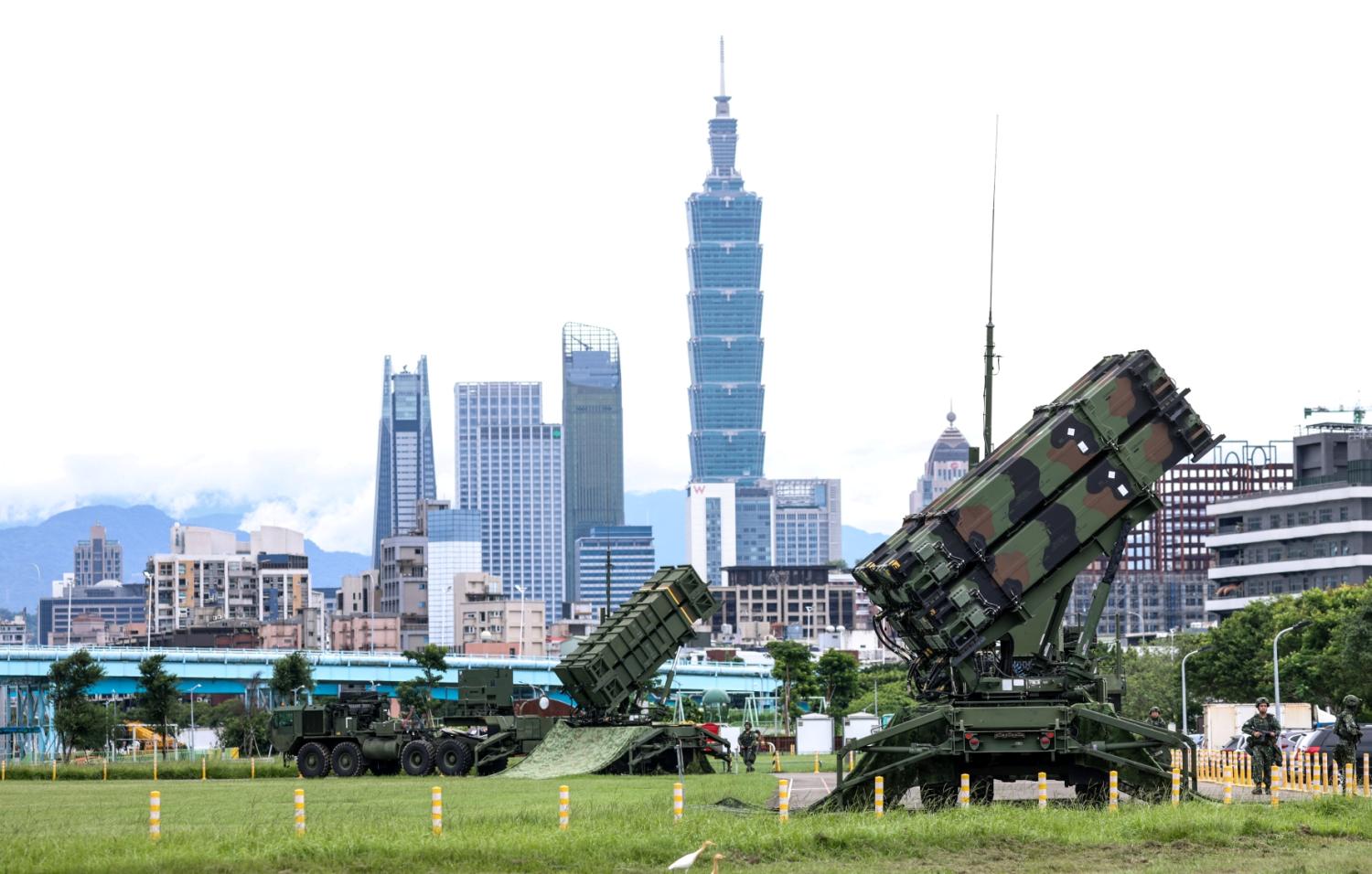
The United States has embraced a strategy of deterrence by denial: convincing Beijing that it cannot achieve its political objectives on Taiwan through force at an acceptable cost.2 In practice, this has translated to procuring capabilities ranging from anti-ship missiles and standoff munitions to uncrewed systems. While the range of platforms and systems is broad, they share common characteristics: they are relatively mobile, cheap, survivable, and lethal. Properly implemented, the strategy could make a Chinese attack on Taiwan unlikely to succeed and limit Beijing, at best, to a pyrrhic victory.
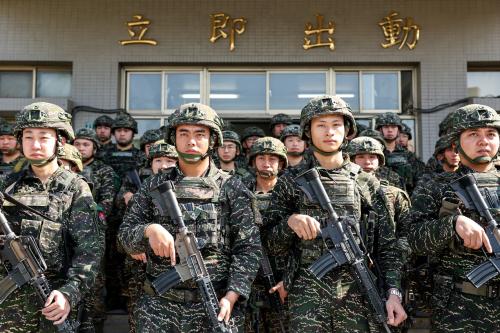
A pure denial focus, however, is insufficient. By focusing on high-end conflict, it cedes space for China to exploit the gray zone—coercive actions below the threshold of armed conflict. Near-daily incursions by People’s Liberation Army (PLA) fighter jets, surface warships, and drones into the airspace and waters near Taiwan steadily erode the island’s security and political resilience. The military capabilities prioritized under a denial strategy are poorly suited to counter such activities. Traditional responses, such as scrambling jets and naval vessels, divert assets from their primary wartime missions and overtax them, further raising doubts as to their ultimate utility.
Beijing has increasingly turned to the gray zone because it concludes that this approach effectively piles pressure on Taiwan without triggering a strong response. It can see that Washington and Taipei differ on how to address these coercive activities. Leaders in Taipei see a need to more proactively demonstrate to their citizens that they are protecting the island’s sovereignty. Many in the United States, however, view responding to such activities as a distraction from the urgent task of pursuing a strategy of denial. U.S. allies, for their part, also want to avoid escalation and retaliation from Beijing, and thus urge a more cautious approach. China assesses that these differences, combined with U.S. and Taiwanese risk aversion, allow it to leverage the gray zone without paying meaningful costs. The United States and Taiwan have yet to develop a coherent, unified response to this challenge.
China can exploit this situation because the United States and Taiwan have implicitly accepted Beijing’s framing of the gray zone as activity short of a kinetic use of force and, therefore, demanding restraint. In reality, China’s behavior reflects a pre-conflict campaign that is designed to weaken Taiwan and set the conditions to prevail in a war. The United States should therefore seek to eliminate China’s perception that gray zone coercion is cost-free. In practice, this would mean lowering the threshold of response and imposing a cost on China for its actions. The United States could pursue this route without sacrificing its strategy of denial—in fact, reinforcing it—by explicitly linking Chinese coercion to accelerated U.S. actions that diminish the prospects of a successful Chinese use of force. The United States needs to develop a gray zone playbook to augment its denial strategy.
A broken playbook
Since Tsai Ing-wen of the Democratic Progressive Party (DPP) assumed Taiwan’s presidency in 2016, ending eight years of Chinese Nationalist Party (KMT) rule, China has shifted from emphasizing the benefits of cross-Strait rapprochement to demonstrating the costs of continued separation.
China’s military activities most clearly demonstrate this shift. China has vastly increased the frequency and scope of violations of Taiwan’s air defense identification zone (ADIZ). It has erased the “median line” in the Taiwan Strait, a buffer that both sides respected for decades and which reduced the chances of an incident in the air or at sea. It has positioned PLA Navy and Chinese Coast Guard vessels around Taiwan on a near-continuous basis. China has declared exclusion zones in international airspace and waters to conduct complex multiday military exercises around Taiwan, disrupting the island’s commerce. Most provocatively, China violated Taiwan’s territorial airspace with a military drone for the first time in January 2026.3
China’s coercive playbook extends to leveraging the other tools of national power. Politically, China has intensified its efforts to isolate Taiwan by poaching some of its remaining diplomatic partners, preventing Taiwan from participating in international fora, and waging a legal campaign that seeks to build an international consensus that Taiwan is a part of the PRC.4 Economically, it has sanctioned Taiwanese firms and sectors, targeting companies connected to the DPP or based in DPP-leaning constituencies. Finally, China has manipulated Taiwan’s information space and interfered in its elections.
Beijing’s goal in applying such pressure is to make the Taiwanese people conclude that unification is inevitable and induce a future elected government in Taiwan to submit to political talks on the island’s fate. China’s strategy is bearing fruit. Admiral Samuel Paparo, commander of the United States Indo-Pacific Command, has warned that “We’re very close to that [point] where on a daily basis the fig leaf of an exercise could very well hide operational warning.”5 A senior Taiwanese military official has similarly evaluated that Beijing could “switch from peacetime to war operations any time.”6 Beijing has increasingly isolated Taiwan, as a growing number of countries publicly endorse its position that Taiwan is a part of the PRC.7 Taiwanese are coming to question whether the island can continue to rely on the United States for its security.8 Taiwan’s politics are growing more fractious, in part due to PRC influence operations.
At the same time, China’s pressure campaign has not come at the expense of preparing for a blockade or invasion of Taiwan. The PLA has built an inventory of precision weapons, such as anti-ship ballistic missiles and air-launched long-range missiles, designed to deny the United States the ability to intervene on Taiwan’s behalf and to degrade U.S. bases in the region. China has infiltrated critical infrastructure in the United States, including targets that could enable U.S. intervention in Taiwan contingencies.9 The PLA’s amphibious exercises continue to increase in sophistication, while China is also building amphibious lift and associated enabling (special barge/floating pier ships) capabilities.10 The question is not whether China is preparing for a full-scale war over Taiwan—it plainly is—but whether there is any preparation it is not undertaking.
While the United States and Taiwan have thus far deterred an attack against the island, they have failed to deter Chinese coercion below that threshold. Worse still, Washington and Taipei have responded to gray zone coercion in counterproductive ways. For instance, when China sends military aircraft or naval vessels into Taiwan’s ADIZ, Taiwan has responded by scrambling jets, warships, or coast guard vessels to observe these activities. These responses have exhausted Taiwan’s military assets and personnel, forcing the military to divert resources toward fuel and maintenance, in turn reducing readiness. Meanwhile, China, far from halting these activities, continues to increase their frequency and scale. This is likely in part because China sees that this is wearing down Taiwan’s military readiness. In addition, China knows that it can operate with near impunity. Taiwan has committed to not firing the first shot out of fear that it would be painted as the aggressor, while the United States similarly does not want to be seen as the party escalating tensions.11
China’s gray zone strategy only works because it is confident that the United States and Taiwan will not impose meaningful costs on its behavior and that it has more tolerance for risk than its opponents. Beijing believes it knows exactly where Washington’s and Taipei’s red lines are and can act as it pleases right up to those lines. Only by forcing China to question these assumptions can the United States stop its destabilizing coercion.
From gray to black and white
Ignoring China’s gray zone pressure against Taiwan might make sense in the abstract; one way to neuter this campaign is to deny China the attention it is seeking. In addition, it is true that no gray zone activity, by itself, will prompt Taiwan to surrender and allow Beijing to achieve its political objective. The danger, though, lies in the totality of these discrete steps. China is using this pressure to improve its ability to execute a blockade or punitive campaign against Taiwan, while gradually eroding Taiwanese citizens’ confidence in their government’s ability to protect them. Similarly, if the United States were to refrain from helping Taiwan respond to these coercive activities, regional partners would come to see Washington as unreliable.
Given this reality, the United States and Taiwan should leverage China’s gray zone coercion to take politically difficult but necessary steps to bolster deterrence against a blockade or use of force. The United States should link heightened Chinese coercion to changes to U.S. force posture in the region; particularly egregious Chinese activities could be met with additional deployments of the Typhon missile system or additional exercises in Japan’s southwest islands with U.S. Army Multi-Domain Task Force and U.S. Marine Littoral Regiment units.
Washington should also demonstrate its willingness to link developments in the Taiwan Strait to the broader U.S.-China relationship. The basis for such a position can be found in the Taiwan Relations Act, which states that “the United States decision to establish diplomatic relations with the People’s Republic of China rests upon the expectation that the future of Taiwan will be determined by peaceful means.”12 The United States can explain that it views China’s strategy of gray zone coercion as running counter to the foundation of U.S.-China relations and that such activities will materially impact other aspects of the bilateral relationship. For instance, the United States could respond to severe gray zone activities against Taiwan by imposing additional export controls on China.
The United States should be prepared to respond to China’s gray zone coercion with asymmetry and creativity. For instance, if the PLA and Chinese Coast Guard enter Taiwan’s territorial waters, the United States could levy sanctions on Chinese entities or place Chinese companies that had any part in the construction of those Chinese assets onto the Department of Commerce’s Entity List. This approach would demand far more coordination across the U.S. government, requiring departments and agencies to act in ways they might otherwise resist. The national security advisor should personally oversee this effort.
Washington could also signal that if China were to qualitatively intensify its pressure campaign against Taiwan—for example, by diverting Taiwan-bound cargo ships to Chinese ports, claiming control over Taiwan’s airspace, or denying Taiwan’s right to its territorial waters—then the United States would respond by increasing the tempo of freedom of navigation operations and enhancing its security partnerships with claimants in the South China Sea.
This menu of policy options carries a risk of moral hazard. Taiwan could respond to such U.S. moves by growing bolder in its cross-Strait rhetoric or even taking more operational risks in the seas or skies around the island. Taiwan could seek to provoke more Chinese gray zone activities if it believed that such coercion would automatically trigger more U.S. security cooperation and support. But the steps advocated here do not have any automaticity; Washington would maintain the initiative and could choose not to respond to certain Chinese actions if it judged that Taiwan had acted provocatively. Indeed, the United States should privately communicate to Taiwan that this playbook would be contingent on Taiwan not taking unilateral steps that deliberately provoke Beijing. Washington should also distance itself from such steps if Taiwan were to take them. Taiwan, for its part, should develop a complementary gray zone playbook, shifting from scrambling expensive fighter jets and frigates to monitoring Chinese military activities with cheaper uncrewed systems.
This course also risks an escalatory spiral with China. If the United States seeks to counter pressure on Taiwan by strengthening its security ties with the island and with regional allies, China could respond by putting more pressure on Taiwan. However, this paper argues that on the current trajectory, deterrence will likely fail. Ignoring China’s gray zone campaign is itself destabilizing: it teaches Beijing that coercion works, reinforcing the very behavior that makes miscalculation and eventual conflict more likely. China is exploiting the asymmetry of risk tolerance to change the facts on the ground and increase the likelihood that a blockade or invasion will succeed. Moreover, explicitly linking U.S. responses to Chinese gray zone activities would give Washington a graduated escalation ladder, filling the gap that currently exists between doing nothing and going to war. The United States and its allies will need to accept more near-term risk of escalation to preserve long-term deterrence in the Taiwan Strait.
The decisive fight
The United States and Taiwan should remain focused on the critical variable that continues to ensure peace and stability in the Taiwan Strait: China’s lack of confidence that it can achieve unification by force at what it deems to be an acceptable cost. Put differently, the absence of full-scale conflict in the Taiwan Strait over the past seven-plus decades is not primarily due to Chinese forbearance, but rather because China has possessed neither the military capabilities nor the belief that it can use those capabilities to compel unification.
Pursuing a strategy of denial is the best way to sow doubt in Beijing regarding the wisdom of turning to military force against Taiwan. At the same time, though, China’s gray zone coercion can negatively impact that strategy to the extent that it enables Beijing to prepare for a conflict against Taiwan and degrade Taiwan’s defenses. As a result, the United States has an interest in reducing this pressure on Taiwan. It can and should do so by linking China’s pressure campaign to U.S. policy adjustments that make a Chinese use of force against Taiwan less likely to succeed.
In Partnership With

Author

Related Content
-
Acknowledgements and disclosures
I would like to thank Ryan Hass and Jude Blanchette for the opportunity to contribute to this important project, and to all of the attendees of the workshops for their insights and questions, all of which helped me refine my thinking on U.S.-Taiwan relations. I would also like to thank Marvin Park for providing feedback on an earlier draft of this paper. Additional thanks goes to Adam Lammon for editing and Rachel Slattery and Adrien Chorn for design.
The views expressed in this document are those of the authors and do not necessarily reflect RAND’s or Brookings’ opinions.
-
Footnotes
- Jennifer Welsh and Maeva Cousin, “The $10 trillion fight: Modeling a US-China war over Taiwan,” Bloomberg, February 10, 2026, https://www.bloomberg.com/news/articles/2026-02-10/the-10-trillion-fight-modeling-a-us-china-war-over-taiwan; Jennifer Lind, “Life in China’s Asia,” Foreign Affairs, February 13, 2018, https://www.foreignaffairs.com/articles/china/2018-02-13/life-chinas-asia; Gabriel Collins and Andrew S. Erickson, “Annexation of Taiwan: A Defeat From Which the US and Its Allies Could Not Retreat,” Baker Institute for Public Policy, August 1, 2024, https://www.bakerinstitute.org/research/annexation-taiwan-defeat-which-us-and-its-allies-could-not-retreat.
- For instance, the Trump administration’s 2025 National Security Strategy notes, “We will build a military capable of denying aggression anywhere in the First Island Chain.” The Trump administration’s National Defense Strategy asserts, “we will build, posture, and sustain a strong denial defense along the FIC [First Island Chain]…we will make clear that any attempt at aggression against U.S. interests will fail and is therefore not worth attempting in the first place. That is the essence of deterrence by denial.” See “National Security Strategy of the United States of America,” The White House, November 2025, https://www.whitehouse.gov/wp-content/uploads/2025/12/2025-National-Security-Strategy.pdf; “2026 National Defense Strategy: Restoring Peace Through Strength for a New Golden Age of America,” U.S. Department of Defense, January 2026, https://media.defense.gov/2026/Jan/23/2003864773/-1/-1/0/2026-NATIONAL-DEFENSE-STRATEGY.PDF.
- Kathrin Hille and Joe Leahy, “China flies drone into Taiwan’s airspace for first time,” The Financial Times, January 17, 2026, https://www.ft.com/content/4b73bf1c-76a4-426f-a335-de8528b24acb.
- Jessica Drun and Bonne S. Glaser, “The distortion of UN Resolution 2758 and limits on Taiwan’s access to the United Nations,” (Washington, DC: German Marshall Fund, March 2022), https://www.gmfus.org/news/distortion-un-resolution-2758-and-limits-taiwans-access-united-nations.
- Demetri Sevastopulo, “China military exercises near Taiwan could be used to conceal attack, US says,” The Financial Times, February 13, 2025, https://www.ft.com/content/3a31c037-f74c-4e33-9720-0fdc32f5133b.
- Kathrin Hille and Demetri Sevastopulo, “China improves ability to launch sudden attack on Taiwan, officials say,” The Financial Times, May 25, 2025, https://www.ft.com/content/c82eb38e-87cb-4468-b013-0f7fce0fc54b.
- Benjamin Herscovitch, “Five One-Chinas: The contest to define Taiwan,” Lowy Institute, January 2025, https://interactives.lowyinstitute.org/features/one-china-contest-to-define-taiwan/.
- “Over 40% of Taiwanese doubt U.S. security support under Trump: Survey,” Focus Taiwan, May 2, 2025, https://focustaiwan.tw/politics/202505020026.
- David E. Sanger and Julian E. Barnes, “U.S. hunts Chinese malware that could disrupt American military operations,” The New York Times, July 29, 2023, https://www.nytimes.com/2023/07/29/us/politics/china-malware-us-military-bases-taiwan.html.
- Allison Martell et al., “China’s shadowy navy trains to take Taiwan,” Reuters, November 20, 2025, https://www.reuters.com/graphics/USA-CHINA/TAIWAN-INVASION/zjpqdekmlvx/.
- Keoni Everington, “Taiwan will definitely fire back if fired upon by China,” Taiwan News, September 21, 2020, https://www.taiwannews.com.tw/news/4013459.
- “H.R.2479 – Taiwan Relations Act,” 96th Congress, 1979, https://www.congress.gov/bill/96th-congress/house-bill/2479.
The Brookings Institution is committed to quality, independence, and impact.
We are supported by a diverse array of funders. In line with our values and policies, each Brookings publication represents the sole views of its author(s).