Executive summary
Artificial intelligence is fast becoming part of the basic infrastructure of economic and geopolitical power. The countries that control leading AI assets will increasingly shape the terms on which others participate in the global economy and in global affairs. Europe, Japan, South Korea, and other middle powers therefore face a risk extending well beyond technological dependence. Reliance on American or Chinese AI could progressively constrain their choices across industry, defense, science, health, information, culture, and politics, leaving formal sovereignty superficially intact while weakening practical control over the systems on which their societies depend.
No middle power can match the United States or China across the entire AI stack. A collective middle-power effort is crucial, but should remain modest, seeking to preserve sufficient capacity, choice, portability, and bargaining power. The objective should not be autarky, rejection of valuable partnerships, or confrontation with either superpower, but an effort to ensure that dependence does not lead to subordination.
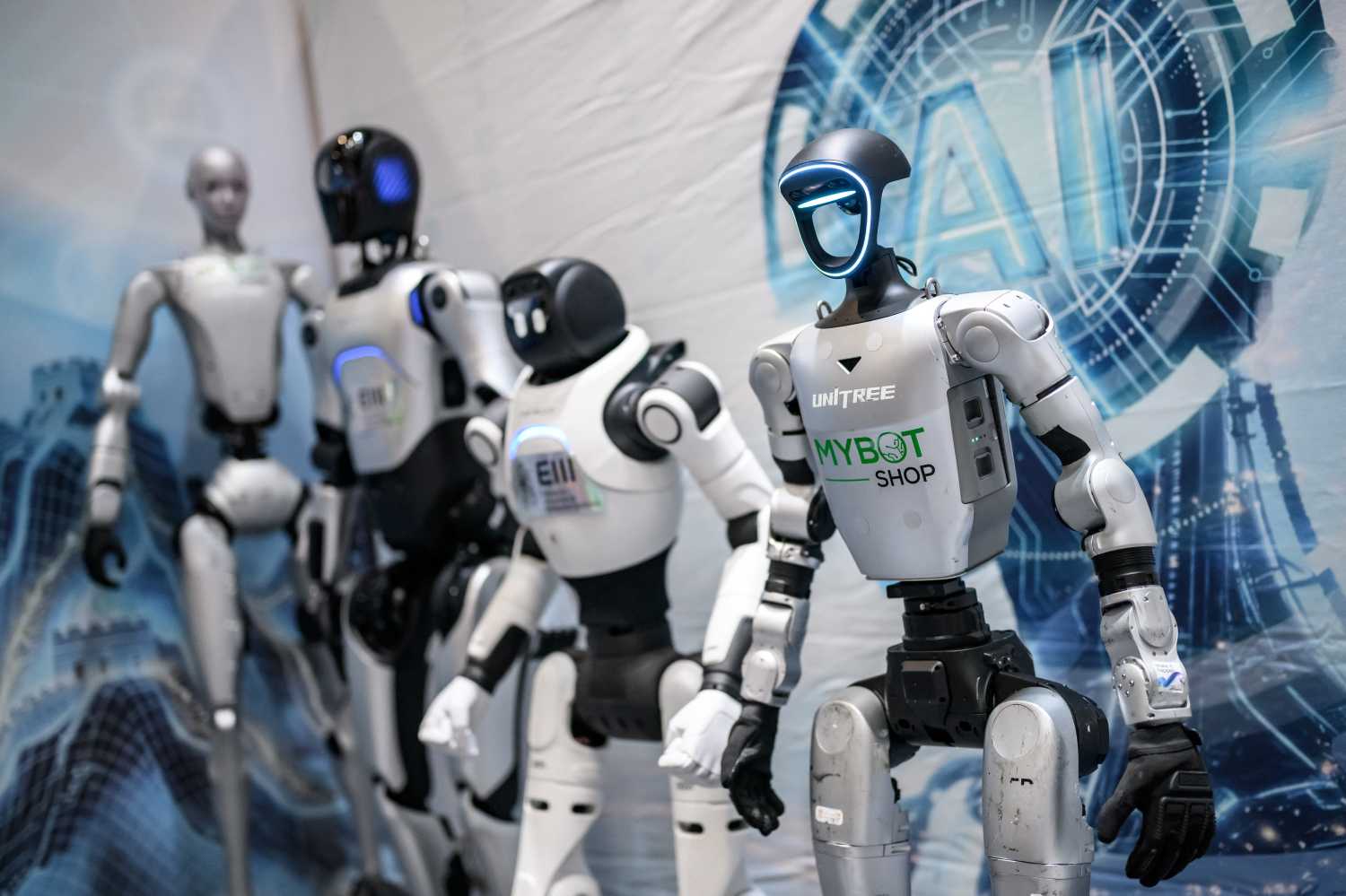
The most realistic opening lies in a specific segment of physical and industrial AI. While American platforms are less entrenched there, China is already formidable in robotics and industrial automation. Middle powers should therefore focus on critical and regulated segments, including critical infrastructure, transport, health care, telecommunications, and security, where jurisdiction, security, reliability, interoperability, and control matter more than cost.
Those assets remain fragmented across national projects. A modular sovereignty strategy would pool capabilities requiring scale while preserving control over applications and deployment. Binding and reciprocal procurement could leverage public purchasing into anchor customers, financeable revenue, and operational data. It could operate within U.S.-led initiatives such as Pax Silica where interests converge, and alongside them where independent capacity is necessary. The window remains open, but long development timelines make delay especially dangerous.
Introduction
Artificial intelligence (AI) is fast becoming part of the basic infrastructure of economic and geopolitical power. The countries that build the leading models, control the compute, own the platforms, and integrate AI into the physical economy will shape the terms on which others participate in the global economy and global affairs. That leaves the world’s middle powers, including Europe, Japan, and others, at high risk of falling irretrievably behind and becoming permanently dependent on the United States and China. Middle powers need to rally around a common effort to preserve agency.
The goal of any common middle-power effort to alter this path should be modest and realistic, but it is crucial nonetheless. Such an effort would not seek to match the United States or China across the entire AI stack, sever useful partnerships, or achieve technological autarky. It would be to preserve enough capacity, choice, and bargaining power to avoid dependence becoming subordination. The most realistic opening lies in a segment of physical and industrial AI. U.S. suppliers are less dominant in robotics and industrial deployment than in general-purpose platforms. China, however, is already strong in robotics, industrial automation, and physical AI. A middle-power effort should therefore concentrate on critical and regulated deployments where jurisdiction, security, reliability, and control matter more than cost.
These countries are already late. The scale gap is widening quickly. The 2026 Stanford AI Index estimates that U.S. private AI investment approached $286 billion in 2025, more than 23 times China’s reported $12.4 billion, although the Chinese figure excludes much state-directed funding. Capital spending by Amazon, Alphabet, Meta, Microsoft, and Oracle is expected to exceed $700 billion in 2026, much of it for AI-related infrastructure. No coalition of middle powers can hope to approach those levels dollar for dollar, but the numbers make clear why scattered national projects measured in the low billions are unlikely to change the strategic balance.
The risk to middle powers from superpowers is not abstract. In 2025, the United States imposed a license requirement on Nvidia’s H20 chips for China, though it later reversed the decision. In June 2026, a U.S. export-control directive required Anthropic to bar foreign nationals from accessing Fable 5 and Mythos 5, which, because Anthropic could not verify nationality in real time, led it to suspend the models for all users until the controls were lifted. U.S. Commerce Department foreign direct product rules also reach some semiconductor equipment made abroad using American technology. Access can be restricted, licenses withdrawn, and companies pressured by governments. A country that depends on foreign models, cloud platforms, data architecture, and industrial systems may retain formal sovereignty while losing practical control over infrastructure central to defense, science, health, information, and industry.
Pax Silica
The U.S.-led Pax Silica initiative to build secure and resilient AI supply chains spanning critical minerals, semiconductors, compute, infrastructure, and models underscores both the value and the limits of coordination. Japan, South Korea, and the European Union (EU) are already among its 24 signatories. The EU joined in late June 2026 after France initially opposed participation—a disagreement that illustrates Europe’s fragmentation. Japan’s and South Korea’s earlier participation also shows how, despite rapidly growing suspicions about American trustworthiness, alignment around a Washington-convened framework remains the default when middle powers have not built a complementary framework of their own.
Pax Silica should be recognized for what it is under the current U.S. administration. It can provide useful resilience against Chinese pressure and improve cooperation on semiconductors, critical minerals, energy, and supply chain security. But it is also shaped by a highly transactional administration and by U.S. national interests in America’s strategic competition with China.
A draft State Department letter reported by Reuters on August 14 illustrates the point more clearly than any characterization of intent. The draft is addressed to the 35 signatories of the U.S. AI Opportunity Statement of June, a wider group than the Pax Silica signatories themselves. It tells recipients that signing the Pax Silica Declaration is a commitment rather than a membership subscription and cannot be held alongside membership in “duplicative initiatives whose expectations conflict with our own.” The proximate target is China’s World Artificial Intelligence Cooperation Organization, launched in July with 29 founding members, which Kazakhstan joined while also signing Pax Silica. The draft is undated, Reuters could not determine when or whether it would be sent, and the State Department declined to comment on the reporting.
The draft’s notable feature is that it never names China. The exclusivity it asserts extends to “duplicative” initiatives whose expectations conflict with Washington’s, a formulation broad enough to reach parallel efforts having nothing to do with Beijing. Middle powers reading that language have to ask whether membership in Pax Silica is compatible with building any independent collective capacity at all. That question, more than the choice between Washington and Beijing, is what should concentrate minds in Tokyo, Seoul, Berlin, and Brussels.
Modular sovereignty
A recent Brookings report makes the underlying problem clear: “Full-stack AI sovereignty is structurally infeasible for almost any country because AI is a transnational stack with concentrated chokepoints across minerals, energy, compute hardware, networks, digital infrastructure, data assets, models, applications, and the crosscutting enablers of talent and governance.” The report calls for “managed interdependence” through alliances that diversify risk and preserve the benefits of open markets.
A middle-power effort should consider a nuanced modular sovereignty approach: preserving agency, choice, and bargaining power at strategically important layers of the AI stack while managing unavoidable interdependence at others. Such an approach would neither compete with Pax Silica across the board nor simply sit inside it. Middle powers could continue to work within Pax Silica where interests converge, including supply chain resilience and protection against Chinese coercion. They should also work alongside it where separate capabilities are needed to preserve their own agency, particularly in models, data, cloud portability, industrial deployment, and procurement. The balance will be delicate. But backing away from every independent initiative for fear that it would be seen as anti-American would leave middle powers with no meaningful strategy beyond accepting priorities set in Washington.
Middle powers should combine complementary national assets and pool the capabilities that require scale, while preserving national and commercial control over applications, deployment, language, and sector-specific use. Shared efforts could include major training runs, selected foundation-model research, compute infrastructure, testing, energy investment, and carefully governed datasets. Companies, universities, and governments could then build models and applications on top of that common base.
The objective would be resilience and choice. A middle-power effort would continue to rely on American suppliers and partners, and cheaper open-weight Chinese technology would remain important in many markets. Modular sovereignty would not make those dependencies disappear. It would, however, create alternative capacity, portability, and bargaining power at enough layers that a single dependency does not result in political subordination.
Interdependence
Even a carefully framed middle-power effort would likely invite a U.S. reaction. Washington could threaten to apply license conditions to advanced GPUs, tighten end-use requirements in cloud contracts, use security relationships to discourage participation, or invoke the Section 232 framework covering semiconductors and semiconductor manufacturing equipment. The coalition should anticipate that response and make clear that it is reinforcing supply chain resilience rather than dismantling cooperation with the United States. It would also need to be robust enough to withstand pressure through diversified procurement, strategic inventories, portable workloads, reciprocal commitments, and investment in alternative capacity.
The interdependence at issue runs in both directions. Europe, Japan, and South Korea supply lithography systems, optics, metrology, semiconductor materials, wafers, high-bandwidth memory (HBM), memory, and production equipment on which the U.S. technology ecosystem depends, just as they depend on American processors, models, and cloud services. Those positions should not be treated as instruments of pressure, and framing them that way would invite exactly the confrontation a sensible middle-power strategy is designed to avoid. But the relationship’s mutual character would be a reason for restraint on all sides. Modular sovereignty should aim to make that interdependence more visible, better organized, and less vulnerable to unilateral disruption.
China presents a different challenge. Near-frontier Chinese open-weight models can be obtained at very low marginal cost, which weakens the commercial case for spending heavily to reproduce another general-purpose foundation model. But China is also already formidable in robotics and industrial automation. According to the International Federation of Robotics, China accounted for 54% of worldwide industrial-robot installations in 2024 and had an operational stock of roughly 2 million robots, about 4.5 times Japan’s. Its current five-year plan places AI-powered robotics at the center of its industrial strategy. Middle powers may be early relative to American platforms in parts of physical AI, but they are late relative to China.
That means competing on scale or price would be a losing strategy for middle powers. A middle-power coalition should instead compete in areas where the identity and legal jurisdiction of the system operator are themselves requirements: hospital and health-system infrastructure, electricity grids, water systems, rail networks, ports, telecommunications, defense sustainment, and dual-use manufacturing. Regulators, security services, and insurers may regard a Chinese controller embedded in a critical process as unacceptable regardless of price. In these critical areas, the value would be in proprietary operational data, integration, reliability, safety, portability, and control, not in raw model quality alone. Where an American, Chinese, or other open-weight model can be adapted securely and cheaply, the coalition should remain open to using it rather than duplicating it for symbolic reasons.
Japan and South Korea
Japan’s recent Noetra initiative offers a promising starting point. Selected by Japan’s New Energy and Industrial Technology Development Organization, Noetra has attracted investment from 44 companies and organizations, including MUFG Bank. Its research effort includes Japan’s National Institute of Advanced Industrial Science and Technology, Preferred Networks, and industrial participants like Sony, SoftBank, NEC, Honda, and others. Noetra is developing Japanese multimodal foundation models for robotics and physical AI. Crucially, its ambitions extend beyond another national chatbot to manufacturing, logistics, transport, health care, energy systems, infrastructure, and other sectors where machines must interpret and interact with the physical world.
Noetra does not enter an uncontested field. Japan’s opportunity lies less in commodity automation than in high-reliability and security-sensitive areas where its engineering, operational data, and trusted legal jurisdiction can command value beyond the lowest available price,
Japan brings unusual strengths to that task. It has world-class manufacturing companies, advanced robotics, precision engineering, industrial expertise, and decades of experience deploying technology in physical production. The operational data produced on factory floors and inside machines is a strategic asset that cannot be easily replicated elsewhere. Pooling it does not require moving it. Federated training and secure access arrangements can allow shared models to improve without raw data leaving the plant, which is what makes cooperation among competing industrial firms both commercially and legally feasible.
But Noetra also exposes a weakness in the modular sovereignty approach, as its planned compute cluster will use approximately 27,500 Nvidia Rubin GPUs and therefore remain exposed to U.S. jurisdiction at the compute layer. Japan’s data, robotics, and application strengths create leverage, not compute sovereignty. A middle-power coalition could reduce that exposure at the margin through several measures. These could include jointly procuring and maintaining strategic inventories of advanced accelerators; supporting Japan’s Rapidus, South Korea’s Samsung, and other regional capacity where technically and commercially realistic; developing inference-optimized domestic silicon for industrial deployment; investing in training efficiency and smaller specialized models; and maintaining open-weight models as a fallback when access to proprietary systems is restricted. None of these measures would close the frontier compute gap. But together, they could reduce the ability of any single supplier or government to halt the coalition’s most important deployments.
South Korea could be a coanchor of the effort. Seoul’s Sovereign AI Foundation Model project already combines public support with competition among domestic consortia. According to South Korea’s Ministry of Science and ICT, four Korean models developed in the first half of 2026 were added to Epoch AI’s list of notable models. The ministry reports that the United States produced 59 such models in 2025, China 35, and South Korea eight. Korean models are not on par with the best American and Chinese systems, but South Korea’s results are striking given the difference in resources. South Korea also brings leading positions in HBM and other memory chips, electronics, telecommunications, batteries, shipbuilding, automobiles, and industrial machinery.
A middle-power coalition could see Europe joining Japan and South Korea where their capabilities are complementary: manufacturing, robotics, transport, health, logistics, energy systems, and infrastructure. Japan can contribute Noetra, industrial expertise, robotics, sensors, vehicles, materials, and precision engineering. South Korea can contribute semiconductors, memory, telecommunications, electronics, competitive models, and an ability to move from policy to execution. Europe can add financing at scale, a continental market, large industrial customers, research institutions, and globally competitive companies in aerospace, automotive manufacturing, pharmaceuticals, energy, transport, and engineering. Their strength and leverage would derive from a common market for critical and regulated systems where national security, resilience, and control are paramount and integral to purchasing requirements, rather than simply preferences.
Europe
The efforts by Japan and South Korea make the contrast with Europe uncomfortable. Mistral’s recent expansion into regional inference, third-party model hosting, and European compute is France’s most consequential contribution, but its growing reliance on Nvidia hardware, Microsoft financing and customers, and the sale of regional capacity illustrate the structural pressure on a stand-alone European model champion. Mistral has not stopped developing models, but its small size and trajectory hardly validate a strategy of fragmented national efforts.
European officials are aware of the dynamics of AI sovereignty. The phrase now appears in various European speeches, strategies, and funding announcements. But rhetorical recognition has not produced sufficient action on the necessary scale or timetable and remains consistent with a familiar tendency to confuse announcements and regulation with capability. Regulation matters, and access to the European market has changed the behavior of large U.S. technology companies. But regulation without independent capability is dependence management. Europe has relied far too heavily on the former while failing to build enough of the latter.
The EU’s gigafactory program illustrates the gap. InvestAI was announced in February 2025 as an effort to mobilize 200 billion euros (approximately $233 billion), including an ambition of 20 billion euros for AI gigafactories. On July 30, 2026, the European Commission opened a tender for up to seven gigafactories, backed by up to 10 billion euros in EU and national funding, roughly half of that from Brussels, and intended to attract at least 20 billion euros in private investment. The public commitment has moved down rather than up over 18 months, and even the full 30-billion-euro headline remains small compared with the more than $700 billion that five U.S. companies may spend in 2026 alone.
Europe’s deeper problem remains nationalist fragmentation. Member states still compete over where compute will be hosted, whose champion will lead, who will pay, whose data will be shared, and which country will capture the jobs and commercial returns. The result is a familiar European pattern of ambitious announcements followed by slow implementation, overlapping national programs, and inadequate scale. Europe could spend several more years debating the distribution of an AI initiative only to find that American and Chinese platforms have become embedded too deeply to dislodge.
Financing
Financing will play a key role in determining whether middle-power collective capabilities can move from aspiration to scale. A credible effort focused on physical and industrial AI would likely require several hundred billion dollars over several years. The funding would need to cover compute, energy, semiconductors, models, deployment, and industrial adaptation, consistent with the scale of the EU’s stated InvestAI ambitions, but still far below what U.S. hyperscalers are likely to spend over the same period. Those hundreds of billions are also far above the tens of billions that the most plausible European and national instruments can now provide. The gap should be acknowledged rather than glossed over.
Europe has the economic capacity to make a larger contribution. A European Strategic AI Bond could help finance a broader middle-power initiative, including compute clusters, secure cloud capacity, electricity infrastructure, semiconductor supply chains, model development, cybersecurity, and deployment. But financial capacity is not the same as an agreed fiscal instrument to deploy it. A 2023 International Monetary Fund staff working paper argued that demand for a common European safe asset could support substantial issuance without an aggregate increase in borrowing costs, which suggests that the convenience-yield benefits of a common liquid euro-denominated instrument would provide ample headroom to borrow for strategically important goals.
The obstacles are political and legal rather than financial, and they are familiar. The EU’s Multiannual Financial Framework and changes to the own-resources system require EU member unanimity, with national ratification required for revenue changes. The EU still lacks an agreed new own resource sufficient for another large borrowing program. Repayment of NextGenerationEU borrowing is likely to be rolled over, but it technically begins in 2028 and will weigh directly on the 2028 to 2034 budget. The legal basis for common borrowing for a new strategic purpose would also likely be contested and litigated.
Those are genuine constraints, not procedural details that can simply be wished away. But they should not become an alibi for paralysis. The risk of future AI subordination is too great to allow familiar process-driven impediments to determine the outcome by default. A strategic bond could be one instrument among several. National vehicles, institutional investors, industrial firms, guaranteed procurement, and private project finance would also be required. Common funding should be reserved for genuinely shared assets, while national funding supports complementary capabilities and domestic deployment.
Demand
Financing issues seek to address the supply side, but governments are not only suppliers of capital; they are also major customers. Each year, EU public authorities purchase roughly 2 trillion euros of services, works, and supplies—equal to about 13.6% of EU GDP. And that is before adding Japanese and South Korean public purchasing power. Contrasted with the 10 billion euros in public financing targeted for the EU gigafactory tender, the difference in scale is clear. That difference between what governments can appropriate and invest and what they are already spending as “buyers” represents a significant potential opportunity for middle-powers in the future direction of AI.
Governments that make binding demand commitments could solve several problems more efficiently than by providing more capital or through subsidies. Similar to Airbus launch orders, committed contracted revenue can be financed and would give companies reasons to invest well before market scale has been achieved. Early deployment would also generate the proprietary operational data on which physical AI advantages can build upon. Procurement can potentially redirect spending that has already been budgeted for public services, without the need for time-consuming and politically problematic new EU own resources, common borrowing, or national ratification.
Europe has already proposed an initial element of this approach. The Cloud and AI Development Act (CADA), proposed on June 3, 2026, would establish a range of non-price criteria to be applied to public bodies as inputs into their procurement decisions on innovative cloud and AI systems. This is a step, though a small one, in the right direction. However, CADA remains at the proposal stage and is not drafted in a way that will necessarily materially alter purchasing decisions.
A comprehensive middle-power-coalition approach should be more specific, ambitious, and binding. Participating governments should commit a defined share of purchasing in specific categories over a defined period. Critical infrastructure, telecommunications, defense, and robotics would be good places to start. Reciprocal access would allow Japanese and South Korean suppliers to compete in European tenders and European suppliers to compete in theirs, advancing market scale that they do not possess on their own.
This approach faces some real legal constraints. The World Trade Organization Agreement on Government Procurement and the EU’s procurement rules limit discrimination against some foreign suppliers. But security exceptions exist and should be aggressively explored here. While they are not blanket permissions for protectionism, they could provide a means of resisting U.S. and Chinese pushback if the effort was based on security, performance, and reciprocity rather than on nationality alone.
Governance
Governance of a middle-power effort would be difficult, and the model chosen would likely determine whether the coalition can happen at all and, if it does, whether it holds together. Participation should follow a contribution-for-access principle: countries and companies that provide financing, technology, energy, data, procurement commitments, or market access receive corresponding rights to shared infrastructure and intellectual property. A supermajority approval structure for major allocations would be needed so that no single member could dominate or hold out, while technical decisions would be delegated to professionals. Common standards would need to guarantee interoperability and data portability.
Binding long-term procurement commitments from governments, health systems, utilities, transport networks, and defense establishments should provide incentives against defection and provide shared projects early customers and commercial scale. Access to subsidized compute, common models, and reciprocal procurement commitments should depend on continued contributions and reciprocal market access. Participants should retain the right to pursue national projects and partnerships with U.S. or Chinese firms, but not to divert shared assets or accept arrangements that undermine the coalition’s security.
Europe’s Airbus experience proves that cross-border industrial policy can create a globally competitive enterprise when national capabilities are insufficient. It also shows how hard that is. Airbus had a corporate vehicle, a balance sheet, responsibility for delivery, and launch customers placing binding orders. By contrast, the Gaia-X initiative had a standards association, diffuse governance, little capital, and no product for which a single party was responsible. Its ambition to create a federated European data and cloud infrastructure was directionally right, but years of standards work, national agendas, and pilot projects never produced a European competitor to the U.S. hyperscalers.
That is the operational lesson. A middle-power AI effort must become more than a declaration or working group. It would need defined products, funded infrastructure, binding procurement commitments, clear responsibility for delivery, and milestones tied to deployment. Whether that ultimately requires a new incorporated entity, a consortium built around existing institutions, or several linked project vehicles can remain open. Leaving responsibility and capital permanently diffuse cannot. A practical beginning would be a small group of governments and industrial firms capitalizing a first joint project around Noetra’s existing physical-AI work, with committed procurement from participating governments and companies, and membership widening from there.
Political obstacles will be difficult to overcome. Europe’s internal divisions have led to repeated failures in cross-border initiatives. Japan and South Korea have unresolved technology-transfer and trust concerns. These are reasons multinational coordination has not happened, but they are not reasons it is unnecessary. As U.S. alliances become more transactional and the U.S.-China technology contest accelerates, middle powers are already making compromises with partners they once considered unacceptable. AI should be one of the areas where the risk of future subordination becomes sufficient to overcome old obstacles.
The window
Over time, other middle-power countries could join. Canada, India, the United Kingdom, Australia, and the Nordic countries each bring some combination of energy, research capacity, critical minerals, capital markets, and deployment scale. A modular coalition would not require every participant to contribute to every layer. Its strength would come from a structure in which no single member controls the whole system and new members can join without accepting permanent subordination to any other national champion.
The window will not remain open indefinitely, but it should not be reduced to a claim that success must be achieved within months. Noetra’s published roadmap targets an omni-modal model around fiscal year 2028 and a robotics-oriented, real-world native model around fiscal year 2030. The EU’s first gigafactories are not expected to operate until roughly mid-2028. Those timelines show that building capacity will take years. They also make it important to begin now, set intermediate deployment goals, and prevent long timetables from becoming excuses for delay.
General-purpose platforms are already becoming embedded in companies, governments, hospitals, and research institutions. In physical and industrial AI, American platforms are less entrenched, providing middle powers with a narrow opening even as Chinese suppliers expand their presence. Middle powers should focus on critical and regulated deployments in which legal jurisdiction, operational control, interoperability, and security can be made conditions of public and private procurement. As foreign platforms move from the office into factories, infrastructure, and machines, switching will become more expensive and politically difficult. Data will accumulate inside proprietary systems, workers will acquire platform-specific skills, and governments will become reluctant to disrupt the services on which citizens and businesses depend.
No middle power can individually match the full spectrum of U.S. or Chinese AI capabilities. But collectively, they have enough capital, technology, talent, industrial data, and market scale to preserve meaningful technological agency. Japan’s Noetra and South Korea’s progress in models, HBM, and advanced manufacturing offer places to begin. Europe has the resources and the industrial base to turn those efforts into something larger, but only if it moves beyond announcements, overcomes nationalist fragmentation, and treats AI capacity as an urgent common strategic priority.
Author

Related Content

The Brookings Institution is committed to quality, independence, and impact.
We are supported by a diverse array of funders. In line with our values and policies, each Brookings publication represents the sole views of its author(s).