For decades, Maryland’s economy has been powered by “ed, meds, and feds”—i.e., educational services, health care and social assistance, and the federal government. But the Trump administration’s extreme cuts have resulted in a loss of 29,200 federal government jobs between January 2025 and April 2026 in Maryland alone, upending the state’s economic foundation.
State leaders have been left with the challenging task of supporting residents, businesses, and communities impacted by these cuts, while also reinventing Maryland’s economy to be more resilient and less dependent on the federal government. To succeed, state and local leaders must have accurate data on the size and scope of federal spending and jobs across Maryland.
This report presents findings from recent research performed by the Office of the Comptroller of Maryland and the University of Maryland Robert H. Smith School of Business on the impacts of Trump administration cuts in Maryland. We found:
-
Federal government economic activity in Maryland in 2024 represented about 30% of the state’s gross domestic product (GDP), but is concentrated among a handful of agencies, with the greatest exposure to cuts from Department of Health and Human Services (HHS) sub-agencies headquartered in Maryland.
-
Relatively small cuts in federal spending can have big impacts on Maryland residents and businesses, even if the agency has no physical presence in the state.
-
Small counties in the District of Columbia-Maryland-Virginia (the “DMV”) region with much lower levels of federal spending than large counties have a greater reliance on the federal government for local economic activity.
Key stakeholders have used this research for several purposes. Maryland’s attorney general used the data to support lawsuits challenging federal actions. The economic impact data informed Maryland’s congressional delegation when negotiating the reversal of planned federal office relocations from Maryland. County budget officials are using the data to help forecast the budget implications of declining economic activity. And economic and workforce development officials are using the data to identify businesses and workers the cuts have harmed in order to tailor assistance.
Methods
This research analyzes federal government spending and jobs in Maryland between 2020 and 2024. The analysis resulted in two reports released in June 2025 and January 2026 that: 1) measure the baseline of federal spending in Maryland prior to Trump administration cuts; and 2) model the financial impacts of potential or planned cuts to federal jobs and spending in Maryland. The reports are accompanied by a set of online dashboards that provide insights into federal agency and subagency spending across the state and enable interactive scenario modeling to estimate the financial impacts of federal cuts.
Key terms
- Jobs: Refers to civilian federal government positions with a reporting location in Maryland and that may be held by residents of Maryland or another state.
- Employees: Refers to Maryland residents employed by the federal government with reporting locations in Maryland or outside of Maryland.
- Adjusted gross income (AGI): Includes all sources of income (wages, interest, capital gains, retirement distributions) minus certain deductions. AGI reflects the amount of income used to calculate tax liability.
- Wages: Total compensation from an employer for hourly or salaried work and reported on W-2 forms.
- Retirement income: Income received from an employer after stopping regular employment and reported on 1099-R forms.
- Federal contracts: The federal government’s procurement for goods and services that are fully or primarily performed by private sector firms operating in Maryland.
- Federal grants: Financial assistance awarded to state governments, local governments, or non-governmental nonprofit organizations.
- Federal direct payments: Payments to individuals or businesses, such as Medicare payments to individuals, unemployment benefits for individuals, or subsidies to farmers.
The June 2025 report, which establishes the baseline for federal investment, focuses on four areas of federal spending: 1) employment and retirement income; 2) contracts; 3) grants; and 4) direct payments.
Examining employment
The research quantifies Maryland residents employed by the federal government in addition to federal jobs located in the state. We wanted data on Maryland residents as well as jobs, because Maryland residents pay Maryland income taxes, while Virginia and District of Columbia residents who work in Maryland do not. To understand how federal cuts will affect Maryland’s economy and revenue base, it is crucial that we capture data on Maryland taxpayers employed by the federal government.
The research team developed a spatial mobility model for estimating where Maryland residents employed by the federal government live and work. To build this model, they combined job-location-level datasets from the Bureau of Labor Statistics’ Quarterly Census of Employment and Wages (QCEW) and Office of Personnel Management with the Census Bureau’s Longitudinal Employer-Household Dynamics (LEHD) Origin-Destination Employment Statistics (LODES) to determine community work-residence mobility patterns.
- Wage and retirement income was calculated using W-2 and 1099-R income tax return data from the Maryland comptroller.
- Federal contracts, grants, and direct payments were calculated using USAspending.gov as the primary data source.
The January 2026 report and dashboard tools provide scenario analysis models to illustrate how actual or potential cuts at federal agencies and subagencies would impact Maryland. Users can run analyses based on agency, county, and a baseline year, and then enter reductions (or increases) as percentages to grants, contracts, and jobs.
The report also includes a simplified dashboard that offers a detailed look at jobs and spending by agency and county.
Background and context
Prior to 2025, the federal government spent about $150 billion in Maryland on wage and retirement income, contracts for work performed in Maryland, grants to local governments and nonprofits, and direct payments to residents and businesses. To put this amount in perspective, Maryland’s GDP during the analysis timeframe was just over $500 billion, making the $150 billion in federal spending about 30% of the state’s GDP.
Jobs and income
An estimated 229,000 Maryland residents were employed in civilian federal government jobs in 2023, which was approximately 7% of all resident employment, and accounted for combined earnings of $26.9 billion. In addition, federal retirement income totaled $8.8 billion a year, received by 153,000 Maryland households.
Employment by county
Federal government employees reside across the state, led by Montgomery County (54,729 federal employees, or 10% of total employment), Prince George’s County (54,379, or 11%), Anne Arundel County (21,107, or 7%), Baltimore County (16,919, or 4%), and Charles County (15,574, or 18%), as shown in Figure 1. In the U.S. as a whole, the federal government only accounts for around 1% of jobs (as of Federal Fiscal Year 2023).

Employment by federal agency
The largest federal employers in Maryland are the Department of Defense (DoD) (54,446 Maryland employees), HHS (34,404 Maryland employees), the Department of Homeland Security (DHS) (15,692 Maryland employees), the Department of Commerce (12,870 Maryland employees), and the Department of Justice (DOJ) (9,651 Maryland employees), summarized in Figure 2. Other agencies with headquarters or large footprints in Maryland, such as the Social Security Administration, NASA, and the Department of Veterans Affairs, also employ thousands of Marylanders.
Two of the top three agencies by employment—DoD and DHS—are expected to receive more funding under the Trump administration, which may in fact create opportunities to grow Maryland’s economy. The third agency, HHS, has already faced massive cuts, with more likely in store—highlighting the need for state and local leaders, as well as Maryland’s congressional delegation, to closely monitor changes at the department.

Contract spending
In 2024, prior to the second Trump administration, the federal government spent $46 billion in contracts to firms for work originating in the state. This contract spending supports more than 3,000 federal prime contractors in the state who employ tens of thousands of Marylanders.
Key takeaways
Federal government spending and jobs in Maryland represent about 30% of the state’s GDP, but are concentrated among a handful of agencies and sub-agencies, with the greatest exposure to cuts from HHS
Between January 2025 and March 2026, Maryland lost 29,300 federal government jobs—the most in the DMV region and of any state in the country other than California, which lost 29,600 federal jobs. This was an 18% decrease in all federal jobs located in Maryland. March 2026 employment data also revealed that Maryland lost the most total jobs of any state (49,900) since March 2025 (followed by the District of Columbia and Virginia)—demonstrating the compounding effect of federal government job cuts. These cuts translate into broader economic challenges relating to household spending and state revenues.
Federal contractors have also been affected by Trump administration efforts to downsize the government. For state Fiscal Year 2026, estimated corporate income tax payments from federal contractors in Maryland are down by about 60% from the prior fiscal year, according to the state’s Board of Revenue Estimates, which is housed within the comptroller’s office.
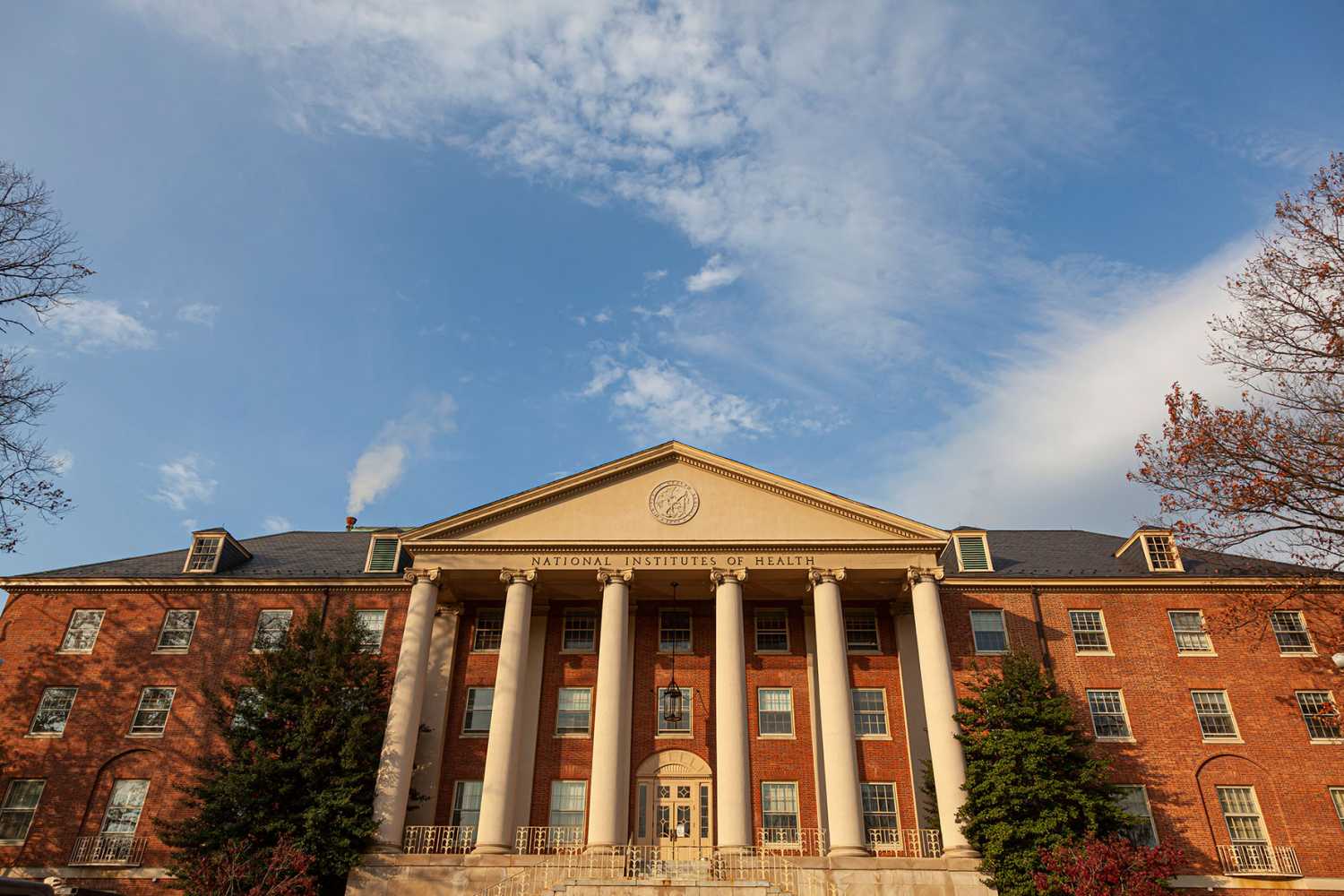
HHS spends more money in Maryland than any other federal agency: about $30 billion in 2024, which represented 20% of all federal spending in the state. Maryland is the headquarters for the department’s National Institutes of Health (NIH) and Food and Drug Administration (FDA) in Montgomery County, as well as the Centers for Medicare and Medicaid Services (CMS) in Baltimore County. An estimated 34,404 HHS employees lived in Maryland in 2024, spread across 10 counties, led by Montgomery County and Prince George’s County. HHS employees living in Maryland earned a combined $5.2 billion in annual wages in 2024.
Last year, HHS announced plans to cut its workforce by 24%. Our scenario planning tool estimated that these cuts would result in 8,419 Maryland residents losing their jobs. Later in the year, HHS clarified that cuts will not be applied equally across all subagencies. For example, FDA would have an 18% cut, NIH 6%, and CMS about 1%. The subagency scenario tool reveals that these three subagency cuts (along with 24% cuts for all other HHS subagencies), would result in 4,714 residents losing federal jobs across all of HHS if these cuts were implemented—a nearly 4,000-job difference that impacts forecasting, budgeting, and planning.
About the DMV Monitor
Brookings’ DMV Monitor is an interactive dashboard and ongoing project tracking 25 indicators of the Greater Washington region’s economic health. The dashboard provides both short-term trend statistics and current levels for most indicators, along with comparisons to other major metro areas and breakdowns for county and county-equivalent jurisdictions in the DMV region.
Related Content



Relatively small cuts in federal spending have big impacts on Maryland residents and businesses, even if the agency has no physical presence in Maryland
The federal government has such an outsized presence and impact in Maryland that even changes to agencies that spend relatively small amounts of money in the state have big repercussions. Proposed and enacted changes at the Department of Agriculture (USDA), which ranks eighth in federal agency employment in Maryland and seventh in federal agency spending, and the United States Agency for International Development (USAID) which doesn’t event register in the top 15 agencies for jobs or spending in Maryland, illustrate this point.
When USAID effectively shuttered all operations last summer, Maryland was hit with an estimated $548 million impact through lost wages, contracts, and grants, even though USAID did not have a physical presence in the state. Maryland-based USAID contractors substantially scaled back or eliminated USAID-funded projects. At least one of these firms, EnCompass LLC, discontinued all business operations last year, terminating its entire workforce and vacating its offices in Silver Spring.
In July 2025, USDA Secretary Brooke Rollins announced the planned closure and relocation of the Beltsville Agricultural Research Center (BARC) in Prince George’s County, which is home to the Agricultural Research Service. According to the scenario analysis tool, this closure would have redirected nearly $200 million in federal spending from Maryland annually, relocated 872 federal jobs that pay $103 million in wages, and ended $86 million in annual contracts for work performed in Maryland.
The Maryland comptroller’s office shared this analysis with Maryland’s U.S. senators and submitted it as public comment to the USDA. Ultimately, as part of the agreement that ended the government shutdown last November, the USDA backed away from closing BARC. However, in April, the USDA reaffirmed its intention to shutter BARC.
Small counties in the DMV region with much lower levels of federal spending than large counties have a greater reliance on the federal government for local economic activity
Montgomery County and Prince George’s County account for around 40% of all federal spending in Maryland. However, it is the smaller counties in the region, such as Charles County and Frederick County, that depend more on federal spending to drive their local economies.
The population of Charles County is about 175,000—the smallest Maryland county in the DMV region. However, there is greater reliance on the federal government for income here than in the DMV region’s larger counties (see Figure 3). According to tax data, 29% of adjusted gross income in Charles County is from federal government wages and retirement. Statewide, federal wages and retirement income account for 12% of total adjusted gross income.

Charles County also illustrates how the federal government has deliberately helped to build the Black middle class in America. Nationwide, 19% of the federal workforce is Black, compared to 13% of the total workforce. With its high level of federal workers and incomes, Charles County recently surpassed neighboring Prince George’s County as the wealthiest majority-Black county in the nation, with a median household income of $128,000 and a 51% Black population share.
Federal salaries have helped drive higher incomes in the county: The Washington Post found that “the number of Black households earning $200,000 or more a year in Charles County quadrupled between 2009 and 2020.” An estimated 58% of all federal government employees living in Charles County are Black. Federal cuts threaten to reverse gains by the Black middle class in recent decades and have the potential to increase already high rates of racial wealth and income inequality across the country.
In Frederick County, the largest employer is Fort Detrick, a U.S. Army installation located in the city of Frederick, 51 miles north of the Pentagon. Fort Detrick employs both civilian and military personnel across five agencies: DoD, Veterans Affairs, USDA, DHS, and HHS.
In Federal Fiscal Year 2023, there were 4,726 federal civilian jobs in Frederick County, and 9,178 total federal employees living in the county. DoD was the largest employer of Frederick County residents, with an estimated 2,667 employees in 2024. HHS was the second-largest, employing almost 1,900 Frederick County residents.
Additionally, $1.8 billion in federal contracts was awarded in 2024 for work originating in Frederick County, primarily out of Fort Detrick. More than half of those contract awards, $1 billion, were awarded by HHS—not DoD—to support work at the Frederick National Laboratory for Cancer Research and the Integrated Research Facility, both based at Fort Detrick, indicating that although the fort is a DoD installation, much of the funding there comes from HHS.
In fact, HHS makes up more than half of all federal contract spending in Frederick County, and the county has the third-largest amount of contract awards (in dollars) from HHS out of all counties in Maryland, despite being the state’s seventh-largest county for total federal employment. HHS has an outsized impact in Frederick County, and any cuts at HHS—especially to research and development contracts and jobs—will make a significant dent in the county’s economy.
Conclusion
In this chaotic and uncertain era of federal government management, it is important to provide leaders at the state and local level with the tools and data necessary to navigate the moment, plan for the future, and support residents. With these reports and tools, we hope to help stakeholders make informed decisions in response to federal cuts and how these cuts will impact state and county economies.
We can see multiple audiences benefiting from these tools, such as a budget analyst in Charles County attempting to forecast future revenues with less federal wage income going to county residents; a former USAID contractor’s business development manager exploring new opportunities by analyzing contract spending by other federal agencies within the state; or state or local workforce agencies attempting to reemploy NIH or FDA scientists in the private sector.
We also believe these resources offer a model for how other states with large concentrations of federal spending and jobs can better understand the federal government’s economic impact—and its decreasing investment—in their regions and states. With this information in hand, local and state leaders can set priorities to push back, drive investments to secure economic resilience, and build coalitions that understand the potential economic headwinds to come.
Authors


-
Acknowledgements and disclosures
The authors would like to acknowledge the team at the University of Maryland Robert H. Smith School of Business who collaborated on this research project. Professors Liu Yang and Vojislav Maksimovic led a group of graduate students, including Pranshu Sahasrabuddhe, Kanat Sagatovich Isakov, Shrenik Kalambur, Sai Gorthy, and Haotian Shi.
The Brookings Institution is committed to quality, independence, and impact.
We are supported by a diverse array of funders. In line with our values and policies, each Brookings publication represents the sole views of its author(s).