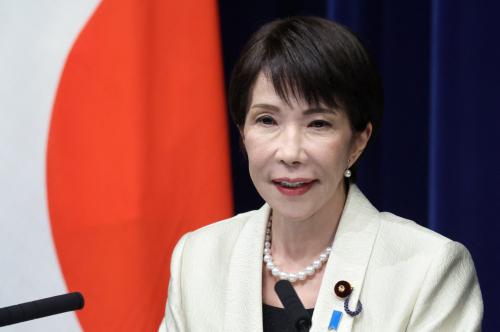
Japanese Prime Minister Sanae Takaichi will arrive in Washington this week with the goal of deepening the U.S.-Japan alliance at a moment of global economic fragility and spiraling conflict in the Middle East. Although the visit will be short, Tokyo had carefully planned it to allay any concerns of alliance drift. This is a serious worry, given President Donald Trump’s bone-deep skepticism of alliances. It is compounded by China’s expanding pressure campaign to punish Takaichi for her comment that a Taiwan contingency could rise to a survival-threatening situation—a precondition for Japan to implement collective self-defense measures. But as Takaichi walks into the Oval Office this week, her mettle will be tested in ways that had not been foreseen just a few days ago.
Summit plans
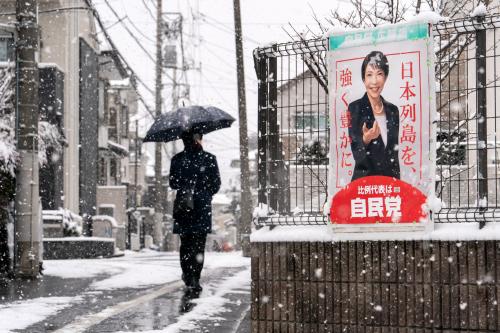
Having achieved the biggest electoral victory for her party in 70 years (a feat Trump claimed credit for), the prime minister’s standing in Trump’s eyes has grown since they last met in Tokyo. She will arrive with a robust public mandate and a wide Lower House majority to advance her economic and security reforms. And she comes well prepared to showcase Japan’s value as a key ally in Asia, even under the exacting parameters of Trump’s “America First” foreign policy.
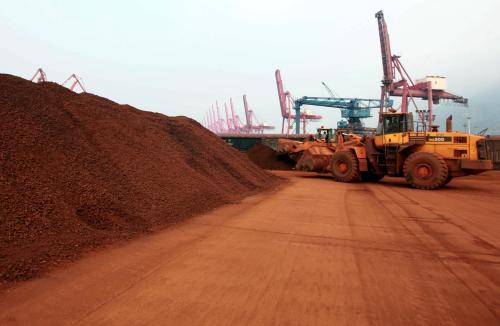
As part of its trade deal with the United States, Japan pledged $550 billion to a strategic investment fund. Tokyo has strived to be the first among other trade partners to implement investment commitments linked to tariff reductions. On February 17, Trump disclosed the first batch of projects under this initiative: a natural gas power plant in Ohio to provide electricity for artificial intelligence data centers, a deepwater oil export facility in Texas, and a synthetic industrial diamond plant in Georgia, for a combined total of $36 billion dollars. Despite the Supreme Court’s decision striking down U.S. tariffs imposed under the International Emergency Economic Powers Act three days later, Tokyo has remained steadfast in fulfilling its obligations. Takaichi is expected to announce additional projects worth an estimated $100 billion, possibly including copper smelting and refining, liquid crystal display manufacturing, and a nuclear power reactor. Tokyo’s decision is both pragmatic and strategic. The Supreme Court ruling removed only the emergency power tariffs while leaving intact the auto tariffs imposed by Trump under Section 232 of the Trade Act of 1974, which continue to weigh heavily on Japan’s economy. At the same time, reneging on the trade deal would disrupt the overall relationship.
Takaichi’s plans for Japan’s defense buildup and proactive security policy align well with the White House’s priorities on allied burden-sharing and deterrence in the Indo-Pacific’s first island chain. The fiscal year 2026 budget that the Lower House passed on March 13 includes a record $58 billion in defense spending. That same day, the Cabinet approved a bill to establish a National Intelligence Agency. Japan’s defense industry also stands to grow from targeted government subsidies and steps to loosen restrictions on exports of lethal weapons. These developments will undergird several expected deliverables in the Trump-Takaichi summit: deeper intelligence sharing and missile coproduction. According to media reports, Japan plans to announce its participation in the Golden Dome missile defense initiative during the summit.
Summit curveballs
Chemistry between Trump and Takaichi, rolling economic security investment projects, more expansive intelligence-sharing, and defense industrial base cooperation are all tailwinds for U.S.-Japan relations. But this progress may be drowned out by late-breaking Trump shocks that are shifting the goalposts for alliance deepening.
The Trump administration’s plans to rebuild its tariff leverage in the aftermath of the Supreme Court ruling could leave Japan worse off and will certainly signify divided purpose in addressing challenges to the international trading system. Newly imposed Section 122 tariffs were set at 10% to address (inexistent) balance of payments concerns. They could rise to 15%. Importantly, these tariffs will be stacked with “most-favored nation” duties, creating the possibility that the total tariff will exceed the 15% cap Japan secured in its trade deal with the United States.
Days ahead of Takaichi’s arrival, the U.S. Trade Representative launched its Section 301 tariff offensive with two investigations that include Japan: one on industrial overcapacity and another on the failure to curb imports produced with forced labor. This is a far cry from times when the United States and Japan cooperated on these issues. For instance, the first Trump administration participated in trilateral work (with the European Union) to reform global trade rules on industrial subsidies and overcapacity, while the Biden administration’s U.S.-Japan Task Force worked to prohibit forced labor in supply chains.
Trump’s war of choice in Iran touches a neuralgic chokepoint for Japan. The lion’s share of the country’s oil imports originates from the Middle East and traverses through the now-closed Strait of Hormuz. An energy supply shock that depresses economic activity, spikes inflation, tanks the yen, and roils the stock market puts Takaichi’s strategic autonomy and economic revitalization ambitions at risk. In response, the Government of Japan has ordered the largest ever release of its strategic oil reserves, but this may prove insufficient with no clear prospects for the normalization of oil shipments. So far, Tokyo has avoided designating the oil stranglehold a survival-threatening situation. Trump has abruptly called for several nations—including Japan—to send warships to keep the strait open. Future requests could include minesweeping assistance. These demands put the Takaichi administration in a bind, given its ambiguous position on the conflict. Tokyo is calling for de-escalation but has refrained from opining on the U.S.-Israeli military operation’s legitimacy.
In selecting mid-March for her visit to Washington, Takaichi aimed to impress on Trump how crucial deterrence in the Taiwan Strait is for regional stability ahead of Trump’s upcoming meeting with Chinese President Xi Jinping (scheduled for the end of the month, but now likely to be postponed). Regardless, facts on the ground are shifting quickly as the United States redirects military resources from Asia to the Middle East—from naval vessels to THAAD missile defense launchers and Marines deployed in Okinawa.
Across the critical fronts of trade, energy, and Indo-Pacific deterrence, Takaichi will not find much reassurance since much of the current maelstrom emanates from Washington itself.
Author

Related Content
-
Acknowledgements and disclosures
The author would like to thank Ariqa Herrera for research assistance, Adam Lammon for editing, and Rachel Slattery for layout.
The Brookings Institution is committed to quality, independence, and impact.
We are supported by a diverse array of funders. In line with our values and policies, each Brookings publication represents the sole views of its author(s).
Commentary
Late-breaking shocks and shifting goalposts: Takaichi’s highwire Washington visit
March 17, 2026