



Why has the Chinese Communist Party survived so long, and how does it rule? Jon Czin and Ryan Hass sit down with Minxin Pei, editor-in-chief of China Leadership Monitor, to unpack China’s political system, the party’s historical dynamics from Mao Zedong to Xi Jinping, and the government’s foreign and domestic priorities.
- Listen to The Beijing Brief on Apple, Spotify, or wherever you like to get podcasts.
- Watch episodes on YouTube.
- Learn about other Brookings podcasts from the Brookings Podcast Network.
- Sign up for the podcasts newsletter for occasional updates on featured episodes and new shows.
- Send feedback email to [email protected].
Transcript
[music]
HASS: Hello, you’re listening to The Beijing Brief from the Thornton China Center at Brookings, part of the Brookings Podcast Network. I’m Ryan Hass, senior fellow and director of the China Center.
CZIN: And I’m Jon Czin, fellow and the Michael H. Armacost Chair in the China Center. The Beijing Brief is a biweekly podcast focused on unpacking the forces shaping US-China relations and China’s political, economic, and technological ambitions.
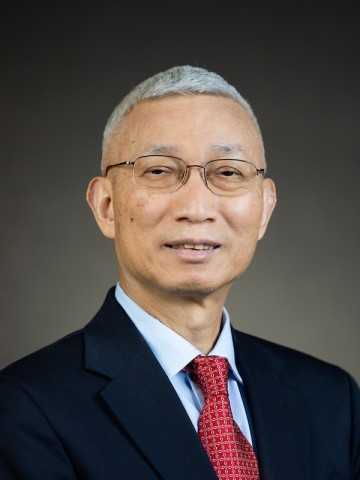
So our guest today, we are delighted to have Professor Minxin Pei, the Tom and Margo Pritzker ‘72 Professor of Government and George R. Roberts Fellow at Claremont McKenna College. That’s quite a title.
He is also a non-resident fellow at the German Marshall Fund just next door, and has written numerous books analyzing Chinese politics, including most recently, The Broken China Dream: How Reform Revived Totalitarianism, as well as The Sentinel State: Surveillance and Survival of Dictatorship in China, both of which I can attest are fabulous reads.
He’s also currently editor-in-chief of the China Leadership Monitor, a quarterly publication on Chinese elite politics, national security, and economic policies and social issues, which Ryan and I both have the good fortune of contributing to regularly. The China Leadership Monitor just released its 89th issue, which focused on China’s emerging grand strategy and featured articles from both Ryan and I and several of our colleagues, including Minxin.
Minxin, we are delighted to have you here today.
[1:17]
HASS: So today we’re gonna take a step back and we’re going to try to assess how the Chinese Communist Party rules, what it fears, and how it considers its own longevity. The party is often described as a black box because many of its internal decisions and power struggles are not visible to the outside eye.
So today we’re going to ask Minxin to pull the curtain back to help us understand internal power dynamics within the Chinese Communist Party, methods of regime security, and his views on the trajectory of the party. Why has the party survived so long and, and where is it going to go from here?
So to get us started, Minxin, can you just help us understand on a scale of one to 10, how secure do you think the Chinese Communist Party’s grip on power is today in comparison to where we were, let’s say, 15 years ago?
[2:04]
PEI: I would still give it, nine, 9.5. I think it’s very secure. That is, if you want to assess whether a regime is in mortal danger or is in robust health, you look at several things. Whether there is organized domestic opposition that can challenge the political monopoly of the Communist Party. Whether the Communist Party itself is deeply internally divided along lines of policy, ideology, personality, and whether the regime faces mortal external threat.
I think relative to 50 years ago, the external part, it has deteriorated, because the U.S.-China competition. But internally, despite declining economic performance, we have not seen emergence of organized opposition. I’m sure there are disagreements, resentments within the Communist Party. But the division within the Communist Party is nowhere near what we saw in the Cultural Revolution.
When we assess the health, the threat, or the state of Chinese Communist Party rule, it’s always useful to benchmark, to have some frame of reference. So because I grew up in China and I would say, “Is the Communist Party today in more dire strait than in 1989?” This is something we can relate to. Probably not, right? Is the Communist Party in more dire strait than, say, during the Lin Biao affair, 1971, or on the eve of the death of Mao or right after the death of Mao? Clearly, the Party is in much better shape.
So I think relative to these historical events and benchmarks, I would say the party today, the party can always feel insecure, be because that is a very different issue. The party is paranoid. That’s part of the regime characteristic. But objectively, I think it’s in decent shape.
CZIN: Yeah. I mean, if anything, you can make the case that that perpetual anxiety that’s baked into the system, it’s part of why they survive.
PEI: Yes.
CZIN: Right? They’re always worried that they’re going to to lose their grip.
PEI: Yeah. That is true, but we also have to be cognizant of the costs of having perennial paranoia. Right? Because you know, if a, if a human being lives that way, that is a very unhappy-
CZIN: Yes
PEI: human being, so. And a regime can be that way, too.
[4:41]
CZIN: They don’t seem happy to you? You know, it’s interesting that you describe the relative health and resilience of the regime, right, especially given what you argue in your last book, right, where you, the, where you title it The Broken China Dream. Right? And in particular, you describe this change that’s happened in the reform era, or maybe we’re really in the post-reform era is a better way to put it, that it has become a totalitarian regime again.
How do you benchmark that? How do you make that judgment that the regime has shifted from being, and I know maybe this is overly semantic, from being merely an authoritarian regime, right, to being a totalitarian one?
[5:13]
PEI: Yeah, I think this is probably the most controversial aspect about the book, the title. I get a lot of pushback from my academic colleagues because they think totalitarianism has a set of features that you have to tick every box to call a regime totalitarian.
I would like to use a continuum. That is, at one end, China can be called authoritarian. At the other end is totalitarian. And I give them, give my critics a set of benchmarks. Say, personality cult, which is a feature of totalitarian rule. You have an at least an attempt to revival orthodox Marxist Leninist communist ideology. You rely on the rule of fear, both vis-à-vis society and also within the regime, which is manifested in the perpetual purge.
And then aggressive foreign policy. And on the economic front, you see a shift away from free market to more state control. And then propaganda, monopoly of information, these are all the sort of hallmarks of totalitarian regime.
I think, and I think, think a lot of people might agree with me, that is if zero being authoritarian, 10 being totalitarian, you cannot make the case that China is below five. It’s at least above five. Whether it’s a nine or eight, it’s subject to debate. So it’s more totalitarian than authoritarian today.
[6:48]
HASS: So you’re suggesting that there’s been an evolution from authoritarianism to totalitarianism. How much of this do you ascribe to the current leader? And if it isn’t personalistic to Xi Jinping, what is driving this this evolution that you’re describing?
[7:02]
PEI: Yeah. I would say this transformation, 75% is his personal contribution. By the way, the old totalitarian system has never gone away. The economic component was 80% dismantled. The ideological part probably 95% gone, died of atrophy. But the organizational, the institutional, this coercive institutions of the system remain basically intact. And the Leninist party structure was basically kept in place when Xi Jinping came to power.
So he could rely on the the surviving institutions of totalitarian rule to bring back the system. And because I think in his case, his worldview was formed in the nineteen … late 1950s, early ‘60s, when China, was seen as a functioning totalitarian system. And he tried to bring back that imagined golden age of Chinese communism.
So I think here it was really driven by a lot of personal ambition, personal vision. We can entertain an alternative world. Li Keqiang, if he beat out Xi Jinping in 2007, we might see a very sort of a Hu Jintao-like regime rather than what we have today.
[8:37]
HASS: So after Mao Zedong dies 50 years ago, you know, Deng takes over, and then Jiang Zemin, Hu Jintao. There is a sense that there is a growing pragmatism, decentralization. And now we’re seeing, you’re describing sort of a reversion back to the way things were before. Is Xi Jinping the norm or is he the exception? How, in your mind, how how would you rank him, you know, in sort of the archetype of a Chinese leader?
[9:07]
PEI: I wouldn’t say norm. That system exhibits wild swings. That is, one set of rule will create a situation that will enable the system to swing dramatically in another direction. In the case of Xi Jinping, if I have to make a judgment, if we did not have Xi Jinping, we would have somebody who would want to behave like Xi Jinping because the system would not pose real obstacles, and it would work really well for the dominant leader.
But as I said, I prefaced my remarks by saying that the system is prone to wild swings. If you have a leader like Xi Jinping, even though, of course, he’s probably going to hang around for another ten, fifteen years, that is because of the policies pursued by that kind of leader, you’re going to have a situation where once the leader is gone, the new leader will have incentive to swing the policies back.
So, I don’t know whether I answered your question, but I would say that this kind of system tends to produce leaders like Xi Jinping. But because leaders like Xi Jinping tend to create a lot of problems for the system, so the system will somehow adjust.
CZIN: This evolution all sounds very Hegelian. It’s like dialectical materialism, right? You know, the thesis produces its antithesis. I want to pull on that thread a little bit, I mean, because Xi is now in his 70s.
PEI: Yes.
[10:49]
CZIN: Right? And he’s gearing up for his fourth term. I mean, this is something I’ve wondered about a lot, including in my writing. I mean, do you see evidence that there will, or do you think there will be some kind of backlash to Xi Jinping, some kind of course correction from the system once he exits the scene?
PEI: Yeah, I like the word once he exits the scene, because I do not foresee any serious course correction when he’s on the scene.
CZIN: Yeah.
PEI: Because basically, he will be correcting his own course. Yes. It’s, uh, very difficult.
CZIN: He is the scene.
PEI: He is the scene, yeah. He’s the… So, then, then you look at pic- again, I like to go back to Chinese history. Mao. It was inconceivable when Mao was there, but once Mao was gone, it took less than a year for Deng Xiaoping to return to the scene. It took, like, 15 months for Deng Xiaoping to take over.
CZIN: Yeah.
[11:44]
PEI: And then China was different. The bigger the mess when Xi exits the scene, the more likely, the more dramatic the course correction will be. Because the Party is like a corporation. It needs new business model to survive whoever the new CEO is. So that is that’s baked into the party’s DNA.
And the second, I think, the sort of there’s an element of uncertainty is who the exact successor is. Depending on, again, past experience after Stalin, after Mao, we’re likely to have a period of weak leadership, because that’s how succession takes place in a strongman system.
Then, you know, could there be another Deng Xiaoping? Could there be another Khrushchev, who will be strong enough, skilled enough to manage a course correction? So that, that’s why I think the likelihood is there, but the certainty is not.
CZIN: I mean, this gets to an idea we were talking about earlier today. Right? I call this the the pilot light theory of Chinese politics. Right? That we want to leave the pilot light on because we can get back to a leader after Xi who resembles the leaders we dealt with before Xi, right, Who I think were either, you know, relatively more reasonable or accommodating when it came to U.S. interests, and certainly less directly conflictual.
PEI: Yeah, but US policy should not be based on that sort of contingency. Right? Because I think the U.S. would be much better off doing things it can control. What happens inside Zhongnanhai is not something that we’re good at controlling.
[13:35]
HASS: Minxin, you’ve been talking about how the Chinese Communist Party adapts to changing circumstances to ensure its longevity. And for a long time economic performance was a source of performance legitimacy. As China’s economy cools and slows down, where do you see performance legitimacy coming from to sustain and strengthen the the Party’s grip on power?
[13:59]
PEI: I would say still matters if unemployment goes through the roof, leadership inside Zhongnanhai will be very worried.
Today it’s not as paramount as, uh, say, during Jiang Zemin era or Hu Jintao era. But still matters because the, uh, the party just cannot rely simply on, say, repression to rule. Performance legitimacy now probably the definition is broader. The tech competition with the U.S. is is once even though most ordinary Chinese benefit very little from this tech competition. They want to say, “We, we are doing much better than the Americans expect us to.” So that is one thing.
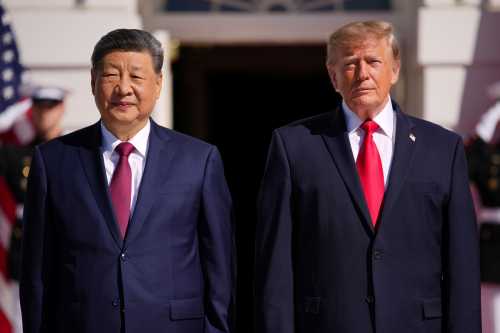
The other is sort of the ability to gain international respect, recognition, sort of the nationalistic aspect. Xi Jinping goes– actually comes to Washington. That’s performance. It’s a diplomatic performance. He is one of the few leaders President Trump actually takes seriously. Right? That’s that’s one thing. So, it’s the tech performance diplomatic performance, and the other is just the minimal economic performance.
[15:21]
CZIN: So that gets to some of the the strength that the system has. What do you think the, the leadership sees as its own weaknesses or vulnerabilities? Like, what do you think really gives Xi fear and anxiety in this current moment, if anything?
[15:35]
PEI: Yeah. Well, here we have two sort of separate people who have, as we start at the very beginning, who have incurable paranoia. So in that case, weaknesses can be imagined. But for most of the sort of more pragmatic, competent people, if they go down the list, is that the structural weakness is they don’t have a good incentive structure.
We’re talking a little bit more so in abstract, how can they incentivize this gigantic system to do things that would be good both for the party and for the system? The interests are not always aligned, so this is one.
The second is that they’ve lost a sense of control. That’s why Xi Jinping likes to recentralize, to reimpose some kind of discipline over the economy. Because the Chinese economy today is driven in large part by market forces.
Externally, I think they do see the U.S. as a existential threat, because for for a long time, my joke is they never stop talking about the U.S. as existential threat. But for a long time it was not true. Now it is true, so this is like the boy who cries wolf. Right?
Also, I think fundamentally they do believe that if they loosen control a little bit, society- will rise up. They actually do fear their own people. So that’s, so they can see a lot of sort of enemies coming out of the wood works if the great firewall of China stops working for a day. So I think these things they do see quite seriously as as their weaknesses.
[17:18]
HASS: You wrote a book recently called The Sentinel State, which looks at how China deals with its own anxieties inside the country. Can you walk us through how does domestic surveillance work in China today? And how important is it for the Party’s sense of legitimacy and longevity?
[17:38]
PEI: I wrote the book 2021, 2022, four years, so I think on the technology side, I might be outdated because of the adoption of technology. But the basic system remains probably unchanged. That is, it’s mostly a organization-based system. That is, they do not flip on switch and say, “AI, you do this.” They are very well organized departments, network of informants. They hold periodic meetings to communicate leadership priorities. And they rely basically on the Party state’s hierarchical system.
So every year, what the Party would like to accomplish in domestic security, the central Political Legal Commission would have a meeting in January, then within two months, down to county, everybody else. Then they will assign specific tasks. So they have already built a a network of informants.
My guess is that it’s 10 million people at least. So it’s, it’s a vast network. They monitor probably 70 million people. So it’s really well organized. Tech came into the picture only about 15 years ago , but they’ve made a lot of progress.
The system is very effective in monitoring known threats. If you are on the blacklist, then they know what you are are up to. They monitor your, movements, your speech, your communications. The system is not very good at preventing people not on the list from engaging in activities the government doesn’t like.
That explains the White Paper movement. Because you would say, okay, the White Paper movement happened in this very tightly, you know, zero COVID don’t– it still happened because the participants were not on the list. They could not.
It’s probably one of the main components of the regime’s toolkit, but it’s not the only one. It relies on it a lot more, uh, than it used to. Used to rely on economic performance to gain public support. Now it relies on the rule of fear a lot more than it used to because the performance has declined. But I would bet the system, the regime’s threat level will go up a lot if this system performs poorly.
[20:19]
CZIN: That’s interesting because, I mean, what it sounds like you’re saying in some ways is that there’s kind of a spotlight effect, right, for the surveillance state. Like, if you’re in their sights, then God help you. Right? But that means there’s large swaths of blackness that they’re not necessarily attuned to.
[20:34]
PEI: I think this is where I think technology, AI in particular, might come into play. Because when I was doing the research, they really did not have that kind of capabilities. Today, probably they they can because all they need to do is to suck up all the stuff you’ve said, written, and then build a file, and then they say, “This is green, red.” They give you code. Yeah, so this is what I worry about.
They initially try, remember social credit system? It was too complicated. But I think AI, large language model, might give them that capability. The old system, the system I have done research on, can monitor about 1% of the population. For China, that’s 50 million, 40 million people. That’s a lot.
Any incremental increase will sort of increase the cost exponentially. Because if, just, if you monitor 2%, it means you have to double the capacity relying on the old system. So that’s, that means the system can only target high priority targets.
CZIN: No, it’s a it’s a it’s a great point because I mean, that’s like monitoring a medium-sized European country. And even when you talk about something as vast as a network of informants of 10 million people, 10 million people–
PEI: You have to pay them.
[21:56]
CZIN: Yeah, yeah, you gotta pay them. Yeah. And 1.4 billion is always an enormous denominator. Right? So I mean, aside from the technological component, I mean, are there other essential facets of the surveillance state that you see evolving across the Jiang and Hu and then into the Xi era?
[22:14]
PEI: I think the idea emerged toward the end of the Jiang era. The Chinese Communist Party are real believers in technology. I think they believe in technology to a much greater degree than their counterparts in liberal democracies. They’re called technological utopians. The slogan is using science and technology to strengthen policing.
So the Jiang era, they began to build the so-called Golden Shield project, which is informatization, digitization of policing. Then in the Hu era, they built the Skynet system, which is basically a visual and sensor surveillance of cities. Then in the Xi era, he extended that system to the countryside, and he upgraded with facial recognition.
So all of them, all three of them, is on a continuum. I think each of them was helped by China’s, growing wealth, access to technology, so they could do more. They’re, they’re doing things that their predecessors could not even dream of.
One anecdote I often want to cite is that in the course of doing my research, I dug up a lot of old police, history they called Gazette. So in the 1980s, they were talking about technological improvement. Guess what they were talking about? They got a camera. So they could take pictures of crime scene.
Just, just imagine, right? Not today.
One point I want to make is that the system, you really have to have both. You have to have well-organized networks, leadership level, policing level informants. Then you have to have capable technology. You just cannot rely on one of them only because they’re very, very limited.
[24:12]
HASS: So a lot of what we’re talking about is how the Chinese Communist Party assesses and observes the population, and it is striking that Beijing spends more money on domestic security than it does on its military, which is, I think, an indicator of what you’re describing, the degree of anxiety that exists.
But oftentimes it seems like regimes such as the one in China face a greater threat to their survival from within than they do from mass movements. So how how does the party manage that risk inside its system?
[24:46]
PEI: You would have two very different models of risk control, the Xi model and the Jiang-Hu model. Before Xi, basically they try to make fellow Communist Party members stakeholders. That is, you are part of the system, you gain benefits, your children are taken care of, and the result is crony capitalism. Right? But everybody benefited and they on the take the, they’re invested. They’re shareholders of the system.
Xi did not like this. So he reverted to a very different system, and it’s a rule of fear system. He made everybody feel afraid. And the tool is perennial purge. He wants to shoot. If you’re disloyal to the party, you lose everything. So I think at some point we’ll have to assess which system works better in terms of eliminating internal dissent.
The Jiang-Hu model, the threat will come from within society because the system will become so rotten. it will lose performance legitimacy, and society will, it will face a backlash. The Xi model, I think, it eliminates the direct threat from within the regime because that kind of rule of fear is effective. We should not underestimate the role of fear.
But the consequence actually is quite similar because, leaders in that, officials in that system will be frozen in place. They are not going to do anything. They lose incentives. They are now shareholders. Why should they work for the system? So you get stagnation. And people become upset. So they travel in two very different directions, but they end up in the same place.
[26:36]
CZIN: It’s interesting, because I remember when we talked about your book back in the fall when it first came out, you use this phrase in the book, you describe their system as currently in a neo-Stalinist moment. Right? But when we talk about the surveillance and the stagnation in particular, you know, what it reminds me of is, it’s, or what sounds like you’re describing is more as the Brezhnev era.
[26:54]
PEI: Brezhnev era, yeah. Right, yeah.
CZIN: Right? Where you have an aging leader. Not much change or originality in in in policy trajectory. What do you think of that?
PEI: Well, neo-Stalinist is, what what I refer to is really neo-Stalinist tactics. Because I think what Xi has been doing is very similar within the Party. Purge, show trial, personality cult, very Stalinistic. But the result is Brezhnev-like.
CZIN: Yeah.
PEI: That is so the two are not mutually exclusive.
CZIN: Exclusive. Okay.
[27:28]
HASS: So we’ve spent a fair bit of time talking about internal governance. I want to shift the lens a little bit to look towards external ambition, because you’ve recently written a important piece in China Leadership Monitor about China’s grand strategy. So what do you think China’s grand strategy is? What are they trying to achieve? What are they trying to avoid?
[27:44]
PEI: I think there’s a evolution. In the Jiang and Hu era, obviously it was very pragmatic. It was to free ride on the U.S.-led order, build up China’s internal capabilities, and then see what they can do. It was not very ambitious in the short term, but ambitious in the long run.
The Xi era is very different. He came into office with a set of objectives, very ambitious, very risky. He nevertheless did what he wanted, and he encountered very strong pushback, mainly from the U.S., manifested in the first round of trade wars. I think the first trade war, 2018, 2019, taught Xi a great deal. He came into office with ambitious goals, ambitious risky moves, without a good understanding of the consequences of of his actions.
And then the trade war and then Biden’s policies made him aware of China’s vulnerabilities. So we had a different kind of grand strategy, I think a a strategy that emerged over time after the first trade war, that focused In the near term on the reduction of vulnerabilities.
Because if China is always on the reacting mode, it just cannot regain the initiative, because the Communist Party and Xi Jinping would like to regain the initiative, the way he sort of behaved 2013 and 2016.
And then the second one is they try to build up partnerships and the Sino-Russian partnership being the centerpiece of it. Because China is quite isolated in, you know, in terms of having genuine, significant partners that share its global vision. And Russia is one. One and only, probably. Well, there are others that cannot bring a lot to the table.
And third, their grand strategy is, in my piece I used a favorite Maoist concept, “protracted war.” They see this as open-ended, prolonged. They believe that the shift in balance of power with the U.S. from initial disadvantage to China to evolving a more favorable balance, that would enable them to regain the initiative. So they they they are indeed playing the long game in this case, but the long game driven by strategic necessity.
I have to say today probably they have a more realistic appreciation of power balance than when Xi Jinping came to power.
[30:46]
CZIN: And do you think at this point that they have in fact regained the initiative? I mean, I argued in my piece that that I think they have. And then a related question, do you think in this moment of strategic stalemate that the feeling is more one of anxiety, which we keep talking about, or one of confidence in their foreign policies?
[31:06]
PEI: Within China you always have different views. The problem for people like us who study China is that we do not see evidence of opposing views. We always see the the official version. And you have to wonder, you know- Is that all there is inside the system?
Because this, the Chinese Communist Party has a lot of talented people inside. Are they just as dumb as, sort of propagandistic, optimistic as sort of the worst people inside the Chinese system? So this is one, so we don’t know. I guess there must be some. Right? Because if you act according to some kind of fiction, imagined world, then they, they will stumble back into a set of disasters.
I would say today I do not think they’ve regained initiative. I have to say they can behave aggressively without regaining the initiative. So there is a, so I, I try to pass, okay? Second, they still feel vulnerable. They look at the big picture. They’ve done more than we expect them to succeed.
I think they’ve done better in terms of tech, but finance and a lot of technology, they are still vulnerable. That’s why they are buying time. I think their strategy is as this period of stability, relative stability is very valuable to them. They want to keep it going as long.
And in terms of initiative, it’s not that they regain, they’ve regained initiative, but what the U.S. has lost initiative. Because of its own policy, because of distraction. How can you regain, how can you keep pressing China when you’re involved in a war. Right? In a in a trade war with practically everybody and in a real war in Iran.
So, I think Chinese leaders probably are aware of this, as as this is a period of strategic opportunity. The window is not going to last forever. They’ve got to maximize this period. My question is whether they can.
[33:12]
HASS: So let’s for a second assume that they do, that they use this moment of strategic opportunity to positive effect for China’s interest. They gain confidence in their ability to manage and advance their interests on the world stage. As China becomes more confident in this scenario, will they become more or less assertive externally?
[33:36]
PEI: I think the instinct of the system is to behave assertively because these guys believe in might makes right. Right? They repeatedly display this in relation to its neighbors. So why should they behave differently? They even do this with respect to the Europeans.
But that would be bad for China. China will not, on its own, be the dominant power. It has to work with others. So if they’re smart, they will use their power the way the U.S. exercised its power until recently, which is restraint. Which is to provide, to show people that you don’t have to fear Chinese power. It can provide some tangible benefits, but I don’t think it will be adopted, that’s [ ].
[34:34]
CZIN: So given what we’ve been discussing, what is your prognostication going forward? Xi’s about to start next year his next five-year term. What do you think that’s gonna look like? And specifically on the world stage, how do you think his behavior might change in in this next term?
[34:51]
PEI: First I think he’s, in terms of power, he’s going to look for some policy that can stabilize the economy, that can get the economy back on its foot. He’s done well technologically. On the world stage, he probably has broad vision about how to regain the initiative, how to show to the rest of world that China can take what the U.S. has thrown at it and still come out basically intact. So this is his broad vision.
But, you know, too many moving parts five years ahead. So first we want to see whether within the U.S., after 2028, there’s a course correction. Whether U.S. allies will regain their confidence in the U.S. leadership. That’s huge. Right?
And then, you look at the war in Ukraine. That is, if Russia loses, that, that’s gonna be huge blow to China, so that will be a factor in how Xi behaves. And then of course, I think something you said today is that what happens in Taiwan after 2028. So a lot of sort of contingent factors that we have to take into account.
But broadly speaking, I think his goal is to improve China’s position economically, strategically, in terms of security. And then once he’s there, he has a lot more room. Because today he’s less vulnerable than, say, five, six years ago, but he’s still vulnerable. China is still vulnerable.
HASS: Well, Minxin, this has been a really rich conversation that I think will add a lot to the discourse around China and the United States and around the world. You’ve told a complicated story, a story of the Party feeling pretty secure internally, and yet at the same time growing more totalitarian, in in your words, increasing its use of surveillance.
But you’ve also observed that the party adapts to changing circumstances, and that even as it is becoming more centralized and controlled now, that doesn’t preclude shifts in the future.
And so I I appreciate you pulling the curtain back for us, helping us better understand how the Chinese Communist Party operates and how it pursues its ambitions abroad. Thank you for being with us.
PEI: Well. Thank you for having me.
[music]
HASS: On behalf of the team at the John L. Thornton China Center, thank you for listening to The Beijing Brief. This podcast is produced by the Brookings Podcast Network. For more in-depth analysis from our team, please visit the China Center on the Brookings website at Brookings dot edu slash ChinaCenter. You can also subscribe to our monthly newsletter, the China Bulletin, for the latest updates.
Our thanks to the production team, including supervising producer Ike Blake, senior producer Fred Dews, producer Allie Matthias, and video producers Chris Chang, Daniel Morales, and Teddy Wansink. Rachel Slattery designed the show’s artwork. We would also like to thank Alex Dimsdale, Joyce Yang, and Amanda Lee, as well as our colleagues in the John L. Thornton China Center, Foreign Policy, and the Office of Communications at Brookings for their support.
And to learn more about this podcast, go to Brookings dot edu slash TheBeijingBrief or wherever you like to get podcasts.
Participants
Guest
Hosts


The Brookings Institution is committed to quality, independence, and impact.
We are supported by a diverse array of funders. In line with our values and policies, each Brookings publication represents the sole views of its author(s).

Commentary
PodcastHow strong is the Chinese Communist Party’s hold on power?
Listen on
The Beijing Brief
September 15, 2026