




The Trump administration has used executive orders to expand immigration enforcement, overhaul elections, and gut diversity, equity, and inclusion efforts. Keon Gilbert, director of the Race, Prosperity, and Inclusion Initiative, discusses the disproportionate impact on Black Americans with Jonathan Cox of the Congressional Black Caucus Foundation and Tonantzin Carmona, a fellow at Brookings Metro.
Access the CBCF Executive Order Tracker Understanding What’s at Stake for Black America.
The podcast audio has been edited for length. Listen to the full discussion using the audio embedded below.
Transcript (full audio)
[music]
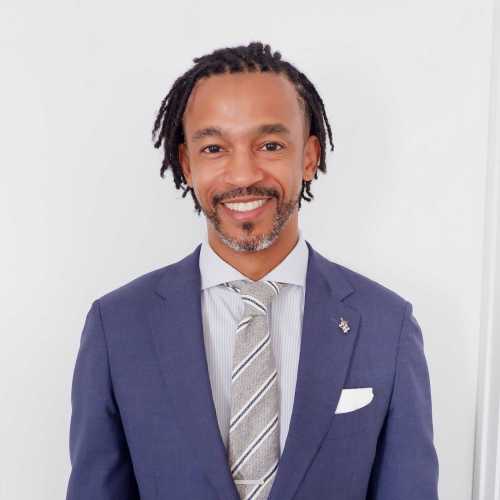
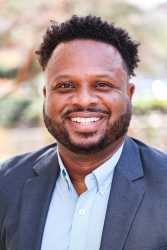
GILBERT: Hello, this is The Current from the Brookings Podcast Network. I’m Keon Gilbert, senior fellow in Governance Studies and director of the Race, Prosperity and Inclusion Initiative here at Brookings. I’m joined today by two scholars and colleagues, Tonantzin Carmona, fellow Brookings Metro, and with Jonathan Cox, vice president of the Center for Policy Analysis and Research at the Congressional Black Caucus Foundation. Welcome to you both.
Our conversation today is centered on executive power and executive overreach. It’s been noted by a number of scholars that executive power has been expanding for over 100 years. The Brennan Center notes that it’s growth accelerated after 9/11 on national security issues. Now the Trump administration is claiming further authority for the executive branch, attempting to push far beyond what the Constitution prescribes.
Brookings scholar Bill Galston also suggests that this battle over the proper extent of executive authority goes back to the country’s founding. It was one of the most contentious issues during the Philadelphia Convention that drafted the U.S. Constitution, as he describes in some of his work. He also notes that members of Congress have become less willing to challenge presidents of their party, even when the chief executive is exercising quasi legislative functions or acting without congressional consent in matters that arguably require it.
So that sort of helps to frame our conversation for today. Part of this work is also to recognize some of the incredible work not only of our scholars, but in particular of the CBCF, who have been tracking a number of executive orders and their impact on Black communities and other communities of color.
And so that also helps to sort of set the tone and set the stage for our conversation today. We’re going to begin with Jonathan Cox talking a a little bit about the executive order tracker that the CBCF has developed.
COX: Sure, yeah. Happy to share about that. Thank you, Keon. So one of the things that we did with the Foundation is we were really trying to be thoughtful around all the flurry of activity that came out of the presidential administration once President Trump returned to office. All the executive orders that came out knowing that these were going to be things that were shifting the landscape of federal policy and how the government operates, how, you know, what life looks like for people.
And so in thinking about how we could be most useful, we decided that it would be great to provide a mechanism to track what the executive orders are that are being put out that have the most significant impacts on Black communities, and be able to break those executive orders down in very plain, simple to understand language for people so they know, like, what it is, how it would be enforced, what would be the impacts on Black communities. And then for us also, what are members of the Congressional Black Caucus saying and doing in response.
And so we thought this would be a useful resource for people to understand the the shifting landscape around them.
GILBERT: Great. And we certainly thank you all for putting this together. It’s it’s an incredible, useful resource. Tonantzin, how would this be used for some of your work? What’s your response to this tracker?
CARMONA: Sure. So, you know, my research focuses on wealth and inequality, a little bit on financial technologies, but a lot on also state and local government work. And so to kind of translate what is happening federally to local communities and vice versa, I’m constantly looking at legislation, executive orders, the laws. And so when I saw this tracker, I just thought, oh my God, thank you. This is amazing. As a researcher, it has everything in one place. But I love that you kind of took away some of the legalese and said, boil it down very simply, this is exactly what it does, and this is what it means for Black communities.
And I just think that piece to me really stood out, because whether you’re a policy person, a policy staffer, a researcher, or even a member of an advocacy group, a community organization, at the end of the day why a lot of us do this work is because we care about the impact to people. And so I really love that it was organized in all in one place, but it’s really boiling down to the things that really matter.
GILBERT: And Jonathan, I’m curious, what has been the response from members of the Congressional Black Caucus and sort of the broader community to the Executive Order Tracker?
COX: Sure. The response has been overwhelmingly positive. Right? Again, I think because of the way in which we put it together, people see it as a resource that, again, it’s very easy to understand. It breaks down very complex language that the executive orders were written in and brings it right to the people so they understand. So members of the CBC are very grateful, obviously because they can share this with their constituents around executive orders, executive actions, and the impacts that they might see in their communities.
But then also, because we are uniquely pointing out what CBC themselves are saying, right, then it lets them, again, let their constituents and others know that, you know, I’m not just sitting by waiting while things are happening. We are engaging in work. We are responding to what’s going on. We are continuing to put forth legislation that will improve lives or counter some of the negative harms that we’re seeing build up from the executive actions.
GILBERT: Yeah, I think it’s really important that you’ve included voices and responses from elected officials. We often, you know, hear from them in sound bites or TV interviews, and they may not always be responding to something, an explicit executive order or explicit policy. Sometimes some of those conversations are very broad. So I think it’s really important that communities and constituents get to hear directly from their elected officials.
CARMONA: Absolutely. And I think too, because so much is happening all at once, constantly at such a rapid pace, I just love that it was all in one place from the policy to what’s changed to what your member said. Like, just I’m such a fan.
GILBERT: And the fact that you’re updating, and I think that that’s also really important. I think people often look for timely information. I think this is definitely a useful tool.
To Tonantzin’s point about things are rapidly changing
CARMONA: yes
GILBERT: One of our topics for discussion today is to talk about voting rights and democracy. And so there has been a Supreme Court decision on the Voting Rights Act, which was put into place in 1965, several months after Bloody Sunday attack on Civil Rights marches in Selma, Alabama. It’s been about six decades. And this has been one of the most consequential laws in the nation’s history preventing discrimination against people of color at the ballot box and helping to elect thousands of Black and Hispanic representatives at all levels of government.
The Supreme Court striking down a voting map in Louisiana, and with it dealing a blow to this landmark Civil Rights law has opened the door for states to redraw their congressional maps in ways that could affect elections for years. And so, with part of that backdrop, what is your response to the Supreme Court’s decision?
COX: I mean, obviously it’s overwhelmingly negative. Right? When I think about the discussion that, you know, we’re engaging in today connected to the executive orders, I’m just thinking about the ways in which a lot of this, these executive actions, the consequences of these and the impacts of these are going to be exacerbated even further by this recent SCOTUS ruling. Again, pulling back decades of hard won victories around voting rights, it’s just going to make it more difficult for marginalized communities, in particular Black and brown communities, to be able to vote. Right?
Looking at what the potential impacts are going to be and one of them that comes to mind immediately, particularly as connected to the work we do with the Congressional Black Caucus, is that the potential for loss, the significant loss of a number of Black representatives that exist in the United States Senate and in the House of Representatives. We’re likely going to see the biggest drop in that that we’ve seen since Reconstruction, in history since we now have the largest number of Black representatives.
So yeah, that’s just one thing out of many that I’m, thinking about as we’re kind of immediately responding to recent decision by the Supreme Court.
CARMONA: I would just say, yeah, it was incredibly disappointing and I was looking for actually some of the responses from the members of the Congressional Black Caucus. And to me it was interesting that it’s, like, okay, you suffered these losses, but the work also must continue. And so I think something that was giving me a little bit of hope right now was also the renewed calls for the John Lewis Voting Rights Act.
There were also, putting my state and local hat on, is now thinking forward, what does that look like to make sure that we are impacting state elections now, like, really paying attention to secretaries of states, state AGs, state legislators, because they play an important role in our maps.
And so I want to say that I am shocked, but I think right now with everything that’s been happening, it was just more like a blow. All you can feel is, oh my gosh, all this progress that was made, completely, like, gutting Section 2 of the Voting Rights Act is a huge loss. But the work must continue. And I think that I I kind of want to make sure that whatever I can do as a researcher, like, support that more forward looking work now.
GILBERT: Yeah. And I’m curious in in terms of part of some of the work that needs to continue. So there’s several issues and concerns with the idea of sort of reducing access to to voting, and in particular to our ideas of a more inclusive democracy, of lots of conversations and discussions about citizenship requirements. And even federal voter verification systems to create a number of, sort of, ways that limit access to voting. And so what have you all been learning about either state, local movements to try to counter or to deal with some of these challenges?
CARMONA: On the voting end, I think obviously it’s, like, state legislators, like secretaries of states and AGs, which you can do. Local level to me was interesting because I ended up working on a project years ago to create a Chicago municipal ID, so a local level ID. And the idea came from the fact that there are a lot of populations that lack access to identification. And I think that just showed me so much of what we can take for granted if we have access to identification, but I think then that connection to voting becomes so much more important now in that there’s almost layers of the ways in which our rights and long, hard fought rights are being scaled back. And there’s, like, a coordination of how do we use every single lever to roll back some of those rights. So we have SCOTUS. Now we have these executive orders. The ID piece is a huge piece because it seems like, oh, it’s just a technicality of, like, you know, your proof of citizenship or whatnot. But I mean, there are about 21 million Americans, or voting age Americans who don’t have readily available proof of citizenship. I mean, that’s massive.
And so this is something that I think goes back to, you know, taking away voting rights and whatnot of Black Americans. Right now it’s being tied to immigrants, but I also think of women that will get impacted by some of these executive orders and then laws that are being tied to this. So it’s a lot to track, but I think more than anything, what I’m just aware of is that it’s, it feels very coordinated.
COX: Definitely coordinated. We’ve known some of this has been coming, and so, you know, you’re starting to see an opportunity for states, right, some of those local municipalities to try to enact things that would create positive change. Because, yeah, any new requirements around identification or to citizenship, right, are simply going to create additional barriers for people to be able to vote. They’re going to make it harder. Right? Like was already said, thinking about something like a passport, folks just don’t have. It’s expensive to get, it takes a long time to get it in the first place when you’re applying for it. Only about one third of Black Americans or one in three Black Americans have a passport. Right? So we’re looking at reduced access for folks there. The birth certificates, right, the assumption that people should be able to, one, have access to it and carry around their birth certificate at all times, which is preposterous on many levels. The idea that you’re going to carry this around just doesn’t make sense. And older Americans, other marginalized groups don’t even have access
CARMONA: young people. Yeah.
COX: To these materials. Right? College students on campuses don’t have access to these physical things. So you’re just creating another barrier for people to be able to get to the ballot box, right, to cast their vote, and which is extremely problematic. It’s just going to continue to disenfranchise eligible voters.
GILBERT: Yeah. Not to take away the seriousness of this conversation, but there definitely was a social media conversation about how people get access to their their birth certificates from their parents, and the struggles with being able to do that. And so that just sort of underscores, you know, a number of other other challenges, right?
Mm-hmm.
CARMONA: Very practical.
GILBERT: Yeah, exactly. Exactly.
So, Tonantzin, you, you mentioned some of the work that you were doing in Chicago to get voter voter IDs. Can you talk a little bit more about the process of that, and was there a database or anything that was created as a result of that?
CARMONA: Oh, oh my gosh. So with the IDs, we actually created them because there was a call from immigrant rights organizations that wanted access to identification for undocumented immigrants. And it wasn’t to vote, but in fact, the whole, the fear mongering of, well, if we give them IDs, they’re going to vote in mass. And I’m like, I looked for evidence, I looked for research. Like, none of this exists. But they used that to counter any ways of getting people identification because then they tie it to voting, it becomes this whole mess.
But in that process, we ended up working with young people, people experiencing homelessness, the elderly, like, I mean, it was whole swaths of like different groups you would not have considered that lack access to ID And that was kind of when we started to make the connections. And databases became really important at the state and local level because at that time, it was 2016, there were a lot of data privacy concerns, at least with the marginalized communities I was working with, that if we, you know, got subpoenaed at the local level by the federal government, your data could then go in their hands and they’d have a database of all of these people.
And so we had to design it in a way to take into account data privacy concerns. This is 2016.
Fast forward now, it is a huge issue where the federal government is in some ways not really respecting the privacy of American citizen data, American resident data, and sometimes sharing data that they should legally not be sharing. And so it’s certainly a concern that we should all be paying attention to because, you know, I think one clear example is that they’re using it, or there was that fear that they were using it, to share, you know, tax data with DHS to deport people. But there are all sorts of ways that your data could be used against you, whether you’re an immigrant or not.
GILBERT: And part of even some, you know, concerns with the EO tracker, raising questions about data security, data privacy, that certainly becomes a very important part in terms of thinking about, you know, whether it’s voter IDs or, you know, the federalization of voting. Any other, you know, concerns or that you want to raise?
COX: I mean the, just that idea you were just talking about, right, this federalization of the voting infrastructure and elections in this country just creates significant problems. Some of those we’ve already seen, some of those we can surmise based upon, like, analyzing what the executive orders are and how the administration has been acting thus far.
So a lot of the things we’re seeing with that are increased risk of errors in terms of voter eligibility. So how do you verify that people are citizens at, you know, those different things. Right? A lot of that’s being done online, which brings up questions around people’s access to broadband, high speed internet. Right? That’s just one aspect of that.
We know that some of the systems that have been in place have already to date misidentified people and classified them as non-citizens when they actually, in fact, were citizens and thus dropped them from voting rolls.
So again, this federalization of the system is not solving problems, it’s creating more issues and more problems. Many would think intentionally in order to remove people from being able to vote. Right? And we think about the fact that like Black folks are one of the most stalwart voting blocks, particularly for Democrats, right, in history.
And so, like, there’s a reason you you could see reasons for, depending on how you want to approach your understanding of it, you could see the reasons for for wanting to create some of those barriers through this this federalization of the voting process for folks.
GILBERT: Yeah, absolutely. We could certainly spend the rest of our time talking about this, but we do have a couple of other topics that we want to get to.
So I want to turn to the theme of immigration. In what ways could the expansion of federal enforcement powers across immigration and criminal justice intensify existing racial disparities for communities of color and other marginalized groups, both as program beneficiaries and as subjects of enforcement? And so I’m going to turn to to you first, Tonantzin.
CARMONA: You know, my work, I guess I’ve I’ve started doing more work on immigration recently, but I, I did this mostly in local context. And in that experience, you know, you learn that Black immigrants are more likely to be stopped, detained, or deported than non-Black immigrants. Right now we have about 5 million Black immigrants in the United States. And I think such a clear example of the way the federal, like, role in this can play out and exacerbate the issue comes down to like the example of \Minneapolis.
It’s no wonder that Minneapolis was, you know, targeted with increased aggressive immigration enforcement. And some of the ways that they justified it was because of prominent Black immigrant community, Somali immigrants.
What I worry about is the way that, you know, the ICE’s budget has tremendously increased, expanded significantly. But now there’s also the state and local context of it where there is an expansion of these things called 287G agreements, which essentially um deputize local law enforcement so that they can have certain federal immigration enforcement duties. And so you have federal that now just gets more expanded with state and local participating.
But one part of it that worries me is the way that local policing is going to increase its role in federal immigration enforcement. So if you think about why Black immigrants are more likely to be stopped or detained, it’s because it takes place with local policing. A regular traffic stop can now because of this expansion, quickly turn into immigration enforcement. you missed your taillights. They stop you. They ask, what’s your status? That gets you into trouble. I, I’m mainly just worried because it is expanding very rapidly and it goes beyond just federal actions.
COX: Yeah. I mean, I agree with all that, right, that increased interaction with law enforcement is a significant problem for Black communities. We know that the outcomes of that interaction with police for Black folks is usually not good. Higher rates of death, injury, et cetera. And so we know that’s a problem.
I also think about the fact that, you know, due to what’s been happening around, like, immigration and the shifting federal power around this, there are fewer pathways to citizenship, , for Black immigrants. One in five Black people in America, or Black Americans are either immigrants or children of immigrants. Right? So that’s a lot of folks that we think about having a pathway to the United States.
Just think about the the administration’s move to terminate the Temporary Protected Status for Haitians. Right? Although that’s been blocked right now, like, we see that they were actively pursuing that. And so there are just fewer pathways for those who are fleeing other countries where they need to come to the United States. We see limited immigration, particularly from Black and brown countries outside of the United States, to come here. So that is one of the things that I I think about as a significant problem with this as well.
GILBERT: Yeah, so it seems, you know, some of the concerns about immigration enforcement being a better coordinated effort with local law enforcement has kind of turned into maybe the darker side, in terms of some of the things that you raise in in the sense of more stop and frisk as just an example. And, you know, how does this continue to erode our our civil liberties, privacy concerns, and sort of the day-to-day treatment of Black and brown residents?
CARMONA: I, I think, you know, public safety as we understand it is definitely changing because of immigration enforcement. You know, when I do interviews with community groups, individuals, it was interesting in one of my conversations, they were talking about how they fear going out. And I was thinking gun violence, and they’re, like, no, ICE. And so just the fact that what we consider safety is changing for so many communities is really important. I think we should be paying attention to how we understand safety.
But none of this is helping us to feel safer or to feel freer. And I think I worry about, like, the lineage between what is happening and feeling like we’re in a more authoritarian type government.
COX: Yeah. I tend to think of it as like the domestic impacts and international impacts, right, with regards to some of this and and safety and how people are feeling. Right? And so we know that because of this increased federal power around immigration and the ways in which even local police have then been brought in, we’re seeing increased scrutiny for for folks when they’re trying to travel abroad. Right? There may be issues with people who want to live abroad. Thinking about now is a good time when lots of folks are saying, you know what, Hey, I want to leave the U.S. There might be some issues with that in terms of being able to get out.
A lot of this is also connected to accessibility of data, which is a big problem, because the expansion of power essentially gave access to federal agents, particularly with, like, DHS
CARMONA: yep
COX: and these other orgs to have access to information they did not have access to before, like, the criminal records of United States citizens, which they now have the ability to share with foreign entities. So again, that brings up huge data privacy issues and concerns around the information that they just were not able to access before and what they can do with that and how that they can be leveraged against marginalized communities, Black and brown people in particular.
GILBERT: And certainly national security issues as well.
Tonantzin, I want to come back to you just for a second because you raised this concern about public safety and the idea that in particular Latino communities, immigrant communities are changing their behaviors in lots of different ways. And so some of your work is also focused on the impact of immigration enforcement on small businesses and entrepreneurship. Can you say more about that?
CARMONA: Sure. So, and this actually does come up on the tracker too, so I’m going to try to tie this in. But, so I have been tracking a few things when it comes to immigration enforcement and small business. So it was tariffs, immigration enforcement, and small business supports. I did not originally think that those are going to be the things I was going to study, but in fact, I interviewed small businesses and local Chambers to see what are your challenges, what are the things you’re encountering? And this is months ago. And they kept bringing up those three issues.
And so you fast forward and all of a sudden the immigration enforcement kind of comes front and center and people are starting to note the way that it impacts business corridors, foot traffic. People don’t feel safe coming out. Workers are afraid to show up to work. And then businesses not only have to encounter that they are trying to a plan for tariffs and then the small business programs. And so I’ve been doing the series on that that piece of it.
Where I think it is really interesting, and I actually appreciated seeing in the tracker, is the piece about small business supports. So, you know, here we have this push around anti like, DEI measures. And so something that businesses are also having to to encounter is the way that programs that support either small business support or access to capital or procurement is being incredibly altered right now.
So they’re managing all of this stuff on the ground. And then anything that maybe would’ve served as a stabilizer is being dismantled. And when those executive order orders happen at the federal level, state level now is just starting to say, well, we don’t want our funding to get cut. So we’re also going to cut our own procurement and capital programs that support specifically Black owned, minority owned businesses at the state level.
One of the things that you mentioned on your tracker, and I loved it, and it was in the fact sheet, it was the way that that anti-DEI executive order would then look at specifically procurement and specifically the 8A program, which is supposed to support businesses in getting mentorship, technical assistance, and access to certain federal government contracts. That started under Congressman Parren Mitchell, also a founding member of the CBC. And the idea was to support Black entrepreneurs accessing federal contracts and other entrepreneurs of color. And so now you, you fast forward, and very similarly, it’s like all these programs that happened after the Civil Rights are now getting gutted.
And so that was just an area I was not anticipating going, because I was, like, immigration, tariffs. But then the small business supports that people rely on to build wealth, to advance. Those are also getting gutted in the small business space.
GILBERT: Yeah. What have been some of the responses from CBCF and CBC members about how this is a affecting entrepreneurship in Black communities?
COX: Sure. So I mean, one of the things that we did, we actually put out some research towards the end of last year, and pushed out again at the beginning of this year, around job loss. Right? So when we think about economic mobility for Black people, we can think about the federal workforce. Right? Black people make up a large chunk of the federal workforce. Almost a fifth of the federal workforce as as of 2023. And so what we’ve seen a result of some of the executive actions in these anti-DEI policies are the cutting of jobs for Black people in the federal government.
The people who have seen it the worst are Black women. Right? Almost a hundred thousand jobs, over 95,000 positions that were held by Black female federal workers were cut. They lost these jobs. They were no longer in these positions. And that was the most significant decline that we’ve seen for Black women in the the federal workforce. Over 33%, I believe, as compared to, like, 3% or 4% of the overall federal workforce that was was lost. Right? So significant impacts for Black people.
I mean, that’s important because, again, if we think about the ways in which the federal government has been a space historically through previous legislation that allowed for Black people to have a pathway into economic stability through these government jobs, that is being removed. So they no longer have that pathway. That impacts job security. It impacts their ability to to hold and maintain positions. So that is really problematic.
So members of the CBC are really pushing forward on legislation to try to to account for that. They’re really calling out the impacts of that. Right? Because they see it, they’re living in these spaces, working in these federal positions as well.
So those are some of the things that we are monitoring is what are the impacts of this on job loss and economic security for for Black communities.
GILBERT: Just as a quick follow up, have any members discussed some of the maybe work that they’re doing in their in in their respective sort of communities to try to mitigate that? So, I mean, we can think about sort of the the DMV area as being an area that’s been largely impacted. But there are also, you know, a large sort of federal workforce presence in lots of other places across the country, which a lot of peoples seem to often forget.
Have there been any discussions about how they are trying to work to mitigate some of these challenges in their own local communities?
COX: Yeah. So, um, and one of the things that we’ve seen from members of the CBC is they have had work recently that looked at just corporate DEI. So one of the issues that we’ve seen is is we expand a little bit outside of just federal workforce, but also the impacts on private work. Right? And so, as Tonantzin was saying, right, like these people are preempting. Right? They’re saying, like, we’re going to cut these areas that are related to equity or inclusivity from our departments because we’re worried about losing federal funding.
And so the the CBC did some research really, like, asking organizations, corporations, what is it the work that you’re doing? And really then pushing them to try to continue this work. Particularly that work that was initiated post the murder of George Floyd, where where all these commitments were coming in, you know, these corporations were going to be doing more to ensure that there were more Black workforce and that minority owned businesses were were being sourced from, et cetera, that we’ve seen this roll back from.
The CBC is constantly pushing them to to re-enact this. What is it that you’re doing? Like, how are you living up to these standards that you promised folks that you were going to be doing in the past? Right? And so that continues to be work that is upheld by the CBC.
CARMONA: That’s so important. That’s great.
GILBERT: Yeah. And I think even part of of a potential benefit or use of the tracker is to be able to, you know, sort of not only look at this from the federal level, but if local communities wanted to do something similar, they certainly could model it in terms of thinking about the impact of the executive orders at their local level, and even to discuss what may, you know, what are other initiatives or efforts that are trying to counter this.
Just really quickly, you know, you mentioned the death of George Floyd. And after many private and public commitments to anti-racism, lots of declarations of racism as a public health crisis, and sort of part of that, there was a backlash in particular as it relates to critical race theory, just as an example.
The executive order tracker itself is, can be thought of as a teaching tool or an information tool. When we think about sort of a lot of the backlash and anti-DEI efforts and how that is affecting civil rights, what are the some of the consequences for opportunity and representation that you are, you know, noticing in other other areas, whether it’s health, health care, other sectors that we should be thinking about?
CARMONA: Oh my gosh. Well, I’m glad you mentioned the workforce. Because, like, the workforce to me was important. Small business. Because it’s really economic that I pay a lot of attention to that I worry about. I think it is important to have this tracker to document what is happening now and for us to then think about do we want to rebuild the status quo? Or do we want to reimagine something different? I’m, I’m pro different, like, pro better, pro change, pro…, like, if this is what we’re going to be working with, it’s going to be a completely new phase that we exist in after this administration leaves.
I don’t know what’s going to come next, but at the very least, we should be thinking about how do we use executive action aggressively, but for better ends. You know, is there a way to create a more equal society that takes these lessons but does it with completely different outcomes in mind? And so, like, when I think about that, I think it’s helpful to track all of the harm, but I also think it was helping me think about what could we be doing better and differently.
COX: Yeah.
GILBERT: Thank you.
COX: I mean, so I, we’ve talked a little bit about, like, some of the economic impacts of these anti DEI policies that are happening. I think it’s really important to also think about just some of the, like, the knowledge that is lost because of these. Right? Knowledge and then the capacity to continue to further invest.
And the development of knowledge. Right? A lot of that is through funding. So we’ve seen major cuts for institutions of higher education with regards to this, because of this anti DEI. We’re seeing the closure of, like any any office on any campus that’s even remotely related or connected to, you know, diversity, equity, inclusion and and similar concepts, which means people are losing their jobs. Right? Whole departments are being gone.
HBCUs have lost significant amounts of funding. And we think particularly about the HBCUs that were applying for Research One status. Right? That has implications for the capacity for their research to exist, but then also pathways into research for Black people in particular. Right? HBCUs are still the the way that most Black folks are educated, is getting into a an HBCU. Right? That is a pathway for them. And so that funding is gone, that, that is no longer a space where they be able to do that.
We’ve also seen reduced budgets or elimination of budgets connected to history museums. Right? Like the National African American History Museum. Where that is now, those are, like, kind of spaces in which we are maintaining accurate history, which is being discouraged from, or outlawed in terms of teaching in in K through 12 and higher ed. Right?
And so if you don’t have the ability to fund that work, then people don’t know what’s happening. Right? They don’t understand the historical context. They don’t know the true stories about people who have contributed to this country. And, you know, some of the negative things that have happened that we continue to see happen again because we’re not teaching people about them.
So I think about the, the economic, but then also, like, the knowledge, the impacts on knowledge, consumption, development, and how we pass that information on to people as well.
CARMONA: That’s such a great point.
GILBERT: Yeah. And I mean, just another, you know, connecting some of your comments about higher ed and what’s changing, it is also likely going to create less safe spaces on college campuses. I mean, we talked about public safety a little bit earlier. But as a result of a lot of the DEI efforts, lots of universities and colleges had to make their their campuses safer spaces for students of color and students with a range of intersecting identities. And so that’s definitely going to change and impact not only, you know, college enrollment, but also our workforce in lots of different ways.
COX: Absolutely. Yeah. Well, I saw a lot of that because I was before this part of my life, I was an educator, I was a professor, and I was teaching in Florida in sociology. So I was teaching all of the courses that the Governor DeSantis was making illegal to teach. Right? Like, while all of that was happening. And so we were seeing in real time the impacts that you’re saying, Keon, around, like, students, their feelings of safety, the services that are meant to to assist with people and to create those safe spaces being dismantled.
And so students were, you know, understandably very worried about their experiences there, deciding if they even wanted to go to school in those states and others. We know other states have modeled legislation based on what Florida has done. So yeah, it’s, it is creating major issues that expand well beyond just even some of the topics we’re discussing right now.
GILBERT: We could spend, you know, quite a bit more time talking about this.
I do want to thank you all for for joining the conversation and I would like to close with, you know, one message or one takeaway from today’s conversation that you might want to deliver to the broader community.
CARMONA: Oof. I would say go check out the tracker. But really pay attention to what is happening. That’s why I liked it. It, it’s just an easier way to pay attention. But use these tools to reimagine a better future.
COX: Yeah, I would, I mean, I would say something similar. Right? Which is, again, obviously I definitely want folks to go to the tracker and use it. But again, just get your information where you’re getting it; us as one resource that I think you can use that’s helpful.
But knowing that you you want to dive into how you can utilize these resources to create positive change. Right? We know that it’s really difficult for things to move federally right now. But despite all the challenges with voting engagement, right, people still have an opportunity to go out and vote. So if you have the ability to educate people about how they can do that, make sure you’re doing that. If you can kind of help bring people to the polls, that’s one way.
How you can use this information to help move things at more local levels and state levels is another thing because we still see opportunities for movement there as well. The fight is not over. It’s something that continues. But it takes everybody to think about what is the piece that I can do and how can I help move things forward. Because no one person is going to change any of this. It’s going to require all of us, everybody doing little individual things that help to move progress forward for everybody collectively.
GILBERT: Yeah. Well, thank you both for the conversation. I’m going to just quickly add my my sort of one suggestion. I would love to see this tracker picked up at at local levels, by local newspapers, and to see college students and high school students using this, especially as we are thinking about the next generation of community change agents, social change agents and activists. I would love to see that that happen in terms of the use and application of of the tracker.
CARMONA: Same here.
GILBERT: Yeah.
CARMONA: Love it.
COX: Thank you.
[muisc]
GILBERT: Well, again, thank you so much for this conversation conversation. You can learn more about the CBCF Executive Order Tracker: Understanding What’s at Stake for Black America on their website, CBCFINC dot org. And learn more about our work on race, prosperity, and inclusion at Brookings dot edu. I am Keon Gilbert, and this is The Current.
Participants

More information:
- Listen to The Current on Apple, Spotify, YouTube, or wherever you like to get podcasts.
- Learn about other Brookings podcasts from the Brookings Podcast Network.
- Sign up for the podcasts newsletter for occasional updates on featured episodes and new shows.
- Send feedback email to [email protected].
The Brookings Institution is committed to quality, independence, and impact.
We are supported by a diverse array of funders. In line with our values and policies, each Brookings publication represents the sole views of its author(s).

Commentary
PodcastHow executive orders are reshaping Black America
Listen on
The Brookings Current
May 5, 2026