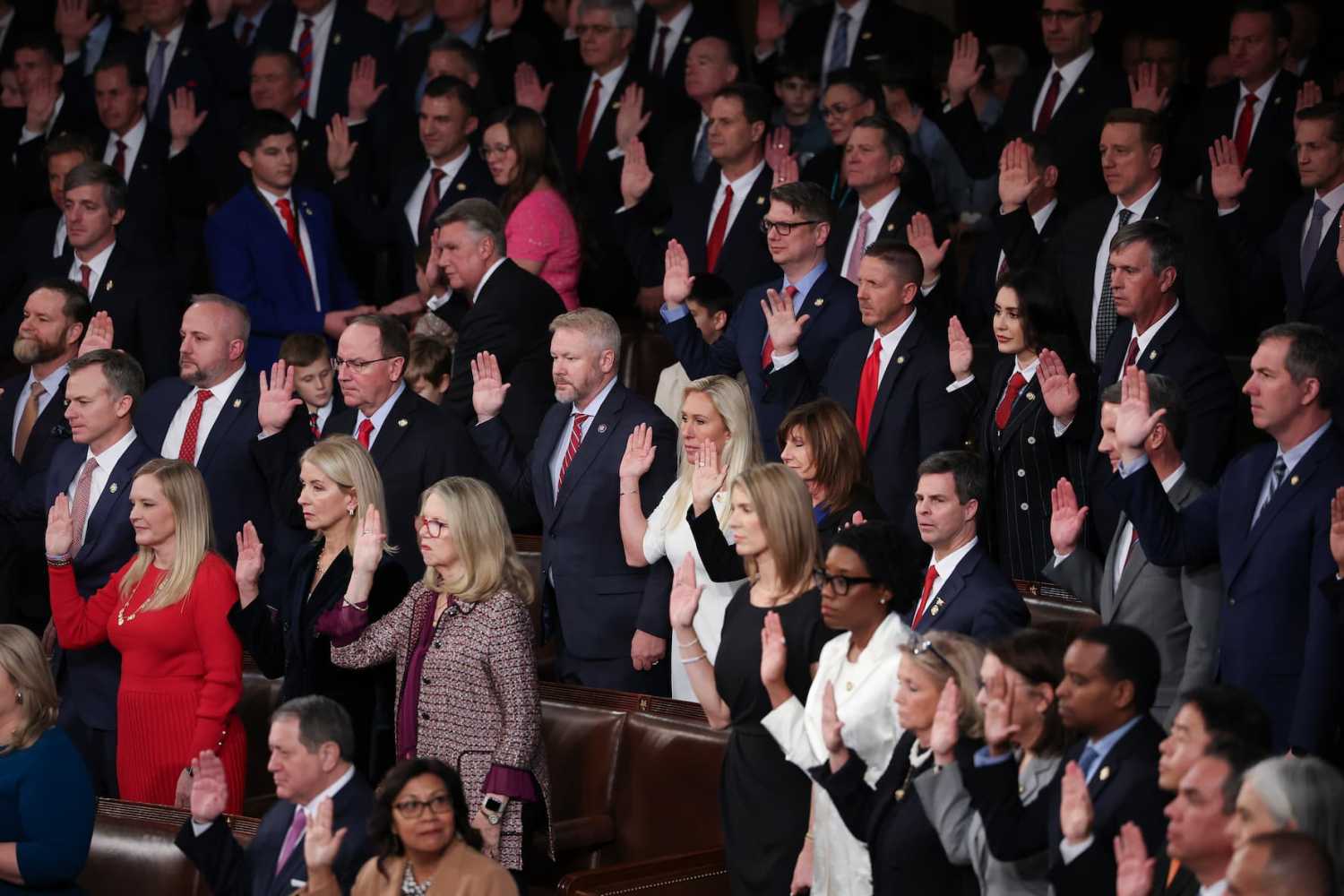
As we head into the 2026 midterms, there are many signs that Republicans face an uphill battle as they set out to maintain their already slim House majority.
For one, history tells us that midterms generally serve as a referendum on the party occupying the White House. The 2026 cycle comes with its own challenges, too. Recent special elections have produced strong results for Democrats. Republicans may have opened the redistricting floodgates last summer, but it’s not clear the party will emerge with any substantial advantage. The unaffordability of health care, an unpopular war in Iran, and the federal immigration crackdown are on many voters’ minds.
Close watchers of Congress have picked up on an additional data point that suggests a difficult midterm season ahead, particularly for incumbents: the number of House members who have announced they will not run for reelection.
Using data from the most recent updates to Vital Statistics on Congress alongside data for 2026, we can compare the number of members who have announced their plans to retire in the 119th Congress so far to past congresses.
Learn more
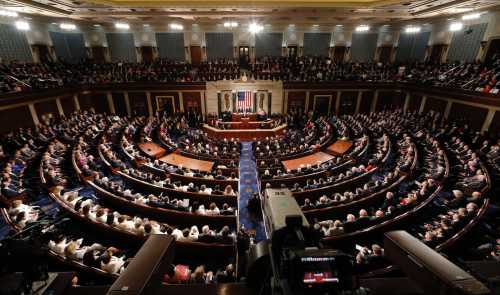
Just over halfway through the 119th Congress, 56 House members have announced their retirement plans, marking the highest number in over 30 years. (An additional five have resigned before completing their terms.) Out of the 56 members retiring this year, 35 (63%) are Republicans, meaning that around 16% of the party’s 217-member conference is stepping down. This group includes 18 subcommittee chairs and three committee chairs.
While retirements generally have consequences for the House as an institution, there are reasons to pay particular attention to the career choices of majority-party members, as they may send signals about party morale heading into an election season.
For instance, the last time Congress saw close to this many retirements was in 2018, and a similarly high share (65%) was from the Republican majority. At the time, some observers saw the large number of retirements as evidence of an anxious Republican Party, and subsequent analyses would eventually connect the number of seat vacancies to the blue wave that followed in that year’s midterms.
The number of retirements is not the only feature that makes this cycle consequential. In addition to being large in number, this year’s class of retirees—and particularly those from the majority—are notable for two additional reasons. First, many are early in their congressional tenures. Second, many are leaving to run for other offices, including at the state level. Both of these dynamics suggest there may be something bigger than midterm anxiety at play, perhaps reflecting broader frustration with Congress as an institution and workplace.
Focusing first on tenure, the average number of terms served among retiring House Republicans this session is the lowest it has been in four decades, at only five terms. For context, the average tenure among retiring Democrats this year is 9.9 terms, while the historical average tenure of majority party retirees is around 8.3 terms.
We saw a similarly junior group of majority-party retirees in 2016, when the average tenure was about 5.1 terms. There were several explanations for such a junior retiring class that year, including some attributes specific to the Tea Party cohort of Republicans who were quick to retire. Broader trends, such as the declining institutional mobility for rank-and-file legislators and the public’s increasingly unfavorable view of the parties and Congress, also likely played a role in making long careers on the Hill less appealing. Little has changed to ameliorate those dynamics since.
This year’s retiring class is also notable in terms of where they’re heading (or aiming to head) next. A large share of this year’s retiring class is not stepping down from politics entirely but rather seeking other offices. Using OpenSecrets data spanning from 2010 to 2026, the graph below shows a growing share of members choosing to run for other offices after finishing their tenure in the House.
The increasing number of members choosing to run for state and local office—as opposed to a Senate seat, for instance—is particularly notable given how it defies conventional career trajectories among members of Congress. Historically, it’s more common for members to leave the House to run for other federal office, rather than offices at the state or local level.
It suggests a growing consensus among members that they can get more done outside of Congress, and perhaps the job’s prestige may not hold the same sway that it used to.
Among Republicans in the current Congress, the trends discussed above are heightened once again. Of retiring Republicans, 60% are running for other offices, compared to only one-third of retiring Democrats. Of the current House Republicans running for other offices, more than half are seeking state-level positions—mostly governorships, though Rep. Chip Roy (R-Texas) is running for state attorney general—rather than Senate seats. The same is not true for Democrats. Of the eight Democrats running for different offices, only one sought a state-level position rather than a Senate seat: Rep. Eric Swalwell (D-Calif.), who recently withdrew from the California gubernatorial race.
Political science research highlights several reasons why members of Congress retire, including old age, the pursuit of higher office, hitting a “career ceiling”, anti-government or conservative attitudes more generally, and low chances of reelection. It’s also worth considering institutional factors, such as term limits on congressional chairmanships, which research found incentivized some senior Republican members to retire during the 2018 cycle.
But when we zero in on the 2026 class of retirees, a potentially different trend emerges, suggesting exiting members are not necessarily running for higher federal office or deciding to make room for younger voices after long careers on the Hill.
A recent NBC News article quoted several retiring lawmakers who, for instance, described their work environment as a “toxic partisan atmosphere.” Some craved respite from seemingly never-ending reelection cycles, while others complained about gridlock. The New York Times looked at the same question and also highlighted the rise of political violence as a factor driving members away from the House.
The high departure rate this cycle is likely being at least partially driven by midterm anxiety among Republicans, given the evidence suggesting they may lose their House majority in November. At the same time, however, this year’s large number of congressional retirements may also signal that the broader legislative environment has changed for the worse. Either way, while there are many uncertainties surrounding what the latter half of Trump’s second term will look like in Congress, one change we can count on is an influx of new members next January.
Related Content


Authors


-
Acknowledgements and disclosures
The authors would like to thank Adam Brantley for additional research and fact-checking support.
The Brookings Institution is committed to quality, independence, and impact.
We are supported by a diverse array of funders. In line with our values and policies, each Brookings publication represents the sole views of its author(s).