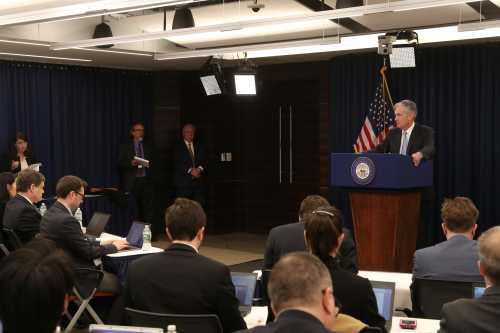
The Hutchins Center on Fiscal & Monetary Policy at Brookings periodically surveys academic and private sector Federal Reserve watchers to assess their views on Fed communications, an integral part of central banking. The 2026 survey, conducted between March 23 and April 10, 2026, asks questions similar to those in the 2016 survey, 2021 survey, and 2024 survey.
With Kevin Warsh about to become Fed chair, we expanded the survey to include questions about his biggest challenges and aspects of the Fed’s communications and framework about which Warsh has expressed skepticism, such as the Fed’s balance sheet.
Highlights of the survey
- The chair’s post-meeting press conference is deemed the most useful form of Fed communications by nearly all respondents, and nearly all say the chair should continue to hold press conferences after each meeting of the Federal Open Market Committee (FOMC). Warsh has questioned the value of the press conference.
- Three-quarters of respondents say the size of the Fed balance sheet does not currently pose a problem for the growth or financial stability of the U.S. economy. Warsh has suggested otherwise.
- About a third of respondents think the members of the Federal Reserve Board and the presidents of the 12 Fed regional banks should speak in public less frequently. Warsh has said the same.
- Nearly half of the respondents say the Fed’s “ample reserves” framework is working well and should be maintained, while nearly a quarter say it should be changed substantially.
- Three-quarters of respondents rate the threat to Fed independence as a 4 or 5 on a 1-5 scale (with 5 representing “enormous” threat). Asked to identify Warsh’s biggest challenge, the most common answer was maintaining monetary policy independence from the White House.
- Fed watchers give Fed communications a median grade of B+, similar to the 2024 survey.
What grade do Fed watchers give Fed communications?
When asked “What overall grade would you give current Fed communications?,” 59% of Fed watchers in academia and think tanks award an A or A- grade, but only 8% of those in the private sector do — that group is much more likely to give Fed communications a B+ or B (58%). Only 2 out of 29 respondents (6%) give Fed communications a C or D.
The median grade given by respondents in academia and think tanks is A-, and the median grade given by those in the private sector is B. These results are similar to our 2024 and 2020 survey, both of which were conducted while Jerome Powell was Fed chair, and higher than in the 2016 survey, conducted during Janet Yellen’s tenure as Fed chair.
Which channels of Fed communication are most useful?
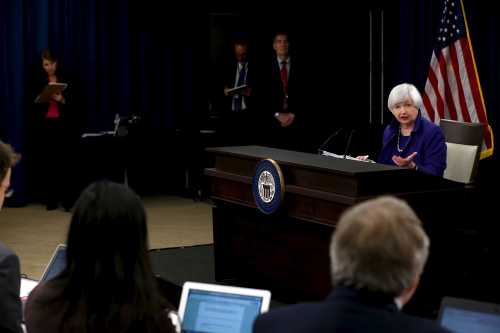
At his Senate confirmation hearing on April 21, Kevin Warsh did not commit to holding a press conference after each FOMC meeting, suggesting a preference for substance over frequency in Fed communications. Fed watchers in this survey take the opposite view. The vast majority of respondents (83%) say the Fed chair should continue to hold press conferences after each meeting; only 14% oppose.
As in past surveys, respondents find the Fed chair’s press conference the most useful channel of Fed communications, with the statement issued by the FOMC after each meeting a close second. In contrast, media coverage of the Fed and speeches and interviews by Federal Reserve Bank presidents were ranked least useful.
As in past surveys, most respondents (79%) say Powell speaks the right amount in public. However, views on other Fed officials have shifted. Only about a third of respondents (35%) say Federal Reserve bank presidents and Fed governors should speak less, down sharply from 59% in 2024.
The Fed’s quarterly Summary of Economic Projections includes the “dot plot” which shows each FOMC participant’s forecast of the future path of the federal funds rate. About half of the respondents (56%) find it useful or extremely useful, with more private sector respondents (65%) finding it useful than those in academia or think tanks (50%). When asked “Should the Fed keep or kill the interest rate dots?” more than half (60%) say to keep and a quarter (19%) say to kill.
How well does the Fed explain itself?
Asked “How well do Fed officials explain their economic views and monetary policy plans?,” 56% of academic and 65% of private sector Fed watchers say the Fed does “an excellent job” or “does well most of the time.” About a third of total respondents (33%) say “it’s a mixed bag,” similar to the 2024 survey.
On the Fed’s reaction function—how it will change monetary policy in response to a change in the economy—about half of respondents (56%) say they have “a clear sense” or are “mostly clear” on it, while 35% say they “understand it sometimes, but not all the time.” This marks a decline from both the 2024 (and 2021) survey, when 66% (and 80%) of respondents said they were “mostly clear” or “very clear” on the Fed’s reaction function.
How do Fed watchers view the Fed’s framework?
Under the “ample reserves” framework implemented after the 2008 Global Financial Crisis, banks hold substantial reserves at the Fed because they earn interest on them. The Fed sets short-term interest rates by adjusting the rate it pays on those reserves, rather than by managing the supply of reserves itself. At his confirmation hearing, Warsh said he would like the Fed to scale back its portfolio in government debt. Among Fed watchers in this survey, 48% say the framework is working well and should be maintained, and 23% say it should be substantially changed.
When asked about the size of the Fed balance sheet, 77% of Fed watchers say the current size does not pose a problem for U.S. economic growth or financial stability, and only 6% say it is a large problem. Private sector respondents express more concern than academics: 30% say the size of the balance sheet is a large or modest problem, compared to 12% of academics.
Should the Fed change the inflation target?
The majority of respondents (87%) oppose raising the inflation target from 2%, up from 66% in 2024. Only 12% favor raising it. More than half of respondents (60%) also favor a point target instead of a range for inflation setting. Support for this is similar across academics (63%) and private sector Fed watchers (55%).
What are Kevin Warsh’s biggest challenges as Fed chair?
We asked respondents in an open-ended question what they think Kevin Warsh’s biggest challenge will be as Fed chair. Their answers center on the following five themes (selected quotes are shown below, with additional responses posted in the full report).
Theme 1: Maintaining Fed independence
“To stick to his hawkish roots and not deliver interest rate cuts if cuts will undermine getting inflation back to target or deliver interest rate increases if that’s what necessary — in other words, the challenge is doing what’s right even if it means President Trump won’t like it (i.e., keeping monetary policy independent).” Ellen Meade, Duke University
“To ensure that monetary policy is set solely based on achieving its dual mandate.” Mark Zandi, Moody’s Analytics
“Honoring his commitment to serve the longer run interests of the U.S. economy without political influence and interference from the Trump administration.” Julia Coronado, Macropolicy Perspectives
On a 1-to-5 scale, with 1 being not at all and 5 being enormous, 75% of respondents rate the threat to Fed independence as a 4 or 5. Academics see a larger threat compared to private sector Fed watchers: 87% of academics rate it a 4 or 5, compared to 55% in the private sector.
Theme 2: Managing relationships with the administration
“Dealing with the White House.” David Shulman, UCLA Anderson Forecast
“Interaction with President Trump.” James Meil, ACT Research
“Maintaining a cordial relationship with the administration while setting monetary policy independently.” Stephen Stanley, Amherst Pierpont
Theme 3: Leading the FOMC
“Leadership. Managing the range of stakeholders (governors, regional presidents, staff, Congress, White House, public) in a way that gives the Fed space to do its job will not be easy.” Carl Tannenbaum, Northern Trust
“I think Warsh will quickly be independent of the White House—that’s his personality. I’m more worried about his ability to lead the Fed’s monetary policy team (meaning staff, governors, and presidents). The team has a particular (standard Econ 101) framework for thinking about how policy affects the macro-economy. Kevin doesn’t believe that standard framework is correct. That’s fine — but he does not communicate clearly about what his alternative framework is or what data leads him to find it preferable to the standard AS-AD model.” Narayana Kocherlakota, University of Rochester
Theme 4: Restoring the Fed’s credibility
“To restore the Fed’s reputation for competence and independence lost after 2020.” Peter Ireland, Boston College
“Market credibility.” Shawn DuBravac, Consumer Electronics Association
Theme 5: Returning inflation to target
“Making the transition to raising rates instead of lowering rates, despite opposition of President Trump to raising rates.” Miles Kimball, University of Colorado
“Bringing the inflation rate back down to 2%.” Eric Swanson, UC Irvine
“Getting inflation under control.” James F. Smith, EconForecaster
Authors


Related Content
The Brookings Institution is committed to quality, independence, and impact.
We are supported by a diverse array of funders. In line with our values and policies, each Brookings publication represents the sole views of its author(s).