




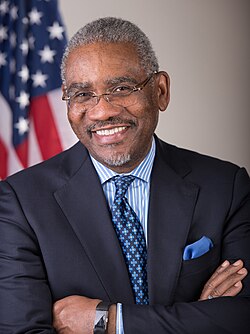
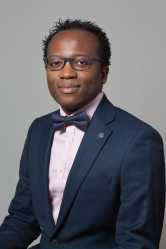
Host Landry Signé visits Capitol Hill to talk with the Hon. Gregory Meeks, representative for New York’s 5th Congressional District and ranking member of the House Foreign Affairs Committee. Their discussion touches on the importance of Africa to U.S. domestic interests and the crucial role of Congress in implementing and designing American foreign policy.
Transcript
MEEKS: Africa is the largest, the youngest, and the fastest-growing continent on the planet we call Earth. And if we don’t work in a multilateral manner to make sure that all of its people or all of its children are benefiting, then we all hurt.
[music]
SIGNÉ: Hello, and welcome to season five of the Foresight Africa podcast. As always, I am your host, Landry Signé, senior fellow in the Brookings Institution Africa Growth Initiative. This season, we continue to look behind the headlines to see how new developments are changing the U.S.-Africa relations.
Today, to explore the role of Congress in this relationship, we have the honor of speaking to the Honorable Gregory Meeks, congressman for the fifth district of New York in the U.S. House of Representatives. Congressman Meeks is the ranking member of the House Foreign Affairs Committee, and previously served as its chairman, roles in which he has been influential in shaping U.S.-Africa relations. He’s also a member of the Congressional Black Caucus. Prior to joining Congress in 1998, he served as assistant district attorney and member of the New York State Assembly.
Congressman Meeks, thank you so much for having us today.
MEEKS: It’s good to be with you.
[2:07]
SIGNÉ: Congressman Meeks, when you first came to Congress in 1998, you unusually chose the Foreign Affairs Committee as one of your assignments. What drew you to foreign affairs? Any stories you can share with us?
[2:30]
MEEKS: Well, look, I’m a kid that grew up in New York City in public housing. But I was always interested in what was taking place around the world. And as I grew older, and by the time that I was, as you’ve indicated in the State Assembly, et cetera, the world had shrunk and had become more interconnected.
And so by the time that I got to Washington, D.C., the committee that I really wanted to sit on, because I thought that it would be very impactful for the future, was Foreign Affairs. I didn’t know it was gonna be this impactful with everything that’s going on today and all of the issues that we’ve got to deal with today.
But I did think that we were more interconnected. Technology was starting to evolve. Our economies was important. And it was important for us to reach reach out as Americans to other countries around the world.
So the story I’d tell you would be, Bill Clinton was the president of the United States at the time that I came to Congress. And I asked Bill Clinton in 2000 what was the thing that surprised him leaving the presidency that he had not expected when he entered the presidency. And he thought about it a while, and he said, I found that I could get more done with other countries if I treated them with respect than just our military might. That everyone knows that we have the greatest military in the world, but to treat them and to respect them for who they were and for their culture and their own foundations, they would want to work with America more.
And I thought that was so profound at the time, and is exactly right, that we need to make sure that no matter how big or how small the country is, and that’s what he said, no matter how big or how small, they would always want an open hand from the United States, but we should acknowledge them, their culture, and who they are also.
[4:59]
SIGNÉ: Amazing. Thank you for the wonderful insight, congressman. Can you elaborate on how Congress, its committees, caucuses, advance U.S.-Africa relations?
[5:13]
MEEKS: Well, it affects them greatly, one way or the other. It could be helpful and it could be harmful. And I think that when we look at where we are right now, we were making some great progress. I mean, there’s some programs that we put together and we, you know, Charlie Rangel, who was a mentor of mine, he was the mastermind of AGOA. And that goes through various committees. There’s certain things that, you know, we have to do through the Foreign Affairs Committee, but the Ways and Means Committee is the primary committee that had to deal with AGOA. And you have to get the votes, you know, to to pass that kind of bill.
And so through the various committees, getting it on the floor, you know, making sure that you have something that’s agreeable with the Senate, it is something that’s important that we do on on a legislative level here in Washington. So AGOA would be one. And PEPFAR would be another. So we, you know, put those programs together to try to make a difference.
And I think that the key is making sure that Africa’s a part of the conversation, and making sure that America does not, and others, do not forget how significant and important Africa is.
And so that’s why for me, when I became the chair of the Foreign Affairs Committee, I said clearly to everyone, not just to the individuals within the House that would vote for me for the chair and others, I said, Part of what my goal is, that Africa as a continent would not be on my back burner, it would be on my front burner.
And we would make sure, for example, that hearings… all of the hearings are very important. Some hearings happen in a subcommittee setting, others on a full committee setting.
And oftentimes where, you know, my experience had, on the Foreign Affairs Committee, most of it was on a subcommittee setting, meaning that the full committee was not exposed to all of the issues that was taking place on Africa, and their significance, and their importance, and why we should be engaged therein.
So, I put Africa on the front burner. I made sure that we had a strong subcommittee, but I wanted that subcommittee to be engaged with the full committee so that those issues everybody had to deal with are to be focused on, to try to talk about, and try to see how we could be better partners and better involved on the continent.
[7:49]
SIGNÉ: Insightful, congressman, and I have witnessed also your global engagement when we met in Davos a few years ago, and still advocating for Africa, including global platforms. Congressman, under the current administration, we have seen the argument that trade and investment ought to take the place of traditional development aid, from the shutting down of USAID to the launch of the Trade Over Aid initiative in April. As someone with decades of experience overseeing U.S. foreign policy, what do you make of this approach?
[8:39]
MEEKS: Look, I do not like what Donald Trump is doing. I do not like how he looks at the continent of Africa generally. We heard what he has said at one point, calling it, using “s-hole” countries and things of that nature.
He seems to be wanting quid pro quo deals and things of that nature. That’s not who we are. And I’ve been here for a while with other presidents, Democrats and Republicans. I don’t think that George W. Bush, he did a lot on and for and with the continent. Of course, Barack Obama. I was able to chat with Bill Clinton. But, this president has not done the kinds of things that I think that are very appropriate to promote trade and to the degree, aid and health care. You know, you look at what he’s done with regards to, as you’ve indicated, basically eliminated USAID, what that did to try to help bring up economies on the continent, et cetera, and particularly in various different sectors.
You know, what Obama did on Power Africa, many of those initiatives are now gone. USAID gone. Money eliminated from MCC. That would significant important. We fought hard to make sure keeping Africa in the front burner, having the African Leadership Summit meeting. We wanted to make sure it happened, you know, biannually. That keeps it up. We have not had that even discussed or talked about or the appropriate office put in place thus far.
So there are various problems that I see that is now taking place with reference to this president and the reasons why he is or is not focused on the on the continent of Africa.
My hope would be that we change that. We change it, and Congress can lead that change.
[10:32]
SIGNÉ: How?
[10:33]
MEEKS: And so, well, Congress can lead that change, but first by me becoming the chair of the committee again. And so we’re going to try to win the… you know, elections matter, and we’re gonna try to win these elections. And once we win these elections, I will become the chair of the committee, and therefore I will set the rules in regards to how Africa is talked about and moved forward. And when he comes to our office, as far as budget is concerned, we will have a back-and-forth, and we will have an equal say.
Fortunately, you know, we’re a separate but equal branch of government, and we have oversight responsibility, too, on the president, so we’re able then to make a difference, I think, in that regards should we win the majority back.
[11:21]
SIGNÉ: Insightful. Congressman, throughout your career, you have been an impassionate advocate for multilateralism, especially around African countries. How do you make the case to domestic audiences that Africa’s prosperity is important for the prosperity of the U.S. and its citizens?
[11:46]
MEEKS: Look, Africa is the largest, the youngest, and the fastest-growing continent on the planet we call Earth. And if we don’t work in a multilateral manner to make sure that all of its people or all of its children are benefiting, then we all hurt.
We can’t keep the planet safe when we talk about the environment. It’s gonna take all of us working together in a multilateral way. We look at the economic system, it’s all tied up, and so what affects one part of the world affects the other part of the world economically. Health care. You know, when we look at, for example, the various viruses that have gone around, et cetera, we’ve gotta work together to make sure that it’s a better world for all of us.
No one country can do it by themselves. It is us trying to do it in a multilateral way. It is tremendously important to prevent some of the horrendous wars that are taking place. We’ve gotta work together to try to stomp that out all over the planet.
I mean, we’ve got work to do, clearly, even on the continent. You know, what’s taking place in Sudan is devastating, but we’ve got to, and that’s one of the reasons why, you know, we put the Sudan bill together in Congress to say that all of us should go after those countries that are trying to get arms into the rebels, et cetera, that’s doing the violence. Let’s make sure they don’t get those arms. Let’s talk as one. Let’s make sure that we’re working cohesively in that regard.
So multilateralism and the globe and the world that we are currently living in is absolutely essential. It’s not even, you know, an option, I don’t think, anymore. It’s essential for us all to survive on this planet.
[13:52]
SIGNÉ: Powerful, congressman! What are the most pressing issues that Congress has worked on recently regarding Africa?
[14:04]
MEEKS: Well, I think that the issues that we’re working on right now is the reauthorization, for example, of AGOA. That’s really important, and we need a long-term reauthorization of of AGOA so that there’s some certainty, and we can deal with making sure that we’re trading and creating jobs and opportunities, both on the continent and for the African people as well as for the rest of the world. So that’s really important.
Security. There’s security concerns and interests that are on the line. And so we’ve gotta work together, and we’re doing bills and trying to help to see how we can be of assistance to create security for many of the countries on the continent and how we can be in partnership in regards to that.
We’ve gotta go back to try to make sure that we’re developing the young minds on the continent. Just a few few days ago, we, on the committee, we passed a bill for YALI, you know, helping and educating the young, talented individuals that are on the continent to make sure that they continue to receive the kind of funding, and I would love to increase it, that’s necessary.
We’re already graduating over 24,000 individuals, and some getting worldwide recognition, in that regard. So, you know, those are initiatives and things that we’ve been doing recently that’s really, really important that we continue, to do because it will make a difference for tomorrow, and help us as we continue to move forward.
[15:40]
SIGNÉ: Powerful, congressman! Thank you so much for making time for us today.
[15:46]
MEEKS: Thank you for having me. This has been good. And thank you for what you’re doing, and thank you to Brookings for continuing to keep Africa in the forefront, because that’s what it’s important. Every time, opportunity that you have, and Brookings is doing that, to make sure that, because Africa is good for the rest of the world, whether you’re from Asia, South America, North America, Antarctica. If you’re on this place you call the planet of Earth, the motherland is still the continent.
SIGNÉ: What a beautiful way to conclude, Congressman Meeks. I couldn’t agree more with you. Thank you so much, congressman.
MEEKS: Thank you.
[music]
SIGNÉ: I am Landry Signé, and this has been Foresight Africa. Thank you listeners for joining me today. The Foresight Africa podcast is brought to you by the Brookings Podcast Network. Send your feedback and questions to podcasts at Brookings dot edu.
My special thanks to the production team, including Ike Blake, supervising producer; Fred Dews, producer; Dafe Oputu, Izzy Taylor, and Aysha House, associate producers; Gastón Reboredo, audio engineer, and Daniel Morales and Teddy Wansik, video producers. The show’s art was designed by Shavanthi Mendis. Additional promotional support for this podcast comes from my colleagues in Brookings Global and the Office of Communications at Brookings.
Participants
- Subscribe to Foresight Africa on Apple, Spotify, Afripods, or wherever you listen to podcasts.
- Listen to previous episodes.
- Watch episodes on YouTube.
- Learn about other Brookings podcasts from the Brookings Podcast Network.
- Sign up for the podcasts newsletter for occasional updates on featured episodes and new shows.
- Send feedback to [email protected].
The Brookings Institution is committed to quality, independence, and impact.
We are supported by a diverse array of funders. In line with our values and policies, each Brookings publication represents the sole views of its author(s).
Commentary
PodcastCongress and the Africa agenda: A conversation with Rep. Gregory Meeks
Listen on
Foresight Africa Podcast
June 17, 2026