




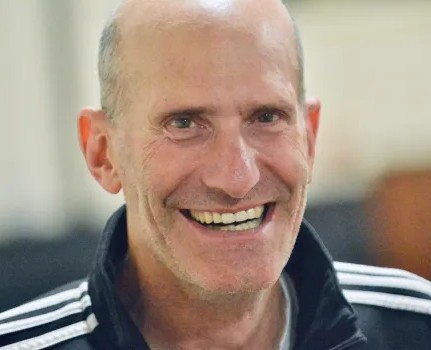
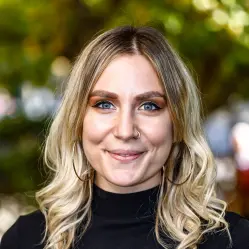
Can investing in youth sports—especially in certain neighborhoods where children are particularly vulnerable—reduce gun violence? In this episode, Rashawn Ray, senior Brookings Governance Studies fellow, leads a conversation on the role that basketball can play in community building and reducing violent conflict. Joining him are Hanna Love, Brookings fellow; Howard Levy, head men’s basketball coach at Mercer County Community College and a founder of Play Smart Save Lives; and Craig Robinson, executive director of the National Association of Basketball Coaches.
Related Content
2025
Transcript
LEVY: There’s so many incidents of minor disputes, and there’s a firearm involved and someone gets killed, and as we’ve mentioned, basketball is a really a perfect vehicle to teach these de-escalation skills.
ROBINSON: They learn these life lessons that they can use outside of the gym, being around other kids who are in situations like they’re in, it gives them a nice little community to not only learn the game and play the game, but talk about things outside of the game, and be around people who are going through the things that they’re going through. And I found that to be as important, if not more important, than the actual game itself.
[music]
RAY: You are listening to The Current, part of the Brookings Podcast Network. I’m Rashawn Ray, a senior fellow in Governance Studies at the Brookings Institution. Gun violence is one of the most politically divisive issues in the United States, that can often seem intractable to solve. Yet there is a proven, often overlooked solution that nearly all Americans, regardless of political party, can embrace for reducing gun violence. Investing in youth sports, particularly in neighborhoods where children are disproportionately vulnerable to community violence and victimization.
In short, what the nation needs is more neighborhoods where people can see and know each other again; interact without conflict; and access the supports and opportunities they may not be exposed to at home or in school.
Now on this episode of The Current, I’m excited to tee off a discussion with guests who represent the intersection of research and action when it comes to addressing gun violence that is so severely impacting our youth. And since we’re in the middle of March Madness, it’s a great opportunity to highlight this research.
Hanna Love is a fellow in Brookings Metro who focuses on place-based approaches to STEM gun violence. Welcome, Hanna.
LOVE: Thank you so much, Rashawn, and I’m very excited to join this conversation today.
RAY: That’s great. Howard Levy is the head men’s basketball coach at Mercer Community College in New Jersey, and a founder of Play Smart. Welcome, Howard.
LEVY: Thank you very much. Great to be here.
RAY: And Craig Robinson is executive director of the National Association of Basketball Coaches and former head men’s basketball coach at Oregon State and Brown Universities. Welcome Craig.
ROBINSON: Thanks, Rashawn. Glad to be here.
[2:33]
RAY: So look, before we continue, I want to let you know that this is part one of a two-part series on The Current about this topic. Stay tuned for an episode next week where the mother of a young athlete who died by gun violence tells her story with Coach Ron Cottrell, who coached men’s basketball at Houston Christian University for decades, and who was also a leader with Howard Levy at Play Smart.
I want to start this discussion by talking about the power of place and play. Sports venues operate as micro geographies that highlight the importance of local investments for community courts and recreation hubs as proactive ways to reduce violence. For many youth, the basketball court, whether inside or outside, often serves as the only available safe space for young athletes.
Hanna, I want to start with you. What are the daily realities that you face in local communities and how does the gym often function as a vital sanctuary?
[3:33]
LOVE: Thank you so much, Rashawn. That was a spot on question. So what I think we see in terms of the national media at this point in time is a lot of ideas and hysteria and fears about youth crime. But when you look at the data in general, what you see is that the data ends up being concentrated among a very small number of neighborhoods and a very small number of people within cities. Those that are involved in gun violence are often living in neighborhoods that have been historically disinvested in for generations, and then have often had their third spaces, such as gyms and sports clubs and athletic leagues, disinvested from.
And so what you end up seeing is that the zip code becomes a stronger predictor of your life expectancy when it comes from being free from gun violence than actually any interpersonal action that you can do.
That has become a huge, huge challenge when we’re looking at the research landscape and how we can identify how more people can be placed into third spaces across the country. What we find is over a third of people living within low-income neighborhoods do not have access to those third spaces. But once they do, we find that sports are one of the few places that you can actually bring people together. And that with sports participation rates, you can find that there are improved outcomes, not only for reducing crime, but also for including college graduation rates, test scores, and lifelong outcomes.
That’s something that’s been a little bit difficult to capture in this moment, given the bifurcation that we have when it comes to our different systems that maybe touch on education or sports, and it’s, there’s really a need to connect those two with people and place.
[5:32]
RAY: Yeah, Hanna, thanks so much. And as we think about those statistics, people oftentimes don’t link youth sports, whether that be playing basketball or another sport, to all of these particular outcomes. Craig and Howard, for you two as coaches, leaders in this space, how do you see those statistics actually playing out in the everyday lives of the youth that you all have been able to coach?
[5:55]
LEVY: You know, if you’re involved in basketball, you’ve you’ve dealt with sort of disadvantaged youth, you’ve dealt with gun violence in in many ways, and I just think that basketball in particular is a is a sport that it’s easy to play, first of all. There’s a lot of interaction, a lot of teamwork involved. It’s also a place where you learn how to resolve disputes. You know, basketball’s a physical game. There’s often calling fouls, not calling fouls. You learn how to choose it out or rock, paper, scissors, then you learn to resolve your disputes without without resorting to fisticuffs or or violence.
As a coach, we’ll get kids from backgrounds that maybe haven’t even learned those skills. It’s a terrific way to teach them these kind of life skills in a way that where, where they’re able to sort of control their impulses for the good of of a team and a team victory.
[6:49]
RAY: Yeah, most definitely, Howard. I I love how you said easy to play. You know, it’s so interesting to hear that. I guess it’s easy to play, it’s much harder to play it well at the level that that you and and Craig have. So Craig, what, what are your thoughts kind of kind of on this piece, is the way that you see this playing out in the everyday realities of of youth in local neighborhoods?
[7:09]
ROBINSON: Yeah. You know, how Howie’s right. It’s not only easy to play, but it’s relatively easy to teach. And we’re not talking about sort of a skill set up. Right? Right? And and you can’t think of this as guys going to the NBA, because most of the kids that we coach are not going to the NBA, but they learn these life lessons that they can use outside of the gym.
We’d be sort of naive to think that that, you know, there’s a direct correlation, you come to the gym and then you immediately stay out of trouble. That’s not what we’re saying. But being around other kids who are in situations like they’re in, it gives them a nice little community to not only learn the game and play the game, but talk about things outside of the game, and be around people who are going through the things that they’re going through. And I found that to be as important, if not more important than the actual game itself.
[8:10]
RAY: I now want to talk about you all’s role specifically. I want to talk about the coach as a trusted intermediary. Growing up for me playing sports in Tennessee and Georgia, I wasn’t a basketball guy, but I played football and baseball, I saw coaches serve as community trustees and intermediaries to deescalate violence, often serving as violence interrupters and credible messengers in a bunch of ways. As you just noted, Craig, to help players navigate oftentimes the trauma of community violence.
And coaches often can build resiliency, and of course, the role of programs like Play Smart to teach the ways to be safe as it relates to gun storage, and also empower athletes to be peace builders. Howard, tell us more about this particular program and how you’ve seen it working in the everyday lives of the youth that you work with.
[9:00]
LEVY: I do think that basketball has generally been on the forefront of so many social issues and social change, and a group of coaches were very active in getting student athletes to register to vote. And there’s now no practice on election day and there’s been a big movement of of coaches and student athletes toward that.
And as the Final Four was in Houston, we were we were talking about what else can we do? And one of my co-founders, Ryan Marks, who’s the head coach of St. Francis University outside of Chicago, along with Joe Kennedy, who’s a former player of Craig’s at Northwestern, we connected with Coach Cottrell who you’ll meet in a in a future episode. And Coach Cottrell’s school, Houston Christian University, was one of the host schools for the Final Four, and his best player, Darius Lee, was shot and killed the summer before in New York City. I actually coached against Darius at the junior college that he played for prior. And as we talked about this issue, we talked about, you know, what can we do to help this problem of gun violence? And Craig was very instrumental.
We wanted to stay away from politics. The coaching community, there are gun owners, not gun owners, all kinds of different people. And, you know, we sort of started by seizing upon secure storage as our issue. It’s it’s the law in Texas, it’s the law in New Jersey. And, you know, the statistics are, are, I’m sure Hanna can tell us more about the statistics, but it reduces violence automatically.
And as we sort of got involved in this work, we realized that there are a couple other areas that we were able to focus on that that are completely nonpolitical. One is the escalation, as we’ve been talking about teaching these skills. And there’s so many incidents of, you know, minor disputes and there’s a firearm involved and someone gets killed. And as we’ve mentioned before, basketball is a a really a perfect vehicle to teach these de-escalation skills.
And then the other issue is trauma. You know, Coach Cottrell coaching his team after Darius was killed, you know, he was sort of all alone in trying to navigate the situation with his players. And and one thing I found really interesting was as they went through this season, every school wanted to honor Darius, which was a very nice thing. But then every game they were confronted with the trauma once again. And so so we’ve created sort of a toolkit to help coaches talk to their student athletes, whether it’s an immediate trauma, and then you have obviously, sadly, school shootings. And then you have so many of these kids raised in the neighborhoods and zip codes that you’ve mentioned who have grown up around gun violence or had a family member killed a friend killed.
So so these are the issues we’re trying to address by getting coaches to have these conversations and equip coaches with the tools to have these conversations with their student athletes.
[11:56]
RAY: Yeah, man, that’s so important. I mean, and part of what you’re highlighting is that youth sports is not just about recreation. But they are an essential part of the public safety infrastructure that requires sustainable local, state, and federal investment.
Craig, what should this investment look like and how can policymakers, business owners, other members of local communities lean into help sustain and enhance youth sports?
[12:22]
ROBINSON: It’s like running a team. Everybody’s got a be a part of this in in different ways. You know, you’re gonna, you you, you’re gonna need some financial backing. You’re gonna need some political backing. But but most of all, you need people on the ground, volunteers, to be out here coaching kids. What I’m seeing is part of the reason why youth sports has has sort of gone a different direction than when Howie and I grew up playing, there’s fewer opportunities for kids in the inner city.
And and how we fix that is a myriad of ways. As I mentioned politically, you need to have people who, who are politically invested in this. You need people who are financially invested. But more importantly, Hanna, you probably have numbers on this, you need, you need volunteers. You need people in the in their own communities giving back to their communities, not just financially, but being really philanthropic with their time.
You know, people are just not inclined to coach anymore because it’s a really hard job and we need to get people back involved. We need to get the parents back involved. We need to get community members who don’t have kids in the program coaching. Howie, I’m sure you remember back in the day, there were a lot of people who coached me in basketball who didn’t have a kid in the program. They were either aspiring teachers, aspiring coaches, police officers, firefighters, businesspeople in the community that didn’t have kids in the program, but they all knew that being involved in young people’s development was important for the overall community. I’m a big proponent of not only parents as coaches, but community members as coaches.
[14:19]
RAY: So so Howard, we just heard Craig talk about the importance of coaches. I mean, as a person who now has teenagers who has coached his his boys in all the sports that they were trying to do, and having to get registered and do all that, there were so many community members who did not have kids who were also coaching. I want to bring you into this conversation, get your perspective as a collegiate coach and what you’ve seen.
[14:41]
LEVY: Well, and I just wanted to really highlight at our Play Smart panel last year we had Coach Bob Hurley, the father of the UConn coach, but also legendary high school coach and is who has devoted his life to Jersey City, New Jersey, which is one of those of those zip codes where where, that Hanna discussed earlier. And, you know, Coach Hurley spends his time in helping kids in Jersey City. And what he mentioned to me last year was that there used to be 70, seven zero, gyms in Jersey City that were open for the kids to play. And now now there’s probably seven, which gets to the point that Craig’s making of of the the volunteers and the people that are required.
And then the other part of it is you need parents to feel safe. You know, I think the gym has always been a safe haven. Even the park is a safe haven, but getting to the park and getting home, you know, oftentimes parents are, are afraid to send their kids out in that regard.
[15:40]
RAY: Yeah, most definitely. I mean, Hanna, I’m curious your reaction, we’re talking about coaches, we’re talking about physical spaces, the closing of spaces. We can ride through so many neighborhoods and see gyms and pools and other places not being open or even accessible to kids. What’s your take on this as an expert?
[15:58]
LOVE: Absolutely. So we recently did some in-depth qualitative field work within the South Side of Chicago. And this was after we’ve seen some recent political movements in which people are more afraid to end up into public spaces. What we heard from every single one of the interviewees that we talked to there, which consisted of community-based stakeholders, parents, and residents and youth themselves, is that the only place that they felt safe interacting in was the basketball court. And you can host as many community meetings as you want, but you’re not gonna get the parents to come there unless it’s something that they can understand and see and watch and root for their child for in the basketball courts.
[16:42]
RAY: I mean, you hit the nail on the head, Hanna, with with basketball courts. One thing that’s great about basketball courts, they’re just multipurpose. You just don’t have to dribble and shoot a ball. You can have a community event, you can have people there for other types of functions.
And I think that is one of the things about these types of spaces is just how useful they are. And so so I have one last question for you all. It’s a one word lightning round question. What is one word you want policymakers to remember from this conversation? So Howard, I’ll start with you. Then, Craig, I’ll go to you. And then I’ll give my Brookings colleague, Hanna, the last word.
LEVY: I would say “de-escalation.”
ROBINSON: I would go right after de-escalation because I think that’s a good one, Howie, I would go “community.”
LOVE: I would go “bridge-building.” I think sports — that’s, that’s a hyphenated word, but it counts — sports can bridge the fields that we have all together and find us, have solutions, whether or not we’ve met each other inside the court, outside the court, in the community, outside the community. Bridge-building.
RAY: Those are great words, you all. Craig and Howard, thank you so much for joining us Hanna. Thank you for organizing this important conversation. To learn more about this research, visit Brookings dot edu. Also be sure to check out Play Smart Save Lives dot org. That is Howard’s organization that is doing such important work as it relates to de-escalation, as it relates to reducing gun violence, and also helping our youth to maximize their full potential.
Thank you all for listening.
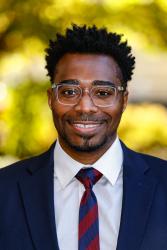
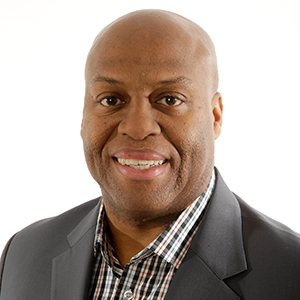
Participants
More information:
- Listen to The Current on Apple, Spotify, YouTube, or wherever you like to get podcasts.
- Learn about other Brookings podcasts from the Brookings Podcast Network.
- Sign up for the podcasts newsletter for occasional updates on featured episodes and new shows.
- Send feedback email to [email protected].
The Brookings Institution is committed to quality, independence, and impact.
We are supported by a diverse array of funders. In line with our values and policies, each Brookings publication represents the sole views of its author(s).

Commentary
PodcastBeyond the Bracket: How basketball can prevent gun violence
Listen on
The Current Podcast
March 26, 2026