Artemis II’s successful launch to the moon shows why the American public’s $25 billion investment in NASA is a sound investment. We’ve made spectacular gains in scientific knowledge over the past few decades, including using autonomous rovers and helicopters on Mars to document the past presence of flowing rivers on the Red Planet. We know more about our neighboring planets, moons, comets, and asteroids than ever before.
NASA has played a central role in advancing human knowledge about the origins and development of the universe 13.8 billion years ago. Through space-based telescopes, we can trace light back to a few hundred thousand years after the Big Bang. There are persuasive models of how the universe expanded, galaxies formed, and stars came to light. We still are searching for evidence of microbial life elsewhere, but there is hope of finding that soon on the moons of Saturn and Jupiter. Such discoveries would demonstrate we are not alone in the universe, and life likely is abundant across galaxies.
Space-based advancements helped experts develop the global positioning systems that are at the heart of contemporary mapping, ride-sharing services, satellite positioning, wildlife management, and weapons targeting. Space investments have also stimulated advancements in mobile communications, satellite imagery, weather forecasting, and digital products and services.
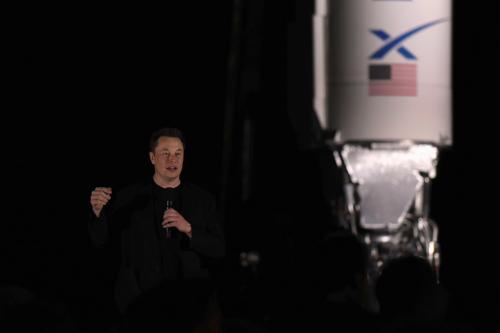
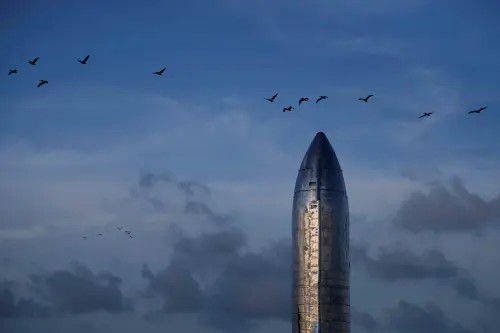
Reusable rockets from SpaceX and other firms have dramatically reduced launch costs by 58%, and that decrease is propelling novel, if sometimes contentious, applications. Companies are now offering to scatter cremated remains in space and name celestial objects after individuals, even though they may lack the authority to do so.
In these and other respects, space is no longer under the sole purview of NASA and other government entities. The growing space economy totaled $613 billion globally in 2025, and the commercial sector accounts for 78% of that money. There are over 1,800 firms working on various aspects of space, including tourism, mining, communications, exploration, and defense. Still, SpaceX remains the dominant launch firm.
Along with commercial firms, NASA is planning permanent settlements on the moon and flights to Mars that could usher in new opportunities for scientists, businesses, and eventually tourists. There are rare minerals on other entities that can be mined and mountains, valleys, and caverns that far exceed what is found on the Earth. As the costs of space launches decrease with the advent of reusable rockets, space ventures are more affordable for business development.
The One Big Beautiful Bill authorized nearly $25 billion to develop a Golden Dome defense system. The war in Iran highlights the importance of satellite imagery and communications in national defense. Drones and missiles are a vital part of military operations, creating a need for offensive and defensive systems that depend on space links for their operations.
Cyberwarfare is another critical component in military engagement. Modern warfare extends beyond troops, tanks, and equipment, as disinformation can lead the public to conclude its side is winning and adversaries are not faring well, when the reality may be less clear-cut. If you can gain a psychological advantage through any type of material (true or false), that is a benefit for your side.
In recognition of these developments, the Trump administration has devoted $40 billion to a Space Force that can defend U.S. satellites and develop offensive capabilities. With satellite communications playing a critical role in national economies, countries are developing anti-satellite weapons to disrupt adversarial links and defensive systems to protect their own orbital assets.
As these and other space-based prospects unfold, nearly 400,000 people in the United States are employed in space-related endeavors. While the space economy currently accounts for 1% of U.S. gross domestic product, the sector is growing at an annual rate of about 8% and is expected to accelerate.
Through all these activities, the space economy is growing rapidly and attracting a wide array of entrepreneurs and innovators. Similar to the nascent digital economy of 25 years ago, space will become integrated into our lives and elevate our imaginations about what is possible and desirable.
Future developments may include floating space communities, permanent settlements on the moon and Mars, orbital data centers, and tourism opportunities that go far beyond planet Earth. NASA’s successful Artemis II mission highlights the many private firms companies working to further human knowledge and foster a burgeoning space economy.
Yet observers should understand recent developments represent just the opening wave of what likely is to be a momentous shift in human existence. Humanity is at a critical turning point. Once-implausible scenarios will likely materialize in the coming years. This new space-based era offers both opportunities and risks, requiring a careful evaluation of how to navigate these dramatic developments.
Related Content
Author

The Brookings Institution is committed to quality, independence, and impact.
We are supported by a diverse array of funders. In line with our values and policies, each Brookings publication represents the sole views of its author(s).



Commentary
Artemis II and the rapid rise of a global space economy
April 8, 2026