




Ahead of the World Bank and IMF’s 2026 Spring Meetings, host Landry Signé sits down with Regis N’Sonde, executive director at the IMF, and Harold Tavares, executive director at the World Bank, to discuss how their institutions are supporting their African members amidst new economic uncertainties.
Transcript
[music]
SIGNÉ: Hello. Welcome to season five of the Foresight Africa podcast. As always, I am your host Landry Signé, senior fellow in the Brookings Institution’s Global Economy and Development Program and Africa Growth Initiative. In today’s episode, we will be discussing the World Bank and International Monetary Fund’s 2026 Spring Meetings, which run from April 13th to April 17th. Every year the meetings bring together leaders and experts from around the world to engage in debate, learning, and advocacy around the most pressing issues in the global economy.
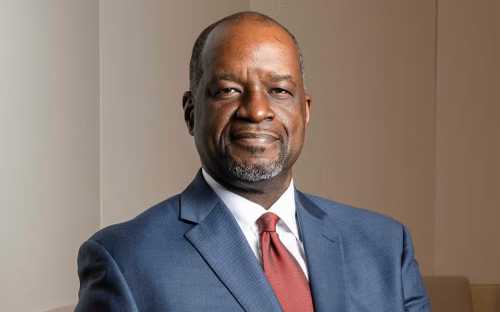
To understand more the state of the global economy and how African countries are looking to seize this moment to advance their agendas at the Bank and the International Monetary Fund, I am joined today by Regis N’Sonde, executive director at the International Monetary Fund where he represents the interest of 17 African countries.
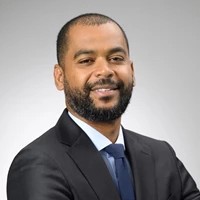
Stay tuned after my conversation with ED Regis N’Sonde for insights into the World Bank’s perspective ahead of the 2026 Spring Meetings. I also had the opportunity to speak with Harold Tavares, executive director of Africa Group II representing 23 African countries, and former chief of staff to the Prime Minister of Cabo Verde.
Welcome Executive Director Regis.
N’SONDE: Thank you very much, Professor Signé, It’s a pleasure to be with you today in the run up to the Spring Meetings of IMF and World Bank.
[2:24]
SIGNÉ: Thank you for joining me today. From the perspective of the International Monetary Fund, what are the key global economic trends and risk that will define this year’s Spring Meetings, Executive Director N’Sonde?
[2:44]
N’SONDE: There is a lot going on in the world economy. First as key trend I cannot not mention the debt vulnerabilities that are continuing. Many countries, whether advance or emerging or even low income countries, are facing increased debt vulnerabilities. This has been a long trend for the past few years.
Some countries are facing solvency issues. But most countries are facing liquidity problems in servicing their debt. So this is a trend that is continuing, although there is improvement in the debt situation of some countries. But overall, the debt vulnerability issues remains.
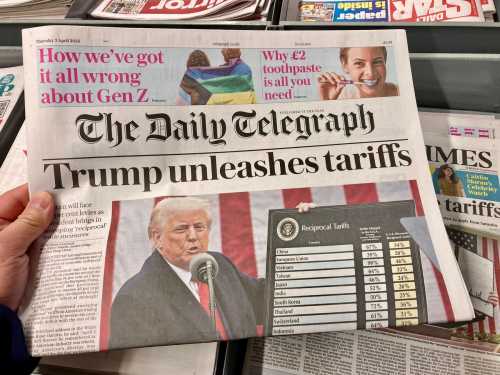
A second key trend is economic fragmentation. You are aware of the tariffs war and the trade policies including industrial policies that tend to slow down global trade. And this is an important trend that we need to tackle as international financial community. And the IMF has a position, clear position of that.
On this issue, the IMF promotes global trade in a fair and just manner. And, in this regard, I think the collaboration between the IMF and other institutions, more specialized institutions such as the World Trade Organization, is very important to make sure that this trend is reversed.
And of course there is, I will add, a third key trend to the global economy, which is the increased use of artificial intelligence. This trend, of course, provide major opportunities for countries, not hardly in terms of productivity gains, but also presents a few risks that also needs to be tackled.
So I would say these are the three main trends going into these Spring Meetings of 2026.
[4:42]
SIGNÉ: Insightful! How are these global dynamics, particularly higher for longer interest rates, debt vulnerability, and slower global growth affecting African economies?
[5:02]
N’SONDE: Well, many African economies are already being impacted. It is clear that not only those trends are providing, as I was saying, some opportunity for countries. Some countries enjoy important natural endowments. So, the current situation in the Middle East that is bringing the price of commodities up is beneficial at least on a temporary basis to a number of economies, those that export minerals and natural resources, energy, oil.
But it is an an adverse impact and adverse shock to those countries that are net importers , for those commodities, including fertilizers. A number of countries have already started to feel the pain. I can see a country like São Tomé and Principe, which is a net importer of energy, where energy is very expensive, is already feeling the pressure. So, all African leaders, of course, should be aware of the challenges.
The shock in the impact of the war in the Middle East is obviously a supply shock that increase the policy tradeoffs between a fiscal policy and monetary policy. Central banks have significant policy tradeoffs to meet. Their need to, of course, maintain price stability without further or damaging economic growth.
So there is a important coordinations also to be made between fiscal policy and monetary policy to ensure that while the fight against inflation is going on, no adverse impact on the economic activity should be neglected.
[6:43]
SIGNÉ: Insightful, Executive Director N’Sonde. Many African governments face difficult tradeoffs between fiscal consolidation, growth, and social protection. Based on your engagement, what policy mixes are proving most effective in navigating these transitions?
[7:07]
N’SONDE: Well, if there are policy tradeoffs, it’s because we don’t have a sufficient microeconomic policy space. So in order to create that needed space to meet both consolidation, fiscal consolidation needs and meeting the investment and social spending that our countries require, there is a need to expand this fiscal space.
First first actions, and policymakers are aware of this, it’s important to enhance domestic revenue mobilization to create the necessary fiscal space. Now, this means that we need to expanded the tax base. Our policymakers need to fight the tax exemptions. And, on the other side, there is a need to, of course, rationalize spending, while better targeting the needed investment and social spending for the most vulnerable countries.
So this is where the main trade off is. Of course, those countries in the current juncture of reduced ODA, there is a need for multilateral institutions to step up and be ready to meet the need of those countries, low income countries especially. This is where development institutions such as the World Bank and regional institutions such as the African Development Bank are very important, are very useful.
For the IMF, as you know, the mandate of the IMF is a little bit different. The IMF helps countries ensure macroeconomic stability. In doing so, the IMF is ready to, of course, support to the countries in this very challenging environment.
[8:47]
SIGNÉ: Amazing! Where have responses been most effective and where do gaps remain, Executive Director N’Sonde?
[8:57]
N’SONDE: I think generally speaking, I can say policy responses have been effective where the countries have benefited from the Fund’s support. That this is very important. Many of our countries, as you know, face weak capacity, implementation capacity for reforms. And capacity development assistance from the IMF, from the World Bank alike, very important. It helps policymakers really own the reforms they implement.
So, the most effective outcomes, the most effective policies have been where the countries have benefited from technical assistance, capacity development, and where the ownership of reforms are strong.
[9:43]
SIGNÉ: Insightful! And what reforms or innovations are most needed within the IMF or across international financial institutions to better support African countries, particularly regarding debt restructuring, liquidity provision, and crisis prevention?
[10:06]
N’SONDE: The IMF has quite a number of instruments available to support African countries. First, the lending facilities that the IMF has. There is plenty of those facilities, concessional resources that that IMF make available to low income countries in need. There are also countries that are less, facilities that are less concessional for mature stabilizers. A number of African countries have tapped into those less concessional resources. Of course, in order to benefit for those resources that are more abundant, the country needs to have a very strong fundamentals.
And there is what we call precautionary instrument that countries can use. So far, those instrument, precautionary instruments, have been used by emerging markets. But we will hope that the IMF will expand the use of these resources for lower income countries as long as those countries really benefit from very strong fundamentals.
Now, the IMF also is acting as, you know, on the debt front. The IMF participate in different initiatives, at least provide advice to creditors and debtors alike. The common framework under the G20 is one of them. And also the IMF is very active along with the World Bank, in the Global Sovereign Debt Roundtable. There will be further discussion during the Spring Meeting on this Roundtable in this Roundtable. And the IMF continues to provide advice to both creditors and debtors to make sure that debt restructurings are effective.
As you know, we have made significant gains in terms of timeliness, in terms of predictability of those debt restructuring processes. But needs to be done and more need to be done, and the IMF is working toward those objectives on making those debt restructuring is more effective and more timely.
[12:08]
SIGNÉ: Fantastic, Executive Director N’Sonde! How can coordination between international financial institutions be improved to avoid fragmentation and maximize impact?
[12:25]
N’SONDE: At the end of the day, it is the membership or member countries that act by the IMF. The international institutions are here to help countries and provide advice. There are significant gains to be made in a more unified world, where global trade is abandoned. And we have seen the, that the global trade has slowed down following the tariff wars and the different industrial policies that some systemic countries have put in place.
So, the World Bank, the IMF, and the World Trade Organization should continue to coordinate their actions. There are different platforms on which those institutions collaborate. And it’s really important, extremely important to maintain this coordinations.
I will add that those global institutions I just mentioned should also strengthen their collaboration with regional institutions that are closer to realities on the continent. The African Development Bank has a new president with a new visions, clear visions on what he wants to do with four main objectives. And I think that he has shown, the new president of the African Development Bank, has shown his interest in enhancing collaboration with the IMF. He has visited the IMF right after his election as president of the ADB, and we were honored to welcome him. When we say we, I mean African executive directors at the MF, at the board, we welcomed him. And we had exchange of visions and ideas. And I think there is good hope that those two institutions, IMF and African Development Bank, at least, will be able to increase their collaboration for the benefits of our member countries.
[14:23]
SIGNÉ: Fantastic! If you were advising finance ministers and central bank governors ahead of the Spring Meetings, what will be your top actionable recommendations to accelerate inclusive growth, strengthening macroeconomic stability, and enhancing resiliency to virtual shocks?
[14:55]
N’SONDE: Thank you very much for your very interesting question. Of course, African leaders are well aware of the policy they need to put into place. We have frequent exchange of views in this regard, and they know very well the IMF policy recommendations.
In order of course, to strengthen growth or growth prospect, the first precondition is to ensure that they maintain macroeconomic stability. And of course, they need to mobilize the necessary resources to boost the growth. So this means that they need to invest in human capital through education and social spending and health spending, which is extremely important to increase human capital and physical infrastructure.
And of course, the continent can leapfrog from artificial intelligence where they can make significant gains in productivity and therefore boost the gross prospect.
Structural reforms, very important. Our policymakers need to continue structural reforms to improve governance, to create the conducive business environment for attracting investors.
And of course if I have to add another policy recommendations, especially at this juncture, is to invite our policymakers on the continent to really advance our African Continental Free Trade Area, which is an important initiatives where our economies can make significant trade, but also gross gains, especially in the current juncture.
We have a diverse number of economies on the continent. Some of the economies can specialize or have specialized, they benefit from comparative advantage. Some are producer of natural resources. Others are turned into more services. And with that diverse landscape of economies, I think our countries, African countries, can benefit a lot from starting of these important regional trade initiatives.
SIGNÉ: Excellent advice and a great note for us to end on. Thank you, Executive Director Regis N’Sonde as always, for your excellent insights. I look forward to hearing more about the International Monetary Fund’s work during the Spring Meetings.
N’SONDE: Thank you very much Professor Signé. It was a real pleasure to join you. And, in closing, I would like to really to commend you for your very helpful and very successful program. And I’m always pleased to be with you. Thank you very much, and I look forward to seeing you during the Spring Meetings.
SIGNÉ: Thank you. Thank you so much for the special collaboration. We deeply appreciate you.
[17:53]
Turning now to Harold Tavares, executive director of Africa Group II at the World Bank, representing 23 African countries.
Welcome Harold.
TAVARES: Thank you, professor. It is great to be here. Thanks for having me again, and look forward to our discussion.
[18:18]
SIGNÉ: Thank you so much for joining me today. As we approach the Spring Meetings, how do you assess the current state of the global economy, particularly in terms of growth fragmentation, interest rates, and debt dynamics?
[18:36]
TAVARES: Sure. As you know, professor, the world is very different since we last we spoke. The current global environment presents serious headwinds and challenge for African countries. There is urgent need to protect the concession of finance, address debt vulnerability decisively, and prioritize investment that fosters growth and job creation.
As you know, job is our main agenda for the World Bank Group. And this Spring Meeting it’s still gonna be the main discussion. And especially link that with the pillars that we discussed in the previous meeting, in Annual Meeting, related to the infrastructures as energy and human capital to prevent today’s shocks from becoming long-term development setbacks.
[19:32]
SIGNÉ: Fantastic! Following up on that, what are the most important implications for African economies in both the short and medium term?
[19:43]
TAVARES: I would say that on the short term, the African economy face higher borrowing costs in international markets and reduced access to to eurobond financing, capital flowing out towards safer and high yield assets in developing markets. As a result, the governments either borrow domestically or turn to institution like IMF and the World Bank. Also debt servicing pressure intensifies with a larger share of revenue going to interest payments. As you know, African country pay really high debt and they spend more money paying interest rates they investing in education or health. As a result, I would say fiscal tightening leads to cuts in spending and delays in infrastructure and social programs.
But on the long term, I would say the high debts still in borrowing costs may push reforms. Debt will still be a major issue because this is something that we’re tied for long term. I would say the better tax collection systems reduce reliance on external debt. As you know, recently, we have seen country cuts foreign aid. This is mainly for the biggest donors as you know, the U.S., the UK, France, and others.
And I think this from our capitals for authorities, I think a more disciplined public spending too. This is from our side. I think it’s very important that we’ll take in consideration. If managed well, this could improve macroeconomic stability in the long term.
[21:37]
SIGNÉ: Fantastic! Over the past year, what have been the most consequential global shifts? For example, tightening financial institution or the fragmentation, the climate shocks among others. And how have they translated into policy tradeoffs for African governments?
[21:58]
TAVARES: The central tradeoff facing African governments is between stabilizing the economies today and investing in the future. This dilemma is especially pronounced in Sahel. And I want to bring Sahel here because this week we’re gonna approve the country partnership framework for the Sahel countries. Very innovative initiative because we’re planning to approve the CPF, the country partnership framework, as one for the four countries, jointly. Because they have all the similar challenge. And I think the challenge that they face where government must balance urgent security and any humanitarian needs with the long-term development goals.
And I think the Sahel, it’s a very unique region, and this is perfect to show you this type of the tightened financial condition, and the geopolitical fragmentation, climate shock.
But with that also many governments have had to prioritize inflation control. And we know the current situation that we have in the Middle East.
One of the biggest challenge for African countries is the impacts on this current situation is the inflation. But deflation has been an issue for a long time. But I think the government needs to prioritize inflation control, exchange rates stability, and debt servicing often at the expense of public investment, social service, and climate resilience.
As I mentioned earlier, in the Sahel, these pressures are compounded by acute security challenge, frequent climate shocks with floodings, and fragile institutions, forcing governments to allocate significant resource to crisis response rather than development.
[23:50]
SIGNÉ: Insightful. Where have responses been most effective and where do gaps remain?
[23:59]
TAVARES: There’s a lot of success stories to be told, particularly from our continent. But obviously we are still facing a lot of challenge, but the good stories we need to tell. And I always like to say, and this is what the president of the World Bank said, whatever works best in one country, we don’t need to invent, we just need to replicate it.
And I’ll give you a few examples where response has been most effective. First Kenya. As you know, Kenya was on the news last year and year before. I want to share this this response that Kenya has done, which has taken relatively decisive steps in tightening monetary policy to stabilize inflation and the currency, increase tax, and reduce fiscal deficit, and maintaining engagement with IMF. As you know, protest in the streets, mainly because of this main issue.
And the other example, Cote d’Ivoire, has benefit from current system stability, maintains strong infrastructure led growth, and avoid severe inflation spikes relative to peers.
And the third example I would like to use is Zambia, which was on the news too, because of its debt challenge they had in the country. Zambia has been a key test case for sovereign debt resolution. And that was a big outcome for the G20.
But also, like I said, the gaps remains significant. Nigeria, for example, we know the challenge that Nigeria has had, particularly if you’re familiar with macro finance in Nigeria regarding the subsidies. I will say Nigeria implemented major reforms, removed the full subsidies, and liberalized parts of the foreign exchange system. However, the inflation surge currency volatility persists, and social safety nets remain limited.
And another example, it’s Ghana. Ghana made progress under the IMF program with the domestic debt restructuring completed and fiscal consolidation is under way. But we know growth remain weak and private sector credit is constrained, and confidence recovery is very slow.
All of these we see a case of success but still with a lot of gap. But we can use this as a knowledge and see what works in one country can be replicated. And all of this we can replicate this knowledge around the continent.
[26:37]
SIGNÉ: Looking ahead, what are the top two to three actionable priorities African governments and your international partners should focus on to deliver better outcomes, whether in terms of growth, jobs, resiliencies, among others? And if possible, could you point to countries that exemplify successful approaches that order could learn from?
[27:06]
TAVARES: Let me structure this in three dimension. The first most important thing, when we talk about end of poverty, I think job is the most important thing. Put job creation at the center of the reforms. And, use my own experience as a Africa Group II. Country like Senegal and Cabo Verde show how jobs can be integrated into reform agenda. Let’s look at Senegal. Senegal has combined regulatory reforms with the targeted investment in agribusiness, tourism, and service. While Ghana has focused on improving the business environment and skills to support SMEs. And Cabo Verde, it illustrates how tourism led growth can pair that with the skill development can generate employments as a small, open economy.
And mainly the elements that can show how jobs can be very impactful on the economy of the not only of those countries, but it can be a model to rep being replicated in other countries.
Second, I would say mobilizing private capital at scale. Several of my countries demonstrate how clear policy came crowd in private investments. And one of an example is Côte d’Ivoire and Senegal. They have used public privates partnerships and sectors sector focused strategy to attract private capital into energy. Not only energy, but agroprocessing and infrastructure.
And the third one, I like to link this particularly with my other hat that I use, which is small states, and particularly crisis response, shift from crisis response to resilience. I’ll use Côte d’Ivoire and Guinea example, which is highlight the importance of tackling debts and climate risks together.
As you might be familiar, Côte d’Ivoire had done debt swaps focused on education. But I want to use particular example Côte d’Ivoire efforts to preserve fiscal space while sustaining public investments underscore how macroeconomics stability supports growth.
Social spending. While Guinea it has increasingly integrated climate and climate related risks into agriculture and mining and infrastructure planning. This experience show that resiliency requires upfront investment, but not just the emergency response. That means you not only mitigating, but also you’re adapting.
SIGNÉ: Excellent advice and a great note for us to end on. Thank you so much, Executive Director Harold, as always, for your excellent insight. I’m looking forward to hearing more about the World Bank’s work during the Spring Meetings.
TAVARES: Thank you professor, it’s always great to have this conversation with you. I look forward to seeing you at the Meeting.
[music]
SIGNÉ: I am Landry Signé, and this has been Foresight Africa. Thank you listeners for joining me today. The Foresight Africa podcast is brought to you by the Brookings Podcast Network. Send your feedback and questions to podcasts at Brookings dot edu.
My special thanks to the production team, including Ike Blake, supervising producer; Fred Dews, producer; Dafe Oputu, Izzy Taylor, Aysha House and Selah Ilunga-Reed, associate producers; Gastón Reboredo, audio engineer; and Daniel Morales and Teddy Wansink, video producers. The show’s art was designed by Shavanthi Mendis. Additional promotional support for this podcast comes from my colleagues in Brookings Global and the Office of Communications at Brookings.
Participants
- Subscribe to Foresight Africa on Apple, Spotify, Afripods, or wherever you listen to podcasts.
- Listen to previous episodes.
- Watch episodes on YouTube.
- Learn about other Brookings podcasts from the Brookings Podcast Network.
- Sign up for the podcasts newsletter for occasional updates on featured episodes and new shows.
- Send feedback to [email protected].
The Brookings Institution is committed to quality, independence, and impact.
We are supported by a diverse array of funders. In line with our values and policies, each Brookings publication represents the sole views of its author(s).
Commentary
PodcastAfrica’s top priorities for the 2026 World Bank and IMF Spring Meetings
Listen on
Foresight Africa Podcast
April 8, 2026