



... I believe that in rural places you don't have as many people. Every one of those people matters a lot and has a big impact. So you can’t dismiss anyone.
Tom Halverson
This special edition of Reimagine Rural features Tony Pipa interviewing Tom Halverson, CEO of CoBank and a member of America’s Rural Future: The Brookings-AEI Commission on Rural Prosperity. Halverson reflects on the commission’s visits and public hearings in North Dakota and Minnesota, emphasizing the diversity of rural places and important trends regarding rural youth, agriculture, innovation, and the need for holistic, bipartisan rural policy reform.
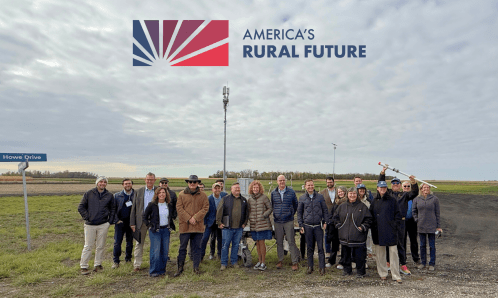
America's Rural Future Field Hearings
Transcript
[music]
PIPA: Hi everyone. I’m Tony Pipa, a senior fellow in the Center for Sustainable Development at the Brookings Institution, and your host for the Reimagine Rural podcast. Normally, I chronicle the changes occurring in a rural town somewhere in America by capturing the stories and perspectives of its local leaders and residents.
This episode, however, is a special edition, an interview with a member of America’s Rural Future, the Brookings-AEI Commission on Rural Prosperity. The Commission is co-chaired by Heidi Heitkamp, former senator of North Dakota, and Chris Sununu, former governor of New Hampshire, and will produce a national rural strategy by the fall of 2027.
To inform the Commission’s work, we’re visiting places across the diversity of rural America to hear from rural people, see projects and progress up close, and host public hearings that elevate their voices. Our first visits were held on October 21st and 22nd at the Grand Farm in Casselton, North Dakota, and on the White Earth Reservation in Mahnomen, Minnesota. I sat down for a conversation with a member of the commission, Tom Halverson, who’s CEO of CoBank, to get his impressions and key takeaways from the visit.
Look for a new episode next week when I revisit Thomas and Davis in West Virginia and learn about a proposed data center for the area.
Tom, tell us a little bit about yourself and CoBank, and your motivations for participating as a member of the Commission.
[1:39]
HALVERSON: Well, thank you, Tony. Pleasure to be here with you. You know, I come from a family of immigrant farmers in the Midwest, specifically Iowa, and I’ve lived all over the Midwest in a lot of rural places. So I have a deep abiding interest and in life experience in rural America, which is something I care a great deal about.
I’ve spent the majority of my professional career in financial services, oddly enough outside of the United States working in the investment banking and international finance industry. And after many years of doing that, I had the opportunity to reconsider what I wanted to do and try and do something that would matter a lot, not just as a job, but as a mission. And I had the fantastic opportunity to join CoBank, which is the largest institution in the farm credit system.
The farm credit system is the original government-sponsored enterprise of the United States, established by Congress. And we serve agriculture, agri-business, co-ops in agriculture, but also co-ops in infrastructure businesses. So think electric power, communications, and water. And we’re active at financing and providing a reliable source of credit for those industry sectors predominantly but not exclusively in rural America.
So I care deeply about rural America and its health and well-being because that’s where predominantly all of our customers are. And so the work of the Commission has a great, passionate, abiding overlap with the mission of CoBank, and so I’m honored and pleased to be able to contribute to it.
PIPA: Well, it’s wonderful to have you as a member, and as you know, the Commission, we believe really strongly that it’s important to go to rural America to listen and to learn from people who are in rural communities about the things that they’re facing, about the opportunities and also the challenges they’re facing and what it might mean for the future of their communities.
Now, just a couple of weeks ago, we were in Casselton, North Dakota, at the Grand Farm there, and then we spent a day on the White Earth Reservation in Minnesota. So as you participated in those visits, what were a couple of the key things, key insights that occurred to you as you were listening and hearing from local leaders and people who just live in those communities?
[4:06]
HALVERSON: Well, that is a part of the country that I am very familiar with having lived in Minnesota for 10 years myself. I have many customers in North Dakota, spend a lot of time there. So I felt very comfortable in that. And one of the reminders as I reflect back on the experience, and this correlates with my life experience of having worked all over the world and done business in something like 65 countries at this point, is that culture matters a lot. So for me, dropping into that environment, particularly at Grand Farms, that’s a culture that I know very well, I’m very familiar with. Could just as easily have been my family as opposed to my customers or friends and acquaintances of my customers.
But I reflected a lot and do now about the fact that the culture of the people, where they come from, their heritage, what they learned and so forth, has a huge impact on how they show up, how they are able to work together, collaborate together, and so forth.
I suspect that since we’re at the beginning, that was one data point, but I suspect what we’ll see when we go to other places all around the country is culture matters and it’s quite different in different places. I mean, I’ve seen those differentials around the world, but it’s also fair to say that we have a lot of diversity and cultural attributes right here in the United States, and I suspect we’re gonna see a lot of that in the coming weeks and months.
PIPA: Well, and I think that diversity of rural America is something that’s really underappreciated, and I really believe and hope that as a Commission, as we get out there, we’re going to get to experience the full array of diversity in rural America.
[5:47]
HALVERSON: I’m sure that’s true. I know it’s true because we have customers in multiple industries all over the country. And there’s nothing like seeing them in person. I do a lot of traveling. I see a lot of customers, and that is absolutely the case. The diversity in all of its attributes is much more prevalent in rural America than is assumed or stereotyped.
PIPA: Now, we got to talk to local elected officials. We heard from, I think, three mayors across and one former mayor across the visits that we did. We heard from a leader of an electric co-op, people that you’re familiar with from your own business. What struck you about what they’re dealing with as local leaders in their particular communities as they look to the future and trying to keep their communities healthy?
[6:38]
HALVERSON: Well, a couple things struck me, one of which is the challenges and burdens of responsibility of being the mayor of a smallish town anywhere, but particularly in rural America. They’re not dissimilar. It doesn’t matter what political party or affiliations you have, you know, you gotta keep the potholes filled and the school system running properly and the police department staffed and resource and all those things.
So the challenges and opportunities of local government are the challenges and opportunities of local government, and I was really actually quite pleased and reassured that the way the elected officials that we interacted with showed up was highly bipartisans or nonpartisan. They were not showing up as ideological individuals. They were showing up all of them in the locations we were in. They showed up as practical problem solving people who wanted to do right by their community and capitalize on opportunities and solve problems. And work with anyone and everyone who could help them in that respect, which was reassuring because our national life these days is a little bit the opposite of that.
And I believe that in rural places you don’t have as many people. Every one of those people matters a lot and has a big impact. So you can’t dismiss anyone. You have to be able to leverage all the resources if you’re gonna get good outcomes. And I was pretty reassured at the way those elected officials showed up, how they spoke to us, how they spoke respectfully to each other, even when they weren’t from the same political affiliation.
PIPA: So the first day we were at Grand Farm in Casselton. That’s sort of an innovation ecosystem in a rural place, drawing upon the assets of that place, which was agriculture. Any particular takeaways from that particular place that struck you?
[8:26]
HALVERSON: Well, it did not surprise me and was not new to me, but what struck me was the fact that modern agricultural practices in the United States are very sophisticated. Right? We have the most productive, most efficient, most technologically sophisticated agricultural production complex in the world. And the types of technological innovations that are being tested and experimented with there on behalf of their stakeholders and shareholders and the people who want to use that facility are indicative of that. It’s a very innovative place and there’s a lot of cutting edge research and development that’s being done there that will be operationalized and utilized next year in a variety of different ways.
So I was pleased to see that. And it was a reminder of the fact that rural America in general, but the ag complex in particular, are very sophisticated, forward-looking businesspeople who are leveraging technology. And it’s not therefore an accident that we have doubled agricultural productivity in my lifetime in this country.
PIPA: And the second day we were on White Earth Nation in Minnesota. And we took a bus tour around the reservation we saw different projects for the reservation. And then heard from local leaders and Tribal leaders when we came back to lunch and for our public hearing. Anything particularly stand out or strike you from our visit there?
[9:59]
HALVERSON: Well, one thing that stood out and struck me was I have less personal exposure and experience in Tribal Nations than I do with other aspects of what we see and will see. And therefore I know that I come to the table with a lot less knowledge. Right? So I need to learn more, listen more, and have more time and exposure. So it was a very good experience for me.
But I think what I have to recognize is I don’t know what I don’t know, and I’d like to know a lot more. I was impressed with all of the people that we met, and I enjoyed the opportunity to interact with them. But I’d like to have more of those opportunities.
I expect that this was one data point and we’ll have others as we travel around the country. But I was pleased to see the passion and the commitment of some of the leaders that we met with to the kinds of investments they make in their time and their personal energies and their leadership and their commitment to their community and to their Tribe. It was impressive.
PIPA: One of the issues that we often hear about in rural America is about youth and about opportunities for youth. We had some students from Future Farmers of America participate. We heard from some of the Tribal leaders who were working in the community colleges with youth. We also heard even from some local philanthropies. In fact, we had Benya Kraus, who was one of our witnesses, talk about a demographic cliff that might be coming for rural America. And really it’s kind of the tip of the spear for the country as a whole because we’re not, we don’t have births outweighing deaths anymore.
What did it strike you about, like, what does the future look like for young people in rural America? And what do you think we as a Commission need to be thinking about or keeping in mind as we think about the youth in rural America?
[11:56]
HALVERSON: Well, it sounds nerdy, but as a CEO of a large business that’s active all across rural America, we actually pay a lot of attention to demographics and where are communities growing and where are communities shrinking? Why? How? Et cetera. And we spend a lot of time thinking about this because it’s very hard to have a vibrant, successful future if you’re shrinking. Right? That’s just a fact.
And so we look very carefully at places that are shrinking, we look at places that are growing and try and figure out why. And one of the things that a community to, to thrive in the long run wants to be able to do is to keep its young people, have economic growth and opportunities, have educational opportunities, decent housing stock for them to live in, healthcare that would match the kinds of infrastructure they would have if they left their rural community and went to an urban center somewhere else. And those are really important attributes.
And I think that the Commission I know will spend a lot of time and energy trying to figure out, you know, what are the attributes that are correlated with successful outcomes in rural communities, or the reverse. Right? Because we’re going to find that we have challenges in this country having the kind of population growth that we might aspire to to have the kind of economic growth and expansion of the opportunity set for people to live successful economic lives and raise their families going forward.
We’re gonna need to have population growth and we’re going to need to have attractive opportunity sets in rural places, which, frankly, to put a positive note on that, I feel much more optimistic about that today than I would have if we’d had this conversation 5, 10, or 15 years ago. Because modern technology in general, but communications technology in particular, makes it a lot easier to live, to work, have a business, and so forth almost anywhere, but particularly in rural America because communications technology is so good. That’s just one of many things that I think creates a more attractive opportunity set for rural communities going forward.
PIPA: Anything in particular that surprised you from the visit? Anything or any experience that you had that said, huh, I didn’t really expect that?
[14:22]
HALVERSON: Well, back to the opportunity on the reservation. One of the things that did surprise me there, and I didn’t know what I expected, was that a lot of the people who we met who were in positions of leadership were actually really young. Right? And I was quite impressed by that. These were people who were well-educated, ambitious, capable people, and they were early in their careers. And that wasn’t what I was expecting. And I was impressed by that.
Now I have a concern, or sort of a question mark, which wasn’t a surprise to me, but it was reinforced by the experience of the trip, which is I feel as though wherever I go, including the locations that we visited in Minnesota and North Dakota, local people know a lot about their local facts and circumstances and so forth. But the broader context of the policy environment in which they’re operating and living is just very untransparent. And local people, just like other people, just don’t know a lot about the flow of funds and the local economy and the like.
And I have found just even in our business that the transparency, visibility, access to economic and financial data and information that would help one to know and understand very basic things about how the economy is functioning, what resources are coming into the community, how they’re being invested and so forth is just not very visible. Not very transparent, not very well understood. And I think that’s a limitation for policymaking and for understanding what’s effective and not effective. And that’s an area where I think the commission could shine some light for benefit of everyone.
[16:10]
PIPA: I really agree. I mean, I can remember Megan Langley from StrengthenND, who was one of our witnesses at the public hearing, talking about her work with local small communities in rural North Dakota and their difficulty in accessing the public investment they need, whether it’s for the infrastructure or business development, and it’s just maze to navigate. Like, it’s just really hard to pierce the veil.
And then I remember hearing from Ben Schrier, who’s a former mayor, during our Minnesota hearing as well, saying the exact same thing. He was talking about energy sovereignty and them wanting more dependable, cheaper energy, but being able to navigate the complications of where you might get public or private resources to be able to do that is really tricky.
So I think that is one thing that we’re gonna hear as an enduring theme throughout our visits, and it is gonna be part of the Commission’s work to be able to, I think, both educate policymakers as well as think of some ideas is how can we make that a whole lot easier. Right? Because it is hard to track where that money is going and even how you access, like, how do you get access to those markets if you’re in a rural place?
HALVERSON: Yeah. No, I think that is a pressing need, that even if you didn’t somehow come up with new plans, new programs, new funds, to just create transparency of what’s actually there and how it works and make it easier–
PIPA: –yeah–
HALVERSON: –would be a great outcome, even if that was your only ambition.
PIPA: Well, any final thoughts about the visit and what it left you feeling for the future of rural America and for the future of the Commission’s work as well?
[17:46]
HALVERSON: I I’m a historian by interest, and we had the individual who worked in the Nixon administration with us who told us the story of the commission that was established under the Nixon administration back in 1970. And I didn’t know any of that story. And so to meet with him and hear that story, have him with us for a couple days, we had some really interesting conversations. And to know and realize that that commission, which had its first meeting in Fargo in I think July of 1970, when I was six years old, to think that nothing like that has been done since then was a really eye-opening idea.
People are debating and Congress is working on various and sundry things in different executive departments and budgets and so forth for decades since then. But the fact that nobody has stepped back from this enormous ball of complicated yarn that we’re looking at and tried to understand it and think about it holistically, it made me feel pleased, but also proud to be involved in something that I think is well past due for a vigorous, thoughtful, bipartisan reassessment. Because the health and well-being of rural America is a significant determinant about the health and well-being of our country in general, but it’s politics in particular, I think.
PIPA: Well, I think that gives us the commitment and the energy for which to push forward with the Commission and the research and the work that we need to do both to hear from folks at the local level, but to your point also to understand that these have been enduring issues from a policy perspective and that it’s long time past due for us to put our collective minds to this and to make policy fit for purpose in the 21st century.
So I really appreciate your participation in leadership on the Commission and look forward to the work that we’re gonna continue to do together over the next couple of years.
HALVERSON: Outstanding. Thank you, Tony, for your leadership.
[music]
PIPA: Thank you.
Many thanks to the team who makes this podcast possible, including Fred Dews, supervising producer; Molly Born, producer; Gaston Reboredo, audio engineer; Daniel Morales, video manager; Zoe Swarsenski, senior project manager at the Center for Sustainable Development at Brookings. Adam Aley and Elyse Painter, also in the Center for Sustainable Development, who provide research support and fact checking. And Junjie Ren, senior communications manager in the Global Economy and Development Program at Brookings.
Also, my sincere thanks to our great promotions team in the Brookings Office of Communications and Global Economy and Development. Katie Merris designed the beautiful logo.
Finally, support for this podcast is provided by Ascendum Education Group. The conclusions and recommendations of any Brookings publication or podcast are solely those of its authors and speakers, and do not reflect the views or policies of the Institution, its management, its other scholars, or its funders. Brookings recognizes that the value it provides is in its absolute commitment to quality, independence, and impact. Activities supported by its donors reflect this commitment.
You can find episodes of Reimagine Rural wherever you like to get podcasts and learn more about the show on our website at Brookings dot edu slash Reimagine Rural. You will also find my work on rural policy on the Brookings website.
If you like the show, please consider giving it a five-star rating on the platform where you listen. I’m Tony Pipa and this is Reimagine Rural.
Participants
HOST
More information:
- Listen to Reimagine Rural on Apple, Spotify, or wherever you like to get podcasts.
- Learn about other Brookings podcasts from the Brookings Podcast Network.
- Sign up for the podcasts newsletter for occasional updates on featured episodes and new shows.
- Send feedback email to [email protected].
- Find out more about the Brookings-AEI Commission on U.S. Rural Prosperity.
- Discover more research on Reimagining Rural Policy.
The Brookings Institution is committed to quality, independence, and impact.
We are supported by a diverse array of funders. In line with our values and policies, each Brookings publication represents the sole views of its author(s).

Commentary
PodcastAmerica’s Rural Future: Interview with Tom Halverson, CEO, CoBank
Listen on
Reimagine Rural
December 2, 2025