In an era of rising energy demand, global industrial competition, and growing risks of climate change, the United States needs to manufacture, generate, transmit, and deploy abundant clean electricity at scale and speed. Yet this imperative is running headfirst into a series of workforce, permitting, and governance bottlenecks that, as a recent Brookings report argues, will only be overcome when U.S. state governments better align their economic development and energy policies. Doing so will not only enable electrification, but also help states capture the economic benefits associated with what energy experts, investors, and economic analysts have termed the “electro-industrial economy.”
By “electro-industrial economy,” we refer to the increasingly integrated system of clean energy, electricity infrastructure, semiconductors, and data centers, whose growth is becoming mutually reinforcing. Advanced industries have always powered the U.S. innovation and export economy, but the country is entering a new phase. The demands of the electro-industrial era put greater value on the physical assets of places: their electricity grid, land, water, and other infrastructure, in addition to their base of workers. This strain, along with broader public anxiety about artificial intelligence, has expressed itself in the recent backlash to the data center buildout. Americans want investment and jobs, especially in places experiencing economic distress—but they are clearly saying, “Not like this.”
As we approach a major midterm election, U.S. states are seeing unprecedented investment that, if channeled properly, could reduce costs for consumers, mitigate supply chain risks, decarbonize our energy system, and deliver more jobs and economic opportunity to more places. But elected officials can only channel investments if they have clarity on what sort of positive-sum model their voters can support. This report explores how a new tool—Advanced Industrial Zones—can help policymakers plan and govern this big electro-industrial buildout to secure private sector investment, grow good jobs, and create pathways to economic mobility in local communities.
Why the electro-industrial economy matters and how it is playing out on the ground
Brookings has long argued that advanced industries are the primary source of U.S. innovation, productivity, and export growth. Today, advanced industries are entering a new phase. In the 2010s, experts were portending a “fourth industrial revolution” revolving around breakthroughs in digitization and robotics. In the early 2020s, the central driver of electro-industrial investments was the shift to clean energies such as batteries, electric vehicles, heat pumps, and solar panels, which drove $275 billion in domestic investment in 2025 and are increasingly cheaper than fossil-fuel-based alternatives. Now, hulking artificial intelligence and cloud data centers are the avatars of U.S. industry. By 2030, tech giants are poised to invest something on the order of $2 trillion in U.S. compute infrastructure.
The electro-industrial era is global in scope, but it will be won through local advantages. While companies compete in different market segments and organize around different global value chains, their competitiveness ultimately rests on localized ecosystems of innovation, talent, land, power, and logistics infrastructure. No single region possesses each of these assets in equal measure, nor will every region compete in the same segments of the electro-industrial economy. Different combinations of regional strengths create different opportunities. As a result, the electro-industrial transition is likely to unfold through a variety of place-based development pathways. We outline three below:
- Innovation-production corridors build on co-located concentrations of research institutions, startup ecosystems, and specialized talent and expertise to move technologies from discovery to production. These regions leverage national labs, universities, and innovation districts to attract manufacturing tied to frontier technologies. In the electro-industrial era, notable examples include Fremont, Calif., home to Tesla and a variety of climate tech manufacturers benefiting from Bay Area proximity; and the Illinois Quantum and Microelectronics Park (IQMP), which builds on innovation assets in the Greater Chicago region, such as Argonne National Laboratory’s quantum computing expertise. This powerful innovation-production link is why Fervo Energy built its first commercial operation next door to the Department of Energy’s FORGE geothermal testbed in Utah, and why the Trump administration is now looking to co-locate AI infrastructure on national lab property.
- Reindustrialization anchors emerge in regions with a strong legacy of manufacturing, plentiful land, and a skilled production workforce. These places are repositioning themselves as sites for large-scale production in sectors such as semiconductors, batteries, and clean energy manufacturing. For instance, Weirton, W.Va., had been redeveloping its old steel mill site since 2017—years before federal funding and tax credits made it possible to build the now famous Form Energy factory. Megaprojects such as Micron’s $100 billion semiconductor investment in Upstate New York or Hanwha QCells’ $2.5 billion solar supply chain in and around Dalton, Ga., also exemplify this trend.
- Sustainable energy-compute hubs leverage rapid investment in compute infrastructure such as data centers to achieve low-carbon or regenerative infrastructure goals. As our Brookings colleagues have shown, these projects can directly add clean energy capacity to the system, improve water quality, cover the costs of grid infrastructure such as transmission lines, and accelerate development of new energy technologies. Examples of this include Google’s partnership with Xcel Energy to leverage Form Energy’s iron-air batteries at its Minnesota data center, or Google’s completed project to upgrade water infrastructure in The Dalles, Ore. This archetype is primarily emerging around data centers, but can also be applied across other large industrial loads, such as Antora’s new 5 gigawatt per hour thermal battery deployment to deliver 24/7 power to a bioprocessing facility in South Dakota. Sustainable energy-compute hubs offer to not only decarbonize local infrastructure, but also drive down clean technology costs and solidify domestic supply chains.
This simple typology illustrates that the electro-industrial era is not producing a single geography of growth, but a differentiated map shaped by how regions align physical infrastructure, energy systems, and innovation capacity.
Rapid electro-industrial buildout is scrambling the economic development playbook
Traditionally, regions have been able to make these industry bets over long time horizons. Local economic development practitioners think of building infrastructure, attracting manufacturers, and developing the local workforce in terms of years and decades. These processes provide time for proactive community organizing, infrastructure upgrades, and more. The types of projects that were being announced just a few years ago, such as semiconductor and solar manufacturing hubs, benefitted from this playbook.
Now, electro-industrial investments, especially data centers, are unfolding in weeks and months. A single data center campus may offer an order of magnitude more investment than some communities have seen in decades. This offers a tantalizing opportunity: Economic developers could bypass the years of effort and cost necessary to even have a chance at landing a factory.
Yet there is a structural misalignment between the scale of investment and the absorptive capacity of the communities on the other side of the table. Utilities are scrambling to adapt, public opinion is turning on data centers, and communities are establishing anti-development veto points with potential ripple effects across the economy. As local officials and economic developers evaluate the landscape of potential electro-industrial investments, it’s hard to make sense of what represents a generational reinvestment opportunity—and what’s a devil’s bargain.
We observe four major governance challenges arising from the electro-industrial buildout:
- Uncertain economic development value. Not all electro-industrial investments create the same degree of local economic value. Production facilities—e.g., battery plants, semiconductor fabs, electric vehicle facilities—can anchor larger localized supply chains that create more jobs and longer-term advantages for regions. For these reasons, a recent analysis showed that the majority of tax incentive deals for clean energy projects delivered positive returns to the surrounding areas. By contrast, the long-term local value of data centers is much less settled. Data centers do create jobs, but the numbers can be overstated and are complicated by the fact that data centers come in different forms (e.g., cloud versus AI training loads). Not only are data centers different from manufacturing, but they also do not interface with the local economy in the same ways that more traditional infrastructure, such as rail or broadband, enables local industry. Recent walk-backs of tax incentives for data centers in places such as Virginia suggest a recalibration of the cost-benefit analysis for economic developers.
- Information and power imbalance. Decisionmakers grappling with electro-industrial investments are operating in an asymmetric and rapidly shifting information environment. There is a structural mismatch between the scale, sophistication, and capacity of large tech and industrial firms and local governments in the places they are looking to site their facilities; firms often use this to their advantage by making claims about their technology that are hard to verify, pitting jurisdictions against each other to secure better incentives, or sweet-talking officials. To make matters worse, tech giants often use third parties or special-purpose vehicles to manage data center development, and have leveraged nondisclosure agreements to restrict public knowledge of these projects. This undermines trust between firms, officials, and the public, and hampers future accountability.
- Public backlash. A deep, bipartisan backlash to data center development has emerged across the country, with implications not just for data centers but for the broader electro-industrial market. For those concerned about the macroeconomic and social implications of artificial intelligence controlled by a handful of powerful firms, data centers are one of the few places where the average citizen can throw sand in the gears. Others are concerned about local quality-of-life issues, including noise and light pollution, electricity prices, and water quality. This backlash is creating immense pressure on local officials and even prompting recall petitions. Policy changes driven by public pressure, deepening not-in-my-backyard (NIMBY) sentiment, and risk aversion on the part of public officials will make it more difficult for all types of electro-industrial projects to move forward.
- Competition over scarce resources. Almost all electro-industrial investments require the same basic inputs: electricity, land, permits, and workforce. Local supply of these real assets is relatively inelastic. A single factory or data center will often require a new substation, grid interconnection, and additional power capacity on that grid. Industrial lands are in short supply, particularly after the investment boom of the past few years. These dynamics pit investments against one another; stretch local administrators, economic developers, and educational institutions; and incentivize jurisdictions to cut taxes (or corners) in a race to the bottom.
Given these challenges, one clear governance option is refusal, which is understandable: Data centers, factories, and energy infrastructure come with tradeoffs. Some states and regions may calculate that the costs are not worth bearing or are too opaque.
However, sidestepping electro-industrial investments also comes with a major opportunity cost—at a local scale, across regional economies, and for national resilience, competitiveness, and decarbonization. For those interested in balancing these tradeoffs and finding a path forward, it’s important to define the positive-sum model for planning the electro-industrial transition. Public authorities, community and labor stakeholders, and local businesses need a vision for where they want to go and a clear sense of place. Only then can they negotiate for projects that deliver aligned economic development outcomes, enhance broader regional infrastructure, and hold projects accountable to their goals.
A proactive planning model for the buildout: Advanced Industrial Zones
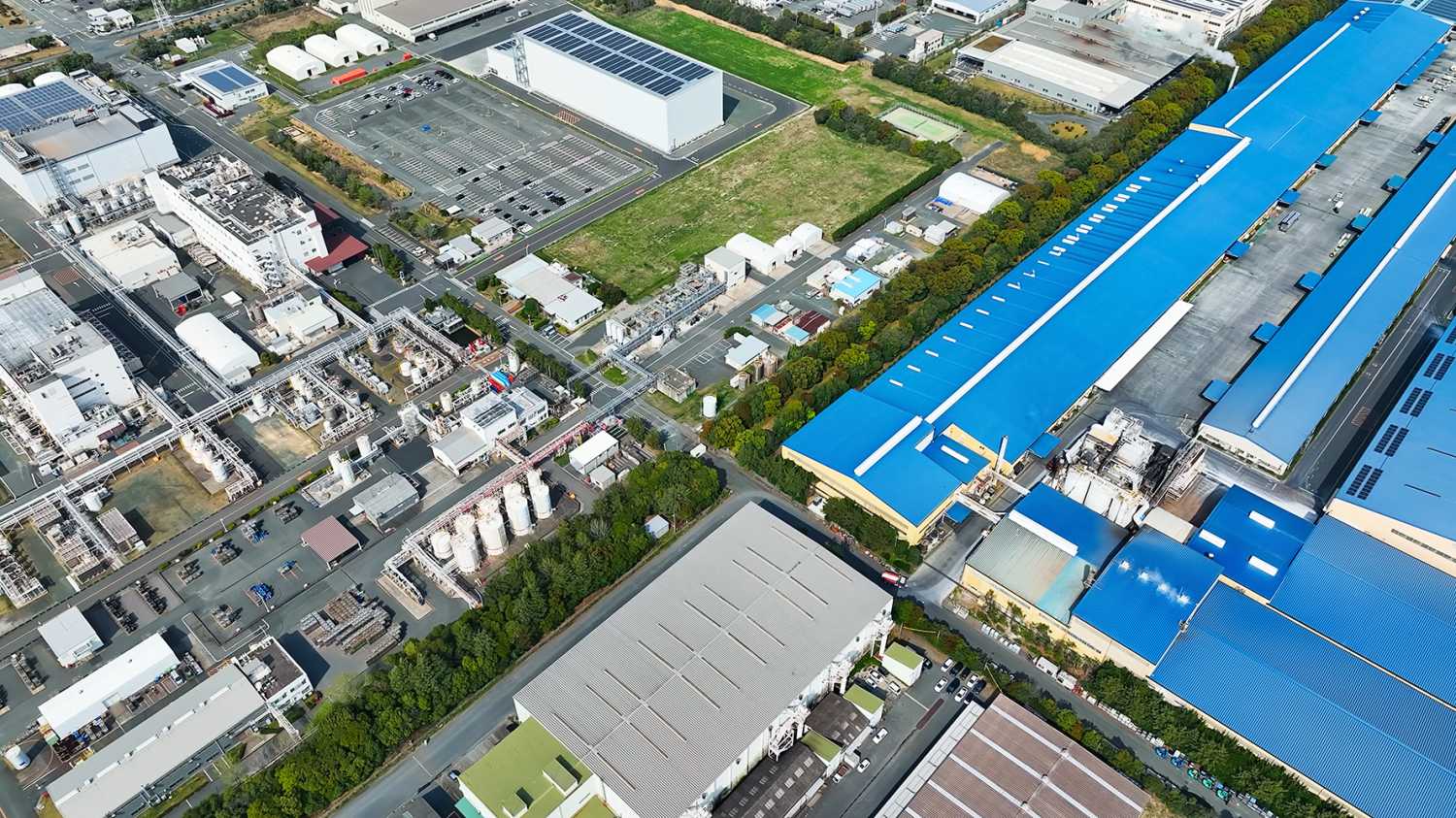
One way to plan and organize these electro-industrial investments is through the designation of Advanced Industrial Zones. Many of the obstacles to building new industries in America today—from a convoluted permitting process to inadequate grid infrastructure—require a localized solution. Many of the risks—from environmental degradation to noise pollution—are due to unplanned, Wild West-style development. Designated zones provide a governance framework for navigating these challenges in specific places.
This type of planning is not new in the world of economic development, with past examples ranging from traditional industrial districts to federal tax incentives such as Opportunity Zones. However, the electro-industrial moment requires a new type of zone—one that focuses on the strategic sectors of the modern, electrified industrial economy; works to agglomerate the real assets that they require; and delivers the types of jobs and benefits communities demand. Fortunately, we have many existing models across the U.S. and abroad that offer lessons for the designation and implementation of these zones.
Designation and governance
Advanced Industrial Zones should be community-led and state-enabled. The most effective zone policies will establish a sort of long-term governance compact between local and state authorities.
Who should take the lead in identifying the right geographies for these zones? It will be important for the state to establish a framework and process for zone designation that involves community approval. In many cases, the state may have already identified one or more initial zones of strategic importance, such as an old military base, port community, or known innovation cluster. The state may also wish to establish a bottom-up nomination process for additional zones. Either way, as locations are being considered for special designation as an Advanced Industrial Zone, there is a unique opportunity for proactive planning, education, and community engagement that is not always present in industrial development. Local economic development organizations are well positioned to facilitate this conversation given their role providing the connective tissue between community stakeholders, municipal and state governments, workforce institutions, and industry.
In the designation process, states and localities should consider existing assets and land use, the types of electro-industrial activities that are geographically suitable and desirable, and the expectations for community and worker benefits. These expectations could be codified in an “Advanced Industrial Zone Development Plan” that state and local officials approve. This is a better model for community engagement than the reactive, project-specific haggling that comes after a project has been announced. There’s a widespread but faulty impression that zones bypass local preferences and process; however, with the right design, they can be a tool for community organizing.
Yet after those conditions are agreed upon and the zone is designated, officials must be able to move with independence and clarity of purpose to develop sites, deliver timely permits, and offer certainty to employers—effectively creating a landing pad for rapid investment. In successful projects such as South Korea’s Ulsan Eco-Industrial Park or the Devens Regional Enterprise Zone in Massachusetts, state or national governments delegated a certain set of streamlined planning, permitting, and investment tools to specialized commissions or public development corporations that administer the zone. These entities would still be subject to ongoing public oversight and responsive to the guardrails set forth in the initial designation and planning process.
Strategic land use planning
It may be counterintuitive, but for those legitimately concerned about harms from industrial activity, Advanced Industrial Zones can help regions manage and mitigate the risks of industrial development by promoting efficient and thoughtful land use. Investments in clean energy generation and battery manufacturing are incredibly important tools for broader pollution reduction and regional economic activity, but many of their would-be supporters remain torn over hyperlocal environmental and social impacts. By clustering large electricity loads and shared infrastructure, zones enable states, communities, utilities, and conservationists to mitigate sprawl and optimize service delivery—and that’s even before accounting for the benefits of clustering for innovation in manufacturing.
State and utility infrastructure investment
In return for this proactive designation and planning process, states or other entities should offer preferential infrastructure investment within the zones to attract manufacturers. This can include site readiness or brownfield remediation grants, prioritized grid upgrades, and onsite power generation. These investments focus public dollars on the core physical inputs to electro-industrial projects, allowing communities to invest in a diversified industrial ecosystem that is not tied to any specific firm.
By contrast, approaches that tend to provide bespoke cash incentives for business attraction can be effective, but also highly risky. Such incentives—and the industrial infrastructure they pay for—all become the property of a single project. Recent analysis from the Upjohn Institute suggests that state and local incentives for clean energy and manufacturing projects have a generally positive return on investment, but noncash services such as infrastructure upgrades tend to outperform cash incentive packages.
Targeted financing
Advanced Industrial Zones also offer a way to break free of the budgetary doom loop for rural or deindustrialized communities. The perennial challenge for these communities is that they need to invest in infrastructure, workforce, and state capacity to attract new investments, but do not have the tax base or administrative capacity to support those activities. This is true in legacy industrial regions—such as Pennsylvania’s Steel Valley, Southeastern textile hubs, and Pacific Northwest timber towns—but also in rapidly growing exurbs looking to diversify their economies via greenfield industrial development. Resolving this constraint often requires fiscal transfers from other regions or a mechanism to borrow against future growth.
Designated zones with clear economic development plans, governance structures, and community buy-in help provide confidence around innovative financing mechanisms such as tax increment financing (which is what Utah’s Inland Port Authority uses to upgrade its industrial districts) and revolving loan funds. It also helps state and federal entities channel financing into specific places with clear, coordinated industrial planning.
Supercharging private capital
Finally, Advanced Industrial Zones can allow communities to strategically tap into a new source of capital: hyperscalers, or the technology companies hungry for land and power to rapidly roll-out billions in investments for new in AI and cloud computing infrastructure. It also simply makes sense to site data centers within industrial parks rather than in greenfield developments.
One can imagine a scenario in which a zone courts a data center developer who is asked to directly pay for or underwrite the larger set of investments necessary for a regional manufacturing hub, such as transmission upgrades, brownfield remediation, site prep, water infrastructure, and workforce development. Regions could effectively leverage hyperscalers’ infrastructure investments as a “slingshot” for broader industrialization or energy transition goals. To pull this off, economic developers will need to be clear-eyed and strategic about the types of industries they want to grow and the infrastructure they will need in specific places. Advanced Industrial Zones can organize that vision.
Building new opportunities from old place-based assets
The various agendas of hyperscalers, clean energy advocates, geopolitical and national security hawks, and economic developers have coalesced around the same physical imperative: to build vast amounts of new electricity and manufacturing capacity across the country. Like waves of different frequencies overlapping, these trends have fueled an infrastructure super-cycle. Whether this generates constructive or destructive waves remains to be seen; so far, it has run headfirst into the same set of physical constraints across the American landscape.
The good news is that this electro-industrial transition is revealing the value of place-based assets—including power infrastructure, industrial land, and a local blue collar workforce—that had fallen out of favor in the 21st century software economy. This could mean new economic opportunity for a broader swath of communities and workers, as well as a once-in-a-generation window to revitalize and clean up our antiquated energy system. States and communities that move quickly to adopt new planning and governance structures—such as Advanced Industrial Zones that organize community priorities, streamline outdated procedures, and channel public sector investments in specific geographies—will be the ones who maximize the potential of this moment.
Authors


The Brookings Institution is committed to quality, independence, and impact.
We are supported by a diverse array of funders. In line with our values and policies, each Brookings publication represents the sole views of its author(s).