




At the recent NATO summit in Ankara, Turkey, wary European leaders sought an equilibrium with the United States. Against a backdrop of ongoing conflict in Iran and Ukraine, Aslı Aydıntaşbaş asked Thomas Wright and Mara Karlin about the dynamics at play.
Transcript
KARLIN: The questions about U.S. credibility, U.S. dedication to Article 5, that’s a whole lot less certain now as President Trump talks about the lack of faith he has in NATO, the lack of support he has for it, the desire to take Greenland, the desire to pull U.S. troops out out of Europe as well.
WRIGHT: He has a level of hostility to Europe and to NATO that’s quite visceral. And he picks all of these fights, and yesterday he talked about Greenland again. He bashed on Spain. Those are the things that create a certain level of instability and new crises.
[music]
AYDINTAŞBAŞ: Hi, welcome to The Current from the Brookings Podcast Network. My name is Aslı Aydıntaşbaş, and I’m a fellow at the Foreign Policy program here at Brookings Institution. As we record this conversation on Wednesday morning, July 8th, the NATO summit in Ankara is just wrapping up.
Now, as someone who’s covered several NATO summits in the past in a previous life as a journalist, I will say these events tend to be, you know, not like the World Cup. They tend to be pretty technical, verging on boring at times, but definitely uneventful. But not this one. This is a NATO summit that’s taking place upon a background of the war in Iran, the war in Ukraine, and in Turkey with, of course, President Trump. That does mean you get a lot of news, and this NATO summit has certainly generated a lot.
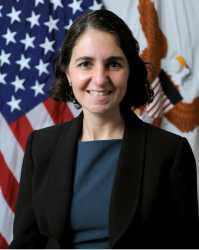
I have with me to discuss all this two colleagues who have worked on defense and security issues, have been to NATO summits, and are really the ideal people to discuss everything about NATO, the changes that it’s going through, and also, of course, the news that it’s generating. Mara Karlin is a visiting fellow with the Talbott Center here at Brookings. And Tom Wright, also a senior fellow at the Talbott Center. Both have worked in previous administrations on defense and security issues and certainly on NATO.
[2:19]
So I don’t want us to try to chase the news. It’s almost impossible. But I will start off with the big story, Iran, which was, of course, the background story in the NATO summit. There has been a live exchange of fire between Iran and United States. President Trump this morning in Ankara in a press conference said the MOU, the memorandum of understanding between Iran and the U.S. is dead. He called Iranian officials scums and liars.
But it’s hard to understand what’s happening. So I want to start off with Mara Karlin. Are we back at war? Is the ceasefire over?
[3:00]
KARLIN: I don’t think so. Look, we shouldn’t be surprised that a few weeks of negotiations on major issues over the last 47 years didn’t really bear a whole lot of fruit, and there’s a lot of confusion surely amongst the negotiators as well as to what each side should be doing.
That said, fundamentally, I don’t think either the United States nor Iran wants this war to continue, particularly at the level that it was. The U.S. president, of course, is thinking about the U.S. economy right now, how high gas prices have gotten over the last few months, and he wants to be able to focus on other things.
Inside Iran, they also don’t want this war to start up at the level that it was. Their economy is in very difficult shape. They have some different characters now in different roles, so they need to rethink what those dynamics look like, and need to try to establish real control over the population.
So neither the United States nor Iran wants a return to a big, hot war. I think we should expect to see these tit-for-tat kerfuffles come up a lot over these next few months, but it’s less likely that it’ll get to the level we saw earlier this year.
[4:15]
AYDINTAŞBAŞ: So a weird place between war and peace. Tom, let’s come to the NATO summit. I’ve read stories that talked about this as being the most important, the most consequential. There’s talk of NATO 3.0. Tell us if this was an important summit, and tell us anything else you want to say on the future of NATO.
[4:38]
WRIGHT: Yeah. I mean, I think it’s definitely an important summit. I also think it’s an unnecessary summit. Because I think with the Trump administration and President Trump in particular, he has a level of hostility to Europe and to NATO that’s quite visceral. And, the name of the game, I think, for European leaders is to get him to sort of a stable place that they can be satisfied with. Right? A sort of a good enough equilibrium that they’re looking for.
And I think at various points they have gotten to that. I think they were there, you know, as of the last week. Right? And, that is basically, you know, President Trump will commit to selling some weapons to Ukraine, to continuing intel cooperation. He will complain about Europe’s level of defense spending, but claim a victory for having gotten them to agree to 3.5 percent plus 1.5 percent on the domestic infrastructure side. And that that is, you know, not perfect. There’s more that could be done, but basically, you know, that’s sort of good enough.
The problem is is that when you have a summit where he is sort of, as he always will be, the focus of attention, and he says all of these things, and he picks all of these fights, and yesterday he talked about Greenland again. You know, he he bashed on Spain. Those are the things that create a certain level of instability and new crises that Europe has to react to and try to fix.
And so, you know, we did not always have annual NATO summits. Certainly in the Cold War, they were relatively rare. They’ve been more frequent since the Cold War, although not always every year. This would’ve been the moment, I think, just to have a summit when we actually need to have a summit to have something critical to discuss.
Instead, I think we’re right back sort of in the Trump show, right, where he is driving the agenda in ways that I think create new problems.
So, you know, all of that said, I think it obviously is an important summit since it’s happening. I think the big sort of question is on the implementation of these defense pledges, where I think some European countries have found it difficult. There are continuing questions around the administration’s support for Ukraine based on what we know so far. That seems to be relatively okay. It seems like the meeting between Trump and Zelensky was relatively good.
[7:11]
AYDINTAŞBAŞ: We’ll get to that. Let’s park that for now because I do want to talk about the meeting and what’s happening in Ukraine. But I want to turn, turn to Mara to respond to your suggestion that maybe we don’t need these summits all the time. And more importantly, Mara, I also want you to address where Europeans are in terms of burden sharing or burden shifting issue. Are they taking over the lion’s share? Do they need to be scolded and humiliated all the time?
[7:40]
KARLIN: I mean, I don’t think that’s a way to get business done, but such as it is. Look, there’s a lot, as you know, that happens below the summit level. I can’t tell you how often I was going to defense ministerials with the secretary of defense, colleagues at the State Department were going to foreign ministerials, to say nothing of what happens below that.
So, NATO is this massive machine that is doing a whole lot of work every single day. That’s great. I don’t know that you need all of the leaders to meet annually. And if it’s going to be trickier, as Tom notes, with President Trump, that could be a reason not to have them.
Europeans have made huge strides in defense investment since 2022. That was not because of brilliant talking points that any of us wrote in the Obama administration, the Trump One administration, or the Biden administration. It was entirely because of President Putin.
The thing is, the investments haven’t been equal. It’s not everyone everywhere. The perfect examples are to look at the Baltics, who will make 5 percent this year, and then to look at Germany compared to the UK and France. You know, in 2030, Germany’s defense budget will equal the UK and France’s combined. So it’s not everyone and it’s not everywhere.
I do think what we need to spend a moment on, though, is the sort of quantitative versus qualitative piece. NATO is bigger. NATO is spending more. Those are great things. And yet, the questions about U.S. credibility, U.S. dedication to Article 5, that’s a whole lot less certain now as President Trump talks about the lack of faith he has in NATO, the lack of support he has for it, the desire to take Greenland, the desire to pull U.S. troops out out of Europe as well.
[9:31]
AYDINTAŞBAŞ: Well, that’s interesting. Quantitative versus qualitative, and it’s not everyone everywhere. The one person who is pretty upbeat about all this has been Mark Rutte, NATO secretary general. And he has become somewhat of a controversial figure because he’s just so flattering to President Trump. But The Economist had an interesting piece that says, “Well, you know, yes, he’s annoying, but maybe that’s the way to save NATO.” I wonder how you would respond to that, Tom.
[10:01]
WRIGHT: Yeah. Look, I think that’s been his approach and strategy. I think they can point to aspects where it’s worked. You know, I think to be fair, if you look back to the start of the administration, and particularly the meltdown in the Oval Office with Zelenskyy, that was a point where Trump could have easily pulled the plug completely, not just on support for Ukraine, including the intel cooperation, which is quite important, but also on NATO in general.
And European governments, by basically hugging Trump close, were able to walk him back from that. The intel cooperation was restored after a few weeks. You know, he began to repair the relationship with Zelensky. None of that was automatic. You know, getting Trump to say that NATO was fixed because of his efforts, again, that wasn’t automatic.
And even on Greenland, in January of this year, I guess they would sort of argue that they were able to convince him not to abandon it, but to leave it alone for another day.
And so the Rutte argument, you know, would be that this sort of sycophancy, which is incredibly difficult to listen to and to look at, and the absolute refusal to criticize Trump on anything is actually the courageous thing to do in this context because it yields results.
I think there is a very strong critique, which I, you know, agree with, which is that that alone is definitely not enough. That on Greenland it was not the sycophancy and the praise that got Trump to back down. It was the threat of Europe using the anti-coercion instrument, possibly it affecting their purchase in the bond markets and and them actually looking at really pushing back in other sort of hard ways, including potentially even Denmark resisting U.S. efforts to take over Greenland, that that was what was critical.
So in my mind, okay, fine, if he believes that that’s necessary to be able to maintain influence with Trump and walk him back from the brink, that’s okay, but they need to really think about the the—
AYDINTAŞBAŞ: —carrots and sticks is what you’re talking about—
WRIGHT: —carrots and sticks as well.
Yes, they need to do that, and I think they have done more on that.
[12:16]
AYDINTAŞBAŞ: It’s funny because we usually use that for U.S. diplomacy, against some sort of a country in the developing world, but here you’re suggesting I think that’s very interesting and and good observation that Europeans might need to use carrots and sticks.
[12:31]
KARLIN: It seems to me that right now European defense planners are juggling this really tricky trilemma. They have to understand what is the U.S. willing to do, and in what areas might the U.S. actually present a threat? They have to think about how Ukraine, an incredibly capable military, fits into their security posture.
And obviously just looking at history, they are walking towards a new relationship with one another. What does it mean to have such a capable German military and German leadership again? And so I think they’re all, you know, trying to wrestle with these different positions and this this trilemma right now, and it’s incredibly complicated.
[13:18]
AYDINTAŞBAŞ: Mara, I want to stay with you, but go to Ukraine, you recently wrote a very striking dispatch from Ukraine for our website, Brookings dot edu. After visiting the frontline in Kharkiv and spending time in Ukraine, it’s really a harrowing account, and made me wonder and question this the phrase that you hear in Washington so often these days that, you know, Russia is on its back foot, Ukraine is winning.
The reality on the ground is very, very difficult for Ukrainians. If you could quickly tell us your takeaway and observations, and then maybe we can talk about another element of the Ukraine story, which is whether or not there could be another push for negotiations. But what did you see in Ukraine?
[14:09]
KARLIN: You’re exactly right. There is sort of this view in Washington over the last few months that sort of enthusiastic, Ukraine is winning. And I would just say Ukrainians are exhausted and they are also determined. It is definitely very tough for Russia right now on the ground to be sure, and you see this with the Ukrainians bringing the strikes, mid-range strikes and long-range strikes to hit at Russia.
But inside Ukraine, day-to-day life, while on one level it is flourishing and busy, it does deal with this constant exhaustion of this war. I mean, everyone has an app that goes off many, many times a day, especially the closer you get to the front line, about upcoming airstrikes and you have to go to the bunker or take a chance.
You know, 2025 was the deadliest year for civilian casualties in Ukraine and 2026 isn’t looking very good either. So yes, things are difficult for Russia, but I would in no way underestimate the profound challenges and difficulties that Ukrainians are under every day, especially given the threat from ballistic missiles and these first-person view drones.
[15:22]
AYDINTAŞBAŞ: And there’s sort of this account of people being chased by drones. They go to their backyard, they come in. A woman you talked to, her husband I think lost a leg from a drone attack just randomly almost like a science fiction movie that you’re describing really well.
[15:38]
KARLIN: And these are people who stayed for years and years into this war, but now are finding that actually they do need to leave parts of Ukraine. I think that story’s not being told as much, that in fact Ukraine is dealing with some real territorial challenges still.
[15:55]
AYDINTAŞBAŞ: So today at one of his press events, sitting next to Ukrainian President Volodymyr Zelenskyy, President Trump said there’s good news and that Ukraine wants to see a settlement. This is something he also reiterated yesterday saying that he’s ended eight wars and so many peace plans, but, you know, with Ukraine and Russia, one wanted and the other didn’t want, but right now, according to him, there seems to be a moment that both Russia and Ukraine wants. So clearly the administration is going to make another push.
Tom, you’ve dealt with the issue both in your time in the Biden administration, but also since as a scholar at Brookings. Do you think we’re closer to a settlement or a ceasefire?
[16:46]
WRIGHT: I don’t know obviously, but here’s how I sort of think about it. Ukraine’s position has been for over a year that they basically want an unconditional ceasefire. They just want the war to end. That was not where they were when we were in office, unfortunately, at times, but they have been since the Oval Office bust-up with Trump basically in the place of ending the war without sort of conditions.
They also basically agree that they won’t come into NATO at the end of the war, although they still have aspirations about that in the future.
The sticking point from the Trump administration’s point of view has been that they believe that Ukraine needs to get out of part of the territory it currently controls, particularly in the Donbas, and to give that to Russia, and that that will be enough for the Russians. I don’t think that is likely to be enough for the Russians because they also want partial demilitarization of Ukraine, and they want a variety of other things. But Ukraine cannot give up its own territory that Russia’s been unable to win in the war.
So I think the question for me is in the context of what Trump said at the NATO Summit, is he basically saying, you know, that actually there should be just an end to the war and the freezing of the lines? Because Ukraine is definitely not moving on giving up territory to Russia. Right? So I think, why did he say what he said today? Is it just because Zelenskyy said we want this war to end?
I would say I I think that the biggest question is whether Putin is willing to continue to pay this enormous price or if he is rethinking that. And I think that’s hard to know the answer to.
I would throw out one bit of wild speculation. My sort of guess is that there’s a possibility this war ends next spring. Because if Democrats win the midterms and Putin thinks that a Democrat might win the White House in 2028, and there’s a more pro-Ukraine, pro-NATO president, and if he goes through his winter campaign of missile strikes and attacks on Ukraine to break its will and energy grid, and if that fails, I think next spring he may think, Actually, I should take this very favorable deal from Trump, which is a freezing of the lines, you know, no NATO, and maybe no European troops in Ukraine rather than continue to fight for another five or six years.
So I think there’s a possible opening next spring. But that really is to do with what’s going on inside Putin’s head rather than anything going on in Ukraine.
[19:30]
AYDINTAŞBAŞ: It’s impossible to know what’s going on in his head, and also whether or not he’s getting exactly the same information that is out there in terms of Russian casualty figures.
Mara, please weigh in on the same question. You’ve also dealt with it in and outside of government. Is Putin closer to accepting a ceasefire? And since you were in Ukraine, can there be something between a war and peace as in, like, muddy sectoral ceasefire or half ceasefires? What do you hear?
[20:04]
KARLIN: There absolutely could be something like that, and it’ll sure be messy. Gosh, I would like if he’d be more willing to accept a ceasefire. I’m just really concerned that that’s not accurate, because another option is that he could just keep escalating. I mean, we’ve even seen this in the last few weeks, frankly, with the scale, scope, the level of the attacks across the country, the efforts throughout the summer now to really try to hit, like, water, sanitation, et cetera.
And we’ve seen, and Tom and I have lived, Putin’s efforts to really, really talk and think about escalation in a whole different way. So I think that’s a real option that he preserves, and we should look for the coming months for him to do that.
You know, in my mind, a big indicator to watch for right now is the U.S. approach, not the words, but the actions. So for example, the Trump administration’s negotiators have gone to Russia eight times, and they have been to Ukraine zero times. That’s the capital, not even anywhere near the front lines. If they’re serious about trying to bring this war to some sort of conclusion, they’ll actually want to figure out what’s happening on the ground.
[21:19]
AYDINTAŞBAŞ: Mara, a simple question as we’re wrapping this up. Do you think there will be a NATO 20 years from now?
[21:28]
KARLIN: I think so. But what will not be clear to me is how capable it will be and what it will be able to accomplish. I say that not just because of the history, not just because of the 32 members, et cetera, but also because once you have established things, once they exist, it’s very, very hard to fundamentally eliminate them, no matter how much someone like President Trump might try.
AYDINTAŞBAŞ: Add to that pressures on U.S. policymakers to pivot essentially to Asia. Tom, same question. Do you think there’ll be a NATO in 20 years’ time?
WRIGHT: Yeah, I I think so. You know, I, I—
AYDINTAŞBAŞ: —the optimist here.
[22:11]
WRIGHT: No, I’m optimistic. I mean, I think, you know, I I think Trump hasn’t pulled out for a reason because even for him, I think it’s clear that some level of NATO is in America’s interest and without it, I think he could be creating a world of trouble in terms of a wider war in Europe that ultimately would be very bad for the U.S.
I would just say one thing on the Asia pivot, which is, when we were in office, I think our worldview was actually that the U.S. was stronger in each region because of its alliances in other regions. Right? So our alliances in Asia actually helped in Ukraine, and our alliance with Europe actually helped vis-à-vis China, and that there’s some trade-offs and there’s all sorts of force posture questions that Mara would be much better able to answer than than me.
But basically, there is a synergy between these alliances I think that we need to harness, and we need to grow the connective tissue between them. And so I don’t think even as the the challenge from China rises, I don’t think that that necessarily means that NATO is on life support or that the U.S. would have to pull out of Europe because I think there are important ways for Europe and NATO to contribute to that larger mission.
AYDINTAŞBAŞ: I think this is a good place to end. Thank you both for this terrific conversation. I also want to flag two important pieces, Mara’s “Dispatch from Ukraine,” and Tom, the piece you wrote for The Atlantic, the recent issue, on the debate within the Democratic Party on exactly what U.S. relationship with the rest of the world should be very much touching upon these issues on force posture, alliances, and whether or not it needs to maintain its footprint or or get to a place of greater restraint.
[music]
Thank you all for listening or watching. My name is Aslı Aydıntaşbaş, and this is The Brookings Current.
Participants


More information:
- Listen to The Current on Apple, Spotify, or wherever you like to get podcasts.
- Watch full episodes on YouTube.
- Learn about other Brookings podcasts from the Brookings Podcast Network.
- Sign up for the podcasts newsletter for occasional updates on featured episodes and new shows.
- Send feedback email to [email protected].
The Brookings Institution is committed to quality, independence, and impact.
We are supported by a diverse array of funders. In line with our values and policies, each Brookings publication represents the sole views of its author(s).
Commentary
PodcastA fractured front? Inside the Ankara NATO summit
Listen on
The Brookings Current
July 10, 2026