Sep 16

Past Event

Making Macroprudential Policy Work

Webcast Archive:

Video

Highlights

  • No One Had the Tools to Build Resilience in the Financial System

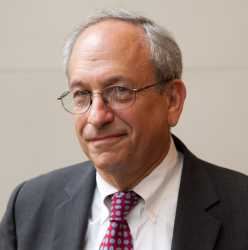
    Donald Kohn: No one had the tools or the decision structure to execute a counter procyclicality in the system and build resilience to the inevitable cyclical overshooting of debt. We now have those tools built. Our challenge is to operate macroprudential policy in a highly developed and globally integrated financial system.

    Donald Kohn

  • What Can Macroprudential Policy Do for Monetary Policy?

    José Viñals, International Monetary Fund: Macroprudential policies can be used to address unintended side effects of monetary policy, and allow monetary policy further room to maneuver in pursuing its goals of price and output stability.

  • Regulators Face Two-Fold Difficulty in Responding to Economic Crises

    Charles Taylor, Office of the Comptroller of the Currency: The question of how to enhance the ability of regulators to respond to emergent signs of crisis is two-fold. There is political pressure, and a not clear enough signal that clear action is needed today and not tomorrow.

Audio

Brookings Multimedia content requires JavaScript. Your browser either doesn't have JavaScript or doesn't have it enabled.

Instructions to enable JavaScript.

Summary

Since the 2008 financial crisis, “macroprudential” policy has taken on much greater importance. These policies view the financial system as a whole and use regulation to lower the frequency and size of financial bubbles and limit the damage caused by their bursting. José Viñals, financial counsellor to IMF Managing Director Christine Lagarde, will present the IMF's views on how nations can best design and operate macroprudential policies and how the IMF and other international bodies can assist in global coordination of these policies.

On September 16, the Economic Studies program at Brookings discussed the importance of macroprudential policy. Following Viñals, Donald Kohn, senior fellow in Economic Studies at Brookings, and Charles Taylor, deputy comptroller of the currency, presented their reactions to the IMF comments and discussed their own views of macroprudential policy. They were joined on a panel discussion afterwards with Erlend Nier, deputy director of the IMF's Monetary and Capital Markets Department. Douglas Elliott, fellow in Economic Studies, served as moderator and also presented some views on the topic.

Event Agenda

  • Introduction and Overview

  • The IMF and Macroprudential Policy

    • José Viñals

      Financial Counsellor and Director, Monetary and Capital Markets Department

      International Monetary Fund

  • Response and Panel

    • Donald Kohn

      Senior Fellow, Economic Studies

    • Charles Taylor

      Deputy Comptroller for Capital and Regulatory Policy

      Office of the Comptroller of the Currency

    • Erlend W. Nier

      Deputy Director, Monetary and Capital Markets Department

      International Monetary Fund

Details

September 16, 2013

9:30 AM - 11:30 AM EDT

Falk Auditorium

The Brookings Institution

1775 Massachusetts Ave., N.W.

Map