May 10

Past Event

U.S.-China Cooperation on Global Issues

Event Materials

Video

Highlights

  • U.S.-China Must Lead on Environment

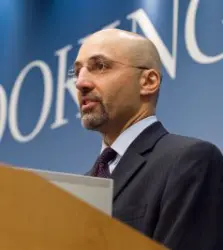
    James Steinberg: The U.S. and China are the two largest producers of carbon emissions and must collectively take the lead on devising ways to lower greenhouse gases.

    Kenneth G. Lieberthal

  • China's Stimulus Plan

    James Steinberg: China's stimulus plan has been a boon for the global economy, but China needs to import more and export less to help sustain the near- and long-term gains.

    Kenneth G. Lieberthal

  • Help in Afghanistan and Pakistan

    China can play an important role in the push to help stabilize both Afghanistan and Pakistan, Steinberg states, adding their effort in those countries must remain transparent.

    Kenneth G. Lieberthal

  • Cooperation on Climate Change

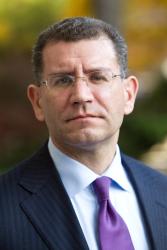
    Kenneth Lieberthal: Cooperating on climate change is good for the U.S.-China relationship. But, a different outcome could also result from the effort.

    Kenneth G. Lieberthal

Summary

Reflecting China’s rapidly growing global presence, interests and responsibilities, the United States is increasingly reaching out to China for cooperation in managing multiple international challenges, including economic recovery, climate change, and nuclear proliferation. Can the two countries work together in partnership to address these issues? What are the prospects for future collaboration in addressing the world’s most critical challenges?

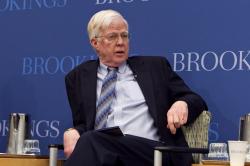
On May 10, the John L. Thornton China Center and the Center for Northeast Asian Policy Studies at Brookings hosted a conference to discuss the growing prominence of global issues in the U.S.-China bilateral relationship. The event featured a keynote address by Deputy Secretary of State James B. Steinberg. Expert panelists assessed how effectively the two countries have dealt with these issues to date and the prospects for future cooperation or confrontation. Senior Fellow Kenneth Lieberthal, director of the John L. Thornton China Center, and Senior Fellow Richard Bush, director of the Center for Northeast Asian Policy Studies, provided introductory remarks.

After each panel, participants took audience questions.

Details

May 10, 2010

10:30 AM - 5:00 PM EDT

The Brookings Institution

Falk Auditorium

1775 Massachusetts Ave., NW

Map

For More Information

Brookings Office of Communications

(202) 797-6105

Event Agenda

  • Introduction and Moderators

    • Portrait: Kenneth Lieberthal

      Kenneth G. Lieberthal

      Director

      Foreign Policy

    • Portrait: Richard Bush

      Richard C. Bush III

      Director

      Foreign Policy

  • 10:30am-12:00pm -- Session 1: The Climate Change Issue in U.S.-China Relations

    • Portrait: Bill Antholis

      William J. Antholis

      Managing Director, The Brookings Institution

      Governance Studies

    • Trevor Houser

      Visiting Fellow, Peterson Institute for International Economics

      Partner, The Rhodium Group

  • 12:45-1:45pm -- Keynote Address

    • James B. Steinberg

      Deputy Secretary of State, U.S. Department of State

  • 2:00-3:45pm -- Session 2: Dealing with States Going Nuclear: North Korea and Iran

    • Charles “Jack” Pritchard

      President, Korea Economic Institute

    • Jonathan Pollack

      Professor of Asian & Pacific Studies

      Chairman of the Strategic Research Department, U.S. Naval War College

    • Portrait: Ken Pollack

      Kenneth M. Pollack

      Senior Fellow

      Foreign Policy

    • John Garver

      Sam Nunn School of International Affairs

      The Georgia Institute of Technology

  • 4:00-5:00pm -- Session 3: Global Economic Issues in U.S.-China Relations

    • Anne Krueger

      Professor of International Economics, Johns Hopkins School of Advanced International Studies

    • Portrait: Barry Bosworth

      Barry P. Bosworth

      Senior Fellow

      Economic Studies