



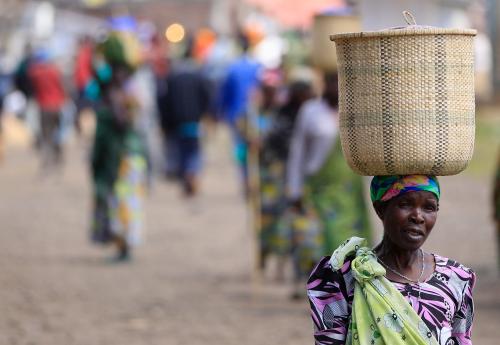
The number of people worldwide living in extreme poverty—defined as living on $1.25 a day or less—was cut in half between 1990 and 2010. Yet more than one billion people still subsist at this level, and about three billion live at under $2.50 a day. Laurence Chandy, a fellow in the Global Economy and Development Program at Brookings, discusses the possibility that by 2030 the world might eradicate the most extreme poverty. He explains how we measure the problem, what the private sector and aid agencies can do about it, whether or not current targeting approaches are effective, and talks about the poverty problem in the United States.
Show notes:
• The Final Countdown: Prospects for Ending Extreme Poverty by 2030 (Chandy)
• Getting to Scale: How to Bring Development Solutions to Millions of Poor People (Chandy and others, eds.)
• A World Free of Extreme Poverty – But by Which Path? (Chandy)
• Is labor income responsible for poverty reduction? a decomposition approach (World Bank)
• High Level Panel on the post-2015 Development Agenda
• Millennium Development Goal: Eradicate Extreme Poverty and Hunger by 2015
• Rapid decline in India’s poverty numbers
• Givedirectly.org
• Extreme Poverty in the United States, 1996 to 2011 (Luke Shaefer and Kathryn Edin)
Subscribe to the Brookings Cafeteria on iTunes and send feedback email to [email protected].
Related Content


Related Books

The Brookings Institution is committed to quality, independence, and impact.
We are supported by a diverse array of funders. In line with our values and policies, each Brookings publication represents the sole views of its author(s).


Commentary
PodcastEnding Extreme Global Poverty
November 8, 2013
Listen on
Brookings Cafeteria Podcast