Chairperson, distinguished Delegates, Ladies and Gentlemen,
The adoption 60 years ago of the Universal Declaration on Human Rights was an historic milestone in the recognition of the dignity, the inalienable human rights, and the fundamental freedoms of all individuals. Yet today, too many people still do not fully enjoy their human rights. Among the most vulnerable are those displaced within their country. Until the early 1990s, their fate went largely unnoticed. They had no voice, no advocates, and the status of their rights was unclear.
10 Years Guiding Principles
Against this backdrop, my predecessor, Francis Deng, presented the Guiding Principles on Internal Displacement to the former Commission on Human Rights in 1998, 50 years after the adoption of the Universal Declaration of Human Rights. By identifying and elaborating upon the specific rights of internally displaced persons as they are inherent in, and can be derived from, existing international human rights law and international humanitarian law, this short document marked a watershed in the protection of internally displaced persons which has since come to be recognized by the General Assembly and the Human Rights Council as important international framework for the protection of internally displaced persons. Like the Universal Declaration, the Guiding Principles address human rights in a comprehensive manner by stressing the importance and indivisibility of all categories of human rights, including civil and political as well as economic, social and cultural rights.
Ten days ago, the international community took stock of the achievements over the past decade of the Guiding Principles at a high-level international conference hosted by the Norwegian government in Oslo. These achievements include the following:
- First, the Guiding Principles empower internally displaced persons all over the world. Thanks to their translation into some 40 languages and the tireless promotion by many actors, including NGOs and civil society, many internally displaced persons today not only are aware of their rights, but also serve as their own best advocates. I will always remember the day I met with a group of IDPs in a camp in Northern Uganda: when I asked about their concerns, an IDP leader stood up and argued for his community’s rights while holding a copy of the Guiding Principles in his hand.
- Second, the Guiding Principles make Governments aware of their responsibilities vis-à-vis internally displaced persons and help them to implement the duties these principles prescribe. I am encouraged to see in my continuous dialogue with a large number of Governments that many of them see the Guiding Principles as a useful tool for the elaboration of national IDP laws or policies. Some 15 countries have already adopted policies or legislation specifically addressing internal displacement, and I provided technical support in a number of cases. While this development is encouraging, it is insufficient when we consider that more than fifty countries now experience conflict-induced displacement, and many more regularly experience displacement by natural disasters. I urge all governments faced with internal displacement to adopt or amend legislation, in order to protect and assist displaced people in accordance with the norms set out in the Guiding Principles. In order to support them in this endeavour, I have undertaken several capacity building activities. In particular, together with the Brookings-Bern Project on Internal Displacement and in close cooperation with humanitarian organizations and governmental experts, I developed a manual for law and policymakers to support governments’ efforts to reflect the Guiding Principles in national law and policy.[1] This manual was launched at the Oslo conference and will be presented in New York and Geneva later this year.
- Third, the Guiding Principles make regional organizations aware of the responsibilities that countries in their region face in dealing with internal displacement. Indeed, regional organizations assume a pivotal role in developing regional instruments on internal displacement. For example, the Protocol on the Protection and Assistance of Internally Displaced Persons adopted by the International Conference of the Great Lakes Region, which commits member states to incorporate the Guiding Principles into national legislation, entered into force this year. I urge the international community to support the Secretariat of the Conference and the countries concerned with the implementation of this provision. I am also closely following the development of an African convention on the protection and assistance of internally displaced persons. The planned adoption of this convention at the special summit of the African Union next April in Kampala will be a hallmark event for the millions of displaced persons on this continent. I urge the African Union and African Governments to persist in their dedication to making this happen.
- Fourth, the Guiding Principles inform the work of international humanitarian agencies both during an emergency and during early recovery and reconstruction. I often find on my missions that in spite of the many efforts underway to strengthen the protection capacities of relevant actors, the concept of IDP protection has not yet become fully operational in the field, and I call on all relevant actors, whether local, national or international, to redouble their efforts. Similar efforts are needed to bridge the gap between the emergency and recovery phase of humanitarian response. While we have made progress in assisting and protecting internally displaced persons during the emergency phase, we – the governments concerned, the UN agencies, INGOs, and donors – all too often fall short of providing the displaced with sustainable solutions. Arbitrary displacement is a human rights violation that can be resolved only when the displaced are able to restart normal lives at their place of origin, or begin their lives afresh in another part of the country. It is the responsibility of national governments and the international community to provide the displaced with these options as a remedy for past violations.
- Fifth, the Guiding Principles have proven useful in coping with the protection needs of persons displaced by natural disasters. In quantitative terms, natural disasters are the main cause of displacement today, and due to the effects of climate change, the magnitude of this problem will in all probability rise significantly. All regions of the world can be hit by such hazards. However, the most vulnerable among them will suffer the most as their mitigation and adaptation capacities are already limited. We must ensure that the international community develops adequate capacities to protect those affected by natural disasters. As outlined in my report, since the beginning of this year, I have undertaken a series of working visits in the Americas and Southern Africa to strengthen my understanding of the challenges that countries face when exposed to natural hazards, and to disseminate and promote the Operational Guidelines on Human Rights and Natural Disasters through training workshops. I will submit a thematic report on the protection of internally displaced persons in natural disasters to the tenth session of the Human Rights Council. This report will show that violations of the human rights of the affected persons usually are not the result of deliberate action but rather result from inappropriate policies, oversight, or neglect. Furthermore, natural disasters tend to exacerbate pre-existing patterns of discrimination and abuse. On the other hand, countries such as Mozambique have shown that with appropriate disaster risk reduction and preparedness measures, the number of deaths from natural disasters can be substantially reduced. It goes without saying that all these challenges will increase to the extent that the effects of climate change are likely to displace an ever increasing number of people. These protection concerns have to be taken into account when negotiating revisions of the UN Framework Convention on Climate Change or new instruments on climate change.
- Finally, the Guiding Principles provide useful guidance to peace and peace-building processes. Last May, the Working Group on Lessons Learned of the Peacebuilding Commission invited me to a thematic session on Internal Displacement and Peace Processes. The discussion showed that the Peacebuilding Commission shared my concerns, namely that without durable solutions for the displaced, sustainable peace may not be achieved. It is therefore important, both from a peace-building as well as a human rights perspective, to ensure that peace agreements address the rights of internally displaced persons and their need for durable solutions. To this end I am presently working in close cooperation with DPA’s Mediation Support Unit to produce a guide for peace mediators to provide them with a highly practical tool in consulting with internally displaced persons in peace processes, as well as in addressing the key issues related to internal displacement in the text of peace agreements.
Country situations
Chairperson, Ladies and Gentlemen,
Despite important achievements, people continue to be displaced and their rights continue to be violated. Millions of internally displaced persons continue to languish in protracted situations. Humanitarian access in particular to persons displaced during armed conflicts is often not possible not only due to security concerns or logistical problems but also because it is denied by state or non-state actors. Problems of this nature in the countries I visited during the past year are described in the report I am presenting today. I do not want to repeat what is said there. However, I will take this occasion to update you on situations in four countries I visited during the past year.
As follow-up to my mission in December 2007, the Government of Sri Lanka invited me to participate last month in a workshop, organized in conjunction with UNHCR, on creating durable solutions for protracted IDP situations. I was greatly encouraged that the Government expressed its firm commitment to finding durable solutions for those who have been displaced for many years, in particular displaced Muslims from the North. I hope for the development of concrete proposals and actions, and look forward to my continued dialogue with the Government of Sri Lanka. Durable solutions will also be necessary for those presently displaced in the Vanni. I am deeply concerned about the impact of ongoing hostilities on the civilian population in that area, including an estimated 200,000 IDPs. Humanitarian access has been difficult and sometimes impossible. I call on the government of Sri Lanka to do everything possible to ensure that humanitarian agencies can access and provide assistance to all civilians in need. I call on all parties to the conflict to scrupulously respect international humanitarian law in the course of the on-going military operations, including those provisions relating to the conduct of hostilities and safe passage for civilians.
When I visited the eastern part of the Democratic Republic of Congo in February, the Conference for Peace, Security and Development in North and South Kivu, held in Goma in January 2008, offered a genuine opportunity for stability, and encouraged the government to pursue its political dialogue with the various armed groups. It is with great consternation that I observe that the situation in North Kivu has dramatically deteriorated over the past weeks and that the ray of hope offered by the Conference has been erased by the brutal reality of this complicated conflict. I call on all actors concerned to stop all attacks on, and violence against, the civilian population, and to reiterate their commitment to the Goma peace process.
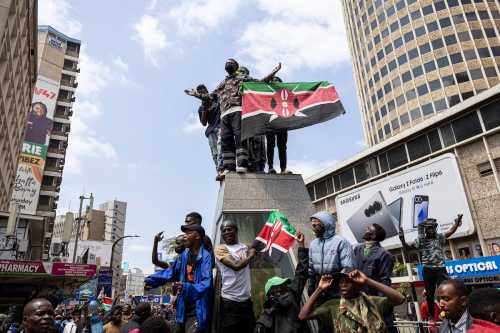
Yesterday, I returned from a short visit to Nairobi where I participated in a workshop with African National Human Rights Institutions in Nairobi that considered their potential role in the protection of internally displaced persons. This gave me an opportunity to follow up on my earlier visit to Kenya in May. I am pleased that relevant actors reported that the humanitarian situation for those displaced by the post-election violence is improving, but I am concerned that important problems remain. More needs to be done to implement a real reconciliation and transitional justice process on the ground, which is a necessary precondition for making returns sustainable. Realizing durable solutions in return areas, and for those who are unable or unwilling to return to their previous homes requires sustained commitment of the government and the international community, and I call upon the donors to continue to support critical early recovery activities .
In late September/early October I undertook a mission to Georgia. I hope to be able to visit the region of South Ossetia later this year and will submit a full report to the Human Rights Council in March. The visit showed that after the end of the emergency phase the challenge is to create conditions allowing all IDPs to restart normal lives. This is not only necessary for those who were displaced from areas adjacent to South Ossetia and have returned since the withdrawal of Russian troops, but also for those displaced from South Ossetia who are unlikely to return in the near future. I welcome the fact that the government has started to build houses for them, but they also need to be provided with economic opportunities. The biggest challenge is to integrate the roughly 220,000 persons displaced in the early 1990s by implementing the action plan adopted by the government in July 2008. Integration efforts should encompass the whole range of civil, cultural, economic, political and social rights of IDPs. In this context I welcome the commitment of the government and the strong support pledged to Georgia by donors to implement this action plan. At the same time I am concerned about a recently adopted new law entitled “on occupied territories” that may seriously affect humanitarian access to Abkhazia and South Ossetia and even hinder returns of displaced persons.
Finally, I would like to mention a country that I wanted to visit but could not because of the security situation. In Somalia, there has been a dramatic increase in the number of IDPs since the beginning of this year and a drastic deterioration of the conditions in which they survive. The UN Somalia team estimates that 1.3 million Somalis are currently displaced the majority from Mogadishu. In the Afgooye corridor alone – an area between 13 and 30 km from Mogadishu – over 350,000 new IDPs are crammed into makeshift camps in one of the most insecure parts of the country and in what constitutes the highest density IDP population in the world. Poor rains and economic shocks have only compounded the primary cause of displacement in 2007 and 2008: the conflict between insurgent forces and the Transitional Federal Government, the latter supported by the Ethiopian National Defence Force. Violations of international human rights and humanitarian law by all parties to the conflict – from indiscriminate attacks in civilian areas, to arbitrary arrest and detention, to a campaign of assassinations of civilian officials – are the main factors that induced them to leave their homes. These abuses take place in an environment of total impunity and collapse of law and order, where perpetrators are not held accountable for their actions. While some aid is still getting through to the IDPs, Somalia has this year witnessed the highest number of killings and kidnappings of aid workers in the world. To address the causes of displacement, improve humanitarian access, and thereby provide the space for durable solutions, the international community needs to engage more seriously in establishing mechanisms that could end the violence, and hold the parties to this conflict accountable for their actions.
Chairperson, Ladies and Gentlemen,
We should indeed be proud of the improvements seen in both national and international responses to internal displacement in the 10 years since the adoption of the Guiding Principles. This progress has been achieved thanks to the relentless efforts of many actors – governments, civil society, international organizations, and often the internally displaced persons themselves. And yet, much remains to be done. The search for durable solutions, the response to natural disasters, and the relationship between displacement and peacebuilding are just a few of the issues where critical work remains. The number of internally displaced persons due to both armed conflicts and natural hazards has never been higher. Close to 1% of the world’s population is displaced today. These people deserve our attention, our compassion, and our commitment.
Thank you.
[1] https://www.brookings.edu/papers/2008/1016_internal_displacement.aspx
The Brookings Institution is committed to quality, independence, and impact.
We are supported by a diverse array of funders. In line with our values and policies, each Brookings publication represents the sole views of its author(s).
Commentary
Taking Stock and Moving Forward: RSG Statement to the General Assembly
October 27, 2008