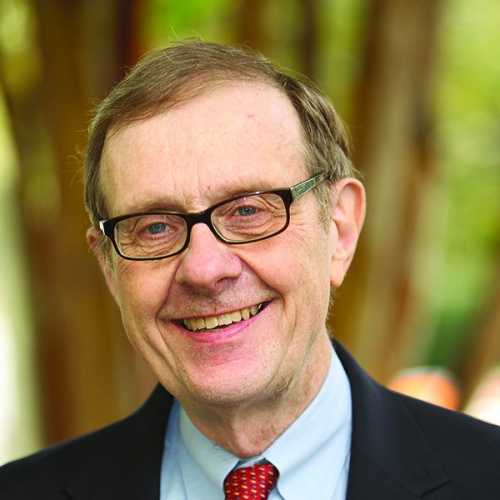
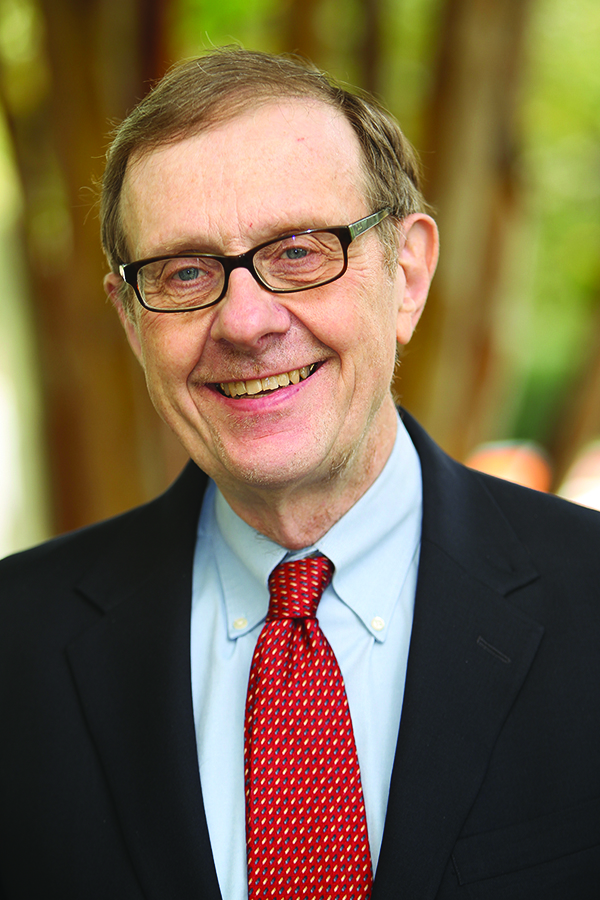
William H. Frey, senior fellow with Brookings Metro, is an internationally regarded demographer known for his research on urban populations, migration, immigration, race, aging, political demographics, and the U.S. census. Frey’s current research agenda involves examining U.S. census practices and results, tracking voting trends associated with the presidential and midterm elections, monitoring post-COVID-19 demographic shifts, and analyzing immigration contributions to area population gains and losses. A newly revised version of Frey’s book “Diversity Explosion: How New Racial Demographics are Remaking America” (Brookings Institution Press, 2018) is scheduled to be released in 2026.
Frey’s demographic expertise also draws from his more than four decades at the University of Michigan, where he is a research professor with the university’s Institute for Social Research and the Population Studies Center. Frey has authored over 200 publications and several books, including “Regional and Metropolitan Growth and Decline in the United States”(Russell Sage, 1988, with Alden Speare, Jr.); “America By the Numbers: A Field Guide to the U.S. Population” (The New Press, 2001, with Bill Abresch and Jonathan Yeasting); and “Social Atlas of the United States” (Allyn and Bacon, 2008, with Amy Beth Anspach and John Paul DeWitt).
Frey has directed projects funded by the National Science Foundation, NICHD Center for Population Research, and several foundations. He contributed to the 1995 President’s National Urban Policy Report, the Department of Housing and Urban Development’s State of the Cities 2000 report, and the Russell Sage Foundation’s census project, and has authored numerous research reports, articles, and op-eds on urban trends for Brookings. With Ruy Teixeira and Rob Griffin, Frey is co-director of the multi-institutional States of Change project, which traces the history of the U.S. electorate and projects future demographic scenarios. Frey has been a consultant to the U.S. Census Bureau and a contributing editor to American Demographics magazine. He has also been active in creating demographic media for use by educators, policymakers, and the public (examples at frey-demographer.org; ssdan.net; and CensusScope.org).
Frey received a Ph.D. in sociology from Brown University in 1974. He has been a visiting research scholar at the International Institute for Applied Systems Analysis (Austria); the Andrew W. Mellon Research Scholar at the Population Reference Bureau in Washington, D.C.; and the Hewlett Visiting Scholar at Child Trends in Washington, D.C. Frey is a member of the Population Association of America, the International Union for the Scientific Study of Population, and the American Sociological Association, and is a past fellow at the Urban Land Institute.
Frey is known for his ability to communicate demographic trends to general and policy audiences. His research has been written about in such diverse venues as The Economist, The New York Times Magazine, The New Republic, National Journal, The New Yorker, and Forbes. Frey’s commentary and observations have been featured on broadcast media, including NPR’s All Things Considered, PBS NewsHour, NBC Nightly News, ABC World News Tonight, CBS Evening News, C-SPAN’s Washington Journal, and print and online media including The New York Times, The Washington Post, USA Today, The Wall Street Journal, and Axios.
-
Current Positions
- Research Professor, Population Studies Center, Institute for Social Research, University of Michigan
-
Past Positions
- Professor and Senior Demographer, Center for Social and Demographic Analysis, State University of New York (1999-2000)
- Research Scientist, Population Studies Center, and Adjunct Professor of Sociology, University of Michigan (1981-1998)
- Project Director and Associate, Center for Demography and Ecology, Department of Sociology, University of Wisconsin (1976-1981)
- Research Associate, Center for Demography and Ecology, Department of Sociology, University of Washington (1974-1975)
- Lecturer, Department of Sociology, Rutgers University (1973-1974)
-
Education
- Ph.D. (1974), M.A. (1971), Brown University
- B.S., Ursinus College, 1969