Courts often issue decisions that, at first glance, might appear disconnected from education. Yet, these rulings frequently ripple through the educational landscape. The Supreme Court’s decision in United States v. Skrmetti (2025) is such a case. While the decision addressed Tennessee’s ban on certain medical treatments for transgender minors, its implications have broader reach.
In this piece, we consider what the Skrmetti decision could mean for students in America’s schools and institutions of higher education.
A (really) brief overview of Skrmetti
Skrmetti upheld SB1, a Tennessee law prohibiting certain gender-affirming care for transgender minors. The case hinged on whether SB1 prohibited the medical care for minors based on their “sex” or because they were transgender. If the Court found that SB1 prohibited access to care based on sex, then the Court would have applied a higher level of scrutiny and may have struck down the law. If the Court found that SB1 prohibited care based on transgender status, the Court would have to decide whether to apply heightened scrutiny. The Court held that SB1 did not prohibit the medical care based on sex or transgender status. Instead, the Court held that the law prohibited medical care based on “age” and “medical use.” Therefore, it applied the lowest level of scrutiny. This meant that Tennessee only had to show that it acted rationally in adopting SB1, and the Court held this much.
The decision marks a departure from the Court’s recent trajectory on LGBTQ+ protections. For example, Skrmetti stands in tension with Bostock v. Clayton County (2020), where the Court held that “it is impossible to discriminate against a person for being transgender without discriminating against that individual based on sex.” To be sure, that ruling was in the context of Title VII employment discrimination. But it remains unclear why the Court is willing to recognize sex-based discrimination protections for transgender individuals under Title VII but unwilling to entertain this logic under the Equal Protection Clause.
Implications for education practice and policy
No matter what we might think of the Court’s logic, its decision will have consequences for students in the United States. The Court is contributing to an environment that is increasingly hostile to transgender students.
One immediate implication of Skrmetti is that a disruption to gender-affirming care will likely affect students’ ability to engage fully in school. Students may struggle with attendance, academic performance, and participation in extracurricular activities when they lack access to medical care that supports their well-being. Also, transgender youth considering college may need to consider which states allow access to continued care—a calculation that can limit their educational opportunities and separate them from support systems.
School boards, superintendents, and principals now confront a legal landscape in which supportive practices—such as affirming names and pronouns, providing safe restroom access, and training staff—may be resisted by courts. Teachers, counselors, and social workers who are closest to students and most attuned to their needs face heightened risk for working to affirm transgender youth. Meanwhile, parents who love and affirm their children must now navigate a more hostile and confusing system that restricts their ability to secure care and support through schools.
The ruling’s implications also extend to higher education. Research shows that college students’ access to gender-affirming health care affects their physical and mental health. Yet, a student’s access to services—in their K-12 and college years—can vary considerably from one part of the country to another. As a result, campus health centers may face uncertainty about what services they can provide, while student affairs staff must prepare for greater mental health needs among students who arrive from unsupportive K-12 environments.
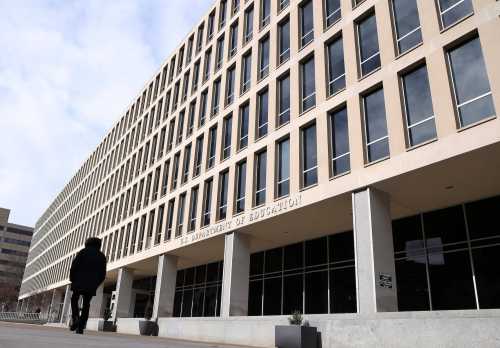
At the federal level, Skrmetti supports the current administration’s apparent goal to restrict any support for transgender students. The administration has moved to extend Skrmetti’s reasoning far beyond the health care context the Court addressed. For example, the U.S. Department of Education’s Office for Civil Rights (OCR) has begun citing Skrmetti in Title IX enforcement actions, despite the decision not directly involving Title IX or educational civil rights law. In June 2025, OCR explicitly invoked Skrmetti to support its position that California’s policies allowing transgender students to participate in athletics consistent with their gender identity violated Title IX.
This pattern mirrors the administration’s approach to Students for Fair Admissions v. Harvard (SFFA), where a decision about college admissions has been stretched to cover a range of activities from scholarships to campus programming. We have described this very extension in a different article.
Politicizing educational research in court
In the Skrmetti decision, Justice Thomas wrote, “This case carries a simple lesson: In politically contentious debates over matters shrouded in scientific uncertainty, courts should not assume that self-described experts are correct.” This is a shot at certain types of research. This includes research that ascertains a link between gender-affirming care and the well-being of transgender youth, as well as the American Academy of Pediatrics’ conclusion that “gender-affirming care is evidence-based and medically necessary” for transgender adolescents.
The majority opinion privileged certain evidence while dismissing others, exemplifying how the Court has selectively used empirical findings to support its desired conclusions. Justice Thomas argued in his concurrence that “so-called experts have no license to countermand the wisdom, fairness, or logic of legislative choice.” Referencing the World Professional Association for Transgender Health’s Standards of Care, Justice Thomas suggested that contributors “tailored its Standards of Care in part to achieve legal and political objectives.” With these statements, Justice Thomas reframes the longstanding effort to have research inform policy as something nefarious. It is not. For decades, researchers have tried to bring evidence to inform policy and the law. Justice Thomas discredits research that aims to shine light on systemic issues from the outset, positioning it as suspect because it intends to inform policy.
For education, the implications are stark. Educational research on supportive school practices for transgender students could now face heightened judicial skepticism precisely because it documents positive outcomes and aims to improve policy. Courts may dismiss education research showing that inclusive practices improve student well-being and academic performance as “politicized” advocacy rather than rigorous scholarship. This selective credibility creates a double bind: Education researchers studying marginalized students, including transgender students, risk having their work discounted when it could most inform education policies.
The Court has shown a growing tendency to dismiss evidence that challenges its perceived ideological positions. Chief Justice Roberts infamously denounced social science research—or, at least research that conflicts with his views—as “gobbledygook.” This pattern reveals strategic credibility judgments rather than principled skepticism. Education research is already underrepresented in courts; Skrmetti makes this work more challenging while heightening its necessity.
Looking ahead
Skrmetti may have equipped policymakers with a legal blueprint to restrict transgender rights while avoiding judicial scrutiny. The decision accomplishes this through a sleight of hand: By finding that Tennessee’s law did not prohibit medical care for minors because they were transgender or because of their sex—but rather because of age or medical use—the Court effectively rendered discrimination invisible. This is a neutrality trap.
The decision telegraphs to policymakers that to escape judicial scrutiny, they can frame their policies as regulating medical procedures, age groups, or any other category where minimal scrutiny applies rather than targeting transgender identity directly. Twenty-seven states have already enacted laws limiting gender-affirming care for minors, and Skrmetti now provides cover for these restrictions to remain in effect.
Skrmetti also sets a foundation that will continue to inform Supreme Court cases. Already, the Court has extended its reasoning beyond health care. In November 2025, in Trump v. Orr, the Court let the administration’s policy requiring transgender and nonbinary people to use passport sex markers that correspond to their sex assigned at birth to take effect while the litigation continues in the lower courts. The Court adopted a similar logic to the one they used in Skrmetti: Such requirements do not constitute differential treatment because they merely attest to “historical fact.” Reflecting the hostile environment transgender people are facing, counsel for Orr explained that the federal requirement is a candid “rejection of the identity of an entire group—transgender Americans—who have always existed and have long been recognized in, among other fields, law and the medical profession.”
The U.S. Supreme Court is also currently considering Little v. Hecox and West Virginia v. B.P.J. At issue in the cases are questions about whether laws that make prohibitions based on transgender status must receive heightened scrutiny and whether states can ban transgender students from participation in girls’ and women’s sports. Both the Equal Protection Clause of the Fourteenth Amendment and—in the case of B.P.J., Title IX—are central to these cases, and the cases have real implications for the sociopolitical environment for transgender students. Depending on their outcomes, they may offer hope for students or further intensify an already-hostile environment.
Related Content


Authors



The Brookings Institution is committed to quality, independence, and impact.
We are supported by a diverse array of funders. In line with our values and policies, each Brookings publication represents the sole views of its author(s).


Commentary
What the Skrmetti decision means for transgender students and the future of education research
December 1, 2025