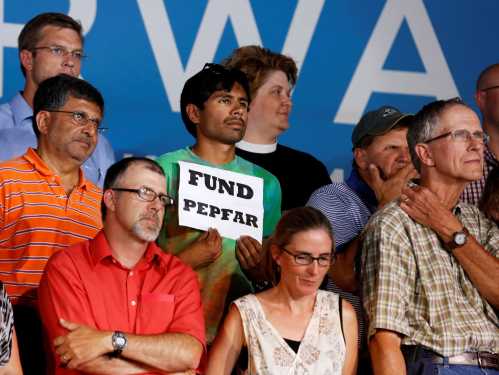
The President’s Emergency Plan for AIDS Relief (PEPFAR) was initiated in 2003 under President George W. Bush. As of end-2024, the program had saved over 25 million lives, supported treatment for 21 million people, prevented 7.8 million babies from contracting HIV/AIDS, supported 6.6 million AIDS orphans and their caregivers, and strengthened pandemic preparedness in recipient countries, all at a cost of less than 0.08% of total U.S. FY 2024 government spending. PEPFAR is widely regarded as one of the world’s most successful, high-impact, and relatively low-cost health interventions and has long enjoyed strong bipartisan support. The program has also been an important source of U.S. soft power, building grassroots good will and long-term alliances around global health issues.
This progress is now threatened. On July 1, 2025, the U.S. Agency for International Development (USAID) was formally dissolved, with its remaining functions absorbed into the State Department, ending more than 60 years of U.S. global health assistance (including PEPFAR) delivered through a dedicated development agency. Funding that was previously appropriated to USAID for health programming was transferred to the State Department—but without the large, professional, field-based U.S. government (USG) workforce which supported tactical decisions and implementation, PEPFAR was jeopardized. While appropriations from Congress for global HIV/AIDS programs have only fallen by about 4% (nominal) since FY 2024, appropriated funds have not been flowing to activities on the ground. In FY25, there was a 34% decline in spending on HIV-related activities owing to various funding disruptions (including the dissolution of USAID). Funding disbursement bottlenecks continue in FY26, including a failure to release funds to the CDC for the country-level assistance activities that they normally conduct using PEPFAR funds.
The human consequences are already becoming visible. Funding disruptions in 2025 were associated with a 22% decline in the number of people tested for HIV globally and a rise in new infections detected. In Zambia, where USAID was the primary PEPFAR implementer, health officials report rising HIV infection rates and a growing emergency that they associate with cuts to testing and prevention programs. In Rakai, Uganda, where researchers have monitored HIV trends for more than two decades, PEPFAR-funded antiretroviral therapy (ART) was associated with a decline in orphanhood prevalence from 21.5% in 2003-2004 to 6.3% by 2020-2022. Researchers there warn that funding cuts will reverse those hard-won gains, particularly for children and young women.1 A PBS report highlighted how lack of treatment drugs in Uganda has been associated with rising HIV/AIDS-related mortality rates. In South Africa, cuts have extended beyond HIV testing and community programming to primary preventive care, including blood pressure monitoring and tuberculosis immunization. The cuts have also disrupted key public health data collection systems, making it harder to track new HIV diagnoses and treatment coverage in real time.
A changing landscape: The “America First Global Health Strategy”
Under the longstanding PEPFAR model, Congress appropriates funding annually, with the State Department’s Bureau for Global Health Security and Diplomacy coordinating U.S. HIV programs worldwide. USAID was one of the key implementing agencies, alongside the Centers for Disease Control and Prevention and the Department of Defense. Funding was also provided to multilateral agencies involved in HIV/AIDS treatment and prevention, including the Global Fund to Fight AIDS, Tuberculosis and Malaria.
PEPFAR implementation historically relied heavily on international and local NGOs and U.S. consulting firms under contract to the USG. This feature allowed PEPFAR to quickly scale up in the 2000s, when national health systems were underdeveloped, and to reach many vulnerable groups—including LGBTQ+ populations—who may not have trusted their own government’s public health system.
This model was justifiably criticized for failing to gradually shift resources into country national health systems. Vertical programs such the original PEPFAR model result in wasted expenditures and a lack of sustainability. In response, PEPFAR programming has been shifting towards a country health systems model. U.S. funding has helped strengthen national health information systems, expand the national health workforce through paid community health workers, and (together with the Global Fund) strengthen supply chains to support the delivery of HIV treatment and prevention products. PEPFAR’s 2022 comprehensive strategy, prepared by President Joe Biden’s administration, targeted “ending HIV/AIDS as a public health threat by 2030” by continuing PEPFAR programs while empowering recipient country health systems to take greater ownership of the HIV/AIDS problem by assuming responsibility for key program elements. Under this strategy, PEPFAR also continued to fund local NGOs implementing PEPFAR testing and treatment programs to ensure that all vulnerable groups could be reached.
In place of that model, the second Donald Trump administration has introduced the “America First Global Health Strategy” (AFGHS), rolled out by the State Department on September 18, 2025. Rather than relying on multiple implementing agencies and partners to coordinate and deliver USG-funded health sector foreign assistance, the strategy envisions bilateral five-year memoranda of understanding (MOUs) negotiated individually with PEPFAR-recipient countries. The stated goals are to advance “public health goals” and accelerate “country self-reliance,” with most of the 71 PEPFAR-supported countries expected to transition to full self-reliance (i.e. no more USG funding) by the end of the agreement period.
Under this new strategy, recipient country MOUs specify the amounts, type, and purpose of the foreign assistance (in USD, by input type) that the USG will offer in the health sector. These compacts cover assistance under PEPFAR, as well as in a few other select areas: malaria, tuberculosis, polio, and measles prevention and treatment; limited support for reducing maternal and neonatal mortality; and support for the public system of disease surveillance and outbreak response as part of an explicit goal of containing emerging disease threats before they reach U.S. borders. Compacts contain yearly outcome targets (e.g., percent of people who know their HIV status on treatment), and yearly targets for recipient country expenditures on inputs for HIV programs.
AFGHS MOUs support a rapid and complete transition to national health systems in recipient countries. Instead of funding contractors, USG support will be provided through government-to-government budget transfers or direct provision of supplies (vaccines, test kits, drugs and commodities) to government systems (such as national warehouses). Technical assistance will be provided by U.S.-funded contractors to systems if needed (for example, to improve country-run supply warehouse management and control). The MOUs also include conditionality provisions allowing the U.S. to withhold funding if recipient countries fail to meet specified financial or programmatic benchmarks or abide by other terms of the MOUs, including supporting U.S. business interests in the recipient country.
As of April 2026, multiple MOUs had been signed under this framework, including 24 with African countries. USG contracts with previous implementing partners have largely been terminated. Programs run by local NGOs—supporting AIDS orphans and their caregivers, community-based testing and treatment for people living far from public health clinics, and targeted services for high-risk adolescent girls—will not be continued under the new approach unless the countries themselves decide to organize and fund them. In Uganda, PBS documented how the funding cuts to local NGOs implementing PEPFAR programs in rural areas have left infected people without access to life-saving antiretrovirals and halted the detection of new infections among high-risk groups such as sex workers.
While the State Department presents the AFGHS as a rapid solution to aid dependency and the problems of vertical programs, it represents a fundamental shift in the logic of global health policy: rather than prioritizing collective health security, pandemic risk reduction, and humanitarian needs, health funding becomes subject to geopolitical calculation and terminable whenever programs are deemed misaligned with U.S. national interests. The suspension of HIV funding to South Africa is an early illustration of this shift.
While the new approach contains some welcome elements, including the transition to country ownership of the HIV/AIDS problem and the build-up of country systems to implement HIV/AIDS prevention and treatment programs, several aspects of the new approach pose serious risks to the achievements of PEPFAR to date and continued progress in the future.
How fair and sustainable are AFGHS fiscal demands?
Our review of the publicly available country compacts revealed that these compacts specify year-by-year reductions in U.S. assistance alongside binding commitments for recipient government health spending—with no credit given for grants or concessional loans from other donors. Often the co-financing levels are specified in USD, not local currency, which means dollar-denominated co-financing requirements can become more burdensome when recipient currencies depreciate or when countries experience external shocks such as commodity price spikes or trade disruptions. Macroeconomic conditions in several MOU signatories have already deteriorated from their positions at the time of MOU negotiations.
While country cofinancing of HIV/AIDS programs is a necessary element of country ownership, it is not clear that the country funding commitments embedded in the compacts were informed by standardized guidelines on country need for funding (the humanitarian basis) or fiscal analysis of country co-payment capacity given overall health expenditures, competing demands on health systems, or macroeconomic position. A few examples of this misalignment in country MOU requirements are as follows.
In Kenya, the compact requires public health spending to reach 50 billion Kenyan shillings ($387 million) by 2030, representing a 36% increase over five years—a significant demand for a country the World Bank has flagged as already at high risk of debt distress.
In Nigeria, which has the third-highest number of people living with HIV in Africa, the government must contribute nearly $3 billion in new public funds over 2026-2030 to receive $2 billion from the U.S., meaning Nigeria is effectively co-financing nearly 60% of the agreed program. Meanwhile, El Salvador, with nearly four times Nigeria’s per capita income and one-third of its HIV prevalence, is only required to contribute 38% of compact costs.
Rather than the previous humanitarian objective of “ending HIV/AIDS as a public health threat by 2030,” AFGHS seems to seek to end U.S. overseas funding for HIV/AIDS mitigation by 2030. Although the strategy envisages some post-2030 funding for the poorest and most vulnerable countries, the level of copayments required in some countries and the disparities among them suggest the AFGHS expenditure framework was not designed with humanitarian need, equity across countries, or fiscal capacity as primary organizing principles. The reasons for the discrepancies across countries have not been explained, and the criteria used to determine country obligations have not been made transparent.
The design of the MOUs also contains limitations on how the broader goal of transitioning to national responsibility for financing and implementing HIV/AIDS programs is to be achieved. The input-based, rigid, year-by-year and subcategory spending commitments in the MOUs leave little room for the local innovation that drives efficiency gains.2 Output-based financing, where outputs are promised but inputs are left to the country to design and procure, would be a better approach. In addition, by setting global health spending targets and refusing to recognize the contribution of other sources of funding (such as multilateral agency loans or grants) to this target, MOUs penalize country initiatives with other heath funding actors who are a normal part of national health system development in less developed countries.
Other troublesome conditionalities
Under the AFGHS template, African governments are being asked to grant the U.S. access to national health information systems, electronic medical records, and genomic and pathogen data in exchange for continued health assistance. This poses structural, legal, and ethical issues related to a transactions-based approach to the provision of health sector foreign assistance. MOUs and associated data sharing agreements contain no binding restrictions on how U.S. agencies may reuse African health data, no provisions for benefit-sharing, and no enforceable safeguards against sharing data with third parties. As a result, health and pathogen data could be used to train AI models or support pharmaceutical research with no guaranteed return to the contributing countries in the form of products, intellectual property, or economic benefit. More importantly, private medical data could end up being publicly shared because of inadequate research protocols of end-users. The AFGHS data-sharing framework embedded in the MOUs bypasses the World Health Organization’s Pathogen Access and Benefit Sharing framework (which the U.S. rejected prior to withdrawing from the WHO).
A few specific examples of issues are as follows:
- In Kenya, these provisions collided directly with domestic law, including the Data Protection Act, the Digital Health Act, and constitutional privacy guarantees, prompting a petition that led the High Court to suspend the bilateral agreement entirely.
- The AFGHS template reportedly asked Zambia to commit to 25 years of data sharing in exchange for just five years of assistance.
- Ghana, Zimbabwe, and Zambia have already rejected draft agreements over these data provisions, although negotiations are reportedly still ongoing with Zambia.
PEPFAR was implemented, monitored, and evaluated efficiently and effectively for more than 20 years without these data sharing requirements. Most African countries already regularly provide data to the WHO and other multilateral agencies under internationally accepted data sharing protocols; presumably there would be less resistance to supplying these data directly to the USG as long as the same protocols were followed.
In some cases, separate agreements have explicitly linked health assistance to access to mineral assets. The Democratic Republic of the Congo signed a strategic mineral partnership agreement alongside its AFGHS compact, with the two reportedly linked. The agreement’s stated aim is that “mineral resources are managed responsibly for the long-term benefit of the Congolese people as well as the people of the United States of America.” The agreement contains no provisions to protect worker health and safety, respect the rights of mining communities and support their development, or prevent environmental harm. The USG is demanding a similar agreement with Zambia, which is holding up compact signing.
Transparency and ethics concerns surround the framework
The State Department has refused to share signed compacts despite Freedom of Information Act (FOIA) requests, and suits have now been filed. The signed Nigeria compact is marked “NOT FOR PUBLIC RELEASE”—an apparent violation of U.S. transparency laws, and an echo of the opaque loan agreements imposed on developing countries by actors such as China, whom the U.S. has historically criticized. In the United States, withholding lifesaving medical care to coerce behavior is considered unethical and, in most circumstances, illegal. The same principle should apply with equal force to U.S. dealings with developing countries. Zambia had brought 95% of diagnosed HIV cases under treatment by 2024; that progress is now in jeopardy after Secretary of State Marco Rubio signaled an intent to make an example of Zambia by withholding all foreign assistance, including programs financed by PEPFAR, unless USG demands are met.
What can be done?
PEPFAR funding saved lives at scale and at low cost, albeit with a model that was slow to adapt to the efficiency and sustainability issues that characterize vertical programs. The Trump administration seeks to address these issues head on, but with an approach that appears rushed, more attuned to geopolitical needs than country humanitarian needs, raises ethical considerations, and as a result, risks undermining progress to date and the international goal of ending HIV/AIDS as a public health risk by 2030.
Congress and the administration need to reform AFGHS implementation to ensure timely disbursement of already-appropriated PEPFAR funds, preserve effective local delivery channels for hard-to-reach groups, and add safeguards limiting fiscal demands, data-sharing requirements, and unrelated geopolitical conditions.
The administration has not indicated a willingness to change course or modify implementation in the face of domestic and international criticism. The design and implementation of AFGHS is centralized in Washington because of the demise of USAID and its thousands of field-based staff. Additionally, the Department is now moving forward with a plan to defund the CDC field-based staff that have been supporting PEFAR implementation, further increasing centralization to the State Department.
Substantial pushback from Congress, in the form of hearings and authorization legislation, could lead to improvements in the strategy and its implementation. Given the bipartisan support that PEPFAR enjoys, Congressional hearings on the AFGHS and PEPFAR implementation, and subsequent incorporation of reform directions and proposals in legislation, could play an important role in placing some guardrails around the strategy and implementation, fostering a bipartisan solution to the issues identified above.
In particular, some questions that remain unexplored include:
- Why are FY26 appropriations for PEPFAR not being disbursed, and what measures are being put into place to ensure that appropriated funds are disbursed in a timely manner to avoid funding shortfalls in affected countries?
- What fiscal analysis and other guidelines have determined the amount of co-financing that is required of countries in the MOUs?
Possible avenues for improving the State Department’s implementation of the AFGHS could include:
- All bilateral MOUs negotiated under this strategy as well as any associated agreements on data sharing and other topics being made public upon signing.
- Any data sharing provisions being consistent with recognized international frameworks, such as the ones in place between the same countries and the WHO.
- Country fiscal analyses for existing MOUs being prepared and be released to the public.
- The USG not conditioning health-related foreign assistance on access to natural resources or sensitive citizen data, nor using the withdrawal of this assistance to coerce country behavior related to non-health related geopolitical issues.
Meanwhile, the State Department should consider retaining some contracts with local NGOs who have been responsible for implementing PEPFAR programs targeted at high-risk but often excluded groups. This includes programs that reach people in rural areas and towns too far from public facilities to be served effectively and groups that are less likely to use public facilities for testing and treatment such as teenage girls, sex workers, and LGBTQ+ people. These contracts could be phased out as recipient countries make satisfactory progress toward reaching these groups within the official health system.
The United States has built a foundation of global health leadership and public goodwill over decades. Decisions made around the AFGHS have already eroded this progress precipitously. The process of rebuilding may take quite a while, but making some needed changes in the AFGHS program could help.
Authors


Related Content


-
Acknowledgements and disclosures
Thanks to Learned Dees and John Santelli for insights and Shristi Bashista for research assistance.
-
Footnotes
- Personal communication, Professor John Santelli, Columbia University Mailman School of Public Health.
- An analysis of five completed compacts showed these spending commitments to be a key feature.
The Brookings Institution is committed to quality, independence, and impact.
We are supported by a diverse array of funders. In line with our values and policies, each Brookings publication represents the sole views of its author(s).



Commentary
The new ‘America First Global Health Strategy’ could erode years of progress under PEPFAR
August 7, 2026