This report is one of three case studies produced as part of the Strengthening Pedagogical Approaches for Relevant Knowledge and Skills (SPARKS) project.
Executive summary
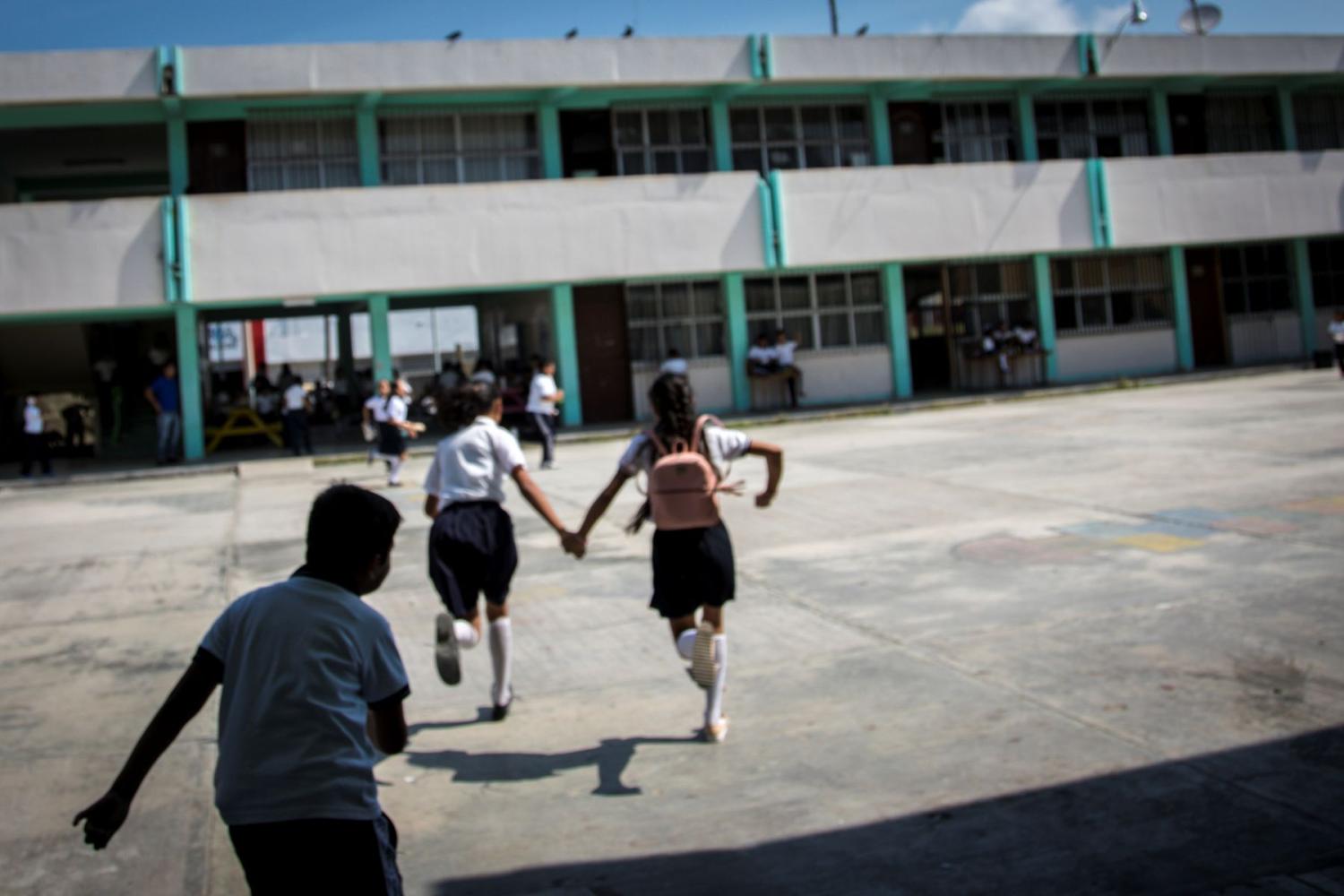
This report describes a comparative case study that investigated how culture, the education ecosystem, and preferred learning theories— collectively referred to as Invisible Pedagogical Mindsets (IPMs)—affect the implementation of the Nueva Escuela Mexicana (NEM) education reform in two public primary schools: one in Mexico City and one in Yucatán.
The study’s findings reveal that IPMs act as both enabling and constraining forces in the NEM’s implementation.
- Culture. Teachers and families strongly support the NEM’s emphasis on community and inclusion but often interpret “culture” narrowly as Indigenous identity. While intercultural pedagogy has generated enthusiasm, teachers feel underprepared to teach in Indigenous languages, and the decline of Maya and other languages limits bilingual education. Still, even small efforts to engage with local cultures have sparked student motivation and pride.
- Education ecosystem. Teachers and families pointed to systemic issues—rushed implementation, limited training, resource shortages, and weak coordination—that constrain reform efforts. Textbook misalignments and low trust in authorities further reduce confidence in the NEM’s sustainability. Yet, across both regions, openness to project-based learning and teacher– parent collaboration demonstrates the ecosystem’s potential to support meaningful pedagogical change when backed by consistent guidance and support.
- Learning theories. Many teachers and families appreciate the NEM’s emphasis on active, inclusive, and relevant learning. However, concerns persist about reduced content coverage and uncertainty about how to balance foundational skills with open-ended projects. Longstanding pedagogical habits— such as reliance on hierarchical instruction—continue to shape classroom practice, suggesting that shifting these mindsets requires sustained, hands-on support.
Together, these findings underscore that the challenges of reform are not only technical or structural but also embedded in the invisible assumptions and habits that shape classroom life. Recognizing and engaging with these mindsets can help bridge the gap between policy design and lived practice.
Based on these findings, this report provides three recommendations for policymakers:
- Provide experiential “learning by doing” training for teachers on each active pedagogy proposed by the NEM. Teachers should have training opportunities that enable them to experience these methodologies firsthand. The sessions should use the same active methodologies the NEM promotes, allowing teachers to practice both teacher and student roles. Each session should begin by making underlying assumptions explicit and conclude with reflection on how those assumptions shift through practice. The training should be delivered primarily in person, complemented by virtual components.
- Redesign free student textbooks to align with both active pedagogies and content expectations. Student textbooks should be redesigned to serve as a methodological guide that includes clear guidance on the use of active methodologies proposed by the NEM. They should also provide reference content that aligns with the learning objectives of each academic year, ensuring that core subjects are not perceived as omitted or undervalued. Finally, textbooks should function as objects of enjoyment within the home, reinforcing the cultural and emotional role of books in family life.
- Establish a national public dialogue and information campaign that both informs and listens. A two-way communication strategy should use mass communication channels and social media to inform families, teachers, and students about the aims and practices of the NEM. This campaign should reinforce and amplify school-level communication efforts. It should also promote awareness of structural issues that limit parental participation, ensuring that public debate acknowledges broader constraints. Finally, feedback loops should be created so policymakers can hear from families and teachers about challenges and successes.
Authors

Related Content
-
Acknowledgements and disclosures
We would like to express our sincere gratitude to the members of the SPARKS Global Network for their invaluable support and feedback over the past two years. We are also grateful to reviewer Wanda Muñoz and to our colleagues at the Center for Universal Education, Dr. Emily Morris and Dr. Rebecca Winthrop, for their thoughtful work as reviewer and editor, respectively. In addition, we thank Dr. Rachael Graham Tin and The Other Design Studio for their contributions to editing and design. We are especially thankful to the members of the Research Policy Collaborative (RPC) in Mexico for their commitment, insights, and collaboration throughout this project (See Annex 9 – Research Policy Collaborative Members).
Photographs courtesy of Education for Sharing and photographers Nancy Richards Farese and Fran Meckler, used with permission. We gratefully acknowledge their contribution to the report’s visuals.
Brookings gratefully acknowledges the support provided by the LEGO Foundation.
Brookings recognizes that the value it provides is in its commitment to quality, independence, and impact. Activities supported by its donors reflect this commitment.
The Brookings Institution is committed to quality, independence, and impact.
We are supported by a diverse array of funders. In line with our values and policies, each Brookings publication represents the sole views of its author(s).