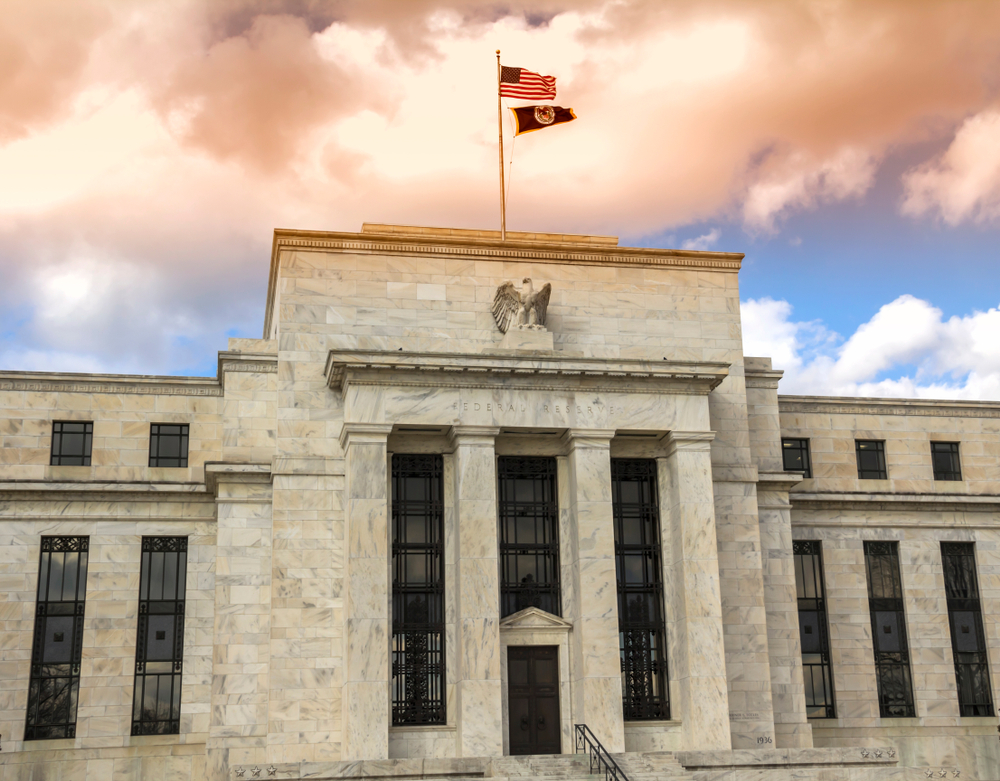
In October 2008, at the height of the Global Financial Crisis, the Federal Reserve began paying interest on the reserves that banks deposit with the Fed. Interest on reserves (IOR), set by the Fed, today is among the central bank’s key tools in steering the economy. Since 2019, the Fed has embraced what’s known as the ample reserves framework, which combines the payment of interest on reserves with a historically large balance sheet.
Chris Hughes and Josh Younger trace the history of this approach and criticize the Fed’s recent embrace of it. They say the costs of this framework have been underappreciated.
“The regime delivers enhanced control of short-term interest rates, yet it also generates significant and new revenue for commercial banks,” they write. They argue that banks profit from getting an interest rate on their reserves that exceeds the rates they pay on deposits. Therefore, the more reserves, the more money banks make. They also argue that the Fed’s large balance sheet cushions banks from taking large mark-to-market losses on their bond portfolios when interest rates rise.
Hughes and Younger advocate for alternatives and explain them in detail. One option would be for the Fed to stick to the ample reserves framework with a smaller Fed balance sheet. Another would be to pay interest only on some bank reserves, the level needed to meet regulatory requirements. Or, the Fed could stop paying interest on reserves altogether.
Donald Kohn and William English strongly disagree with Hughes and Younger.
They argue that total bank deposits rose not because of increased reserves at the Fed, but for other reasons, including the large government payments to households and businesses during COVID. And, they say, even if the ample reserves framework did lead to significantly higher bank deposits, competition among banks should push up the interest rate they pay on deposits, sharply constraining the impact on bank profits. They also note that reported bank profits did not swell during the period in which Hughes and Younger are focused.
Much of the Hughes and Younger argument, Kohn and English say, is really criticism of quantitative easing, the large-scale purchases of assets by the Fed during and after the Global Financial Crisis and COVID pandemic. They say the alternatives Hughes and Younger outline “would effectively impose a tax on the banking system by forcing banks to lend to the government at a below-market rate.” This would lead banks to maneuver to avoid holding reserves, which would be wasteful and make intermediation more costly, which would be a drag on economic activity.
Authors
Report authors


Respondents


Related Content
-
Acknowledgements and disclosures
Younger is employed by Tudor Investment Corporation. The views expressed in the paper are the authors’ own and do not necessarily represent the views of Tudor. Tudor is a Brookings donor. Tudor’s financial support to Brookings is not in any way related to this article or Younger’s authorship.
The Brookings Institution is committed to quality, independence, and impact.
We are supported by a diverse array of funders. In line with our values and policies, each Brookings publication represents the sole views of its author(s).