This essay is adapted from a speech Fiona Hill gave for the World Traders Annual Tacitus Lecture at The Guildhall in London on February 26, 2026.
When we hear phrases like “collapsing old order,” “emerging disorder,” and “new order,” they sound like three successive acts in the drama of global governance. The “old order” is the set of rules and expectations we assumed were settled until events demonstrated how much they all depended on habit, shared interpretation, and (often selective) enforcement. “Emerging disorder” is what it looks like when all our assumptions are contested simultaneously by states, firms, and publics, each advancing a different view of what it thinks is legitimate, secure, and fair. “New order” is the coherence we try to project onto the chaos we perceive when everything is in flux. It is the hope that today’s turbulence will smooth out and things will settle into a stable pattern again. In practice, old order, disorder, and new order are not separate phenomena. They are different phases of one underlying process: reconfiguration, or “reordering.”
In the context of the global order, for decades, we operated within a broadly understood framework for how power, markets, and rules interact. These rules were underwritten by institutions, security guarantees, and norms of openness. Today, what is striking is not that the rules are eroding, but that multiple actors are trying to rewrite them all at the same time—through trade policy, technology standards, sanctions, supply chain design, and the strategic use of interdependence, as well as, of course, through the use of force. From the outside, this process looks like disorder, almost permanent turbulence. But this may also be what the transition to something new looks like in practice. New equilibria are being tested, not just contested.
Are we observing three distinct states: the old, the emerging, and the new? Or are we living through one system reassembling itself?
The questions I want to pose are simple: are we observing three distinct states: the old, the emerging, and the new? Or are we living through one system reassembling itself? Is what we call “disorder” just the visible surface of adaptation? Will the process of adaptation settle into a durable new order—or, more worryingly, will it harden into a state of chronic instability?
My central proposition is that we are not observing three separate states of being. We are seeing one system trying to reconfigure itself. In some areas, this will succeed. In others, the system will retain or develop vulnerabilities that could lead to crisis and conflict.
The process of reconfiguration
With my introduction out of the way, I have some reflections on where we are now in the process of reconfiguration—or at least where we appear to be—and how we got here.
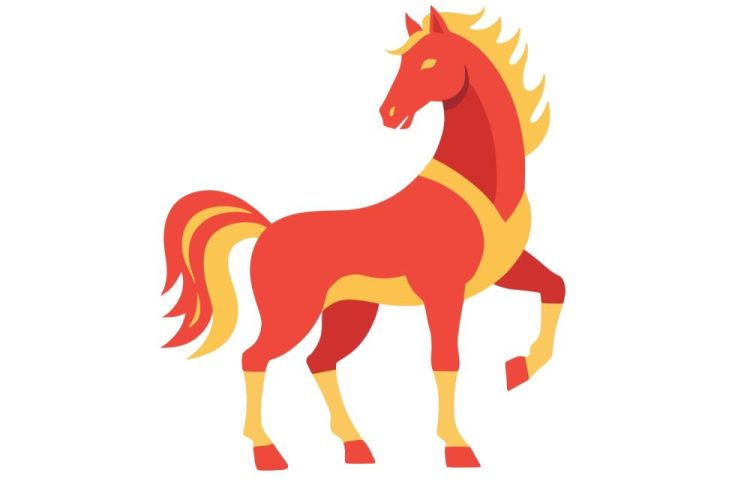
This year, we marked the Chinese lunar new year—the year of the Fire Horse, which only comes around once every 60 years. This lunar year fits the current moment very well. It promises a period of intense energy, dynamic change, the breaking and transformation of old patterns and orders, the embrace of new ideas, and the prospect of innovation.
This year also commemorates the 250th anniversary of American Independence and its giddy rise from a grab bag of former British colonies to a global superpower. And we have just marked the fourth anniversary of the outbreak of a full-scale interstate war in Europe since Russia invaded its neighbor, Ukraine, on February 24, 2022. As of January, this year, 2026, Russia has fought Ukraine longer than the Soviet Union fought Nazi Germany in the Second World War (when, of course, Ukraine itself was part of the USSR).
2026 does seem particularly filled with peril and possibility.
Commemorations and anniversaries often mark the end of something old and the beginning of something new. And even without the symbol of a Fire Horse galloping through this year, potentially setting everything ablaze, we know that change is rapid and occurring on many fronts. We’ve been living in a period of global turbulence for quite some time. This is not exactly new. But 2026 does seem particularly filled with peril and possibility.
The fundamentals of national power have been shaken by dramatic economic, technological, and demographic changes. Climate change, artificial intelligence (AI), and other major developments raise many more questions about the future of the world population and its distribution, the meaning of work, and the future of trade than I can possibly delve into in this essay. But there are a few things that we can say for sure.
First, we no longer live in the unipolar post-Cold War world that was shaped and regulated by the United States after 1989. The United States may still dominate the way we think about things from trade to geopolitics to security—especially after President Donald Trump has produced so many shocks to the system with punitive trade tariffs, predatory behavior against allies’ territory, and muscular militaristic displays at home and abroad. But we are now moving to a post-American world—this is at the heart of the current system reconfiguration.
We probably moved past the old post-1989 order into the period of disorder—where the global political, security, and economic rules are in flux and contested—after 9/11 and, from my perspective, certainly after the U.S. invasion of Iraq in 2003. But we are now at something of a watershed moment in the process, where even the United States itself is finally calling it quits on the old order. A series of recent speeches by American leaders has made this quite clear.
Secretary of Defense Pete Hegseth and Vice President JD Vance both told Europeans, in back-to-back speeches in Brussels and Munich in February last year, that America would no longer underpin their security. In January this year, in Davos at the World Economic Forum, U.S. Commerce Secretary Howard Lutnick declared globalization—which was supposed to be the culmination of the old economic order—a “failed policy” that had “left America behind; it has left American workers behind.” The United States was moving on, he asserted. And he suggested that other countries should do the same. They should look out for themselves—take care of their own borders and sovereignty—and not develop any critical dependency on any other country.
Commentators at Davos described a meeting quite out of keeping with the normally staid Swiss conference—filled with drama, anticipation, and fear, where nothing could be taken for granted anymore, and where the highlight or lowlight was a rambling, grievance-laden, and ominous speech by the U.S. president. In the midst of all this, the Canadian premier and former head of the Bank of England, Mark Carney, told everyone that the global system had reached a critical juncture—a rupture. In other words, even before the beginning of the lunar new year, we were on fire, and someone had pulled the alarm.
And at this year’s Munich Security Conference in February, U.S. Secretary of State Marco Rubio gave another speech emphasizing the U.S. change in direction. It had a softer tone than the others. Rubio declared the United States a “child of Europe,” and praised the historic and cultural bonds of Western civilization. But he also criticized the direction of European economies and societies. The cadence of his speech was more funeral lament than rallying cry for the future of the transatlantic alliance.
Calling it quits on the old order
- Hegseth at the NATO Ministers of Defense Meeting
- Vance at the 2025 Munich Security Conference
- Lutnick at the 2026 World Economic Forum
- Trump at the 2026 World Economic Forum
- Rubio at the 2026 Munich Security Conference
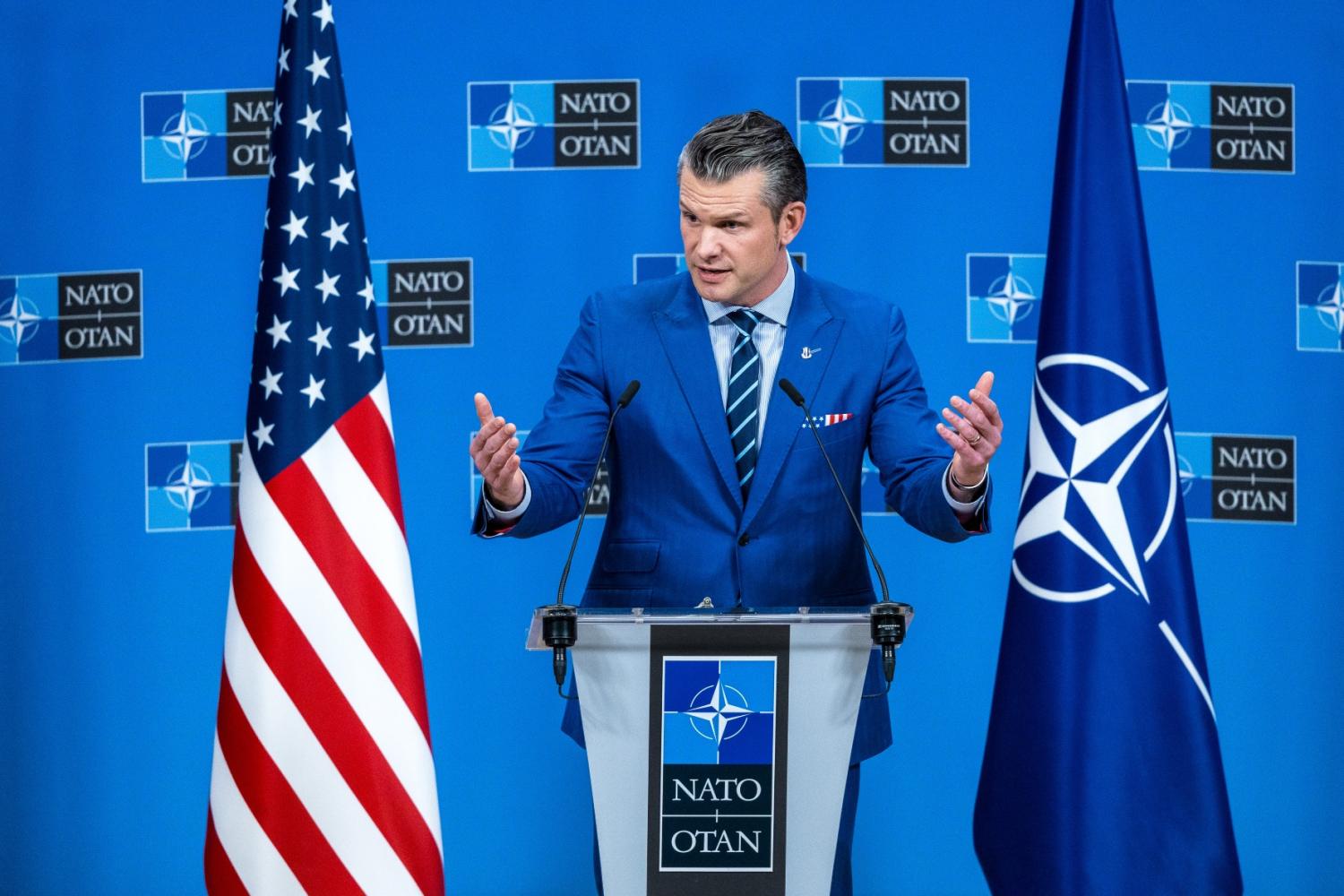
Hegseth at the NATO Ministers of Defense Meeting
“Leaders of our European allies should take primary responsibility for defense of the continent…”
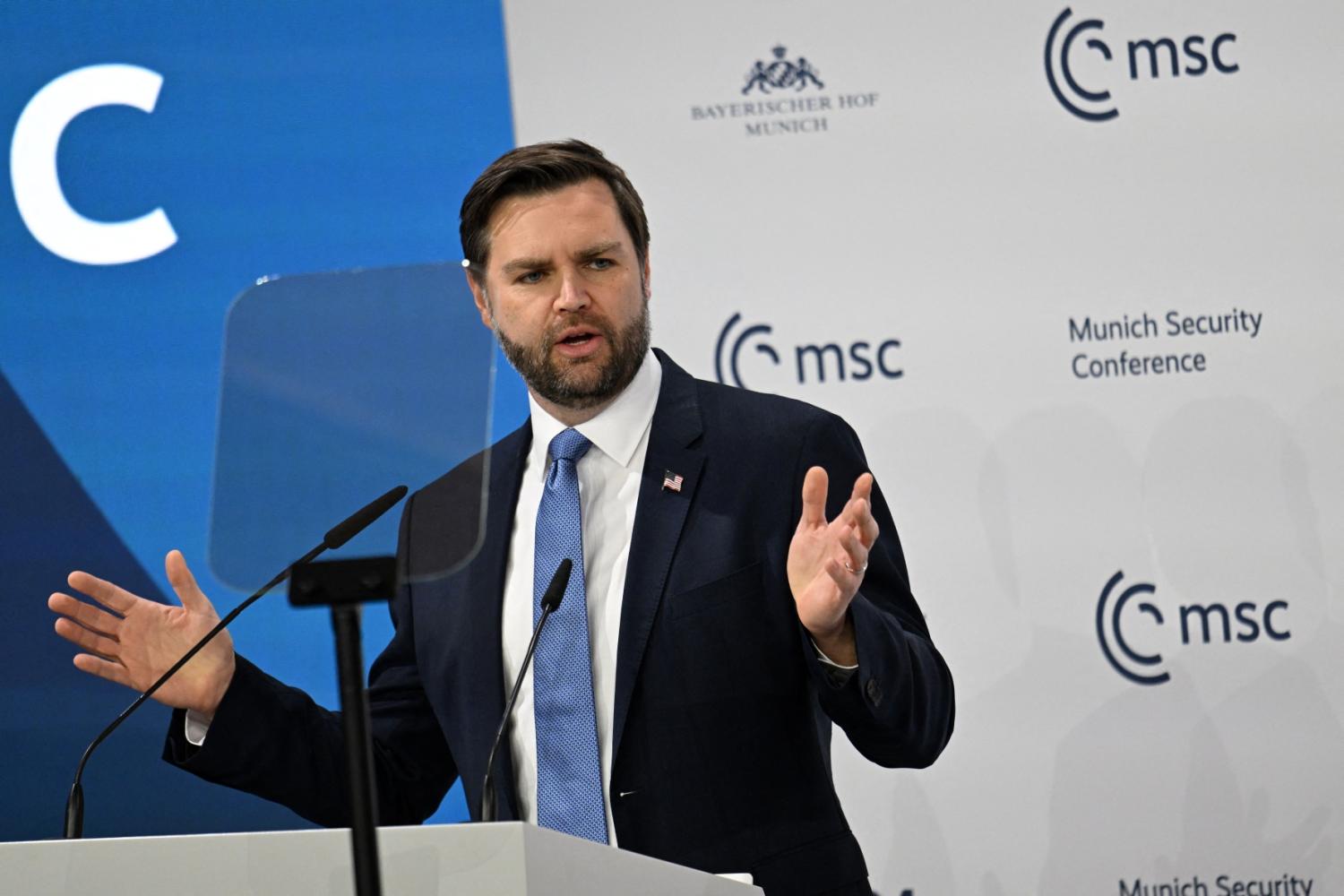
Vance at the 2025 Munich Security Conference
“… it’s important in the coming years for Europe to step up in a big way to provide for its own defense…”
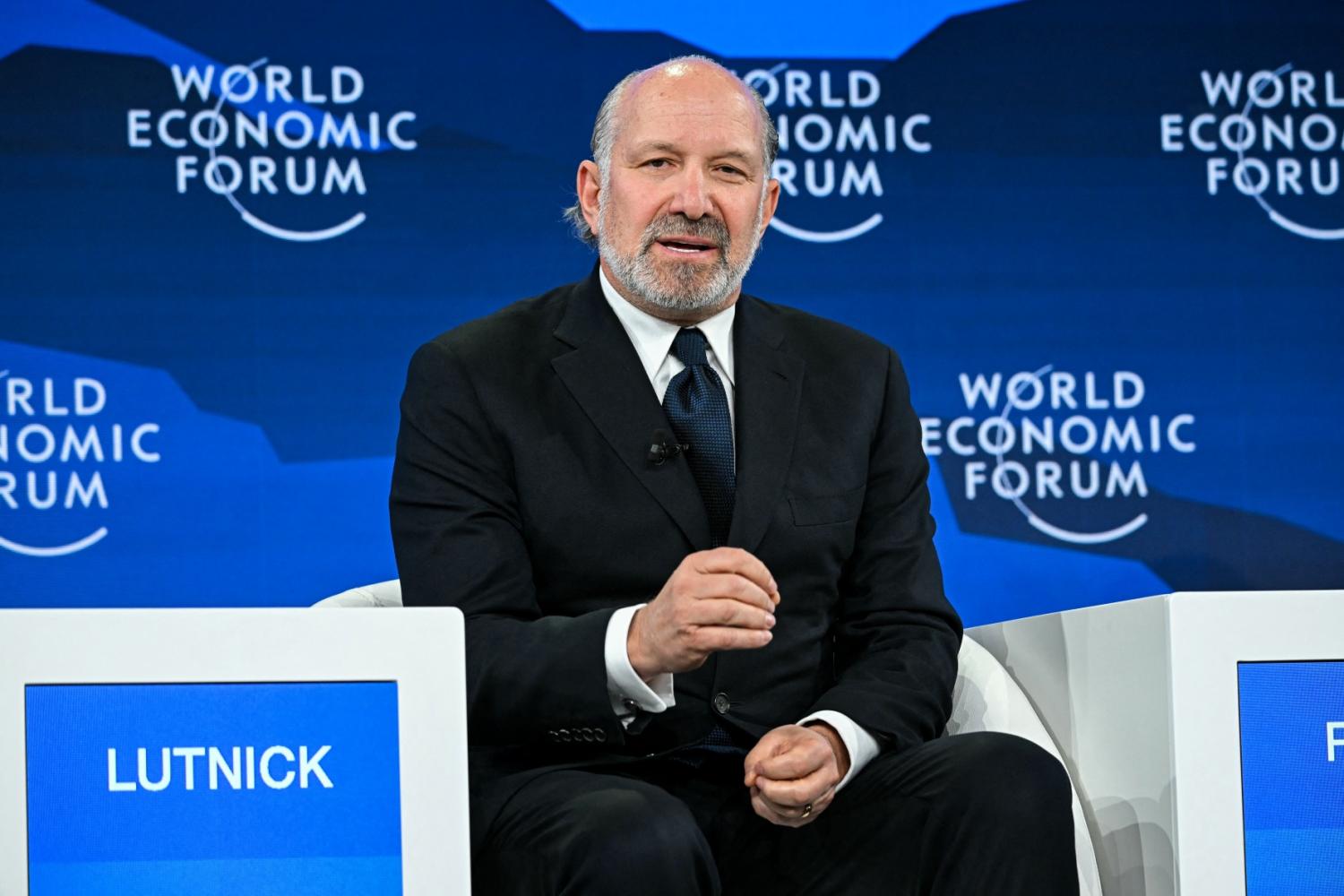
Lutnick at the 2026 World Economic Forum
“Globalization has failed the West and the United States of America. It’s a failed policy…”
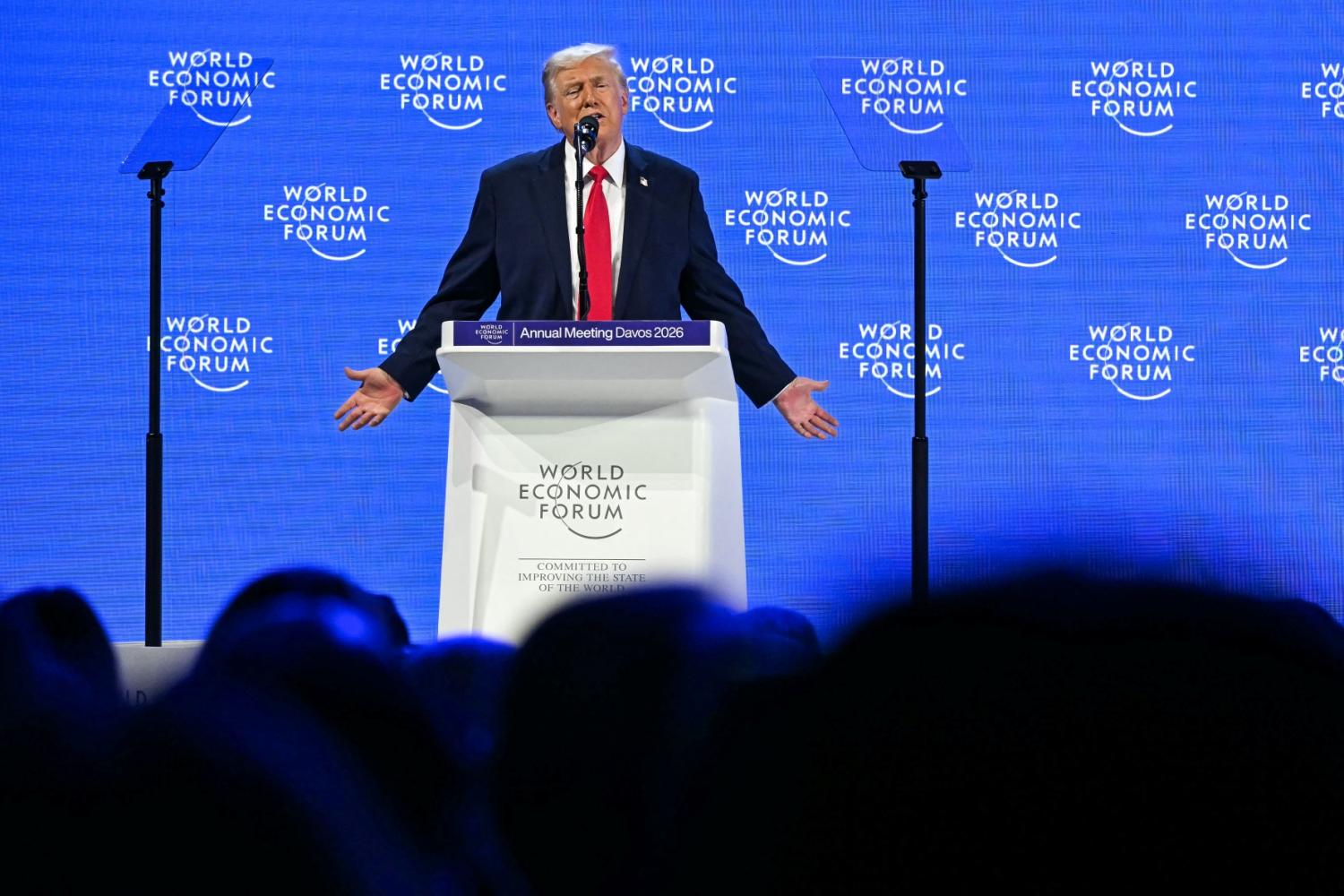
Trump at the 2026 World Economic Forum
“What does the United States get out of all of this work, all of this money, other than death, destruction and massive amounts of cash going to people who don’t appreciate what we do? They don’t appreciate what we do—talking about NATO, I’m talking about Europe. They have to work on Ukraine. We don’t—the United States is very far away.”
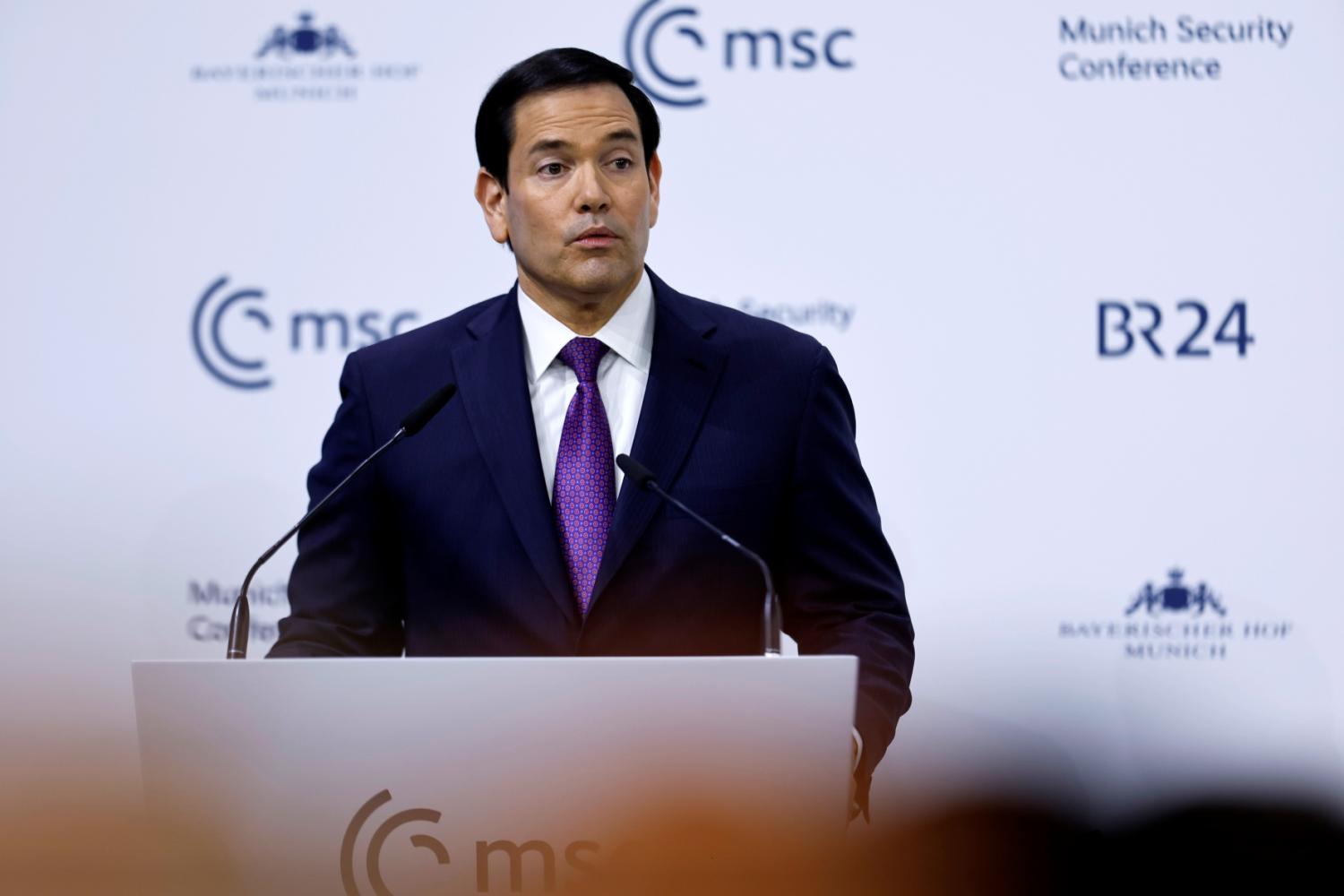
Rubio at the 2026 Munich Security Conference
“Under President Trump, the United States of America will once again take on the task of renewal and restoration, driven by a vision of a future as proud, as sovereign, and as vital as our civilization’s past. And while we are prepared, if necessary, to do this alone, it is our preference and it is our hope to do this together with you, our friends here in Europe.”
In short, this year’s Fire Horse is just the latest manifestation of an era in which the balances of power are shifting.
We conventionally think of balance of power shifts led by states—the relative decline of the United States, the rise of China, a shift in global power from West to East. But we also have to factor in nonstate actors. Osama bin Laden changed the course of history with horrific terrorist attacks 25 years ago. Multiple actors continue to try to shape the world by other means to further their own interests in as quick a timeframe as possible—often at the expense of everyone else.
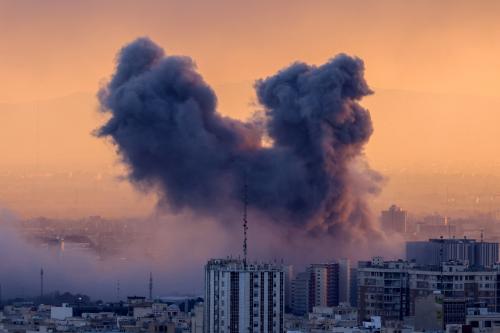
Private corporations and superrich individuals, including “Technology Titans,” are now as deeply invested in geopolitics as they are in the pursuit of their business interests. Boosted to great heights by the technologies they develop and control, they take public stances on issues of war and peace and engage directly with world leaders. All this at a time when conflicts and crises around the world—from Ukraine to Gaza to Africa and South America—are also ablaze, fueled in part by the withdrawal of the United States from overseeing international legal safeguards and crisis intervention, or even by intervening itself in a very different way in Venezuela. And businessmen, not diplomats, have been the key figures in U.S. efforts to negotiate peace in Ukraine and Gaza, as well as in the attempt to make a high-stakes nuclear deal with Iran ahead of the joint U.S. and Israeli strikes on that country at the end of February.
AI and the development of advanced digital technologies drive our economies. They also change the shape and conduct of war, including the nature of attacks on civilians. Casualties have soared in every conflict—we just hit the 2 million mark in terms of those killed and injured in Ukraine at the end of January. Even societies that are not technically at war are constantly under siege and destructive attack, including by cyber assaults and acts of sabotage against critical national infrastructure. We, as citizens, are personally and collectively subject every single day to the pernicious effects of psychological and so-called hybrid warfare. We are bombarded by the deliberate, destructive power of weaponized disinformation and broadly propagated conspiracy theories—all facilitated by the technological breakthroughs we have come to depend on, and our growing reliance on digital systems and devices for all aspects of daily life.
These developments, taken together with the return of war to Europe, have thoroughly undermined the mechanisms, democratic institutions, and systems of governance we relied on to keep the peace after World War II and since the end of the Cold War. This is the “old order” we are always referring to: the post-1945 settlement, and in particular its post-1989 iteration, which has been sustained by U.S. leadership and commitments, and the institutions associated with them. This is what is often termed Pax Americana. In the decade since Russia first annexed Crimea and then moved to take the rest of Ukraine, the breakdown of Pax Americana has accelerated.
Over the last 80 years in the U.K. and Europe, people have forgotten the high and terrible costs and chaos of full-scale war. They have been complacent about their own security. They have taken U.S. political and economic benevolence and its military protection for granted. The United States is now withdrawing from the system. That benevolence is a thing of the past.
The onus is now on others, on all of us. We will have to build something new, including on the security front, ourselves. It will not be built for us. But we have plenty of precedents for doing this. What we have done before, we can do again.
The American president has torn off the band-aids from a wounded global system, and its limbs are falling off.
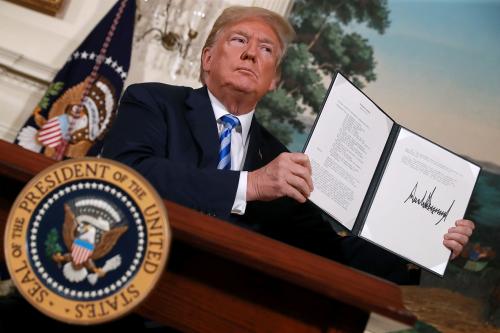
Since Trump’s inauguration for a second term in office, he has made it clear that he is not willing to lead, nor to pay for, the effort to create something new. Instead, he will jostle for the best possible position for the United States, and the United States alone, in the geopolitical free-for-all. Trump wants maximum room for maneuver, and U.S. economic benefit, without responsibility and obligation to others, including the U.K., Canada, and other formerly close American allies. At home, Trump is remaking America in ways that go far beyond the objectives of his first term and even those of the U.S. founding fathers, 250 years ago. This is the rupture that Carney pointed out at Davos. Trump is systematically reframing trade as a tool of coercion and extending trade conflict to allies as well as adversaries; he is explicitly embracing territorial ambitions. The American president has torn off the band-aids from a wounded global system, and its limbs are falling off.
The U.K. and Europe cannot count on the United States anymore. As the 2025 U.S. National Security Strategy makes very clear—beyond an almost poignant shout out to the memory of the old American ties and affection for the U.K. and Ireland—the United States is moving on and away from Europe. The continent and its travails are now a secondary consideration in American foreign policy—as was the Middle East until the end of February this year. Prior to attacking Iran, the U.S. primary focus was on building up and fortifying the region closer to home—the Western Hemisphere, which includes Canada, Greenland, and the former Panama Canal Zone, not just Latin and South America. This demanded more attention to militarizing the U.S. southern border, taking aggressive action to stem flows of migrants and illicit drugs, controlling hemispheric trade, and, as we have also seen, the forcible removal of regional leaders—like Nicolás Maduro in Venezuela—and blatant attempts at territorial acquisition in the case of Greenland.
Beyond land grabs in the Western Hemisphere, China and Asia remained a U.S. priority in the National Security Strategy, but Africa was relegated to a source of raw materials with no intent to invest further American attention.
While the United States is doubling rather than hunkering down in the Western Hemisphere, and Europe (and now the Middle East) is at war, Asia is relatively at peace (for now). But given President Xi’s end-of-2025 address and his own fiery references to Taiwan, the Chinese year of the Fire Horse could bring another regional land grab attempt in Asia, a military conflagration, or, at the very least, the trampling of Taiwan’s independence.
Whatever happens in these geopolitical realms this year, to the West and the East, the future settlement of global economic activity and trade will still be shaped by China and by its confrontations with the United States. China is the locus and the pivot point of Asia, demographically, economically, politically, militarily, and also crucially in terms of technology development and innovation. Although China’s and its neighbors’ populations are aging, Asia now represents roughly 60% of the global population.
The West, rather than the Western Hemisphere (if “the West” still exists by the end of this year as a geographic construct centered around the United States), is both aging and declining in population. With the extreme backlash against immigration in the United States, which has been a major source of its population growth in the last 80 years, this demographic decline will pick up in pace. And, of course, we have the same backlash in most of Europe—with the notable exception of Spain. So, will further demographic decline in the West boost China?
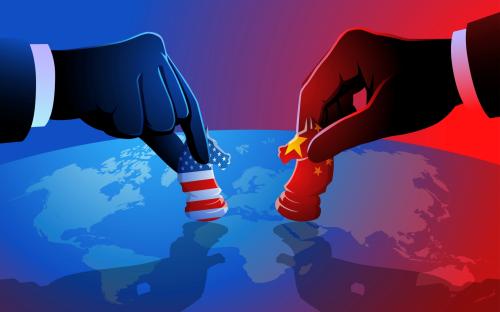
I would venture that, Fire Horse imagery aside, we are not right now galloping from a U.S.-dominated world to a Chinese hegemonic system. China wants to prosper, but it does not want to “run the world.” China does not seem likely to pick up the international mantle of American power and leadership this year—nor the “slack” in the global economy. China sees much possibility in the future, but it does not want to actively court the peril that comes with global responsibility. China’s approach to the old economic order is also a disruptive one. As my colleagues at the Brookings Institution’s China Center underscore, China wants to cement its ability to trade on its terms, selling but not buying from others. It wants to dominate the sectors it is most interested in—including the green economy and green energy. It wants to promote its own growth, even if this means forcing dependency and potential deindustrialization on others. China will seek to adapt regional and global structures to suit itself and bolster its economic development and security, but not to be the progenitor of a new all-encompassing order.

Perils, uncertainties, and what we stand to lose
So, what does all this mean for world trade? What perils and uncertainties lie before us in this period of disorder? What are we in danger of losing and never getting back? And do we have the possibility to shape things more favorably in the process toward a new order?
I will get to the possibilities in a moment. But if we consider how things will unfold from our current vantage point, I don’t think we are likely to see a single economic and military hegemon consolidate itself. Nor, I propose, will we see geopolitical and geoeconomic spheres of influence emerge in the way that people—including Trump—currently envisage, with a three-way carve up of the world between the United States, China, and Russia. Why?
A couple of reasons.
First, spheres of influence are inevitably contested. They lead to more confrontation and fragmentation. I greatly doubt that the United States will be left alone to dominate the Western Hemisphere, or that China will be unchallenged in Asia, or that Russia can translate its war in Ukraine into the dominance it seeks in Europe. In the case of the Ukraine war, there is no current end in sight for this war in terms of a single moment that “ends” it. We only have the prospect of a long, painful process that the U.K. and Europe will have to engage in, with or without the United States, including eventually rebuilding Ukraine’s economy and polity. Russia is currently a nihilistic power, a source of regional and broader disorder. It will not engage in building some new order in Europe and Eurasia, nor anywhere else, at least for the foreseeable future.
Second, putting Russia aside, the United States and China are not engaged now, nor will they be in the future, in a military and economic face-off in a vacuum. We no longer have the same set of circumstances that prevailed during the Cold War between the United States and the USSR. Over the last 80 years, the world has become a complex and complicated place. It has changed completely.
The U.K. and Europe, it must be said, currently have limited leverage over the United States, their ostensible ally, but others have more clout. India, Brazil, South Africa, Turkey, Saudi Arabia and the Gulf states, and many other countries have wealth and power and their own trading networks. And, individually in some cases as well as collectively, they have the means to counterbalance the United States and China in key regions, if not globally. The so-called BRICS powers have more aggregate wealth or economic size in purchasing power parity terms right now than the G7, which already translates into new forms of economic and political impact. The U.S. National Security Strategy highlights this when envisaging new economic and trading arrangements for the United States.
New rules will not be the product of some binary superpower struggle between the United States and China, nor of machinations among the United States, China, and Russia over exclusive spheres of influence. We are no longer in that kind of world. The new global rules that will fill the current spaces in the international system will be the product of competition among the so-called “great” and these “middle” powers.
Nonetheless, trade is definitely subject to “great power” machinations. Trade in goods as well as finance is currently seen as leverage for dominance in the current global geopolitical competition—a sword to be wielded in the post-Pax Americana free-for-all, not just an arena to engage in. For the United States, as we have seen over the past year, trade is a major part of interstate competition. COVID-19 upended global trade and ruptured supply chains, wars continue to change trade patterns and rupture regional supply lines, and now U.S. tariffs are doing their part to create more uncertainty. Trade and financial markets have also become fractured with the emergence of cryptocurrencies and the creation of meme coins, with the United States now actively engaged in this process.
In the United States, personal caprice seems to drive the administration’s application of tariffs and sanctions, not just national interest. Even intra-U.S. trade across the continent is affected in ways that it was not before. In his second term, Trump has singled out individual American states for opprobrium by the federal government—not just other countries. Everything depends on the stance of their leaders on certain political issues and their general political disposition. Trump wants to support so-called red states that predominantly voted for him with federal largesse, not blue states. So, walls are built, tariff barriers, sanctions, and other financial measures are applied as a means of political punishment.
The future of free, fair, honest world trade currently seems in peril.
The future of free, fair, honest world trade currently seems in peril. With the end of Pax Americana, we fear the end of post-WWII peace and prosperity and its accompanying phenomena of global business, global growth, and global advancement.
All of us rely on trade to create jobs, generate wealth, and produce revenues for paying taxes to underpin vital state functions. And trade, of course, has many aspects: money/financial flows, the exchange of products/goods, and services, but also of ideas, intellect, and human capital. International businesses rely on the consistent and impartial application of the rule of international law to support fair trade in goods and the creation of economic partnerships, but also to enable people to move between countries to practice their skills and benefit from their talents.
This may all seem trite, but at the moment, we have lost our appreciation of these basic goals of engaging in trade at the local and global level. They have been subsumed by obsessions about geopolitics or geoeconomics and the exigencies of waging and winning wars. Or they have become lost in our understandable concerns about the negative aspects of trade and economic development, the flip sides of the various flows of goods and people—the creation of unequal dependencies through trade, including economic exploitation, and even “enslavement,” including trade or trafficking in people.
The world has been brought closer together through the cross-border nature of trade, enterprise, innovation, technology, and growth. However, we have also been pushed further apart by the same developments, by our fractured domestic politics, the discrediting of postwar political and financial international institutions, and the accompanying rise of nationalism and populism.
Today, too often, the benefits of trade seem to be bending toward the few, not the many. In this context, everyone is looking to carve something else out for themselves, to adapt to the new circumstances and uncertainties and be more “resilient,” in part by staking claims to critical resources and supply chains. Trump’s exhortation to “Make America Great Again,” and his often confounding and seemingly contradictory policies such as the mass deportation of immigrants, imposing tariffs on allies and adversaries alike, claiming Greenland, reclaiming the Panama Canal, and even attempting to coerce Canada into becoming a 51st U.S. state, in fact amount to a pursuit of greater strategic and economic resilience for the United States.
Trump is not necessarily tearing things down for the sake of it. He is pursuing his own ideas of U.S. strategic autonomy and forms of autarky, or economic independence and self-sufficiency. Trump’s approach is clearly not inclusive nor altruistic, nor is it what other countries have come to expect from the United States on the world stage. Trump has narrowed America’s focus in a way that leaves allies, and many citizens, in the dust. But there is a method behind the madness, even if there seems to be more madness behind the method.
However, as my Brookings colleague, Carlo Bastasin, a prominent Italian economics professor and journalist, has argued in a recent paper, this kind of approach is not likely to be economically and strategically sustainable. The United States is far from being self-sufficient, and it is still dependent on the global economy (as Iran’s closure of the Strait of Hormuz clearly illustrates). Nonetheless, the United States is now laser-focused on economic security—and trade is seen as a key, if not the key, feature of national security. This is also laid out in the U.S. National Security Strategy.
Two patterns are now emerging in the U.S. approach to trade, as identified in a recent U.S. Council on Foreign Relations analysis: Building walls with tariffs (what we might call “The Great Wall of Tariffs”), and the United States trying to consolidate its own trading space by rewiring global supply chains away from China and toward itself. In new trade deals with Australia and Malaysia, for example, the United States has lowered tariff rates to advance national security priorities. With Australia, the United States has focused on securing commitments to provide critical minerals for U.S. manufacturing and defense in return for preferential tariff treatment, thus—Washington hopes—breaking China’s stranglehold on supplies to the United States. And with Malaysia, the United States has reduced tariffs in return for Malaysia adopting restrictive measures against Chinese goods and technology that mirror U.S. policies. Similarly, in early February, the United States concluded a new deal with India to reduce reciprocal tariffs and have India commit to major purchases of U.S. products, including (until the crisis in the Strait of Hormuz) replacing purchases of Russian crude oil with American supply.
So, Trump is trying to demarcate the contours of a new U.S. economic and trade order by pulling countries together around a set of standards and supply chains. The administration has pursued similar accords to the Malaysia agreements with Japan and South Korea. It has also explored mineral-related deals with the Democratic Republic of Congo and Central Asian states. Trump believes he is creating more resilience and economic security as a result of wielding tariffs and making deals.
Tariff barriers and physical walls may play a role in ensuring one state’s security, but they create plenty of problems for other states and their economies.
Tariff barriers and physical walls may play a role in ensuring one state’s security, but they create plenty of problems for other states and their economies, as we have seen in the past year. Not a great “trade-off” for everyone else, so to speak—and Carney called this out in Davos. Canada is, of course, almost uniquely vulnerable given the fact that the bulk of its international trade is with the United States and the United States is its primary export market.
However, the United States cannot possibly hope to control every critical supply chain and address all of its vulnerabilities at once, as my Brookings colleagues Mike O’Hanlon and Marta Wosinska pointed out in an end-of-December Wall Street Journal article and in a more in-depth recent study. The United States has yet to identify which supply chains are the most essential to U.S. critical national infrastructure and manufacturing, and exactly where U.S. dependence on Chinese products and components might pose a significant threat to lives, defense, and essential economic activity. As the United States works this out, there will doubtless be more upheaval for others ahead.

Moving from peril to possibility
So, how do those who shape world trade, or support the efforts of those who do, move from peril to possibility while the U.S. figures out where it is going?
Last year in October, when I turned 60, I walked a stretch of Hadrian’s Wall. I have long been fascinated with Roman Britain and Roman history, growing up in northern England close to one of the many forts on the way to the wall, Vinovium, at Binchester near Bishop Auckland. In keeping with the themes of this essay, Hadrian’s Wall was not just built for security to fend off marauding tribes on the outer fringe of the Roman Empire. It was a physical tariff barrier to restrict trade and extort a toll from those wanting to pass through. It kept people in and out and limited their interactions. It circumscribed the contours of Rome’s economic sphere, as well as protecting its territorial holdings against military incursions.
The Roman Empire was a trading empire, not just a military empire. When it dissolved, we obviously no longer had a single Rome nor a single integrating political, economic, and trading space. We had fragmentation with the emergence of different parastatal entities across Europe and North Africa in its wake. The Roman Empire itself moved its center of gravity from west to east to Byzantium or Constantinople for another thousand years.
Historians tell us there was a decline in urban life when the Romans left Britain, as well as reduced trade and decreased literacy. But Britons were clearly still there after the Roman commanders had departed. They were going about their daily lives, repurposing, refocusing, building, doing something else, also trading with new partnerships and supply chains emerging. They were in the process of adapting and creating a new system, a new order.
All of this is to say that, fast forward a millennium, and here we are again with the end of the modern American empire and its unified, globalized trading system. People in the past moved beyond Rome and all the other orders that came and went after it. They will move beyond America now.
All people, societies, and institutions will figure out how to bounce back from this setback and cope with its challenges. This is what it means to be resilient.
As I noted before, the United States does not operate in a vacuum. None of us does. Everyone will adapt to the new circumstances that the United States is creating and the punitive measures it is trying to impose. All people, societies, and institutions will figure out how to bounce back from this setback and cope with its challenges. This is what it means to be resilient. Being resilient as a state, a society, or an individual generally means avoiding single points of failure, reducing dependencies and vulnerabilities, and building up your resources and capacities.
Other countries are already interacting with the United States in different ways from before and reacting to it politically, economically, and in terms of trade. Canada is a case in point. Even before his speech in Davos, Carney’s constituents had been taking action at home. Canadian tourism to once-popular places like Florida was down sharply, and so was Canadian demand for popular consumer goods like Kentucky bourbon. Canadians were changing their travel, drinking, and other habits out of antipathy to things American. Other factors are obviously at play, of course, but American actions have had consequences, with a notable hostility emerging toward U.S. goods. Danes are looking elsewhere as Trump looks to acquire Greenland. Danish pension funds have been withdrawing investments from the United States. U.K. Prime Minister Keir Starmer, Carney, and EU leaders have all branched out since the beginning of the year on trade missions to China and India, looking to sign new deals to break out of what they now see as a dangerous dependence on the United States. Carney’s Davos speech was essentially a “Canada is open for business with other middle powers, here is my card,” sales pitch.
In terms of trade and international business, however, technology is key. The United States still leads in AI and the digital space. Global competition is now technological, not just ideological (or personalized, as in Trump’s case). AI and other technologies will be the immediate drivers of what happens next in global affairs and how far countries like the U.K., Canada, and those in Europe can really go.
The U.K., Canada, and Europe are so far on the sidelines, despite, in the U.K. and Europe’s case, concerns about tech ethics and values and the impact on society, not just profits. China dominates the production of wind turbines, batteries, and solar panels, and is moving into nuclear energy, alongside 5G and other platforms. Brazil, Indonesia, and other major countries are already linked to Chinese tech, not to the United States. Europe and the U.K. will have to figure out how to push back against China’s statist, authoritarian approaches—as well as American so-called “tech bros” trying to influence global and domestic events outside of their home arena using their colossal wealth.
There are few historical parallels for the scale of this particular wealth and influence accumulation, with essentially 8 billion people on the planet finding themselves dependent on the products of “8 tech bros.” Although we have, of course, seen the rapid accumulation of power and money in the hands of a few individuals, families, and groups in the past—including in Roman times, everything is always relative. But the political purchasing power of a tiny number of individuals has been amplified through the advance of technology in ways we might not have previously envisaged.
Keeping with my Roman metaphor for a little longer, we are in a new era of different kinds of empires—personal, informal, and formal—that affect business and trade and everyone’s lives. This is, for now, the age of strongmen, as Gideon Rachman of The Financial Times noted in his recent book. The rest of his title is quite ominous—“How the cult of the leader threatens democracy around the world.” But it’s not just the leaders we have to worry about. Think of their entourages and people who have become household names in the United States, who would previously have been obscure functionaries like Trump’s budget director. Trump’s White House is hyper-personalized—his Caesar’s Palace makeover of the East Wing, more Vegas than Rome, and pending redo of what the president has styled as the “Trump-Kennedy Center,” and efforts to rename Washington’s Dulles airport and New York’s Penn Station, exemplify all of this.
But things may be changing. The signs are there beyond the drama in Davos of growing dissatisfaction with the current state of affairs. The recent election of Zohran Mamdani in New York City could be a good leading indicator of change in the United States itself.
For now (up until the war with Iran at least), the U.S. economy is still growing. It is, after all, a roughly $30 trillion economy. But there is brittleness in the economy. There is peril and risk from reliance on the AI boom, military/security expenditure, and the rich and superrich and their consumption habits, all of which are fueling this growth.
The top 20% of those active in the American economy drive the growth in consumption, for example. Admittedly, this is, according to some calculations, around 60 million people in total, which is more than the population of many other countries. But the rest of the population does not feel so good about things. The so-called “affordability crisis” that Americans are currently debating is rooted in an ever-deepening chasm between lower- and higher-income households and what the lower-income households cannot afford—like housing, health insurance, a car, travel, recreation, eating out, etc. Although the rising costs of staples and electricity are also a major issue, affordability is less about food prices and more about this level of consumption. Slowing wage growth for lower-income individuals is also a major problem. This is creating a political backlash.
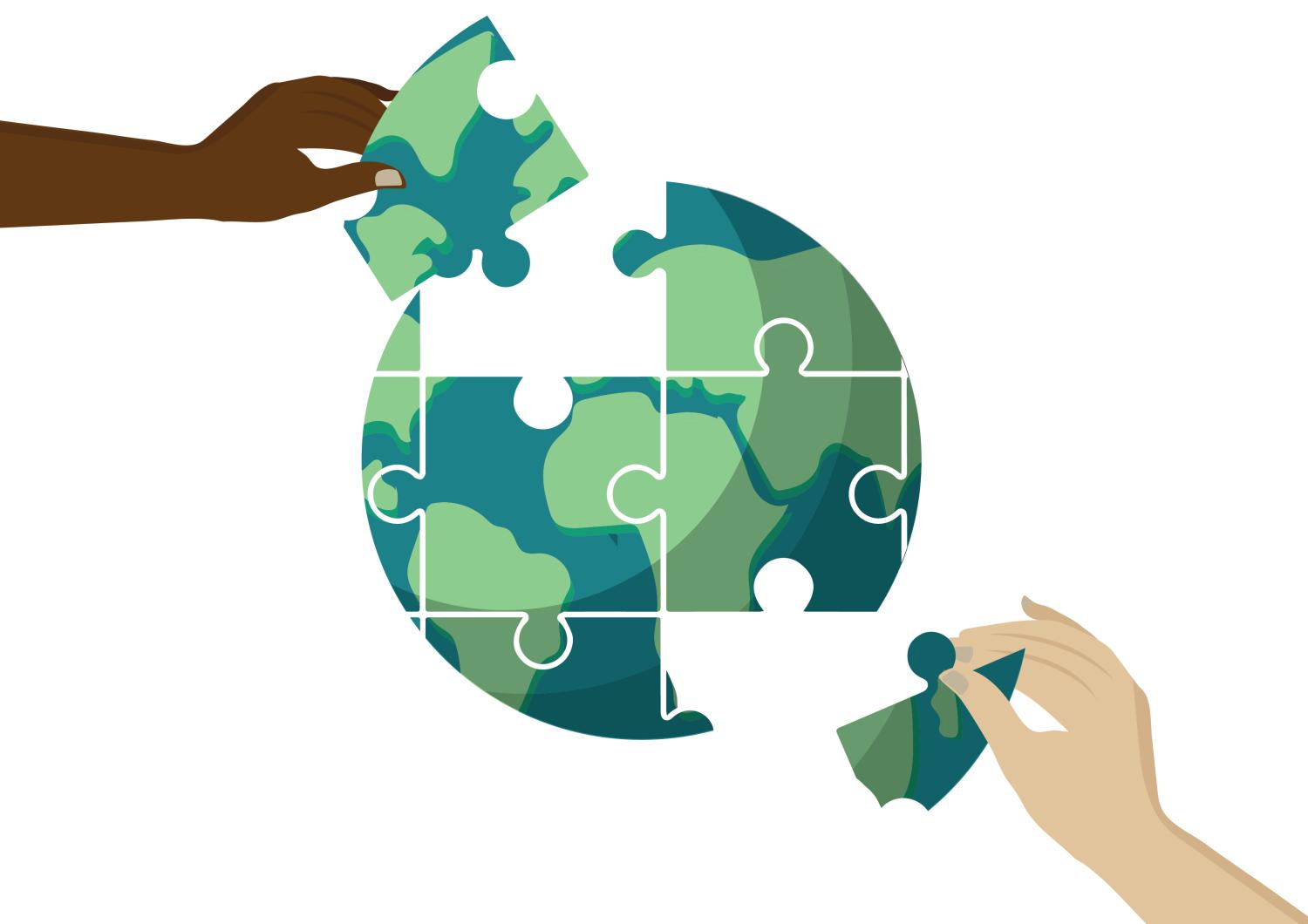
What comes next?
History is full of warnings and pitfalls. Let’s bear in mind that all of us, including China, the United States, and the global superrich, prospered as a result of the old system and its more egalitarian and equitable society. We seem to have forgotten this. Our challenge is to negotiate, reconfigure, and build a new order where power and economic prosperity are more evenly spread.
After my walk along Hadrian’s Wall, I think the answer lies in regional commerce and the resilience we see in some national and local economies, including in both the United Kingdom and the United States.
There is still a lot of capacity to consolidate and build something new. The BRICS grouping is just one example of efforts to create new trading opportunities globally. New patterns of intra-U.S. trade and economic partnerships are emerging (such as new public health collaborations in New England and the U.S. West Coast). Canada is currently focused on building up internal, cross-Canada trade and breaking down barriers between its constituent provinces to offset the previous propensity and preference for trading with the nearest U.S. states. Canada is looking inward as well as outward to expand its global trade beyond North America.
China is also looking more inward at the moment. As I have already noted, this is not to create a more “equal” order, but it might just facilitate one. Beijing’s stress is on multilateralism. Internationally, China wants no single power to be allowed to dominate a new system. China is championing smaller midsize international institutions. China is engaging in closer economic relations with neighbors with which it has tense political relations, including India and Australia. As the United States continues to throw up barriers and wield more sticks than carrots, the Chinese market becomes more attractive to others. But as countries move away from the United States and its market, the process of looking elsewhere will provide opportunities for other regional markets in Europe, Asia, and Africa. Not all roads or trading routes have to lead to Beijing or Washington, just as they did not all lead to Rome in the past. There are other destinations.
New arenas are emerging—the Arctic, for example, is a future trading route. The Arctic is not yet up for grabs, despite Trump’s machinations around Greenland, but it is opening up for new sea transportation routes—and competition. China has declared itself a “near Arctic state,” and all kinds of other not-so-near-Arctic states seek a place on the Arctic Council. The U.K. has a maritime history in the region. Old patterns are breaking down with the retreat of the sea ice.
In terms of other new patterns, an emphasis on smaller local, as well as regional, commerce seems to be part of an emerging trend. Discussions abound in the U.K. and the United States about returning to and renewing ideas of local generation of wealth based on local assets. We especially see this in the U.K. with the creation of new devolved and combined mayoral authorities. Part of this is essential given the sorry state of U.K. public finances, on the one hand, and London’s separation from the rest of the U.K.—more city state than capital city—on the other. In the United States, the Trump administration’s ongoing efforts to dismantle parts of the U.S. federal government are forcing individual states and groups of states to take action to preserve critical public goods and to think about forming or growing their own network of trade relations at home and abroad. One case in point is the recent memorandum of understanding on deepening climate cooperation between the state of California and the U.K.
Ultimately, populations in the U.K. and the United States (as elsewhere) are much more interested in their own “personal” or local GDP than the state’s—in other words, how they are directly affected by the cost of living, affordability, and family sustainability in the region they live in. So, it’s up to all of us to figure out how to address and change things in whatever ways that we can.
Collapse and disorder are all part of a system adapting. We are in the throes of adaptation.
In closing, collapse and disorder are all part of a system adapting. We are in the throes of adaptation. A new order is not something we can wait around for, nor something that will be imposed by a single hegemon. The current environment is multipolar. Our adaptation will be shaped by many different actors. Rather than a set of stable blocs and a single new order in a form we might expect from past patterns and practice, we may most likely end up with overlapping trade and security arrangements.
I can’t predict where this particular year of the Fire Horse will end, but in keeping with the theme of this Chinese lunar year, we are at a point where crisis and opportunity coexist, where there are perils but all kinds of possibilities. Those of us who want to protect what we value or hold to be true and good from the old order will have to respond with great agility this year. We will have to try to ride or tame the horse—or get out of its way as it gallops ahead.
Author

Related Content

The Brookings Institution is committed to quality, independence, and impact.
We are supported by a diverse array of funders. In line with our values and policies, each Brookings publication represents the sole views of its author(s).
Commentary
Peril and possibility: Collapsing old order, emerging disorder, or new order?
April 3, 2026