This case study is part of a project on the state of democracy in Africa. See our other works from this project.
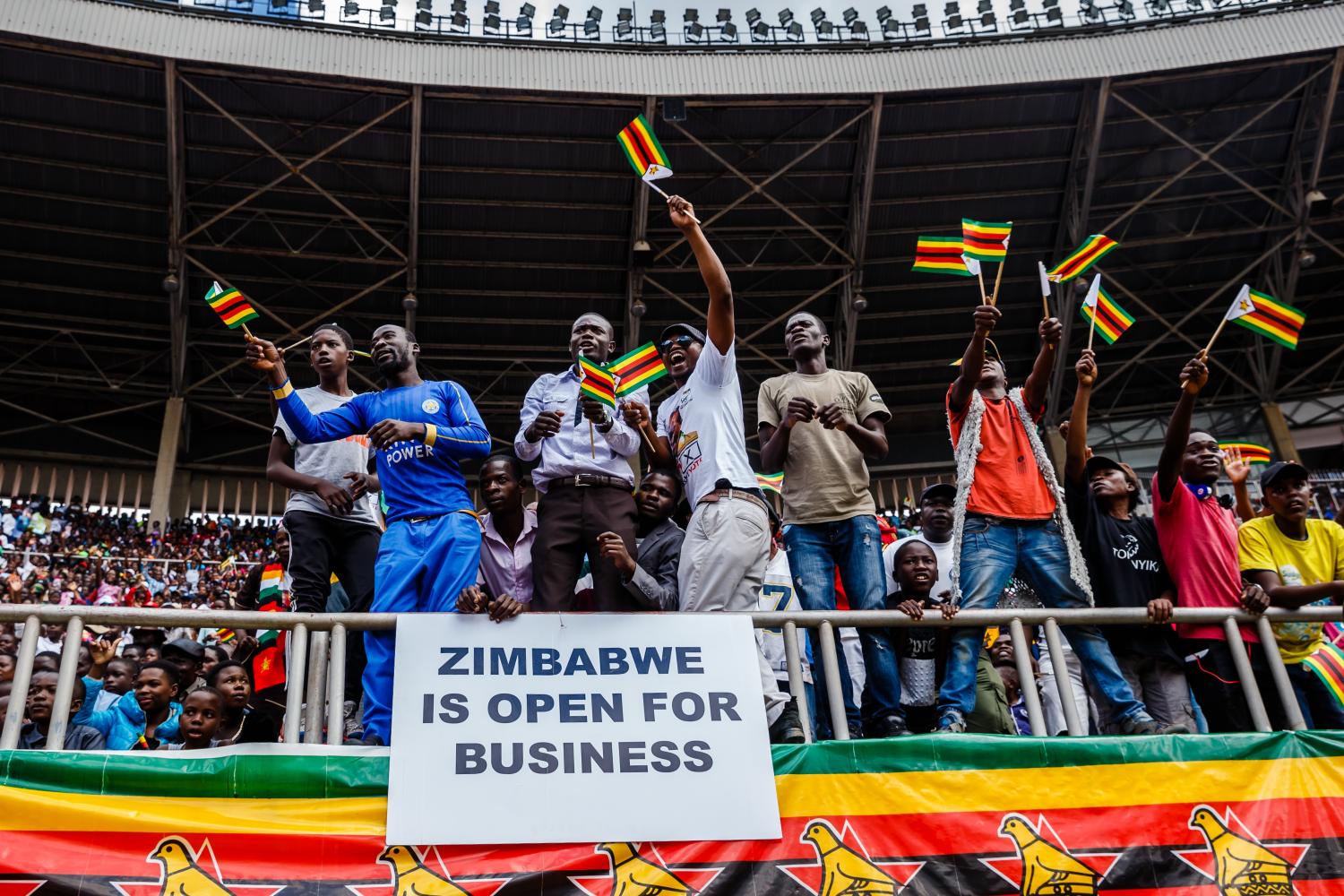
Zimbabwe has long struggled in its democratic development. During colonial rule, only white Zimbabweans had full rights and economic opportunities, while Black Zimbabweans had limited political rights (Nyawo and Rich 1980). In 1980, Zimbabwe transitioned from colonial rule to self-governance under a majority-Black government, and Robert Mugabe served first as prime minister and then as president from independence until his ouster in a coup in 2017. Emmerson Mnangagwa, who had served as vice president since 2013, took over as president after the coup and has won two controversial elections since, in 2018 and 2023. Both Mugabe and Mnangagwa belong to the Zimbabwe African National Union – Patriotic Front (ZANU PF), the party that has been in power since independence.
After independence, ZANU PF pledged firm commitments to democratic governance, including protection of the right to vote; one man, one vote; and land reform, among other pro-people initiatives. On the one hand, the ZANU PF government brought massive improvements in education and employment and expanded voting rights to every citizen. However, ZANU PF continues to restrict freedom of political participation and human and property rights, and state-sanctioned corruption is at an all-time high. Our previous analysis (Dendere and Tendi 2025) emphasizes that the survival of Zimbabwe’s hybrid regime is mainly due to a shrinking opposition, weakened civil society, and minimal international opposition to the 2017 coup and to support for democracy. In that paper, we also argued that the continued militarization of politics, which began shortly after independence, has severely limited all axes of democratic accountability. This paper proposes policy recommendations to address the democratic frailties we identified, at a time when the regime has not shown a commitment to change and global support for democracy is in decline.
Traditionally, the most effective strategies to strengthen democracy are those that empower civil society and citizens, foster active participation, and encourage governments to undertake meaningful political reforms. These approaches often involve a combination of grassroots initiatives, international support, and policy changes to increase transparency and accountability. However, implementing such strategies is not always straightforward, particularly in complex, challenging environments like Zimbabwe, where traditional diplomatic tools have proven less effective at navigating the political landscape and promoting democratic development.
Several strategies have been employed by both internal and external parties to advocate for democracy in Zimbabwe. Some of these strategies have worked better than others and with mixed results; for example, despite violence and repression, Zimbabweans consistently vote. Opposition parties participate in elections while voicing concerns about an unfair playing field. Elections remain significant, even when hopes for change are limited (Lindberg 2006). Still, many of the election outcomes have been disputed, and ZANU PF is repeatedly accused of engaging in patronage politics and using the military to influence election outcomes (Kwashirai 2023; Ndawana 2025).
Civil society actively educates voters and raises awareness about political issues, such as constitutional amendments or bills that may violate human rights. External actors support these efforts, especially through financial aid. Western democracies have also exerted pressure on the government, notably through sanctions such as the United States Zimbabwe Democracy and Economic Recovery Act (ZIDERA) of 2001 (U.S. Senate 2018). ZIDERA mandated that global institutions such as the World Bank and the International Monetary Fund limit financial aid to Zimbabwe. Additionally, asset freezes and travel restrictions have been imposed on many ruling party elites, including the ZANU PF presidium. Likewise, European Union (EU) sanctions prohibit EU member countries from engaging in economic trade with several Zimbabwean companies, including those involved in arms sales (Council of the E.U. 2025).
ZANU PF blames sanctions for all of Zimbabwe’s economic and political problems. Mugabe and Mnangagwa have argued that sanctions have caused suffering among the masses and created pathways for corruption, especially in the mining sectors (Chakawa 2023; Sabao 2023).
Given the complex nature of democratic challenges in Zimbabwe, especially since the 2017 coup, which has led to greater militarization of civilian politics and shifting geopolitical conditions, this paper recommends that policymakers and those interested in Zimbabwe’s democratic future consider a different approach, one that focuses less on isolating sanctions and more on leveraging the current era of transactional engagement in international diplomacy. To that end, this paper recommends a multi-pronged approach to addressing weaknesses in government accountability alongside traditional efforts such as international diplomatic reengagement, political reform, and the empowerment of opposition groups and civil society. Tackling corruption and boosting trade and investment by foreign actors and the diaspora can help rebuild the economy. Even though, as explored later, Western countries are placing greater emphasis on profitable trade relations over human rights and democracy promotion, mutual trade interests among countries could indirectly benefit democracy. These proposals are not exhaustive of all potential strategies that can be applied to a case like Zimbabwe.
-
Acknowledgements and disclosures
The Brookings Institution is a nonprofit organization devoted to independent research and policy solutions. Its mission is to conduct high-quality, independent research and based on that research, to provide innovative, practical recommendations for policymakers and the public. The conclusions and recommendations of any Brookings publication are solely those of its author(s), and do not reflect the views or policies of the Institution, its management, its other scholars, or the funders acknowledged below.
This publication is supported by a grant from the Open Society Foundations.
Brookings recognizes that the value it provides is in its absolute commitment to quality, independence, and impact. Activities supported by its donors reflect this commitment.
The Brookings Institution is committed to quality, independence, and impact.
We are supported by a diverse array of funders. In line with our values and policies, each Brookings publication represents the sole views of its author(s).