



In 1776, the Declaration of Independence declared that “all men are created equal.” Ever since then, Americans have invoked that promise to demand inclusion and drive policy change. On this episode of Democracy In Question, host Katie Dunn Tenpas unpacks what the phrase has meant throughout American history and how it informs policy debates today with guests Bill Galston and Keon Gilbert.
- Listen to Democracy in Question on Apple, Spotify, or wherever you like to get podcasts.
- Watch episodes on YouTube.
- Learn about other Brookings podcasts from the Brookings Podcast Network.
- Sign up for the podcasts newsletter for occasional updates on featured episodes and new shows.
- Send feedback email to [email protected].
Transcript
MARTIN LUTHER KING, JR.: I have a dream that one day this nation will rise up and live out the true meaning of its creed: we hold these truths to be self-evident that all men are created equal.
[music]
TENPAS: Hi, I’m Katie Dunn Tenpas, a visiting fellow in Governance Studies at the Brookings Institution and director of the Initiative on Improving Interbranch Relations and Government. And this is season three of Democracy in Question.
This season, we’re doing something a little unusual for a policy podcast. We’re going back, 250 years back, to when a document was written that every American is familiar with, most can quote from, but very few have actually reckoned with it seriously: the Declaration of Independence. The founding document that came before the Articles of Confederation and the Constitution with its Bill of Rights, the one that outlined exactly why the United States of America came to exist in the first place.
Over eight episodes, we’re exploring the Declaration of Independence phrase by phrase. I’ll ask my guests what key lines meant in 1776, what history has done to them since, and most importantly, what they actually mean for how we practice democracy today.
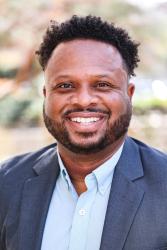
On this episode, I’m excited to welcome two wonderful colleagues, Keon Gilbert and Bill Galston. Keon is the director of the Race, Prosperity, and Inclusion Initiative and a senior fellow in the Governance Studies program at Brookings. His research focuses on the intersection of race, class, gender, and place with specific focus on public health and how racial equity tools can influence policy change.
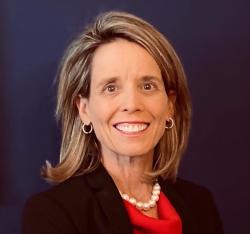
Bill is the Ezra K. Zilkha Chair and a senior fellow in Governance Studies at Brookings. His research focuses on American political thought, history, and domestic policy. Bill, welcome.
GALSTON: Great to be here, Katie.
TENPAS: And Keon, welcome also.
GILBERT: Thank you so much.
[2:12]
TENPAS: I’m really excited to have both of you on the podcast. And on this episode, we’re focusing on a highly debated phrase that immediately follows the assertion that, “we hold these truths to be self-evident,” which was the subject of our first episode. This one is, “all men are created equal.” Thomas Jefferson’s phrase has been a point of contention throughout American history, particularly as it was written by an enslaver.
Bill, can you kick it off for us? What do you think the founders meant when they wrote “all men are created equal” back in 1776?
[2:47]
GALSTON: Well, I’m glad you spoke of the founders in the plural. Because history records that they weren’t entirely uniform in their views of that phrase. Some had trouble including African Americans, although others who came from states where there were many free African Americans who were fully participating citizens had a different view of the matter. When it came to women, once again, while nobody was considering the issue of women’s inclusion in full political rights, like voting, there were many founders like John Adams who had people like Abigail Adams to contend with, and I can’t rule out the possibility that the views of dialogues, and even pillow talk in the family, led to a variety of views on that question.
You’re asking me for the center of gravity. I would say that there was agreement on all white men, and after that disagreements among the founders.
[3:50]
TENPAS: And Keon, what are your thoughts when you hear this phrase?
[3:53]
GILBERT: Yeah, I think Bill really alludes to my thoughts in terms of thinking about who was included and who was excluded. Certainly even at that time, even sort of some historians to political scientists estimate that even this phrase excludes three fourths of white men, because they were not landowners, they were not part of the elite classes at that time. And so you already are introducing the idea that there are differences in who was included in this phrase and who was excluded. And as Bill has already noted, women and African Americans were another sort of large segment of the population that were not included in this.
[4:29]
GALSTON: Yeah. And just building on what Keon just said, the generality of the phrase exerts a kind of constant moral pressure on the specific circumstances within which it was written. And that tension, I would argue, is at the heart of much of American history. The tension between the generality of the language and the specificity of the circumstances.
[4:55]
TENPAS: Right. And Bill, they were clearly influenced by Enlightenment thinkers at the time that they wrote this or that Thomas Jefferson wrote it. Is there any sort of thought that the word “men” actually referred to people at large? As opposed to white male landowners, which is a very small subset, as Keon pointed out.
[5:14]
GALSTON: Many of the philosophers of the time, once again, used very general language. John Locke, for example, certainly did. I would argue, some would differ, that Locke was the principle influence on Thomas Jefferson. You know, he had an annotated copy of John Locke’s Second Treatise on Government with his own marginal notes on his bedside.
On the other hand, when he was asked late in his life, well, who were the intellectual inspirations? He said, I didn’t write this as a philosophical document. I wrote it as the general expression of the American Mind, quote unquote. And then he listed all of the different influences on the American mind as he defined it, going all the way back to the Greeks and the Romans, and including figures from the English Republican tradition as well as John Locke.
So it’s very difficult to generalize. There are people who, philosophers who spoke in very general language, but the multiplicity of the sources from which Jefferson drew suggests to me that he was relying on people who disagreed among themselves as to the meaning of that term.
[6:27]
TENPAS: Right. And Keon, I want to shift from the founding era to kind of the subsequent history and talk to you about any key legal or political moments throughout our nation’s history that you think heavily influenced the meaning of the phrase “all men are created equal.”
[6:42]
GILBERT: Yeah, I mean, I think in many different ways, not only the beginning of the American Revolution in and of itself, but the general idea is that there’s essentially a divorce from Britain, and this idea that we are going to unify America becomes a really important turning point generally in American history. But also thinking about what is the narrative that begins to emerge about who Americans are and what Americans are going to be becomes a really important part of the conversation and a starting point for not only what happens in the Bill of Rights, as you mentioned, the Constitution, and other legal documents, whether we talk about Dred Scott, whether we talk about the Fugitive Slave law, and even sort of the end of slavery itself, what then begins to happen to the language that continues in those documents and also what language gets excluded?
And back to the earlier question of also what groups of people get included in these documents in subsequent other additional sort of articles, et cetera of the Constitution becomes really important in terms of framing and shaping who America will become. And part of that is also thinking about others who critiqued very early, not only the Declaration of Independence, but other founding documents and legislative movements that occurred.
[8:05]
TENPAS: Yeah. Same question for you, Bill.
[8:08]
GALSTON: I think that after the founding era, the most critical moment occurred with the Dred Scott decision and the reaction to it, because it was the reaction to that decision that forced so many Americans starting with Abraham Lincoln to decide, well, we don’t agree with this decision. What are the grounds of our disagreement? Why are we so passionately against that?
And that led Lincoln to some very deep reflections on the meaning of the Declaration, because the Dred Scott decision stood for the proposition that African Americans not only were not, but could not be equal citizens in the United States. And Lincoln said, No, that’s not right. Right? Whatever this language means, it should not be understood as the language of permanent racial exclusion and division.
And so out of that, he developed an interpretation of all men are created equal to say all men, you know, regardless of race or ethnicity. And he went further and said the meaning of equality is bound up with the meaning of the phrase that follows the all men are created equal, namely “endowed with certain unalienable rights,” because at the very least, people are equally endowed with equal rights.
And so, Lincoln’s interpretation of equality not only broadened beyond white men, but it also broadened beyond the naked expression of equality to include a specific reference to the equality of rights. And that that turned out to be the entering wedge for a host of post-Civil War reforms and constitutional amendments.
I should add that there was a second strand, and that is the way in which the first generation of feminists and women’s suffrage warriors starting in the 1830s and the 1840s also drew on the Declaration. There was sort of a pincers movement against the restrictive idea of equality as confined to white men.
[10:31]
TENPAS: And in preparing for this episode I came across Frederick Douglass’s speech, “What To a Slave is the 4th of July,” which I thought was such a compelling, profound speech. I believe it was 1852. And just his thoughts and his expression and his kind of unremitting criticism of it I thought was really something. Do you have any thoughts on that speech or generally?
[10:54]
GILBERT: Yeah. So I mean, Frederick Douglass being, you know, a prolific figure, anti-slavery abolitionist, also a very pro-Black individual important historical figure, writing that really was an interesting way of critiquing the founding fathers. Not only the Declaration of Independence, but the emergence of this nation, of this sort of dual reality of declaring freedom for Americans as at the same time enacting various forms of structural racism and discrimination as well as gender discrimination at the same time.
And Frederick Douglass being very prolific and clear about these two realities cannot exist in the same country. The language and the articulation of what freedom means for Black people has often meant political democracy and racial discrimination for African Americans. And the reality of that he spoke to in many different ways, not only there but in other places, with the recognition that he understood that power never concedes anything without a demand.
And having that as the backdrop of the speech becomes important in terms of thinking about how do we push the nation to actually realize it’s Americanness as well as this idea of democracy in this particular country.
[12:13]
GALSTON: Totally agree. I’ve read that speech several times and I’m more impressed with it each time I read it, in part because I think history will record that Douglass wasn’t reading that speech. Right? He was standing up and delivering it, and it sure reads like a finished product to me, but it was
TENPAS: oh boy, that’s impressive.
GALSTON: It was a feat of oratory, among other things. I see it as a play in three acts. Act number One, he begins with a more or less standard invocation of the American attitude towards the 4th of July. And just when the audience is sitting back in its seat, then he gets people to sit up when he begins Act Two, with a ruthless denunciation of the gap between what the standard American view of the Fourth is and what the view of the Fourth is from the standpoint of people who can listen to those promises, but who feel excluded from them.
Then comes Act Three. And I think Act Three may have been the most important of all. Because in my reading, and you may disagree, Keon, Douglass is not saying forget about the Declaration. He’s not saying forget about the Constitution. He’s saying honor the moral and legal promises that are made in those documents. And that’s a very important moment because some people who are disaffected from America, and this has been true of many groups, not just African American groups but other dissidents, have said America was misbegotten from the very beginning. There is no salvation to be found in America’s beginning. We must begin again.
That’s not what Douglass said. You know, Douglass said in his own language, I think a version of what Martin Luther King ended up saying almost a century later. And that is, the point is not to repudiate our beginning, but to make it real. to pay the promissory note, to fulfill the promises. And that is a critical divide, it seems to me, among people who find themselves outside of the American promise as they understand it; do we go to war against the promise? Or do we demand that it be upheld?
[14:39]
GILBERT: I agree actually. I mean, part of your reference to King talking about, you know, the check of insufficient funds, right, that, in many, many different ways the original check, whether we talk about the Declaration of Independence or other important documents, is the promise. Right? The promise of the American Dream, of equality. We can’t talk yet about equity, but we should at some point as well in terms of thinking about how do we address people based on their needs.
Not only do I agree with you, Bill, but Frederick Douglass also even introduces the reality of multiple identities because he identifies from the perspective of those who have been enslaved. And him even introducing that suggests that there are multiple social realities in America. And people who sort of pull themselves up or free themselves in different ways is part of the American story also.
But it shouldn’t be. Because if this is the land of the free, then we should all have that at the outset. Right? And we know that that was not the case. And so I think part of what Douglass does in that speech in not only introducing the different social realities by identifying from the perspective of the enslaved, allows us to really sort of think through how do we restructure or how do we reframe or sort of really push America into honoring that promise?
And I think others would, as you mentioned, Bill, suggest that, you know, not only was it just sort of morally bankrupt from the beginning or politically bankrupt from the beginning, and just scrap the whole idea and start over, I think others have tried to really sort of push the idea of how do we make this work and how do we make it work for all Americans?
[16:22]
TENPAS: It has been this constant struggle to keep redefining it and paying homage to what the original intent should have been, I guess at the time.
Where are we today, Bill? I think one of the things that’s so noteworthy about the American electorate today, and maybe the past 20 years, is just the polarized nature of our atmosphere, much as it was in the 18th century. Britain was deeply divided between loyalists and patriots. How does the polarization of that era compare to what we are experiencing now? And then how does that then influence or alter the meaning of the phrase all men are created equal?
That’s a long essay question.
GALSTON: Right. I used to be a college professor, so I used to set those essay questions. I’m less accustomed to answering them —
TENPAS: — what goes around, comes around —
GALSTON: — I guess in some cosmic, karmic sense this makes sense.
GILBERT: It is your turn.
[17:13]
GALSTON: Yeah. well, I have a depressing answer to your question. And that is I think we’re in a period now that is akin to the 1850s in that you have forces on both the left and the right that are very actively and explicitly rejecting the Declaration of Independence as their point of departure. I was trained as a political theorist, and so it gives me no pleasure to say that some very talented political theorists on the right are writing essays and books to the effect that everything that’s wrong with America is John Locke’s fault, including that part of America that was inspired explicitly by Locke, which includes Jefferson and the Declaration of Independence, and that we ought to be going back to medieval conceptions of natural law or the Greek city state, or something that America’s fundamentally flawed.
And of course, on the left there’s some people who would deny that 1776 represents the true, origin year of the United States, and they locate it almost two centuries earlier.
And the center, I think, continues to be defined by some version of the Declaration of Independence, but there there’s, a division about what it means when you move from the political and civil sphere to the economic and social sphere. Does “all men are created equal” mean that in a material sense all should have equal holdings? Or does it mean that “all men are created equal” implies equal opportunity to rise, which was Lincoln’s idea? And if that’s the case, well, what does it mean to have equal opportunity to rise? What are the material conditions for equality of opportunity, even if equality of material results is not the implication of the Declaration.
Then there are some on the more libertarian side who would say that the question of material holdings of economic status is irrelevant to the question of enjoying rights.
So that there’s a right version of the Declaration of Independence, a centrist version of the Declaration of Independence, and a left wing version of the Declaration of Independence when it comes to the question of economic status.
To sum it up, I think, or better put, I hope, that we’ve reached a cyclical peak of disagreement among ourselves about the meaning of the Declaration of Independence for America, because I can’t imagine any substitute for the Declaration as our point of departure that wouldn’t be worse than the Declaration as our point of departure.
[20:24]
TENPAS: But it seems sort of shocking just from an external perspective, let’s say I’m from a different country, five words, “all men are created equal,” but yet no one can agree on what those five words mean. And there’s a constant struggle to be defining them. And everyone has their own sort of —
[20:38]
GALSTON: But here’s the good news, as long as we’re fighting about the meaning of words, these words, were on common ground. In the same way that for a believer, a fight about the meaning of the Bible, particular sentence in the Bible, already involves a certain unity with the person you’re arguing with because you both agree that understanding what this really means is really important in setting a direction for how I or we should live.
People who reject that framework are much farther apart than people who are arguing about what it means.
[21:15]
GILBERT: I actually think that’s really important. I mean, I think in some ways, you know, that’s kind of part of the Socratic method in ways of thinking about questions, raising lots of different questions. And part of that is it means that you are at least in conversation with one another. I think part of our challenges today is that we’re not having conversations with each other. We are having isolated conversations with the same people who think the same or believe the same ideas, and without the idea of having conversations across, whether it’s racial lines, class, political, ideologies. We don’t get to different types of questions.
And in many different ways, that is also part of, you know, in many ways how government works. It’s about compromise. And part of it comes from having different questions. Even sort of the purpose of this podcast and our conversation today, what does “equal” truly mean?
And, you know, Bill, earlier and before our podcast, you were talking about the idea of access to opportunity and access to outcomes. And there I would even maybe suggest there’s a middle piece in terms of thinking about what does even equal access look like to how do you navigate the in between? How do you get from opportunity to outcomes and the different struggles and systems that we’ve implemented to be able to do that?
In many Black communities that has meant building institutions, making sure that, you know, the family structure was as strong as possible in many ways, to combat the narratives that there was an inherited deficiency with Black people. And so Black people responded to that by the building of institutions, in addition to being excluded from lots of institutions.
You know, a lot of people don’t realize that many of the professional organizations that say “national” were started by Black communities, because the “American” version were started by white individuals and excluded Black people. For example, the National Medical Association versus the American Medical Association as an example.
So when we think about the ways that communities of color have tried to respond and navigate equal access to opportunity to get to the outcomes becomes also a really important part of the conversation.
[23:35]
TENPAS: Sure. And Keon, I’m hoping you can talk a little bit about the research that you do by responding to this question, which is how do current federal policies on DEI, voting rights, healthcare, and civil rights enforcement reflect a particular interpretation of equality? Or how do they challenge that phrase?
[23:53]
GILBERT: It’s a great question and one that we’re, you know, continue to wrestle with in the Race, Prosperity, and Inclusion Initiative, and thinking about what does civil rights mean sort of moving forward? Not only questions of equality, but also equity, and what is it going to look like moving forward? And so thinking about how do we reframe this idea of civil rights and equal protection by looking at what are states doing, what are cities doing? In many ways it’s a throwback to what happened before in thinking about, so, what’s going to happen there that then sort of forces the federal government to make shifts or changes or reverse this particular set of policies that ended DEI. And also the questions about, you mentioned voting rights, et cetera.
So part of that gets us to start thinking about, one, the DEI policies that exist are not actually very old. You know, 40, 50, 60 years old, which is not very long for them to take shape. But they have had considerable impact. They’ve helped to increase social mobility across the board, but in particular for communities of color.
So what then becomes the policies around economics that help us to sort of reinvigorate the sentiment of DEI if they cannot exist in the forms that they existed before? so we need new language as well to sort of make sure that the sentiment and the impact of DEI still is there and also can really sort of help and support communities of color.
[25:25]
GALSTON: Well, I’d like to pick up on a very important point that Keon made. And that is that we should be looking at all levels of government, you know, for examples for inspiration, for solutions. And I think that is a particularly important thought in the context of a very polarized national political scene. Really for a very long time, for almost a century, whether the issue was economic rights or civil rights, or rights for other excluded groups, we have looked principally to the federal government as a not only a problem solver, but as a solution enforcer against the states and localities.
The downside of that is that it forces us as a country to deliver a single national answer to radically contested questions. And so in my own work, I am trying to think through the uses of federalism in highly polarized times. Because the cost is that you will have many different state and local regimes. The answer may be is that states and localities that are on a productive course may have an opportunity to develop that and turn into new models for national policy down the road that might not be exploited if we kept our eyes so firmly and, single-mindedly fixed on the national government. I think that the national government, which was seen as the solution for so long, may have become part of the problem. And maybe we should be looking, not just, out of a kind of desperation, but really with hope,
TENPAS: inspiration
GALSTON: toward, with inspiration — very good — to the states and localities as new sources of what they were called more than a century ago, you know, laboratories of democracy.
[27:30]
GILBERT: I think that’s, it’s so important your commentary on both viewing the federal government as a problem solver and also part of the problem. I think one of the things that will be really interesting to see and to witness is what demographic shifts are going to occur across state lines as people move to opportunity and for, you know, lack of a better way of saying. And thinking about lots of places, for example, have passed universal childcare. Right?
So how will that draw people to those particular states or even municipalities will be interesting to watch and to see, because, I mean, we’ve been having lots of conversations about the term affordability. One, even if it exists, and what does it mean? And people who have some capacity will, I think, move towards places and spaces that are thinking not only about DEI, but thinking about how are they going to manage affordability or their own affordability crises differently. And I think it’s really important for us to think about that and think about, you know, what’s happening in those particular places.
[28:36]
GALSTON: Well, that’s really interesting, Keon, but let me just complicate that discussion a little bit.
GILBERT: Of course you will —
[28:42]
GALSTON: — because it’s my job. You’re absolutely right. The people are moving to opportunity, but they’re also moving to some similarity. Right? And so, people who have one political disposition are now as rarely before moving to live with other people who have that same political disposition. The problem with that geographical sorting goes back to something you said earlier about the absence of conversation along these lines of difference. The more we live with people who agree with us, the less likely we are to have productive conversations across these differences.
and so mobility, geographical mobility, is a real mixed bag. On the one hand, you know, people who can’t afford housing on the West Coast are moving to the Midwest, they’re moving to Texas. They’re finding opportunity. But at the same time, a lot of people who can’t stand the racial and ethnic diversity of California are moving to Idaho and Montana, which is not such great news.
[29:43]
TENPAS: And let’s not forget the impact of taxes too. Oh yes. And lower, lower tax rates, drawing people to move to their states.
GALSTON: Right. Mainly billionaires these days.
TENPAS: And think about in the ‘80s and ‘90s, we didn’t call states, red states, blue states, purple states. Now it’s sort of very defined which states are the red states, which states are the blue states, which I think is a sign of this geographic polarization that you just alluded to.
I always like to ask my guests sort of a final question that gives them the chance to think about the Declaration’s relevance today. What is one takeaway that you think describes the Declaration’s relevance today? Another tough essay question for student Bill Galston.
[30:18]
GALSTON: Well. I’m going to treat this as a fill in the blank question. You know, I think for better or for worse, the Declaration defines the moral basis of American government and civic life. which is why continuing to argue about its meaning, its significance for us today is, in my view, essential.
[30:41]
TENPAS: Great. Keon, what about you?
[30:43]
GILBERT: I, I agree with Bill. I think it helps to define our moral obligation, even sort of our ideas about what democracy can and should be, and really sets the tone and the stage for the various stages that America has gone through, and the idea that it can be better and can be improved. Maybe one slight differences is that raising the question of do we need a newer or different version of it? And I know earlier you alluded to the idea of possibly no. But I think it’s worth a conversation. We are still a relatively young country compared to many other countries at the age of 250. But I do think in terms of the ways that we have evolved, I think it is worth asking the question of if we need new language or other language that updates the Declaration of Independence in some ways.
TENPAS: Thank you for listening and thanks Keon, and thank you, Bill, for coming on as we dive into season three.
GILBERT: Thank you.
GALSTON: Our pleasure.
TENPAS: On the next episode, we will take on arguably the most well-known phrase from the Declaration that comes right after: “life, liberty, and the pursuit of happiness.” Stay tuned.
Democracy in Question is a production of the Brookings Podcast Network. Thank you for listening, and thank you to my guests for sharing their time and expertise on this episode.
Also, thanks to the team that makes this podcast possible, including Ike Blake, supervising producer; Fred Dews, producer; Gastón Reboredo, audio engineer; Daniel Morales and Teddy Wansink, video producers; the team in Governance Studies including associate producers Adelle Patten and Massi Colonna; and our government affairs and promotion colleagues in the Office of Communications at Brookings. Special thanks to my colleague Vanessa Williamson for her collaboration. Adelle Patten designed the beautiful show art.
You can find episodes of Democracy in Question and learn more about the show on our website at Brookings dot edu slash Democracy in Question, all one word.
I’m Katie Dunn Tenpas. Thank you for listening.
Participants

The Brookings Institution is committed to quality, independence, and impact.
We are supported by a diverse array of funders. In line with our values and policies, each Brookings publication represents the sole views of its author(s).

Commentary
PodcastHas America ever lived up to ‘all men are created equal’?
Listen on
Democracy in Question: America at 250
April 9, 2026