This viewpoint is part of Chapter 3 of Foresight Africa 2026, a report on how Africa can navigate the challenges of 2026 and chart a path toward inclusive, resilient, and self-determined growth. Read the full chapter on Africa’s industry-led growth.
Our ocean is not just a geographical reality—it is our greatest opportunity.
As a small island nation surrounded by the Atlantic ocean, Cabo Verde has long understood that our ocean is not just a geographical reality—it is our greatest opportunity. The sea that once symbolized isolation now represents connection, resilience, and prosperity. Harnessing the blue economy (i.e., economic activities taking place below, on, or adjacent to the ocean)1 for sustainable development is central to Cabo Verde’s vision for the future and integral to the broader African agenda for inclusive, climate-resilient growth. For Cabo Verde, embracing the potential of the blue economy is not just an innovative development concept but a core national strategy. Our ocean covers an area over 200 times larger than our land mass, and it holds vast potential for renewable energy, sustainable fisheries, maritime transport, tourism, and innovation.2 Seizing this potential demands intentional, responsible stewardship and the steadfast commitment to long-term investment in our marine resources.3
Sustainability—in all its forms—is at the heart of our blue economy focus. Cabo Verde is investing in marine spatial planning, protecting biodiversity, and strengthening climate adaptation across coastal communities. Our approach seeks to balance economic use with environmental protection, ensuring our precious ocean resources can continue to support livelihoods and resilience for generations to come.
In this context, the innovative debt-for-climate-and-environment swap between Portugal and Cabo Verde stands as a landmark achievement.4 Thanks to this innovation, part of Cabo Verde’s bilateral debt to Portugal has been converted into a climate and environmental fund to support renewable energy, marine conservation, and climate adaptation projects. This mechanism demonstrates how creative financial instruments can simultaneously strengthen fiscal sustainability and accelerate investment in the blue economy. It also reflects the spirit of partnership and solidarity that underpins Cabo Verde’s relationship with Portugal—a partnership that is political, economic, cultural, and deeply human.
As this new agreement indicates, success is not built in isolation. Cabo Verde’s progress has been possible thanks to partnerships with international institutions and stakeholders, including the World Bank, the African Development Bank, the European Union, the United Nations, and bilateral partners. Together, we are working to mobilize financing, strengthen capacity, and share knowledge for sustainable ocean management. We also engage actively in regional and global forums, because small island states must not stand on the sidelines of global ocean governance: We must be at its center.
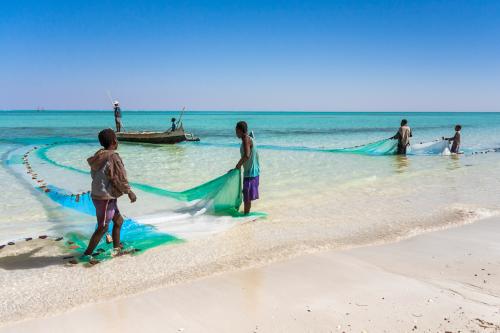
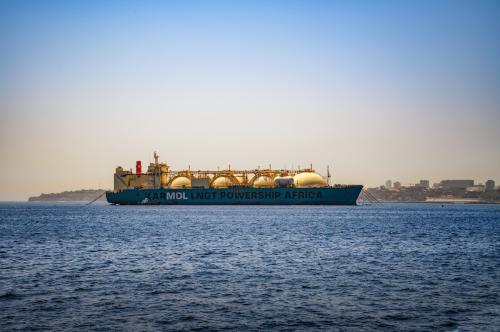
The blue economy is also about economic diversification and job creation. For Cabo Verde, it represents a pathway to reduce dependence on tourism and imports while expanding opportunities in new sectors such as sustainable and regenerative aquaculture, maritime logistics, renewable energy, and digital services. The development of sustainable ports, green shipping, and digital connectivity are key priorities. We are hopeful that these investments will create decent jobs, especially for youth and women, and build resilience against external shocks.5
Looking ahead, Cabo Verde’s vision is to become a true “Ocean Corridor”—a hub that connects Africa, Europe, and the Americas through the Atlantic. Our geographic location gives us a natural comparative advantage for air and maritime connectivity, data and communication cables, and renewable energy networks. We aim to transform Cabo Verde into a logistics and digital hub, a bridge between continents, and a center for knowledge and innovation in the blue economy.The boldness of this vision requires continued commitment to good governance, private sector engagement, and regional cooperation. It also demands that we see the ocean not as a frontier to exploit but as a system to protect and sustain. Ocean sustainability is not an environmental luxury; it is an economic necessity and a moral obligation. As we look to 2026 and beyond, Cabo Verde remains committed to deepening its role in advancing the African blue economy agenda. We will continue to promote innovative financing, inclusive governance, and responsible ocean stewardship.
Throughout history, the sea has been a great connector of people, culture, and commerce. As we advance into the 21st century, we are further recognizing its incredible power as an engine of shared prosperity, global sustainability, and peace. Cabo Verde’s journey—including its recent graduation to upper-middle income status6—offers a message of optimism for other African small island and coastal states: Even with limited natural resources, it is possible to build a resilient and dynamic economy by investing in people, institutions, and partnerships while aligning and reconciling growth with sustainability.
Related Content
-
Footnotes
- U. Rashid Sumaila, “Africa’s Blue Economy Can Continue to Deliver Huge Benefits to the Continent,” in Foresight Africa: Top Priorities for the Continent in 2023 (The Brookings Institution, 2023).
- Isaac Trindade Santos et al., “Reconstruction of Marine Fisheries Catches for the Republic of Cape Verde, 1950-2010,” in Marine Fisheries Catches in West Africa, 1950-2010, Part I, Fisheries Centre Research Reports 2 (Fisheries Centre, University of British Columbia, 2013); “Catches by Taxon in the Waters of Cape Verde,” SeaAroundUs, University of British Columbia, 2022.
- U. Rashid Sumaila et al., “Financing a Sustainable Ocean Economy,” Nature Communications 12, no. 1 (2021): 3259.
- Sergio Goncalves, “Portugal to Swap $153 Million Cape Verde Debt for Nature Investments,” Reuters, June 20, 2023.
- Marco António Medina Silva, “Cabo Verde’s Sustainable Growth Relies on Economic Diversification and Resilience to External Shocks,” The World Bank, July 14, 2023.
- Eric Metreu et al., “Understanding Country Income: World Bank Group Income Classifications for FY26 (July 1, 2025–June, 2026),” Data Blog, July 1, 2025.
The Brookings Institution is committed to quality, independence, and impact.
We are supported by a diverse array of funders. In line with our values and policies, each Brookings publication represents the sole views of its author(s).



Commentary
Harnessing the blue economy for growth and prosperity: The Cabo Verde experience
February 17, 2026