Controversies over federal spending rarely used to make headlines. That’s no longer so. The attempt to create a $1.776 billion “anti-weaponization fund” to pay victims of purported “lawfare” without congressional authorization or judicial oversight is the latest major news story involving the current Trump administration’s controversial and vast assertion of executive branch authority over spending decisions. But it’s hardly the only one; think about paying for the White House ballroom, terminating grants en masse, paying troops and TSA agents during shutdowns, and many more such actions.
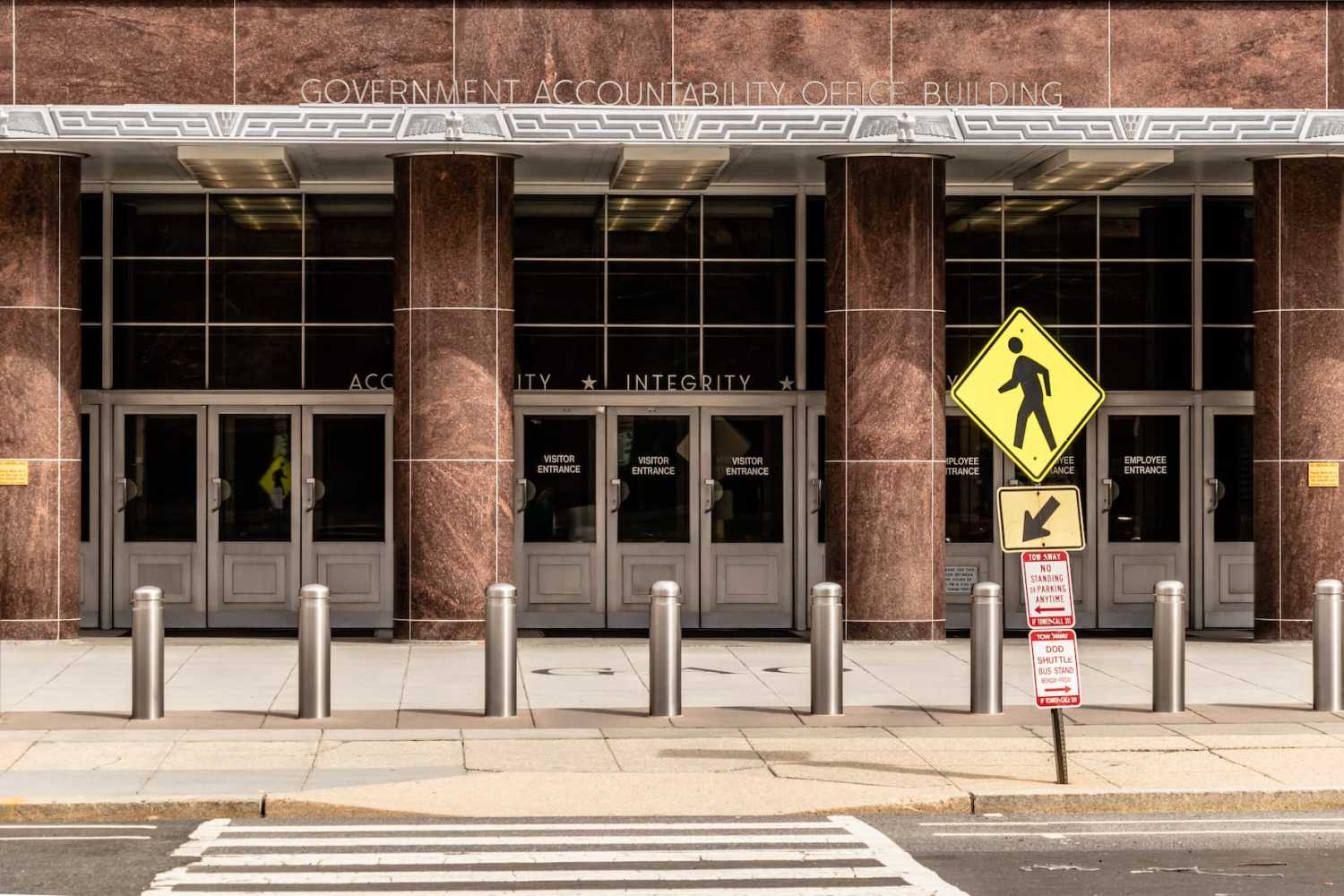
The pace and scope of these developments are not only the subject of headlines and litigation. They have also put enormous pressure on the Government Accountability Office (GAO), the legislative support agency that has traditionally been the nonpartisan arbiter of appropriations law questions in a space with historically (at least up to this administration) very few lawsuits. GAO’s expertise in appropriations law manifests itself in many ways: GAO publishes the leading treatise on federal appropriations law; provides appropriations law training to employees across the federal government; offers informal technical assistance to members of Congress, their staff, and agency personnel about appropriations questions; and publishes formal appropriations law decisions in response to congressional or agency requests and on its own initiative under certain laws’ reporting requirements.
As part of the research for a book one of us is writing about how federal agencies have usually implemented appropriations laws in the modern era, we have spent the last year reading and coding these formal appropriations law decisions covering the 12-year period of the two George W. Bush administrations and the first Obama administration. Our work complements the work that an earlier iteration of this research team did analyzing GAO appropriations law decisions from the 12-year period of the second Obama administration, first Trump administration, and Biden administration. We have also paid close attention to the decisions GAO has published in the past year evaluating the appropriations law conduct of the second Trump administration.
Three observations from our initial results illustrate the decline of ordinary appropriations law in the first quarter of the 21st century.
The decline of agency consultation
Two decades ago, federal agencies would regularly consult with GAO about how to spend their congressional appropriations by asking for formal appropriations law decisions on tricky legal questions. The goal was either to obtain clarity on the proper path forward to avoid being held personally responsible for incorrect payment or to disclose and determine how best to remedy an error already made.
Today, agencies seldom turn to GAO for formal guidance. Our data show a consistent decrease in the raw number of annual agency requests to GAO regarding appropriations law decisions across each administration since George W. Bush. As a percentage, agency requests constituted almost the majority of all the requested decisions in the Bush administration and more than a majority of all requested decisions in the Obama and Biden administrations. However, the first and second Trump administrations saw a significant decline in these requests. During the first Trump administration, these agency requests dwindled down to 30% of all requests made to GAO. And during the second Trump administration, there has not been a single agency request to GAO thus far.
The decline in formal agency consultation with GAO about appropriations law matters is not surprising, in light of positions taken by the Trump administration’s Office of Management and Budget to diminish both GAO’s role and Congress’ power of the purse more generally during the first administration and today. What is more striking is the prevalence of such formal agency requests in the not-too-distant past: agencies trying so hard to comply with appropriations law requirements that they reached out to GAO to get written clearance in advance or to acknowledge a potential error already made. While agencies may still be asking GAO privately for informal technical assistance on appropriations law questions, the decline in published decisions is noteworthy.
The decline of low-salience appropriations law issues
In the past, most GAO decisions reflected appropriations law questions of low political salience—simply the ordinary operations of government. Today, most decisions are about politically controversial issues.
To assess the salience of GAO decisions, we developed a three-point scale that allows us to systematically evaluate the political salience of appropriations law issues. At the low end of the scale, we score decisions a “1” if they involve essentially accounting-style questions without implicating substantive policy debates. We score decisions a “3” if they involve high-profile political questions related to a presidential campaign promise or major public controversy. In between these two poles, we score decisions a “2” if they contain some aspect of an accounting question but also some greater political or policy concern that might generate external news coverage. (Multiple members of the team read and discussed each decision to ensure intercoder reliability.)
The vast majority of decisions covering the Bush and Obama administrations involved the lowest level, with only a tiny handful of matters for each at the highest level. Things shifted during the first Trump administration, where the vast majority of decisions involved either level 2 or level 3 issues. While level 1 decisions picked back up in the Biden administration, they remained in the minority compared to levels 2 and 3. And the second Trump administration has, at least thus far, seen decisions only about level 2 and 3 matters.
The rise of high-salience appropriations law issues reflected in these decisions illustrates three trends. The decline of agency requests can explain some of the transition away from level 1 queries, as it is typically agencies who present accounting-style questions. Another factor is the expansion of congressional “unorthodox lawmaking” through the appropriations process, as appropriations laws are must-pass annual legislation in an era when ordinary legislation is difficult to pass because of partisan divides, and thus more high-salience issues get bundled into appropriations. Yet another contributor is the growth of “appropriations presidentialism,” as the last few presidents have turned to creative uses of the Treasury when Congress would not bless their signature policies. This trend has been particularly pronounced during the second Trump administration, with its campaign promises that it would refuse to spend appropriated funds in order “to crush the Deep State.”
The evolution of GAO appropriations law decisions in just a few years—from routine questions such as whether an agency could use its appropriations to subsidize employee parking to fundamental questions of whether the president or his political appointees had the authority to impound funds— is striking.
The decline of institutional oversight
Finally, it used to be that Congress played a significant role in appropriations oversight as an institutional matter, as indicated by requests from members of both political parties that GAO evaluate some aspect of executive branch compliance with appropriations law. This role even formerly included oversight by the president’s own party and in bipartisan fashion.
During the Bush administration, for example, congressional requests for GAO decisions were roughly evenly distributed among Democrats, Republicans, and bipartisan coalitions. Partisanship rose during the Obama administration, with almost two-thirds of the requests coming from Republicans, but still more than ten percent stemmed from Democrats, and a quarter grew out of bipartisan requests. Partisanship increased even more during the first Trump administration, with over eighty percent of the requests coming from Democrats. Even then, however, just under ten percent of the decisions came from Republican requests, and the same was true for bipartisan requests.
Bipartisan and same-party requests have entirely disappeared. There were only Republican requests for appropriations law decisions about the Biden administration, and at least so far, there have been only Democratic requests for decisions about the second Trump administration.
While the pace of congressionally requested GAO decisions intensified during the first Trump administration, more than double the yearly rate of the Obama administration and 40% more than the yearly rate of the Bush administration, congressional interest in requesting GAO appropriations law decisions declined to almost nothing during the Biden administration. Now that President Trump is back in power, that interest is back. At the same time, only one of the 12 decisions GAO has issued thus far evaluating appropriations law issues since Jan. 20, 2025, was a direct result of a specific congressional request; the others were formally issued pursuant to GAO’s reporting responsibilities under the Impoundment Control Act (although eight of them referenced a March 2025 letter from the Democratic ranking members of the House and Senate Budget Committees asking GAO to evaluate whether three presidential orders and an OMB directive were consistent with that act).
The apparent decline of bipartisan use of GAO’s appropriations law work is consistent with the broader trend toward partisanship more generally for both parties, while the apparent decline of Republican interest in GAO’s appropriations law work is consistent with recent political developments challenging the legitimacy and value of both appropriations law and GAO. For example, the Republican chair of the House Appropriations Committee suggested early in the second Trump administration that appropriations laws were not real laws, and the House Appropriations Committee has for the last two years voted to cut GAO’s budget significantly.
A politically embattled institution
Republican approval of GAO took a significant hit during the Biden administration. In response to a request from more than 100 Republican House and Senate members, GAO concluded that the administration’s decision to halt spending on the wall at the southern border did not violate the Impoundment Control Act—a finding that landed just one year after GAO had declared that the Trump administration did violate the ICA in halting defense funding for Ukraine in 2020. At the time, Republican leaders alleged that GAO has one rule for Democrats and another for Republicans. This claim has no basis in fact, as our previous research demonstrates. That claim ignores, among other things, GAO decisions finding no violation in controversial actions during the first Trump administration, such as the transfer of $1.8 billion in funds appropriated for other purposes to build the wall. In fact, in a decision published just last month, GAO concluded that the Biden administration violated both an appropriations provision and the Antideficiency Act when it created the Disinformation Governance Board within DHS in 2022. As GAO explains, “GAO’s role is procedural—to protect congressional prerogatives and help ensure compliance with the ICA and appropriations law—and is not to be interpreted as taking a position on the underlying policies addressed in its decisions.” But Republican distrust of GAO has had some staying power, at least in public.
The decline of ordinary appropriations law that we have documented is a loss for the American people, who depend on the ordinary functioning of government across both political branches no matter who is in office. But whether the trends that we have documented will continue is unclear. After all, it was not too long ago that things were quite different in this space. Our research team will continue to study both old and new GAO appropriations law decisions as an important window into the realities of modern government.
Related Content

Authors




The Brookings Institution is committed to quality, independence, and impact.
We are supported by a diverse array of funders. In line with our values and policies, each Brookings publication represents the sole views of its author(s).