The following is a summary of the 40th session of the Congressional Study Group on Foreign Relations and National Security, a program for congressional staff focused on critically engaging the legal and policy factors that define the role that Congress plays in various aspects of U.S. foreign relations and national security policy.
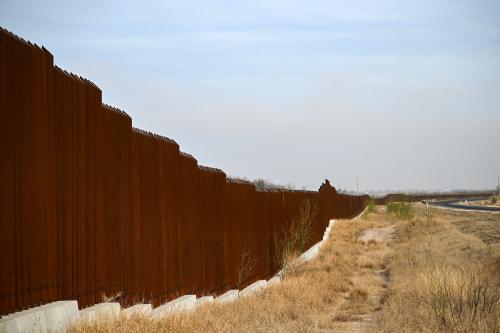
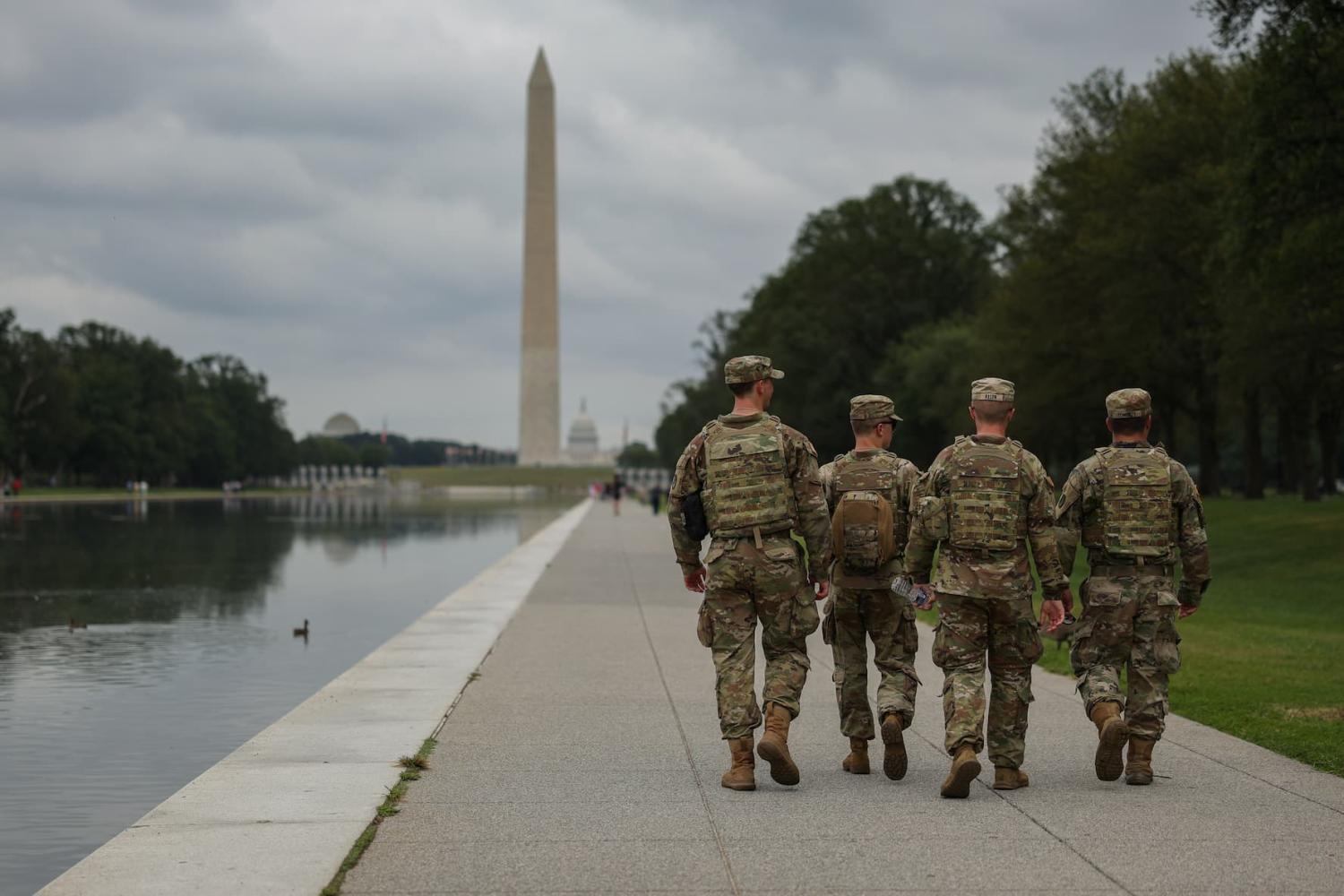
On March 6, 2025, the Congressional Study Group on Foreign Relations and National Security convened virtually to discuss the legal authorities surrounding domestic military deployments. The Trump administration has begun using the military in novel ways to support various aspects of its immigration and border control policies. And several executive orders President Trump has issued raise the possibility of further domestic use of the military in the future. While some of these activities fit comfortably within established authorities, experts have raised questions about the legal basis of others and their relationship to longstanding posse comitatus restrictions that traditionally limit military involvement in law enforcement activities.
The study group was joined by two leading outside experts on the topic, who participated in a discussion led by study group coordinator Scott R. Anderson:
- Chris Mirasola, an assistant professor of law at the University of Houston Law Center and former attorney-advisor at the U.S. Department of Defense; and
- Laura Dickinson, professor of law at the George Washington University Law School and former special counsel to the general counsel at the U.S. Department of Defense.
Prior to the discussion, participants in the study group received the following background readings:
- Chris Mirasola, “The Trump Defense Department’s First Border Deployment: A Return to the Past,” Lawfare (Jan. 30, 2025);
- Chris Mirasola, “An Emerging Road Map for Trump’s Use of the Military to Combat Immigration,” Lawfare (Jan. 22, 2025);
- Scott R. Anderson, “The Real Legal Limits on Domestic Military Deployments,” Lawfare (Nov. 19, 2024); and
- Laura Dickinson, “How the Insurrection Act (Properly Understood) Limits Domestic Deployments of the U.S. Military,” Lawfare (Sept. 12, 2024).
Dickinson opened the discussion by outlining the constitutional backdrop governing domestic military use. She noted that the Constitution gives Congress, not the president, authority over domestic deployments and emphasized the limited role that the military has traditionally played in domestic law enforcement outside of extreme circumstances. She traced this historical aversion to military involvement in civilian matters to the American Revolution, when British military enforcement of colonial laws fueled resistance to the crown. As she noted, U.S. courts have repeatedly emphasized the dangers of military intrusion into civilian affairs, a concern that has been deeply embedded in American political and legal traditions.
Dickinson and Mirasola then went on to discuss the Posse Comitatus Act (PCA) as a major statutory limitation on military involvement in domestic affairs. Enacted after the Civil War, the PCA prohibits federal armed forces from participating in civilian law enforcement unless explicitly authorized by Congress or the Constitution. Dickinson noted that there are several exceptions to the PCA, including:
- The Insurrection Act, which allows domestic military deployments to suppress civil unrest and enforce the law in certain crisis situations;
- Counter-narcotics authorities, such as 10 U.S.C. § 284, which permit certain limited military support for federal, state, and even international counter-narcotics efforts; and
- Statutory authorities that allow the military to provide certain types of support to federal law enforcement agencies, which enables indirect military assistance, such as intelligence sharing, equipment maintenance, and surveillance.
The Insurrection Act, first passed in 1792 and amended multiple times since, grants the president authority to deploy the military to quell civil unrest or enforce federal law. Dickinson explained that while the statutory language appears to provide broad authority, historical practice and executive branch legal interpretations suggest a much more restrained application.
The Act contains three key provisions, all of which are today contained within Title 10 of the U.S. Code. Section 251 allows military deployment upon a state’s request to suppress an insurrection. Section 252 authorizes deployment when “unlawful obstructions, combinations, or rebellions” make enforcement of federal law impracticable. And section 253—arguably the broadest provision—authorizes deployment when the president deems it necessary to suppress an insurrection or other activities that “obstruct the execution of U.S. law.” All three uses must be preceded by a public proclamation by the President.
Despite its arguably broad language, Dickinson noted that the Insurrection Act has been invoked only about 30 times in 230 years, primarily in cases of state-requested intervention, major civil rights crises, and instances where law enforcement capabilities had completely broken down. Notably, it has never been used for immigration enforcement.
Mirasola then discussed several lesser-known legal authorities that have allowed military involvement in domestic enforcement without formally invoking the Insurrection Act. Key among these is 32 U.S.C. § 502(f), which allows the president or secretary of Defense to deploy the National Guard in its state militia status while conducting federal missions. This provision has been used to sidestep PCA restrictions, as National Guard troops in state status are not subject to the same constraints as federal forces.
Additionally, Mirasola highlighted the Economy Act, which allows interagency cooperation between the military and law enforcement agencies, facilitating military support for border enforcement operations. He noted that, while PCA restricts direct military participation in law enforcement activities, indirect support—such as transportation, reconnaissance, and intelligence gathering—is legally permissible.
A central question raised during the discussion was the enforceability of the Posse Comitatus Act. As noted by one participant, 18 U.S.C. § 1385 provides for criminal penalties, including fines and imprisonment, for violations of the PCA. But Dickinson and Mirasola agreed that PCA has rarely been enforced through criminal prosecution. Instead, compliance has largely been achieved through internal Department of Defense (DoD) regulations and executive oversight.
Further discussion explored whether courts would intervene if a president used the military in a controversial manner, such as for immigration enforcement. Dickinson noted that courts have traditionally been deferential to executive interpretations of military deployment authority but that this could change if a president attempted to use the Insurrection Act for immigration enforcement, a move that many scholars argue would be inconsistent with the law’s historical use.
A recurring theme in the discussion was the Trump administration’s invocation of Article IV, Section 4 of the U.S. Constitution (the Guarantee Clause) as a potential justification for domestic military deployment. This clause guarantees that the federal government will protect states against “invasion” and domestic violence. Some legal scholars have speculated that a future administration could attempt to justify military action under this provision by framing unauthorized immigration as an “invasion.”
Mirasola and Dickinson expressed skepticism about this argument, emphasizing that historical interpretations of “invasion” have consistently referred to armed military incursions by foreign powers, not unauthorized migration. Moreover, they noted that Congress, not the president, has the primary authority to address immigration enforcement, making it unlikely that courts would uphold a unilateral presidential invocation of military force under the Guarantee Clause.
Dickinson suggested that Congress could impose additional procedural safeguards on the Insurrection Act, including by requiring congressional approval after a certain period, eliminating vague statutory language that could permit private militia involvement, and strengthening judicial review mechanisms to ensure constitutional compliance.
Mirasola highlighted fiscal and bureaucratic barriers to expanded military domestic deployment, including funding limitations and interagency coordination challenges. He also emphasized that military involvement in domestic law enforcement could undermine military readiness and public trust.
In all, the discussion underscored that while the president possesses significant authority to deploy military forces domestically, historical practice, legal constraints, and practical considerations have traditionally imposed meaningful checks on this power. As the legal landscape evolves, congressional oversight will remain critical in ensuring that these powers are not abused.
The study group concluded with an open discussion session, during which attendees were free to comment on and pose questions regarding the various issues raised.
The Brookings Institution is committed to quality, independence, and impact.
We are supported by a diverse array of funders. In line with our values and policies, each Brookings publication represents the sole views of its author(s).