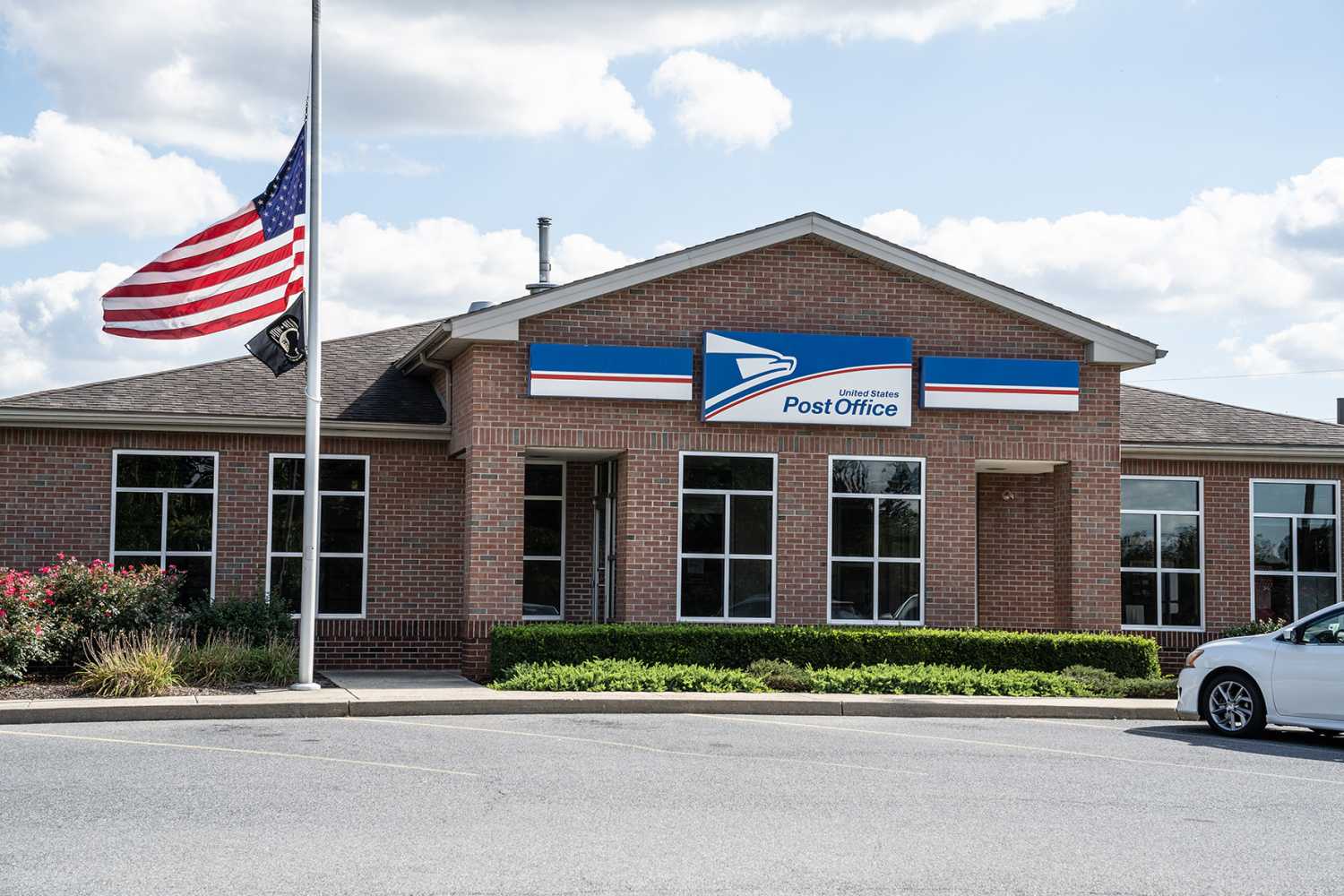
For the past two decades, the United States Postal Service (USPS) has struggled under a persistent revenue shortfall. USPS remains critical national infrastructure, but is hamstrung by net losses totaling billions of dollars annually, driven by declining mail volume and high operating costs within its nationwide service network. To ensure USPS remains a strong public enterprise, it must identify new, sustainable sources of revenue that do not diminish the quality of service nor the strength of its workforce.
Meanwhile, the United States currently faces another, seemingly unrelated challenge: a severe housing supply shortage. This report proposes a strategy to address both of these challenges by using the Postal Service’s real estate portfolio to build housing and generate new ongoing revenues. The goal is not to privatize USPS but instead to use the agency’s greatest asset—its land—to strengthen the public enterprise. By modernizing how it uses its properties, USPS can generate the stable revenue needed to fulfill its public mission while simultaneously boosting housing supply. And while this report focuses on the housing potential of Postal Service land, our analysis is useful for a broader array of land uses that can add value and productivity to the agency.
Our analysis indicates that redeveloping underutilized postal sites could produce up to 237,000 housing units nationwide. Approximately 117,000 of these units are located in high- or medium-demand areas where new supply is most urgently needed. Beyond increasing housing stock, this initiative would be a significant financial engine for the Postal Service. We estimate building housing on all medium- and high-demand parcels could generate approximately $2.2 billion in annual rent receipts, which would yield large enough net revenues to significantly offset the USPS’ current annual controllable operating losses.
To demonstrate the scalability of this model, we identify key property categories and site-specific examples that reflect the diverse geography of the USPS portfolio. By looking at international peers that have already pioneered similar real estate strategies, we show that this transition is both achievable and effective. We conclude with a detailed roadmap of administrative and legislative actions necessary to tap into assets to address these twin problems of housing supply and USPS’ fiscal sustainability.
Background
President Donald Trump has championed the idea of using federal lands to spur housing development, casting these efforts as a way to lower costs and expand supply. In March 2025, the Department of Housing and Urban Development (HUD) and the Department of the Interior signed a memorandum of understanding to explore this idea further. Since that announcement, the administration has taken additional steps to operationalize this approach. HUD and the Interior Department have established a Joint Task Force on Federal Land for Housing, charged with inventorying underutilized federal properties and identifying parcels suitable for residential development. The task force is intended to streamline interagency coordination, clarify disposition pathways, and reduce procedural barriers to transferring or leasing federal land to states, local governments, and nonprofit housing providers, while maintaining statutory protections for sensitive and conservation-designated lands.
There may be opportunities to accelerate responsible disposition of some federal lands for housing (most notably in the Las Vegas Valley, which has a special statute to accelerate disposition). But a recent report found that only a small portion of federal lands may be suited for housing due to locational constraints.
While the Trump administration is primarily focused on Bureau of Land Management-owned lands, there is another source of underutilized land that is already served by existing infrastructure and transportation networks: land owned by the United States Postal Service (USPS). Federally owned properties embedded within existing communities—already served by transportation, utilities, and services—offer more practical near-term opportunities for housing development than remote or infrastructure-deficient public lands. The USPS owns over 8,500 properties and leases over 25,000 more. It also needs money.
A recent USPS Office of Inspector General audit analyzed the usage of the agency’s real assets, focusing primarily on excess and underutilized interior space within existing postal facilities such as vacant workrooms, administrative offices, and storage areas that could potentially be subleased. The audit highlighted opportunities to generate incremental revenue by leasing unused interior space to third parties, including small businesses, nonprofits, and co-located public services such as state or local government offices. The audit concluded that the Postal Service lacks reliable data on space utilization across much of its real estate portfolio and is leaving rental revenue on the table.
Congress has previously recognized the value of this kind of operational subleasing. During the 116th Congress, one of the authors of this paper introduced legislation to authorize the Postal Service to enter into agreements with state, local, and Tribal governments to provide non-postal property, products, and services on their behalf. This would enable arrangements such as co-locating state or local government functions—for example, state Department of Motor Vehicles services—within postal facilities. That concept was ultimately enacted as part of the Postal Service Reform Act of 2022, which established a statutory framework allowing USPS to use its facilities to deliver non-postal services in partnership with state and local governments, provided such arrangements enhance public value, do not interfere with core postal operations, and recover USPS’ costs.
These reforms and audit findings underscore significant weaknesses in how USPS manages its existing buildings, but they address only a narrow slice of the broader real estate opportunity facing the Postal Service. The focus of this report is on entire USPS sites that are underutilized relative to their surrounding land use, such as single-story post offices or processing facilities located on large parcels in dense urban or suburban areas where zoning, infrastructure, and housing demand would support substantially more intensive use.
At these sites, the primary opportunity is repurposing or redeveloping entire sites through vertical expansion, mixed-use redevelopment, or joint development that preserves postal operations while also unlocking housing production and long-term revenue. In some circumstances, this may also involve relocating postal logistics and processing facilities that no longer sit in an operationally optimal location to lower-cost or better-suited sites nearby or allowing the underlying land to be redeveloped for housing or other higher-value uses while maintaining or even improving postal service delivery. This distinction matters: Incremental subleasing can help USPS improve operational efficiency, but site-level redevelopment and relocation have the potential to materially expand housing supply and generate recurring revenue at a scale commensurate with the Postal Service’s financial and public service challenges.
The Postal Service is also hamstrung by persistent revenue shortfalls, with net losses totaling billions of dollars in each of the last several fiscal years. Even after accounting for certain non-cash expenses and legacy liabilities, the agency continues to face approximately $2 billion to $3 billion in annual controllable operating losses—a structural gap between operating revenue and the cost of maintaining its nationwide service network. Although recent legislative reforms addressed certain accounting distortions (most notably, the long-criticized requirement that USPS must prefund retiree health benefits decades in advance), these changes did not resolve the agency’s underlying structural challenges. Mail volumes continue to decline, package delivery operates on thinner margins, and operating costs remain high in a labor-intensive, nationwide service network. A March 2026 Brookings analysis found that USPS has operated at a loss every year since 2007, and has now reached its statutory $15 billion borrowing ceiling while holding cash reserves covering only approximately 33 days of operations
Past efforts to stabilize USPS finances have often relied on measures that place disproportionate pressure on the postal workforce, including staffing reductions, facility consolidations, and changes to job classifications and work rules. While such approaches may generate short-term savings, they risk undermining service quality, employee morale, and the public mission of the Postal Service. For this reason, identifying revenue strategies that strengthen USPS’ financial position without shifting costs onto workers or reducing service has become an increasingly urgent priority. As the Brookings analysis concluded, the most consequential reforms must come from Congress rather than operational management alone, which is why new revenue strategies, rather than further service or workforce cuts, represent a better path forward.
Weakening the Postal Service’s physical network is not an attractive alternative. USPS creates real macroeconomic value that it does not recapture; for example, a Brookings analysis of rural small businesses found that the postal network functions as critical economic infrastructure, supporting market access, customer reach, and business resilience in communities that private carriers often underserve. The study shows that the reliability and geographic reach of postal facilities matter not only for mail delivery, but also for local economic participation and growth, especially in rural and small town America. The Postal Service owns or controls thousands of properties across the country, many of them located in central neighborhoods where housing demand is strong. Better utilizing these assets represents a promising pathway for strengthening the Postal Service’s long-term financial position.
Doing so at scale, however, requires confronting two significant constraints that the recommendations below are designed to address. First, USPS currently has no retained capital and has reached its statutory borrowing ceiling, leaving it without an independent financing vehicle for redevelopment. Second, the statutory framework governing postal facilities—including notice and consultation requirements for post office closings and Postal Regulatory Commission oversight of network changes—limits the degree to which real estate decisions that relocate existing operations can be made unilaterally or quickly. The proposals in this paper are intended to provide the legal clarity, dedicated financing tools, and institutional capacity that would allow USPS to act on this opportunity in a structured, sustainable way.
USPS’ disposition authority and research precedents
The USPS holds more discretion over property disposal than nearly any other federal agency. Unlike most federal entities, it does not rely on the General Services Administration (GSA) to manage the sale or transfer of its real estate. Closings or consolidations of individual post offices are subject to their own statutory procedures, including public notice, a community review period, and an appeal process overseen by the Postal Regulatory Commission. These requirements do not apply to ordinary federal real property disposals. The USPS manages its own property dispositions based on what best serves its interests, aiming to maximize value. It may sell, lease, exchange, or otherwise transfer property through whichever method it determines most advantageous. Its internal policy allows it to dispose of property in ways that serve the best interest of the Postal Service, including for less than fair market value if deemed beneficial to USPS operations or finances.
USPS’ real property guidebook also stipulates that “the Postal Service has immunity from state and local regulation except where Congress has waived such immunity. The Postal Service complies with local zoning, planning, and building codes to the extent required” by federal law. The Postal Accountability and Enhancement Act of 2006 imposes statutory obligations on USPS construction and alteration projects, requiring that buildings be constructed in compliance with nationally recognized model building codes; that zoning, land use, and environmental laws be considered prior to construction; and that USPS consult with local officials, submit plans for review, permit inspections, and solicit community input on real property decisions. That legislation framed these as obligations of consideration and consultation rather than strict compliance, meaning USPS retains ultimate discretion but is subject to a structured process that goes beyond the purely voluntary posture suggested by the guidebook alone. A court case in Berkeley, Calif., limited that zoning preemption and restricted USPS’ ability to sell or redevelop the property for uses not permitted under a historic preservation overlay, such as residential development. However, this does not represent a blanket limitation of USPS zoning immunity nationwide, but rather a context-specific outcome based on the facts of the Berkeley case.
To date, there has not been comprehensive, public, and granular analysis of the properties that USPS owns and the housing potential of those properties. Wells Fargo issued a memo in 2025 to assess USPS’ real estate portfolio. They estimated that USPS owns approximately 8,500 facilities, of which over 7,000 are smaller post offices, and the rest are larger sorting and processing facilities. In addition to those facilities, USPS owns approximately 20,700 acres of land, with just over 8,000 of those acres in urban or suburban areas. Together, they estimate the value of USPS-owned real estate to be between $61 billion and $88 billion.
The Terner Center for Housing Innovation at the University of California, Berkeley analyzed USPS-owned sites in California for housing suitability. That analysis found that there are 264 sites that are large enough to accommodate multifamily development (parcels of over 20,000 square feet and located within a majority-residential area). The analysis found that 53 of those sites are also located near public transportation and in a “high-resource” area, defined as areas with lower poverty rates, higher home values, and access to schools and employment centers. There are also many anecdotal examples of USPS owning high-value real estate in urban areas. For example, a 2025 op-ed highlighted that USPS owns more than 15.3 acres in downtown Boston and another 3 acres in the nearby suburb of Revere, and a 2020 op-ed highlighted two low-density USPS-owned sites in Manhattan.
Estimating the housing and revenue potential of USPS land
The analysis in this report draws on a variety of datasets to estimate the number of housing units that could be built on USPS-owned property. First, we pulled property data for the approximately 8,500 parcels that USPS owns from the USPS website. Next, we merged that with the Lincoln Institute of Land Policy and Center for Geospatial Solutions’ data to get more accurate information on the size of every USPS-owned parcel. Similar to the Terner Center report, we limited our inquiry to parcels over 20,000 square feet. We also assumed that the density of the resulting buildings would equal the highest density of any of the surrounding census block groups (as measured by dwelling units per acre), although we limited eligible parcels to those with at least four dwelling units per acre.1
Under these assumptions, we estimate that 237,000 housing units could be built on USPS-owned parcels nationwide, including approximately 117,000 units that are in census tracts with high or medium housing demand.2 To put that in perspective, the United States built an average of 1.4 million units annually between 2020 and 2024. While building housing on USPS-owned parcels would not yield enough housing to address the national housing shortage, it would make a meaningful difference in many cities. For example, Boston permitted an average of 2,821 units annually from 2020 to 2025; our analysis shows that USPS-owned sites there could yield 3,335 units, which is more than a typical year’s worth of supply.
While every state has USPS-owned parcels in census tracts with significant housing demand, Table 1 shows the 10 states where USPS-owned land has the highest unit potential. In states such as Maryland (18,500 units permitted in 2023) and Pennsylvania (25,000 units permitted in 2023), these numbers are fairly significant compared to the typical output of housing construction.

Based on the housing unit potential, we can also calculate the potential revenue that building housing on USPS properties could generate for the agency. We use the 2023 American Community Survey five-year median gross rent of the census tracts where eligible USPS-owned parcels are located (see assumptions above) to calculate potential rents for these units, even though newly constructed units typically rent for above the median rent level in a given tract. We estimate that housing developed on these properties would generate $4.4 billion in annual rent receipts at 100% occupancy. When we restrict eligible parcels to only those in middle- or high-demand census tracts, total rent receipts drop to $2.2 billion annually.
Rent receipts represent gross revenue, but it is important to calculate net revenue to estimate the amount of money that would accrue back to USPS on an annual basis. We calculate this under two different scenarios: 1) USPS provides a ground lease to the developer; and 2) USPS retains an ownership stake in the housing.
Under the first scenario, we use the smaller gross revenue estimate of $2.2 billion and assume that the ground lease expense is 9.72% of total revenues. This build-out of USPS-owned properties for housing could generate approximately $214 million in annual revenues to USPS. Under the second scenario, we still use the $2.2 billion gross revenue estimate; assuming an operating expense ratio of 45%, this would net $973 million annually.
For comparison, total operating revenue for USPS is approximately $80 billion annually and the annual controllable losses are approximately $2 billion to $3 billion, meaning that this housing development strategy could help USPS to move toward revenue neutrality. It is also quite possible that a similar strategy focused on mixed-use development, inclusive of housing, could generate even more revenue.
What converting USPS-owned land into housing looks like in practice
USPS’ real estate portfolio presents several pathways for advancing housing development and revenue generation, depending on site characteristics and operational needs. These opportunities fall into three broad categories: 1) surplus properties; 2) mixed-use postal operations facilities; and 3) large processing or distribution facilities where relocation or consolidation may be justified as part of broader network modernization.
The first two categories represent opportunities that USPS can pursue within its existing operational footprint, often with limited disruption to service. The third category is fundamentally different. Decisions to relocate or consolidate major processing and distribution facilities are not discretionary real estate actions, but network-level changes subject to statutory requirements, operational constraints, and regulatory oversight, including review by the Postal Regulatory Commission. Such changes are infrequent, often controversial, and must be driven primarily by service performance and logistics considerations rather than land value alone.
This third category should be understood as a longer-term and conditional opportunity—one in which USPS determines, through its network planning processes, that a facility is no longer optimally located and relocation may create the additional benefit of unlocking high-value urban land for redevelopment. In these cases, housing and revenue generation are potential benefits of network modernization rather than its drivers. While the most immediate opportunities lie in surplus properties and mixed-use redevelopment, the broader portfolio also contains longer-term possibilities tied to the evolution of the postal network itself.
Moving from concept to practice, however, requires understanding how these strategies play out on the ground. The U.S.-based examples that follow focus on individual sites to show how surplus land, mixed-use redevelopment, or relocation-enabled reuse could function in specific local contexts. The discussion then broadens to international experience, drawing on examples from Canada and Japan. These cases shift the lens from individual projects to institutional approaches, highlighting how other postal systems have structured real estate governance, partnered with local governments, and integrated redevelopment into broader organizational strategy. Together, the site-level and international examples help clarify both what is possible today and what would be required to pursue these opportunities at scale.
Surplus USPS properties that are no longer needed for postal operations
USPS periodically assesses its real estate portfolio and designates certain properties as “surplus” as part of its acquisition and disposition strategy, but it does not publish a comprehensive list of surplus properties. Today, these sites are typically sold through general auction, with limited consideration of their potential contribution to housing supply. In most cases, USPS disposes of surplus properties based on existing land-use entitlements rather than undertaking rezoning or entitlement processes prior to sale. While buyers may price in some expected future development potential, this approach often results in USPS capturing only a portion of the full value associated with higher-density uses, particularly in strong markets where zoning changes can significantly increase land value.
A more deliberate approach, especially through joint development or ground lease structures, could prioritize revenue generation through housing construction on sites located in higher-demand residential zones or near transit and job centers, and would allow USPS to participate in the entitlement process alongside local governments and developers, capturing a greater share of long-term value. While such opportunities are inherently episodic (reflecting the relatively stable size of the USPS network and the statutory and operational constraints that limit facility closures or dispositions), when surplus properties do arise, they can represent high-value, well-located sites where a more deliberate housing-oriented strategy could yield significant public and financial benefits.
Several cities have already demonstrated the redevelopment potential of former postal facilities. In Portland, Ore., a 14-acre former USPS distribution center near Union Station is being transformed into the Broadway Corridor district, a mixed-use redevelopment expected to include approximately 2,400 housing units along with commercial space and public amenities. In San Francisco, the former Rincon Annex postal facility was redeveloped into Rincon Center, a mixed-use complex that includes 320 apartments alongside office and retail space while maintaining onsite postal services. Similarly, the city of Boston sees the potential relocation of the South Boston Postal Annex as a priority opportunity to open a 16-acre site near downtown for large-scale redevelopment and expansion of the adjacent Amtrak station. These examples illustrate how low-density postal properties can be repositioned to meet urban housing demand while generating new economic value.
A USPS parcel in Atlanta’s Buckhead neighborhood is a good example of the potential opportunities. This parcel is located in one of the city’s hotter residential markets, and the adjacent multistory apartment building demonstrates housing demand. The parcel is approximately 100,000 square feet and occupies a prominent location within a rapidly developing corridor. Sites such as this one, where relatively low-intensity uses occupy valuable urban land, could be developed as housing while maintaining postal operations; or, if the property were eventually designated as surplus, it could yield substantial value while contributing new units in a high-demand location.
3840 Roswell Road in Atlanta is a low-intensity USPS property in a rapidly developing urban corridor
Operational USPS facilities that could support onsite redevelopment while maintaining postal functions
A larger set of opportunities involves USPS facilities that are necessary for operations but sit well below the density of their surroundings. Many post offices occupy single-story buildings on large parcels in transit-accessible neighborhoods where zoning and market conditions would support significantly greater density.
In these cases, USPS could pursue vertical or mixed-use redevelopment that preserves onsite postal operations while adding housing above or alongside the facility. For example, a single-story USPS facility on a two-acre parcel near transit could become a five-story mixed-use development with a modernized post office on the ground floor and housing above. Because USPS would want to maintain operations at the site, it would not pursue a sale for these properties, and would instead retain ownership and lease the development rights above the facility—generating long-term revenue while enhancing existing services. Similarly, a 10,000 square foot facility on a 50,000 square foot lot where the rest of the lot is used for surface parking could support housing on the unbuilt portion of the site with minimal disruptions to ongoing operations.
450 Lexington Avenue in New York City is owned by USPS
A prominent example of how USPS has successfully leveraged valuable urban real estate while maintaining postal operations is the redevelopment of the former Grand Central Post Office site at 450 Lexington Avenue in Midtown Manhattan. Originally constructed in the early 20th century as a major postal facility serving the Grand Central area, the building occupied an exceptionally valuable site adjacent to Grand Central Terminal—land in which development potential far exceeded the needs of a low-rise postal use.
USPS retained ownership of the site and entered into a long-term ground lease that enabled private development of a high-rise office tower above and around the historic post office structure. Completed in the early 1990s, the resulting project integrated the preserved postal facility at street level with a 38-story Class A office tower above. Postal operations continued uninterrupted in a modernized facility, while the air rights and development capacity of the site were monetized through private investment.
Although USPS does not publicly disclose property-specific lease revenues, 450 Lexington Avenue is regarded as a successful commercial office asset in one of the strongest office markets in the country. The project illustrates how USPS was able to preserve its operational presence, respect historic architecture, and generate a stable, long-term revenue stream through a ground lease and air rights strategy without relinquishing control of the underlying land.
This model demonstrates the potential of joint development on USPS-owned land in high-value urban locations. Importantly, it also highlights how postal facilities need not be limited to their existing physical form or scale. By separating the operational needs of the Postal Service from the full development potential of the site, USPS unlocked value that would have been impossible under a traditional disposition or single-use approach.
While 450 Lexington Avenue is an office project rather than a housing development, the underlying lesson is directly applicable to today’s housing challenges. Similar joint development strategies—particularly when adapted to mixed-use and residential projects—could allow USPS to generate long-term revenue while contributing to the production of housing in high-opportunity, transit-rich locations where new supply is most urgently needed.
A USPS post office in Salt Lake City is a mixed-use development opportunity
The U.S. Post Office located at 1953 South 1100 East in Salt Lake City illustrates how a well-located but low-intensity USPS facility could be repositioned to better serve both the Postal Service’s financial needs and pressing local housing demand. The site sits along a key neighborhood commercial corridor serving the Sugar House area, which has experienced sustained population growth, rising housing costs, and increasing demand for walkable, mixed-use development.
Today, the property is a single-story postal facility surrounded by surface parking—a development pattern that reflects mid-20th century operational needs rather than current land-use conditions. The surrounding neighborhood, by contrast, has seen substantial residential and mixed-use investment, with zoning and market conditions that could support significantly greater density. The site’s proximity to transit, retail amenities, and employment centers makes it particularly well suited for housing, including mixed-income and workforce units. This property represents a USPS facility that remains operationally important but could support onsite redevelopment while maintaining postal functions.
Alternatively, if operational analysis determined that postal functions at this location could be more efficiently served from a nearby lower-cost site, the property could also be evaluated under a relocation-enabled redevelopment approach. In that scenario, relocating postal operations within the same service area could free the entire parcel for redevelopment, creating a larger opportunity for mixed-income housing in a high-opportunity neighborhood while potentially improving USPS logistics and reducing long-term operating costs.
In either case, this site highlights the broader point that many USPS properties are underutilized internally and underperform relative to their land value and surrounding context. With the right policy framework and implementation tools, sites such as this could generate durable revenue for the Postal Service while boosting housing supply in communities where new housing is most needed.
Large processing or distribution facilities located on high-value land in urban cores
Another opportunity involves large USPS processing or distribution facilities that occupy highly valuable land in urban cores but are no longer optimally located for modern logistics. In some cases, these facilities could operate more efficiently if relocated to lower-cost sites with better access to highways or regional freight infrastructure, while still serving the same metropolitan area.
Relocating such facilities would free up large, well-located parcels for redevelopment—creating an opportunity to deliver mixed-income housing, including affordable units, at a scale that smaller sites cannot support. When paired with deliberate planning and reinvestment, this approach could both improve USPS operational efficiency and generate significant long-term revenue, while also addressing acute housing shortages in precisely the neighborhoods where new housing is most needed.
The U.S. Postal Service complex at 300 West Pershing Road in Kansas City, Mo., shows the redevelopment potential of large, centrally located postal facilities that occupy high-value urban land but are no longer optimally configured for modern postal and logistics operations. The site sits at the southern edge of downtown Kansas City, adjacent to Union Station and near major civic, cultural, and transportation assets. Over the past decade, this area has seen sustained public and private investment, with growing demand for residential and mixed-use development.
A USPS postal distribution facility at 300 West Pershing Road in Kansas City, Mo.
The property consists of a substantial USPS processing and administrative facility occupying a large parcel in a location where surrounding land uses have evolved significantly. While the site continues to serve postal functions, its scale, configuration, and location reflect an earlier era of mail processing, when proximity to rail infrastructure and centralized sorting were paramount.
The primary opportunity at 300 West Pershing Road lies in evaluating whether postal operations could be more efficiently accommodated at a different location within the metropolitan area, potentially closer to highway access or modern logistics infrastructure, while freeing the existing site for redevelopment.
Due to the size and importance of these processing and distribution centers, any evaluation of relocation or co-location of housing would need to account for the broader network impacts, including through Postal Regulatory Commission review. If postal operations were relocated or substantially consolidated, the Pershing Road site could support a large-scale, mixed-use redevelopment, including mixed-income housing, in one of Kansas City’s most transit-accessible and amenity-rich locations. The size of the parcel would allow for a coordinated, master-planned approach, rather than a piecemeal infill project—enabling the integration of residential units, ground-floor commercial or community uses, public space, and improved connections between downtown, Union Station, and adjacent neighborhoods.
Redeveloping this site could produce significant long-term value for the Postal Service. A ground lease or retained ownership strategy could generate stable, recurring revenue streams, while relocation to a lower-cost, logistics-optimized facility could reduce operating inefficiencies associated with maintaining a large processing center in a high-cost urban core. This approach would align with USPS’ service obligations by maintaining or improving operational performance rather than compromising it.
The 300 West Pershing Road site also highlights the importance of coordination with local stakeholders. Kansas City has articulated goals around downtown housing growth, transit-oriented development, and inclusive economic development, and has demonstrated the capacity to support complex public-private redevelopment projects. A USPS-led evaluation of this site, conducted in partnership with the city and other public entities, could align postal operational needs with broader urban and housing objectives.
While no such redevelopment is currently underway, the Pershing Road facility illustrates the scale of opportunity embedded within USPS’ existing portfolio, particularly at large distribution and processing sites located in urban cores. It reinforces the central argument of this paper: The most transformative opportunities for housing production and revenue generation may lie not in marginal improvements to existing facilities, but in decisions about where postal operations are best located and how the land they leave behind can be put to far more productive use.
These examples, taken together, suggest that the challenge facing the Postal Service is not a lack of viable sites or development models, but the absence of a systematic approach to identifying, prioritizing, and executing such opportunities across a national real estate portfolio. Isolated projects are unlikely on their own to materially strengthen USPS’ financial position or contribute to housing supply at scale. The harder question is how to move from individual projects and hypothetical scenarios to an institutional strategy at scale that treats real estate as a long-term asset in service of the Postal Service’s public mission.
Canada Post’s real estate and housing strategy
Canada Post offers a particularly relevant international example because it demonstrates how a publicly owned postal service can leverage real estate to support housing development without privatization and without separating ownership from the public enterprise. Similar to USPS, Canada Post remains a Crown corporation wholly owned by the federal government, with a statutory mandate to provide universal postal service nationwide. Its real estate strategy has been pursued explicitly as a way to modernize assets, support financial sustainability, and advance public objectives rather than as a step toward divestment or privatization.
In recent years, Canada Post’s real estate portfolio has drawn increased attention as part of the federal government’s broader effort to address housing shortages through the reuse of public land. Rather than pursuing wholesale divestment or asset sales, the Canadian approach has focused on identifying underutilized postal properties that could support housing development while maintaining postal service delivery, typically through leasing, partnerships, or adaptive reuse, retaining ownership whenever possible.
This shift has recently been formalized through federal housing policy. Canada’s 2024 federal budget explicitly identifies Canada Post properties as candidates for residential development under the government’s Public Lands for Homes initiative. The budget names six specific Canada Post properties across Québec, British Columbia, and Alberta that are being assessed for housing development potential, along with dozens of additional postal sites identified as potentially suitable for future residential use. These actions reflect an institutional recognition that postal land—often centrally located, well-served by infrastructure, and embedded within existing communities—represents a valuable and underutilized public asset in addressing housing supply constraints.
The federal government has also articulated a more ambitious vision for how public land, including Canada Post properties, could be mobilized at scale to support housing delivery. Under proposals advanced by the governing Liberal Party in connection with the Public Lands for Homes initiative, the federal government has contemplated structural reforms that would make it easier to move land from federal departments and Crown corporations into development-ready vehicles such as Canada Lands Company. Canada Lands Company is a federal Crown corporation that specializes in preparing surplus public properties for redevelopment, often partnering with private developers to deliver mixed-use projects while returning financial value to the public sector. Recent proposals envision transferring eligible public land for a nominal price, accelerating approval timelines by consolidating and standardizing review processes, bundling multiple properties into single transactions, and offering long-term, low-cost ground leases to housing providers rather than requiring outright sales.
While these reforms have not yet been fully implemented, they reflect an emerging policy consensus in Canada that unlocking public land for housing requires institutional changes, not just site-by-site dispositions. The emphasis on nominal land transfers, portfolio-based transactions, and long-term leasing reflects a broader Canadian approach that uses specialized public development entities to prepare and reposition surplus land, reduce administrative friction, lower land costs, and enable nonprofit and private developers to deliver housing more quickly and at greater scale while returning value to the public sector.
At the local level, this policy direction has begun to translate into site-specific evaluations. For example, federal and municipal discussions in North Vancouver have identified a Canada Post warehouse at 120 Charles Street as a candidate for housing redevelopment. While no redevelopment has yet been completed, the public consideration of this site illustrates how postal properties are being examined as part of coordinated federal-local housing strategies rather than treated as isolated surplus assets to be sold opportunistically.
Canada Post’s emerging real estate strategy remains incremental and institutionally cautious. Unlike countries such as Japan and the United Kingdom (which have privatized or corporatized their national postal systems), Canada Post has thus far emphasized public ownership, service continuity, and alignment with national housing objectives. Postal operations are expected to be preserved where feasible, either through co-location within redeveloped sites or through service continuity planning when relocation is required. Real estate activation is framed as a means of strengthening a public institution—not dismantling it.
The Canadian experience highlights both the promise and the limitations of a non-privatizing approach. While Canada Post has not yet delivered a large portfolio of completed housing projects on postal land, it has established a clear policy precedent: Postal real estate can be systematically evaluated, prioritized, and mobilized for housing within a public framework that preserves ownership, maintains service obligations, and channels value back into the postal system. The emphasis has been on building institutional permission and political legitimacy before moving to scale.
For the United States, the lesson from Canada is about establishing the legitimacy of an institutional strategy. Canada Post demonstrates that a postal service can begin shifting from ad hoc property dispositions toward a more strategic, portfolio-based approach—one that treats land as a long-term public asset capable of supporting both financial sustainability and housing production, without triggering the political and workforce opposition that often accompanies privatization. Canada represents the closest international analogue to the model proposed in this paper: cautious, public, mission-aligned, and focused on unlocking value through partnership rather than divestment.
Japan Post’s real estate reform
Japan Post offers an instructive example of how a large, historically public postal system has sought to manage its real estate portfolio more strategically at scale while also maintaining universal service obligations. Japan’s approach differs markedly from Canada’s incremental, government-led land reuse strategy, and must be understood in the context of a broader, multidecade reform of Japan’s postal system that included elements of partial privatization and corporate restructuring.
Japan Post Holdings, the parent company of Japan Post Co., Japan Post Bank, and Japan Post Insurance, was reorganized under revisions to Japan’s Postal Service Privatization Act beginning in the late 2000s and early 2010s. Together, these entities operate as the Japan Post Holdings, a holding-company structure designed to separate postal, financial, and insurance operations while allowing the government to gradually reduce its ownership stake. Japan Post Holdings is now publicly traded, and the Japanese government is legally required to retain more than one-third of its shares, ensuring continued public influence and oversight. Postal delivery itself remains a public obligation carried out by Japan Post Co., through a nationwide network of post offices, with universal service requirements established in law.
Within this broader reform framework, Japan Post Holdings moved to professionalize and scale its real estate activities. In 2018, it established Japan Post Real Estate Co., Ltd., as a dedicated subsidiary to undertake its real estate development business, consolidating functions that had previously been managed within the postal organization or through project-specific arrangements. The creation of a standalone real estate company reflected a strategic decision to treat real estate development as a distinct line of business, with specialized asset-management and development expertise, rather than as a residual function of postal operations.
Japan Post Real Estate focuses on the redevelopment of properties owned by the Japan Post Group, many of which are located in highly valuable, transit-accessible urban areas near major stations. Japan Post has publicly emphasized that its portfolio includes numerous sites such as former or underutilized post offices, sorting facilities, and company housing that are well suited for higher-intensity use. Through this model, Japan Post has been able to pursue redevelopment at a scale that would have been difficult under a purely operational, site-by-site approach.
The results of this strategy are visible in a growing pipeline of large redevelopment projects. Japan Post has announced plans for more than 20 major redevelopment projects nationwide, many centered on centrally located postal properties. These projects are typically mixed-use, combining offices, retail, cultural and civic space, and, in some cases, residential uses, depending on local market conditions. While housing is not present in every project, several developments include residential components alongside commercial uses.
A prominent example is the redevelopment of the former Tokyo Central Post Office site adjacent to Tokyo Station. The project preserved portions of the historic post office building and integrated them into JP Tower, a major mixed-use complex that includes offices and the KITTE commercial and cultural facility. The redevelopment demonstrates how Japan Post has been able to unlock the value of centrally located postal land while maintaining a visible postal and public presence within the project footprint.
Similar redevelopment initiatives have occurred in regional cities, adapted to local demand and urban contexts. Across these projects, Japan Post’s real estate activities have emphasized long-term value creation from underutilized land rather than one-time asset sales, positioning real estate as a recurring revenue source within the broader Japan Post Group.
Japan Post’s real estate strategy should be understood as part of the country’s broader postal reform process rather than as a standalone privatization of postal assets. Although Japan Post Holdings has been partially privatized and operates under corporate governance rules applicable to publicly traded companies, Japan has deliberately preserved universal postal service as a public obligation and retained significant government ownership. The separation of real estate development from postal operations was intended to strengthen the financial position of the postal group during this transition, while maintaining universal service levels and public oversight of core postal functions.
For the United States, the lesson from Japan is not that USPS should replicate Japan Post’s model wholesale or follow Japan’s path toward partial privatization. Rather, Japan Post illustrates how even a large, historically public postal system can move beyond ad hoc property transactions and manage real estate strategically at scale through professionalized governance structures, portfolio-level planning, and redevelopment of high-value sites while preserving universal service obligations. Japan’s experience underscores that unlocking the value of postal real estate requires institutional capacity and governance structures that clearly distinguish postal operations from real estate development, and that enable real estate assets to be managed in support of, rather than in place of, the public postal mission.
Policy recommendations
This section contains policy recommendations that would enable USPS to utilize its property holdings to build more housing and generate revenue. While there are steps USPS could take on its own, most of these ideas would require an act of Congress.
Before turning to specific proposals, it is worth acknowledging the constraints that make this work difficult. USPS has no retained capital and has reached its statutory borrowing ceiling, leaving it without an obvious financing vehicle for redevelopment. Individual post office closings and consolidations are subject to their own statutory procedures that can slow or complicate disposition decisions. Meanwhile, changes to processing and distribution facilities are not purely operational decisions; they trigger regulatory oversight and have already generated significant controversy in the context of USPS’ ongoing Delivering for America network redesign. Many of the facilities that could be redeveloped for housing are also not simply retail counters; they house complex processing operations and specialized equipment that are integrated into a regional logistics network. And USPS has little institutional experience operating as a real estate developer or a long-term landlord.
The recommendations below are designed specifically to address these barriers by providing legal clarity where authority is ambiguous, creating dedicated financing tools that do not depend on USPS’ constrained balance sheet, and building the institutional capacity that would allow the agency to act on this opportunity in a structured and sustainable way.
Better utilize USPS’ real estate office
USPS sees itself as a mail delivery agency, and to date, its real estate team has focused on aligning its holdings to enable it to deliver mail in the most efficient and cost-effective manner possible. Recognizing that evaluating its holdings for housing potential would be a new endeavor, USPS should build out its real estate team to conduct a housing feasibility study of its properties in the short run, while also looking for ways to bring that capacity in-house in the longer term. According to the most recent public data available, USPS spent roughly $1 billion annually on consultants between 2009 and 2015. Assuming those numbers are still accurate, USPS could carve out several million dollars to conduct necessary analyses related to this endeavor. On an ongoing basis, USPS could fund the operations of this office with a portion of the revenues from the leasing or transfer of parcels it owns for housing, with the majority of the revenues going to the Postal Service Fund, which is the primary repository for Postal Service revenue. This funding structure would have the added benefit of incentivizing creative land use and development solutions, since a share of the revenues generated would fund this office.
Conduct an audit of USPS land holdings to look for housing opportunities
This study would mimic the initial analysis from this report and would similarly filter parcels by physical attributes (e.g., size and grading), proximity to amenities, and nearby housing demand. While estimating unit potential by property type (surplus properties, mixed-use postal operations facilities, and the relocation of large processing or distribution facilities) was beyond the scope of this paper, a USPS-initiated audit could include this breakdown within their assessment. This would provide USPS leadership with an initial list of targeted properties, and the agency could commit to reproducing that study and publicly releasing findings on a regular basis to reflect changes in operational needs and market dynamics.
Provide technical assistance grants encouraging cities to develop proposals
To help local governments identify and activate opportunities for housing development on underutilized postal properties, USPS could use a portion of the revenues generated from early sales or leases to create a technical assistance program that further enables project origination to come from state and local partners. This program would provide cities, counties, and regional agencies with data on USPS-owned parcels, guidance on land-use compatibility, and resources to develop site-specific housing proposals in coordination with USPS real estate staff.
Many postal redevelopment opportunities—such as those involving mixed-use properties, affordable housing, or transit-oriented development—are complex and require deep local knowledge of zoning, infrastructure, market conditions, and community priorities. Rather than relying on USPS to originate and advance these projects internally, the program would enable cities, counties, states, and regional agencies to develop development concepts, procure qualified development teams, assemble financing strategies, and initiate negotiations—and then bring fully formed proposals to USPS for evaluation and approval.
Under this approach, USPS would focus on assessing whether proposed projects meet the agency’s operational needs and long-term financial objectives, rather than serving as the primary source of deal generation. By removing this bottleneck, the program would make it possible for smaller cities, midsized communities, and even rural post offices (where USPS capacity and market signaling may be limited) to participate alongside large urban jurisdictions. Empowering local governments to originate and advance proposals would broaden geographic participation, accelerate implementation, and allow USPS to scale redevelopment activity while maintaining disciplined oversight of operational and financial outcomes.
By proactively inviting local governments to propose mixed-use or affordable housing developments on USPS sites (particularly those near transit or in high-cost areas), the program would foster locally driven solutions while streamlining the federal decisionmaking process. Technical assistance could include access to parcel-level data, guidance on land-use compatibility and operational constraints, and planning grants and template agreements for ground leases or joint development agreements—enabling communities to move quickly from concept to transaction while aligning with USPS’ operational and financial goals.
Establish a joint development process and criteria
USPS should establish a process for interested parties to lease, purchase, or land swap USPS-owned parcels for the purpose of housing construction. In addition to the regularly published property list described above, USPS could articulate a process for local governments and developers to nominate properties. Regardless of how the proposal is sourced, USPS could develop criteria that include the terms of the ground lease, the number of units and affordable units built on site, whether the project will improve existing onsite USPS core business functions, strategies to contain construction costs, and other considerations.
Create a development trust that provides below-market financing
Congress could create a dedicated vehicle, such as a USPS-affiliated development trust or subsidiary, to empower the agency to support housing production through sophisticated financing tools. The Postal Service currently lacks the authority to originate loans or provide below-market financing to third parties, and this entity would allow the agency to invest alongside developers in joint ventures. The trust would be seeded by selling surplus parcels that lack housing potential or through a targeted congressional appropriation. These proceeds would then be reinvested into strategic sites where USPS intends to retain long-term ownership. In these joint development scenarios, USPS would contribute land as equity, while the fund provides capital from previous sales to be paired with private developer or bank capital. This allows USPS to provide construction loans that can eventually convert into long-term equity or permanent financing.
This structure creates a powerful financial flywheel, enabling USPS to maintain a self-funded, ongoing housing development program while preserving its core land holdings. Revenues would include ground lease revenue, a share of operating income from rents in co-owned projects, and the overall appreciation of the fund itself. After the entity covers its operational costs, all remaining revenues would flow back to the Postal Service Fund. This approach would preserve Postal Service ownership, reduce public risk, and align with USPS’ mandate to operate in a financially self-sustaining manner. With appropriate guardrails and oversight, a USPS development trust could become a powerful tool to address the housing shortage in communities nationwide, while helping the Postal Service put its underutilized assets to productive, income-generating use.
Clarify USPS’ authority to pursue long-term ground leases and mixed-use redevelopment
Congress could amend the Postal Reorganization Act to clarify and modernize USPS’ authority to lease land and development rights for mixed-use purposes, including residential, commercial, and community-serving uses. While USPS currently possesses broad authority to acquire, lease, and dispose of property, the statute does not explicitly address long-term ground leases, joint development arrangements, or non-postal residential uses. This ambiguity has contributed to risk aversion and limited use of USPS real estate for large-scale redevelopment.
USPS has previously executed complex joint development transactions where it retained ownership and entered into a long-term ground lease to enable vertical private development (including the 450 Lexington Avenue property in New York highlighted earlier in this report), yet such projects have been rare and largely bespoke. The underlying statutory authority for these arrangements exists but is not explicit, particularly with respect to long-term ground leases, residential uses, and modern joint development structures. This has contributed less to outright legal barriers than to institutional risk aversion and a lack of standardized processes, limiting USPS’ ability to pursue these opportunities consistently or at scale. An explicit statutory provision affirming USPS’ authority to retain ownership while entering into long-term ground leases or joint development agreements would reduce perceived legal risk, provide clear guidance to agency leadership, and increase confidence among developers and local governments—enabling more routine use of ground leases and joint development while preserving federal ownership.
Update USPS’ real estate redevelopment authorities
To move the Postal Service from isolated, transaction-by-transaction real estate decisions to a coherent, scalable redevelopment strategy, Congress could clarify and modernize USPS’ statutory authority to manage and put its real estate assets to productive use. This would reduce legal ambiguity, align federal and local processes, and provide USPS with the institutional tools needed to support financial sustainability while advancing public objectives such as housing production and community development.
First, Congress could authorize USPS, in defined circumstances, to rely on competitively conducted municipal procurements when pursuing redevelopment projects. Many cities already run rigorous, transparent developer selection processes for complex housing and mixed-use projects on public land. Allowing USPS to negotiate directly with a city and a developer selected through such a qualifying municipal process without requiring a separate USPS-led competition would reduce duplication, shorten timelines, and improve coordination among public landowners, local regulators, and private partners. This authority should be conditioned on clear statutory criteria and USPS’ independent determination that the transaction is financially fair, operationally appropriate, and consistent with its public mission.
Second, Congress could make more explicit the property disposal rules as they apply to USPS redevelopment activities. Legislation could clarify that when USPS is pursuing redevelopment consistent with its statutory mission, it is not subject to General Services Administration (GSA) surplus property disposal requirements and may negotiate directly for joint development, long-term ground leases, and other flexible arrangements not contemplated by conventional federal asset disposition processes. This clarification would remove a persistent source of legal uncertainty and risk aversion, particularly for complex, mixed-use projects that depend on tailored deal structures and long time horizons.
Third, Congress could affirm USPS’ authority to retain and reinvest redevelopment proceeds. This would explicitly confirm that revenues generated from ground leases, air-rights transactions, or property dispositions may be retained by USPS and reinvested in capital improvements, facility modernization, and long-term service sustainability. This would ensure that the financial benefits of redevelopment directly support the Postal Service’s mission rather than reverting to the U.S. Treasury Department. This authority is critical to making long-term real estate strategies financially viable and self-reinforcing.
These reforms would give USPS the clarity and flexibility to partner on housing and mixed-use redevelopment, while preserving public ownership, safeguarding postal operations, and strengthening the financial foundation of universal service.
Conclusion
The United States Postal Service possesses a large and geographically diverse real estate portfolio. Yet today, these assets are managed primarily as operational infrastructure rather than as resources capable of advancing national priorities and local public benefits. This report shows that a different approach is possible, providing both fiscal benefits to USPS and boosting housing supply in cities across the country.
Our analysis shows that redeveloping underutilized postal land, ranging from surplus parcels to operational facilities suitable for vertical expansion, could produce hundreds of thousands of new housing units nationwide while generating hundreds of millions of dollars in recurring annual revenue for USPS. This approach does not require privatizing the Postal Service or weakening its public mission. To the contrary, the strategies outlined in this report would create a powerful engine for both housing production and long-term financial sustainability by transforming underutilized land into long-term revenue streams while preserving postal operations and the nationwide service network that communities depend on. International examples—from Canada’s emerging public land housing strategy to Japan Post’s institutionalized real estate development—demonstrate that postal systems can pursue these opportunities while maintaining universal service obligations and public oversight.
The United States Postal Service has the land, market demand, and viable development models. What it lacks is a clear institutional framework that empowers it to treat real estate as an asset rather than as a passive holding. Congress and USPS leadership should establish that framework, either as a standalone bill or as part of a future postal reform bill. Creating a dedicated real estate capability within USPS, conducting a national audit of housing opportunities, empowering local governments to propose redevelopment projects, clarifying authority for joint development and long-term ground leases, and establishing financing mechanisms to support housing development would together allow the Postal Service to seize this opportunity at scale.
The stakes are significant. The United States faces a structural housing shortage that threatens economic mobility and regional growth. At the same time, the Postal Service must find durable ways to sustain a national network that remains essential to commerce, civic life, and rural economic participation. Unlocking the value of postal land will not solve either challenge alone, but it represents a practical, bipartisan, and immediately actionable step forward. The task now is to recognize that opportunity and act.
-
Methodology
We started with the dataset of USPS sites by state available on the USPS website for download. We initially ran an analysis on the sites where Tolemi has data. This covered around 300 of the 6,000 sites. For sites without Tolemi data, we partnered with the Center for Geospatial Solutions (CGS) at the Lincoln Institute of Land Policy, who provided a dataset of parcel polygons with ownership information for parcels. We cleaned the dataset to only include parcels that we were confident were owned by USPS. For example, many sites had multiple entries in the original USPS site data, which had to be merged, and some had different addresses even when they were part of the same site. In addition, the parcels may be adjacent to a USPS site or separated by a street or parking lot. In these cases, we tried to merge these into a single site.
Once we had the site data cleaned, processed, and merged, we pulled in additional data to determine the housing capacity and estimate the density a site would likely support. We used the American Community Survey (ACS) 2023 five-year housing units at the block group level, ACS 2023 median gross rent at the tract level, block group polygons, and building footprints from Overture Maps.
We used dwelling units per acre (DUAC) to derive estimates for units that could be built on a site. To calculate a DUAC estimate for a block group, we first calculated a value for the developed area within the block group in order to avoid larger open spaces that would skew the density calculation. We used building footprints in the block group and created an area that contained the building footprints and the typical spaces in between them to represent the developed area of that block group. We then intersected this area with the block group in case it exceeded the block group boundaries. Dividing the housing unit count for the block group by this area produces a DUAC value for the block group. We estimated potential DUAC at a site by considering the block group that contains the site along with the adjacent block groups. We estimated potential DUAC at a site as equal to the maximum DUAC of the block group the site is located in and all adjacent block groups.
We then estimated the annual rent generated by the estimated units for a site using 2023 ACS five-year median gross rent data. If a value was not given for the tract, we used the closest tract to the site that had a valid value for median gross rent. We multiplied this by the unit estimate for the site and then by 12 months to get an annual estimate. We assumed 100% occupancy.
We spot-checked approximately 50 sites, about 30 of which were random samples and 20 were based on selecting large lot size and large DUAC estimates. To assess the accuracy, we looked at Google Maps and satellite views to estimate the density of nearby housing and to check the lot size. Nearly all spot-check estimates were quite close, but the few that were not (those with larger lot sizes or estimates) were marked as invalid, usually due to the lot size being larger than it appeared to be in the map and satellite view. We also searched for additional anomalies by sorting by lot size, DUAC estimate, large differences between the three DUAC estimates, and other methods. We found a few additional anomalies that were also marked as invalid for the analysis.
Authors



-
Acknowledgements and disclosures
The authors thank Tracy Hadden Loh, Elena Patel, and Stephanie Kestelman for their review of earlier drafts of this piece, as well as Andrew Kieve, Jeff Allenby, and Yonah Freemark for their assistance in determining the best methodology to calculate housing unit impacts. Any errors or omissions are those of the authors.
One of the author’s contributions was made possible by support from Arnold Ventures. The views expressed in this report are those of its authors and do not reflect the views of the donors, their officers, or employees.
-
Footnotes
- For a given block group, the dwelling units per acre are calculated based on an adjusted area of the block group that only includes building footprints and not larger, unoccupied parts of the block group (e.g., parks and streets).
- We use Yonah Freemark and Rolf Pendall’s dataset from their forthcoming paper, “Where’s the Shortage? Housing Supply and Neighborhood Quality Among and With Metro Areas,” which defines high-demand tracts as census tracts in metro areas of over 500,000 people that have low vacancy (being in the lowest quartile nationally), plus either: 1) have high housing supply growth (being in the highest quartile nationally); or 2) have high growth in persons per household (being in the highest quartile nationally).
The Brookings Institution is committed to quality, independence, and impact.
We are supported by a diverse array of funders. In line with our values and policies, each Brookings publication represents the sole views of its author(s).