This case study is part of a project on the state of democracy in Africa. See our other works from this project.
Executive summary
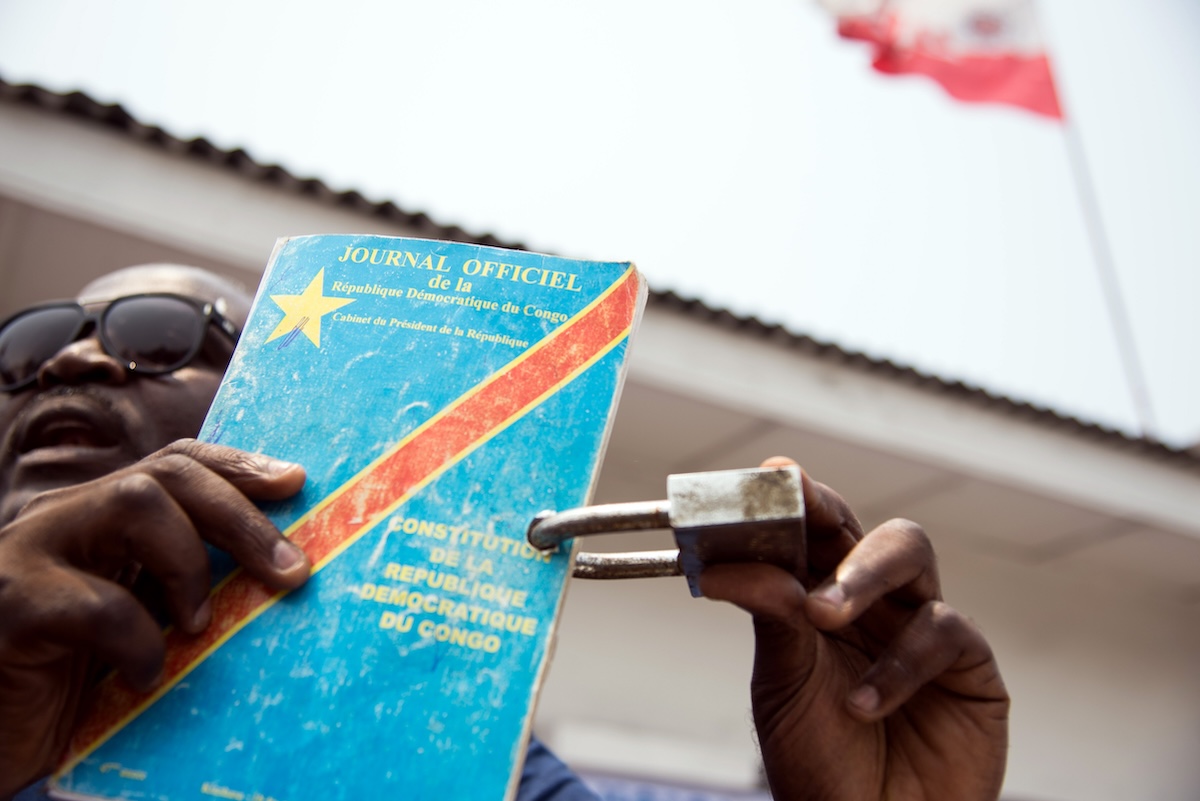
The Democratic Republic of the Congo has been through three major waves of democratization, each fueled by a different combination of massive grassroots mobilization, elite maneuvering, and foreign involvement. Each time, the result has been bold reforms followed by gradual retrenchment as the institutions delineated on paper are diluted and co-opted by the ruling elites.
What emerges is a sobering picture in which the very necessary technical debates over institutional design—what kind of electoral system, the nature of parliamentary power, the right to a free press and popular assembly—take a backseat to political power struggles.
This is the rationale for the approach taken in this paper. Drawing on past experiences, we highlight the technical reforms necessary at the current moment. This includes checks on presidential power, greater transparency in parliamentary proceedings, reforms to the electoral system, more accountability for security forces, and more space for participatory democracy. At the same time, however, we also highlight the fact, borne out by history, that even the best reforms on paper will not become reality unless there is a political movement to back them. As long politics remains a game controlled by a narrow elite, there is little hope for broad transformation.
This analysis draws on political settlement theory (Khan 2005, 2010) and political mediation theory (Amenta et al. 2010). Both schools of scholarship share the attention to the balance of power between contending groups and classes in society. While we outline a technical reform package here, without a powerful political coalition, these transformations will remain elusive. The deepest challenge to the construction of that coalition in the DRC is not only government repression, but the persistence of patron-client relations, alongside the institutional weakness of political parties, media, and civil society organizations (Diamond 1997).
In the first sections, we summarize how reform coalitions have come together in the past, highlighting their disparate nature and the links between grassroots organizing and elite politics. The following portion of the paper is dedicated to recommended technical democratic reforms, including limiting presidential power, strengthening political parties, carrying electoral reforms, and bolstering a strong and accountable civil society. We end by returning to the need of building reform coalitions and laying out how this might happen.
Summary of recommendations
- Reduce presidential power: Since independence, the DRC has struggled to constrain the concentration of power in the presidency, which has led to repression and corruption. We propose a series of constitutional and legislative reforms to constrain the executive.
- Reform the party system: Political parties in the DRC have been personalized and disconnected from the broader citizenry. We propose bills to regulate parties, but also to reduce their proliferation and fragmentation.
- Reform the election commission: Ahead of the 2028 elections, the electoral commission is certain to be at the center of political contention. We outline how it can be strengthened and insulated from politics.
- Restructure civil-military relations: The DRC is a country in conflict. In order to survive as a democracy, the government needs to balance accountability and discipline within the military with measures to prevent coups. We outline how this could manifest itself.
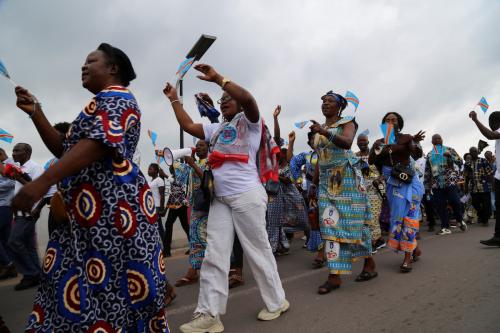
- Enhance civil society: Congolese civil society is one of the country’s main assets. It needs to be supported, but also held accountable to prevent it from fragmenting and becoming politicized.
Authors


Related Content

-
Acknowledgements and disclosures
The Brookings Institution is a nonprofit organization devoted to independent research and policy solutions. Its mission is to conduct high-quality, independent research and based on that research, to provide innovative, practical recommendations for policymakers and the public. The conclusions and recommendations of any Brookings publication are solely those of its author(s), and do not reflect the views or policies of the Institution, its management, its other scholars, or the funders acknowledged below.
This publication is supported by a grant from the Open Society Foundations.
Brookings recognizes that the value it provides is in its absolute commitment to quality, independence, and impact. Activities supported by its donors reflect this commitment.
The Brookings Institution is committed to quality, independence, and impact.
We are supported by a diverse array of funders. In line with our values and policies, each Brookings publication represents the sole views of its author(s).