




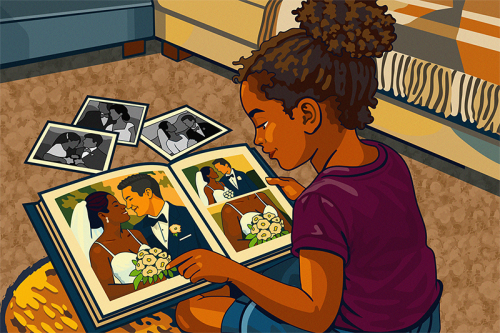
In new research, scholars at the Center for Community Uplift at Brookings and Gallup find a high degree of interracial cooperation across key aspects of American life such as work, relationships, and family. In this episode of The Current, Brookings Senior Fellow Andre Perry discusses the report’s findings and implications for policy, with Dr. Ibram X. Kendi of Howard University and Washington Post White House reporter Cleve Wootson, Jr.
Related Content
Transcript
KENDI: I do suspect that this study reveals a tremendous amount of truths that we haven’t been talking enough about. And simultaneously there’s been all sorts of studies that have documented how conflict is absolutely pivotal to, you know, the profit motive of of social media companies and even to the electoral prospects of particular political parties.
[music]
PERRY: Welcome listeners to The Current on the Brookings Podcast Network. I’m Andre Perry, senior fellow at the Brookings Institution. And I’m joined by two wonderful guests, Cleve Wootson of the Washington Post, and Ibram X. Kendi of Howard University, author and noted historian.
And we’re here to talk about a new report with a long title: “We asked Americans how they felt about their interracial interactions. The answer may surprise you.” And so we’re going to have a conversation that Cleve Wootson is going to moderate. So take it away, Cleve.
[1:04]
WOOTSON: Thanks Andre. I’m going to hop right in with Dr. Kendi. You’ve written extensively about the history of racist ideas in America, and when you look at some of the findings in this study, particularly the fact that a majority of Americans have interracial friendships and that approval of interracial marriage has increased significantly, how do you situate all of that historically?
[1:27]
KENDI: I would first and foremost state that there has been demographic change in the United States over the last few decades. And you had some intellectuals and even some elected officials who who’ve painted those demographic changes as dire and harmful for the country. But this study actually speaks to a potential other outcome of of demographic change, which ultimately is increased proximity to people of other racial groups has led to an openness, and even a recognition of the value of befriending and even forming relationships with other people of other racial groups.
And so to me, when I think of this historically, I’m thinking about these larger demographic trends, and this is potentially a study that demonstrates that unlike some in our political orbit that make the case that those changes are harmful, this study potentially shows that it’s actually been quite helpful to many Americans.
[2:38]
WOOTSON: I want to follow up on that with either of you because it it’s it’s almost one of those, like, what what should I believe? Should I believe what the study is is is telling us about racial cooperation? Or the things I see on on Twitter? Or , you know, on social media or even some of the things that we recently saw in the State of the Union? You know, we’re inundated with things that show us kind of just the opposite. And I wonder what you guys think of that.
[3:05]
PERRY: Well, I think from this study, the data show that when people think about their day-to-day interactions, when they go to school, when they go to work, when they’re befriending people, when they’re finding a lover, they can cross racial lines quite easily.
It’s when we’re talking about policies around the distribution of of goods when it becomes a sticking point. But people hold values that are multiracial. Their actions on the day-to-day are really disconnected from what has been used as a political tool to garner votes, to garner power, to deceive folks in in many cases of the reality that they’re living.
And so for me, there is a disconnect between what you see on social media platforms, which in many ways are paid to create discord and to have these kind of high-flying headlines. But when people are asked questions about their day-to-day reality, it’s a different story.
[4:10]
WOOTSON: Dr. Kendi, I wonder if you had thoughts on that. I’m I’m I’m an old newspaper guy, and one adage was if it if it bleeds, it leads. Basically that conflict, you know, is what generates and drives clicks and all of that stuff. Is is that what we’re seeing or, you know, are are we seeing people revealing aspects of their interactions in the study that that are at odds with, you know, how they live their lives?
[4:35]
KENDI: I do suspect that this study reveals a tremendous amount of of truths that we haven’t been talking enough about. And simultaneously there’s been all sorts of studies that have documented how conflict is absolutely pivotal to the, you know, the profit motive of of social media companies and even to the electoral prospects of particular political parties. So there’s a tremendous amount of benefit to generating conflict on social media. And and it’s important for us to to remember that social media isn’t necessarily reflective of what people are actually thinking and doing on a on a day-to-day basis.
At the same time, I do think that there are certain Americans who, you know, may tell a pollster, you know, one thing but obviously may potentially do something else in their in their private life. And I also think that if you have thrived on racial conflict and you can sense, or even surveys like this one are showing that that racial conflict could be ebbing, you’re going to then go about seeking to regenerate that for your own political benefit.
And so it’s really hard to know precisely, and I suspect as a scholar I’m I’m always leaning to probably all of the above.
[6:03]
PERRY: You know, MLK in an interview once talked about there’s three groups in America. There’s the integrationists moving in the right direction. There’s segregationists moving in the wrong direction. And then you have a middle who’s adherent to status quo, but they’re pliable. And I think this study kind of resonates with that. There are going to be people working to convince people something different than their lived realities, because there’s a benefit politically speaking.
And there’s some of us, and I I would consider myself someone who’s working in the right direction, working to show people, Hey, look at what you’re doing. Look at how you’re living. Look at when you’re going to work. Look at when you’re going to school. It’s not harming you. In fact, it’s benefiting you. Why deny yourself?
For me, it is it it is clear that there’s people who are intentionally using race and racism to compel an audience who don’t see it every day in their lives.
[7:09]
WOOTSON: Yeah. While we’re speaking of intention, there’s some data that shows that Hispanic and Black workers have less workplace diversity than the demographics would show in the study. And I’ll I’ll put this to either of you, actually. I wonder what historical policies, things like redlining or educational segregation or employment discrimination, continue to shape these historical patterns or these these patterns contemporarily, you know, despite the progress that we’re seeing.
[7:39]
PERRY: Well, for me, what the study also showed is that you would have more integration if people literally lived in integrated neighborhoods. The difference between the expected level of diversity and what is actual, half of it can be accounted for by the residential segregation that exists in this country, or the residential patterns that exist, which are not by coincidence.
Redlining, transportation policy, economic policy in general really helped determine who lives where. And and so for me, when you remove these barriers — and sometimes they’re physical barriers, there’s railroad tracks, there’s roads, there’s other policies that keep people from interacting — but when you remove those things, you’ll actually see more interaction and more favorability around it.
[8:36]
KENDI: Yeah, and I’ll just add as it relates to education, of course there’s all sorts of studies that demonstrate all sorts of racial disparities in terms of educational attainment, particularly collegiate and and and to a certain extent, you know, graduate study. And so if you have a number of higher paying jobs that require, let’s say, a college degree where there’s no real need for a college degree, then that then that potential sort of qualification ultimately is going to disproportionately harm the group that is less likely to be college degreed.
And and so in the ‘60s, when particular companies or organizations could no longer bar people via race, they created proxies. And and those proxies still persist, particularly because in our in our discourse on what is a racist policy, we we’re really focused on intent and whether there’s a a, whether there’s the terminology of race in a particular policy as opposed to the actual inequitable outcome, you know, of a particular policy.
And so I think the more we focus on inequitable outcomes of educational and housing and economic policies, the more we could actually see what is actually barring people, as Dr. Perry spoke about, which then is barring people from living fuller and more integrated lives.
[10:01]
PERRY: Yeah, absolutely. And I, and we don’t punch this enough in the report, but that occupational segregation is underpinning then education. If you receive underfunded education because of the way you’re zoned, it’s going to show up in the job market in different ways. That’s why this report also shows that businesses are hubs of diversity. People are interacting across racial lines in places of business. But there is a barrier when you’re talking about getting into management. There’s less exposure to diversity in management positions.
But Dr. Kendi is absolutely right. Some of this is baked in by the educational experiences of folks overall when eventually that thing works its way through the snake. If you are getting less educational opportunities, you’re going to get less opportunities to interact a across racial lines in the job market.
[11:00]
WOOTSON: Yeah. Well, you know, as a, I’ve been a political reporter now for what, a decade, and one of the things I found very fascinating just in talking to people across the country is how it is possible for them to have competing ideas in their head at the same time. You know, views about the division of resources and who gets what in America at the same time that, you know, they may feel a specific sense of racial comity towards their neighbor or towards the people in their lives or even be in interracial families.
And so, that can seem somewhat conflicting or voting against your own interest. And I’ve kind of had to learn to just, you know, accept that people can be a series of walking contradictions, especially when it comes to, you know, the most the complexities of race.
[11:48]
KENDI: Well, let me just say, I I I think this is why in my work I’ve I’ve tried to move us away from understanding the term, like a term like “racist” as as a fixed category, as a as a category that describes who a person essentially is. And for us to more understand, let’s say the term “racist” as a descriptive term that describes what a person is being in any given moment based on what let’s say they’re doing or not doing.
And so if they’re expressing a racist idea in that particular moment, they’re being racist. But in the very next moment, to your point, they could express an anti-racist idea. And and because of human complexity, and frankly because of human contradictions, it’s to me more scientifically appropriate to not, sort of, understand racist or even its opposite, anti-racist, as these fixed categories, as we primarily have been have been taught. And I think that’s a more accurate way of actually mapping all these complexities that we all carry.
[12:54]
PERRY: You know, in in the study we did a a small experiment, hiring experiment. You could hire a laborer or a software developer, and we had people randomly selected in terms of different qualifications. What was clear: people who had exposure to Black people were more likely to choose a Black contractor either in the the labor position or the software developer. So that exposure, just getting exposed to difference, reduces the level of racist behavior in the workplace.
So it’s an incredible finding, but that’s it’s supported by social contact theory, which suggests that the more exposure you have, the less fears and and prejudices you’ll carry.
[13:44]
WOOTSON: I think that some people might look at these findings and say, the work is done. Like, we had this moment after Obama was elected, right? We’re in a we’re in a post-racist America, and all of the sins of the past have been wiped away. And that the status quo, you know, whatever it is, is is fine. I wonder what you would say to that argument.
[14:09]
PERRY: What I would say there is discrimination and there are outcome differences, as Ibram Kendi stated, you still have to focus on these outcomes because past discrimination does show up in housing markets, job markets, and education. And this is the challenge because people who generally feel they’re equal, they don’t see how a reparative policy may help them in the long run. And, and there’s, so there’s a difference between holding values of equality and and and believing a multi racial society and and enacting policies that repair the damage of the past.
But what is also clear about this study is that those racist policies of the past, the redlining, the housing segregation, all those different things, and the policies to combat them are actually working. And and remember, those policies were in place to keep people apart. And so as people get more exposed and more comfortable with one another, the more that you have this kind of outcome in terms of interracial interaction.
But there are still gaps that we must close. We still must improve the outcomes. But we’re not going to do it if people don’t feel comfortable working with each other. So that’s why I’m encouraged by these findings.
[15:30]
WOOTSON: Dr. Kendi, do you think people feel comfortable working with each other? I think a lot about the pendulum that happened after George Floyd was killed, when, that’s when I read your book for the first time. And a lot of people were interested in anti-racism and in in in interracial cooperation, all of that stuff. But then that pendulum has sort of swung in the other direction. And now we see, you know, some of the loudest voices in America are are, you know, declared, even in the State of the Union recently that, you know, DEI has been eliminated.
And I I just wonder what we’re to make of of where that pendulum is in the present day.
[16:06]
KENDI: Well, again, to reiterate Dr. Perry’s point, if if it a reparative anti-racist policy is working, and working — which is to say that it’s causing people to recognize that racial, multiracial solidarity is best for their own particular racial group, that equitable policy is best for them, that racist policy in certain ways harms us all — if more and more people are recognizing that, then a political party that actually has long been primarily promoting those policies are going to try every which way to convince people that those policies are actually harmful to them. But, you know, more so to your to your point, they’re also going to try to remove those anti-racist reparative policies that are working.
And so to me, it’s not a coincidence that there has been this all-out effort to remove policies that are actually trying to to create more more equity and justice, that are actually bringing people together. And you then have to justify that.
And and and I think that’s one of the reasons why even in my my upcoming book, Chain of Ideas, I I write about the relationship between this perspective that immigrants, particularly immigrants of color, are invading the nation and stealing jobs from people and harming people. The connection to that narrative and the idea that DEI is anti-white, that diversity, equity, and inclusion isn’t creating equal opportunity, that it’s actually taking jobs from white people.
And and once you can convince people that these equitable policies are are harming them, then you can convince them to do away with them. Then you can project yourself as their protector, even as your policies that you’re replacing those with are actually harming them and the rest of us. And so that’s the sort of political dynamic that we’re facing in this moment.
[18:19]
PERRY: And it’s also just becoming harder to say, who is us and who is them? You know, one of the startling findings of this, more than a quarter, 26% of Americans, are in an interracial romantic relationship. And then also 23% of Americans live with children of a different race. Compare that to just 11% who report having a parent of a different race.
So your just seeing the diversification of the population overall, that it’s becoming harder to say you’re hurting white people when those white people are in families that are multiracial. We are moving towards a direction in our day-to-day and in our racial composition in this society. And that’s saying something important about what we truly believe in. Certainly there’ll be politicos who will try to convince us otherwise, but our reality is being lived out every single day in this country.
[19:22]
WOOTSON: Dr. Kendi, I wonder if you have thoughts on how America’s increasing multiracial identification is having an impact on policy? Does it does it get harder to pit people against each other in in 2026 than it does in 1966?
[19:39]
KENDI: So, I do think it it it it does become harder, because I think you you you know, if someone has a a Black spouse, or if a white person has a Black spouse or a Black girlfriend or a Black, a biracial child, and you directly state that Black people are harming the country, right? you know, some people will some white people will take that personally.
So what happens now? I think there there’s more so an effort to specify the type of Black people that apparently, let’s say, are harming the country or harming families or harming communities. Which then gives people, let’s say, an out to claim it’s not the Black people close to me, right? It’s those other Black people.
And and frankly, that was even the message that was told to certain Black people historically, right? You know, like, say, members of the Black middle class were told that the people keeping the race down were low-income Black people. So it allowed certain elements of the Black middle class to reinforce the status quo thinking that the actual cause of that status quo wasn’t racist policy or racist power, but but low-income Black people.
So those types of messages, I think, are being more likely to be targeted to these multiracial families. But there’s an old history of those messages. It’s just being recast for new groups.
[21:04]
PERRY: You know, and also we’re seeing similar solidarity around the immigration issue. You know, there are plenty of members of society who happen to be immigrant, non-citizens, undocumented maybe. And now you see Black people, women, realizing, Oh, throughout history I’ve been a member of society and I didn’t get the full-fledged privileges of citizenship. I’m similar to those immigrant groups. And so similarly, it’s just becoming harder for people to get away with, Oh, you don’t belong here. You don’t belong. Because if they don’t belong here, I don’t belong here. They’re doing everything that I’m doing. They’re going to school, they’re working, they’re reciprocating, they’re exchanging goods and services, they’re in our churches. And we’re doing just fine.
[21:53]
WOOTSON: So historically, policies have helped increase those fissures. I wonder what policy recommendations, what can be done from a policy perspective to help increase coordination? To make it more than about just I I know people of different races, but to make it more about coordination and all of that stuff?
[22:12]
PERRY: In general, policies follow a framework of of creating opportunities of engagement, literally removing the barriers that prevent people from interacting.
With that stated, oh, this train has left the track. We are moving in this direction, in my opinion. And there’s going to be certainly bumps in the road. It’s going to be difficult traveling, but some of these policies to eliminate segregation, they’re actually working. So that’s where I am on that.
[22:46]
WOOTSON: Dr. Kendi, do you see any openings or places where policy can be used to sort of speed us along the track that Andre was talking about?
[22:54]
KENDI: Well, actually, let me let me mention a particular set of policies that I I I think speaks to what Dr. Perry was was talking about in terms of opportunities for engagement that I do think a large majority of Americans would support. And so, there’s all sorts of studies that show that when you create public infrastructure that brings people together, it it organically allows people to to interact with people, let’s say, they wouldn’t normally interact with.
So let let me give an example. So, you know, in a particular city in which people primarily drive single to work, you know, creating an infrastructure of public transportation that then would take many people out of their cars and into buses and into trains where they can interact with with other groups, you know, could be beneficial for engagement. Deepening investments in in public libraries. Again, that’s a a place where where more and more people can can come together. Deepening investments in public parks, right? I mean, all these types of forms and infrastructure, are critically important to creating organic connections between people.
And, and I, And this isn’t to me just about, let’s say, people of different racialized group, but even people of different ethnicities, people of different classes, people of different genders and sexualities. And and so the more we can create these public spaces where people see it as in their benefit to come to those places, and they feel that it that it’s a place where they can, where they can gain from, you know, I think the better for society.
[24:41]
WOOTSON: Okay, so the findings suggests that Americans are more connected across race than many narratives suggest, and that connection exists, but that equity and power sharing kind of lag far behind. I wonder how people who are engaged in racial justice work should interpret this data. Like what what should it challenge, what should it affirm?
[25:03]
PERRY: For those who are working on improving conditions in the United States, particularly for underserved, under-resourced Americans, they should take stock in these findings and really put a lot of emphasis on how we live. There is a disconnect between our values and our policies. But one thing’s for sure, you’re not going to get the kind of policies that will address racial inequities if you don’t have people sharing values that will uplift people.
So I think right now, if I’m a cheerleader, I’m saying, Hey, rah, rah, people are engaging, people are connecting, people are loving each other, literally raising families, life, liberty, and the pursuit of happiness. They’re doing that in a multiracial way. Now let’s figure out how to convert those values into actual policy. And that’s work to be done. But we do know that we are moving in the right direction as MLK stated.
[26:07]
WOOTSON: Dr. Kendi, the last question I’m going to actually direct towards you. And it’s kind of in that devil’s advocate sphere. I wonder what questions in this survey that you wish had been asked but weren’t. Or you know, what what would you want to know about the state of racial cooperation that the research doesn’t really get into? What’s the work left to be done?
[26:29]
KENDI: Well, I think one of the things that happens with certain people, who, you know, let’s say for instance, you you take a person who had not necessarily worked with, let’s say a Black person, and they begin working with with with a Black person. And that Black person performs really well in the job. And so then they open up, let’s say, to hiring, you know, another Black person, certain people could view that Black coworker as extraordinary, and then look for somebody else who’s also extraordinary. So they have a belief that there are certain Black people who are extraordinary, but they may not necessarily normalize that person’s behavior.
And so, you know, I think that that that’s certainly something I would’ve I would’ve loved to see more of. But you know, as a as a scholar, I know how incredibly difficult it would be to actually find that out. Right? And so that’s why it’s it’s somewhat of an impractical ask. But it is, you know, something that always gives me pause. Like, are they really recognizing that Black people are equal or are they positioning that particular Black person as extraordinary, and which is to say not like those ordinary, inferior Black people.
WOOTSON: Yeah. It’s certainly an an aspirational thing to examine in the future.
[music]
Well, I want to thank you both for your thoughts and and conversation. To learn more about the data found in this report, visit Brookings dot edu. And for now, thanks for listening to The Current.
Participants
More information:
- Listen to The Current on Apple, Spotify, YouTube, or wherever you like to get podcasts.
- Learn about other Brookings podcasts from the Brookings Podcast Network.
- Sign up for the podcasts newsletter for occasional updates on featured episodes and new shows.
- Send feedback email to [email protected].
The Brookings Institution is committed to quality, independence, and impact.
We are supported by a diverse array of funders. In line with our values and policies, each Brookings publication represents the sole views of its author(s).



Commentary
PodcastAmericans are not as divided by race as it seems
Listen on
The Brookings Current
February 27, 2026