This policy brief is part of a series on “Cross-Strait crossroads: Pathways for America’s Taiwan policy” produced by the Brookings Institution in partnership with RAND’s China Research Center.
Washington, Taipei, and Beijing have been navigating tensions in the Taiwan Strait for three quarters of a century. It was June 1950 when President Harry Truman sent the U.S. Navy 7th Fleet to patrol the waters off Taiwan to deter an attack by Mao Zedong. This decision set in motion a strategic commitment that the United States is still managing today. In the decades since, the three parties have weathered military confrontations, a wrenching switch of formal ties from Taipei to Beijing, the flourishing of Taiwan’s democracy, and the emergence of China as a global economic power and peer military competitor to the United States. These events severely challenged peace and stability in the Taiwan Strait, but none proved fatal.
That history offers an important lesson: determined, adaptive statecraft by all three parties has prevented crises from becoming conflicts. Such efforts will be even more crucial in navigating intensifying pressures on the status quo in the years to come.
This is what motivated the Brookings Institution and the RAND Corporation’s China Research Center to undertake a series of workshops with leading experts to explore pathways forward for managing cross-Strait tensions. The public debate over Taiwan has too often been narrow in its focus, heavy on military scenarios, and insufficiently attentive to the diplomatic, political, and economic dimensions of one of the world’s most complex strategic challenges. Perhaps most importantly, it has struggled to look to the future. The workshops asked not only how the United States should manage today’s cross-Strait tensions, but also what outcomes it is actually trying to achieve and whether current policy is capable of getting there.
Beginning in the fall of 2025, we convened a bipartisan group of leading scholars and practitioners who collectively served in the Clinton, Bush, Obama, first Trump, and Biden administrations for a sustained, structured examination of where American policy stands, where it is falling short, and where it should go. The goal was to stress test prevailing assumptions, surface disagreements, and tackle inconvenient questions.
Project overview
This project commissioned five policy briefs. These policy briefs and the subsequent workshops around them interrogated three main questions. The first is whether the current cross-Strait status quo is durable. The second is whether it remains possible for the United States and other external actors to influence China’s approach to Taiwan. A third question is whether Taiwan’s sustained autonomy represents a vital or merely important U.S. strategic interest, and whether the answer has changed or will change as the military balance, technology competition, and other geopolitical and economic factors evolve. How each author resolved this third and threshold question proved at least as determinative of their recommendations as their assessment of conflict probability or Chinese influenceability.
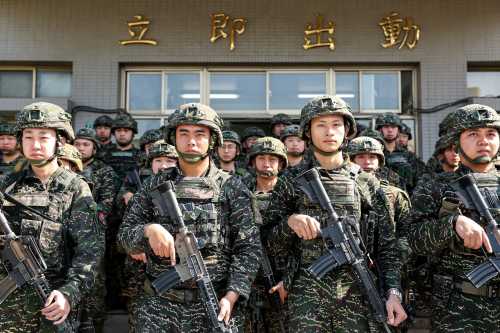
Although there was uniformity across all five papers that China is unwavering in pursuing cross-Strait unification, there was a range of perspectives on the level of urgency Beijing assigns to this objective and the path it would be willing to take to achieve this goal. Several authors viewed Beijing’s approach as a coercive and persistent effort to wear down Taiwan’s will to resist Chinese designs for unification, whereas others argued that China is prepared and planning to use military force to seize Taiwan.
Broadly speaking, the more confidence the authors expressed about the durability of the cross-Strait status quo, the more they proposed adjustments to, but not a major overhaul of, America’s approach to cross-Strait relations. The greater the risk of conflict they assigned to the current situation, the larger the shifts in American policy and strategy they recommended.
Four of the five authors described China’s calculus on Taiwan as influenceable to varying degrees. The authors presented a range of recommendations for signaling America’s resolve to sustain the status quo. These four papers coalesced around the need to sow doubt in the minds of China’s leaders about the feasibility and advisability of trying to seize Taiwan through force. These four papers placed varying degrees of emphasis on the usefulness of reassuring Beijing that America remains open to any peaceful resolution of cross-Strait differences as a supporting element of America’s broader deterrence strategy.
Jennifer Kavanagh’s paper departed from the other four in her judgment that U.S. interests in Taiwan are not sufficiently important to justify the growing costs and risks of deterrence and potential confrontation. Instead, Kavanagh recommended taking the potential of U.S. force off the table, enhancing Taiwan’s capacity to defend itself, and redirecting U.S. force posture to fortify its other regional interests as the best way to deny Beijing its strategic aims.
All five authors were commissioned to write on various aspects of America’s approach to cross-Strait issues. As such, their papers were in response to prompts and not a clean sheet appraisal of U.S. policy. Nevertheless, none of the authors advocated for maintaining devotion to the current U.S. policy. They all suggested modifications to America’s approach to respond to China’s expanding efforts to assert control over Taiwan. Similarly, in the broader expert workshops to interrogate each of these five papers, there was no constituency for adhering rigidly or narrowly to long-standing policy. There appeared to be broad acceptance that the cross-Strait strategic environment is changing and that American policy must adapt to these changes.
The main fault line among workshop participants, as in these five papers, was one of degree and direction. Some participants felt strongly that America’s capacity to deter China is eroding and that America would be wise to retrench rather than risk defeat in conflict, whereas the majority of participants advocated for adjustments in America’s posture but not abandonment of the underlying principle of American strategy—insistence that cross-Strait differences be resolved peacefully and in a manner that is capable of enjoying support from people on both sides of the Taiwan Strait.
Kharis Templeman explores why Taiwan matters to the United States and the People’s Republic of China (PRC). He concludes that Taiwan is of strategic importance to the United States given its geography, its centrality to the global economy, its symbolism as a bellwether for the credibility of America’s security commitments, and its shared values around democracy. For China, Taiwan represents a democratic spotlight that challenges the Chinese Communist Party’s (CCP) governing narrative. Taiwan’s autonomy also stands in tension with the PRC’s efforts to assert sovereignty over all its claimed territories. Even so, he concludes that Beijing can tolerate the status quo.
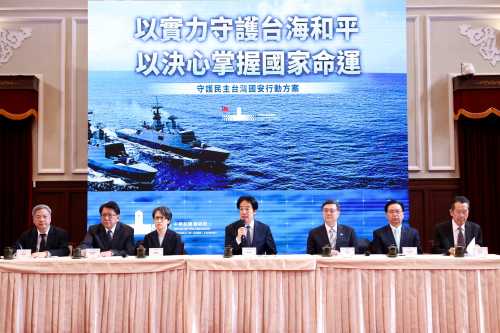
Templeman writes that the United States and China are in a game of coercive bargaining over Taiwan, whereby neither side wants to dilute its bargaining position. To protect its interests, Templeman advises that the United States should oppose unilateral changes to the cross-Strait status quo by either side, reassure Beijing that it will not oppose peaceful unification, deepen economic and security interests with partners in the Asia-Pacific region, and visibly demonstrate to the Taiwan people that their fate matters for the United States. Templeman’s analysis of Taiwan’s domestic politics implies that the most immediate near-term threat to cross-Strait stability may be political rather than military. Taiwan’s fragmented legislature, the Kuomintang’s active opposition to President Lai Ching-te’s defense special budget, and a measurable shift in sentiment among the under-30 cohort toward less pro-independence views suggest that China’s most achievable path to its objectives runs through Taiwan’s domestic politics rather than across the Taiwan Strait in amphibious assault vehicles. Taiwan’s 2026 local elections and the 2028 presidential election are thus consequential near-term inflection points.
Jennifer Kavanagh presents a case for overhauling the United States’ Taiwan policy. She argues that America’s level of strategic interests in Taiwan does not justify direct military intervention in a conflict with China over Taiwan. Rather than risk being pulled into a conflict over Taiwan, Kavanagh argues the United States should instead signal privately to Taiwan that it is turning over responsibility for Taiwan’s defense directly to Taipei by 2030 and that Washington will facilitate arms sales to Taiwan during that period. She argues that with proper investments in asymmetric capabilities and updates to Taiwan’s defense doctrine, Taiwan could credibly protect itself against threats from the PRC. She suggests Washington could use the pullback of its support for Taiwan’s defense to pursue a grand bargain with Beijing, whereby Beijing commits to engage in cross-Strait dialogue and reduce its military pressure against Taiwan. She believes this shift in American posture would lower the risk of conflict, free up American military capabilities, and support a reduction in American defense spending.
Bonnie Glaser examines the role of diplomacy in U.S. management of cross-Strait relations. She urges America’s leaders to take more initiative in building public support at home and awareness of Taiwan’s importance to American interests. She sees a more active role for U.S. diplomacy in underscoring to Chinese leaders that U.S.-China relations would be irreparably damaged if China ever uses force against Taiwan. She encourages U.S. diplomats to grow more active in countering “America skepticism” in Taiwan. She believes America should encourage cross-Strait dialogue while also opposing any external interference in Taiwan’s electoral processes.
Glaser departs most meaningfully from existing American policy by encouraging the United States to organize a coalition of countries to actively discourage Beijing from using force and instead encourage a peaceful resolution of cross-Strait differences. She sees an ancillary benefit of such a coalition in helping its members build insulation against Chinese economic coercion. The more that a coalition forms that is willing to counterbalance Chinese economic pressure on countries that engage constructively with Taiwan, the less impact Chinese threats would have in deterring countries from pursuing their interests with Taiwan.
David Sacks develops recommendations for countering China’s gray zone coercion of Taiwan. He views China’s creeping expansion of actions below the threshold of conflict, or gray zone activities, as an attempt by Beijing to set the conditions for war. He warns that gray zone activities already are sapping confidence in Taiwan about its ability to control its future. To counter these actions, he urges Washington and Taipei to coordinate efforts to raise the costs to Beijing of continuing down this path. He encourages Washington to signal to Beijing that the more PRC leaders mount gray zone pressure on Taiwan, the more the United States will do to offset it. He suggests the United States could do so by increasing security assistance for Taiwan, making shifts to the U.S. regional defense posture, adjusting America’s approach to the U.S.-China relationship, and increasing security support to other South China Sea claimants as a cost-imposition measure. Central to Sacks’ argument is a challenge to the premise that countering gray zone activities is in tension with a “strategy of denial.” His “linked escalation” framework treats well-designed responses to Chinese gray zone coercion as instruments of a denial strategy rather than distractions from it.
Sacks suggests that linking changes to America’s security posture toward Taiwan and other countries with territorial disputes with China presents one way to horizontally raise costs to China for continuing to exert gray zone pressure against Taiwan.
Matt Turpin makes the case for greater clarity and less ambiguity about America’s security posture toward maintaining peace and stability in the Taiwan Strait. He observes that America’s declaratory policies on Taiwan were designed for a different era. America’s “One China” policy and its posture of strategic ambiguity were compromises intended in part to secure China’s commitment to peaceful means in pursuit of unification. He contends that China has invalidated this approach through its massive military buildup and increasingly aggressive actions toward Taiwan. In light of this, Turpin calls for the United States to conduct a “clean sheet” review to update America’s policies to uphold its strategic interests in Asia: maintaining access to a free, open, and stable region; and preventing any rival from dominating the region at America’s expense.
Turpin argues that deterring China requires the United States to clearly demonstrate it possesses both the capabilities and the political will to prevent China from seizing Taiwan. A clearer articulation of American determination would be stabilizing, Turpin suggests, by shrinking the risk of miscalculation. The goal would be to convince Beijing that it cannot secure its objectives by force and that it must abandon coercion in favor of negotiation with Taiwan’s leaders to resolve cross-Strait differences.
Key takeaways
A stand-back review of the five policy briefs and the closed-door workshops used to interrogate them reveals several key takeaways:
- There was broad agreement among the expert community that the strategic equilibrium in the Taiwan Strait is shifting as China gains greater capabilities to influence the environment around and within Taiwan. But there was a range of views on the sharpness and urgency of the threat Taiwan faces.
- None of the participants advocated for keeping U.S. policy on autopilot. The main areas of contestation are over how much to adjust American policy and how much to rely upon military tools for deterring conflict and preserving American interests.
- Disagreements among Taiwan experts are narrower than they initially appear. A small group, often aligned with retrenchment, argues that the United States should step back from defending Taiwan and pursue a broader accommodation with China. The more consequential divide, however, lies within the mainstream camp. Advocates of strategic clarity and defenders of strategic ambiguity disagree because they hold different empirical assumptions about how Beijing interprets U.S. commitments and signals. Until there is stronger evidence about how China responds to these signals, the debate will remain unresolved.
- One area of expert consensus that deserves higher policy priority than it currently receives is China’s legal and normative campaign against Taiwan’s international standing. Beijing is systematically pressing governments to treat U.N. General Assembly Resolution 2758 (which transferred the “China seat” in the United Nations from the Republic of China to the PRC in 1971) as having also resolved the question of Taiwan’s sovereignty, a claim the resolution’s text does not support. Simultaneously, Beijing has pressured governments in Europe and across the Global South to adopt its “One China” principle rather than the U.S. “One China” policy.” Beijing is in effect framing support for the cross-Strait status quo as tantamount to support for Taiwan independence. This campaign is active, well-resourced, and has achieved measurable results in multilateral institutions, European capitals, as well as in capitals in Asia, Africa, the Middle East, and Latin America. It is also an area where coordinated U.S. and allied pushback is both feasible and strategically important. The workshop identified a stronger consensus for American action in countering China’s legal and normative campaign than on the military deterrence questions that tend to dominate the policy debate.
- One dimension that the workshop treated as a background assumption rather than an analytical focus was that of a nuclear escalation risk. Any Taiwan conflict involving direct U.S.-China military engagement carries a non-trivial risk of escalation beyond conventional warfare, and China’s ongoing nuclear buildup is already affecting the credibility of U.S. deterrence commitments in ways the papers do not fully reckon with.
- In discussions of “retrenchment,” important objections were raised about the challenge of drawing new, credible lines of defense. If the core argument that Taiwan is not a sufficiently vital U.S. interest to justify the costs and risks of potential conflict with a nuclear-armed China is accepted, one could imagine this logic expanding to encompass U.S. commitments across the first island chain. Future discussions premised on this logic should be explicit about where, precisely, America should draw its defensive line in Asia and what theory of deterrence sustains it at that new position.
Conclusion
The purpose of American strategy on Taiwan is not to engineer a specific outcome to long-standing cross-Strait disputes, or to keep Taiwan permanently within an American security perimeter. It is to protect America’s long-standing interest in preventing conflict and keeping a path open for leaders on both sides of the Strait to resolve their differences peacefully and in a manner that is acceptable to the people of Taiwan and China, however long it may take for them to arrive at such a destination.
One dynamic the workshop identified, but that policy discussions often underweight, is the relationship between U.S. credibility and Taiwan’s willingness to defend itself. Polling consistently shows that Taiwan’s public support for increased defense spending, extended conscription, and armed resistance is contingent on the belief that the United States would intervene on Taiwan’s behalf. This creates a feedback risk: erosion of U.S. credibility in Taiwan reduces Taiwan’s investment in its own defense, which reduces the deterrent value of Taiwan’s defenses, which in turn further erodes U.S. credibility. Managing this dynamic, and preventing a spiral of mutual pessimism, is as important a near-term policy task as any of the force posture or declaratory policy questions the papers address.
The task for the current moment is to buy time, but with clarity about what that time is for and what it requires. In the near term, it requires Taiwan to redirect defense investment toward asymmetric, survivable capabilities (drones, anti-ship missiles, naval mines, air defense stockpiles) rather than the high-visibility platforms that respond to gray zone pressure but are of diminished utility in defending against a direct assault by China. It requires sustained investment in the alliance architecture that makes U.S. deterrence credible and helps distribute the burdens of peace in the region across a larger number of allies and partners. And it requires active, well-resourced diplomacy to counter Beijing’s normative and legal campaign against Taiwan’s international standing before that campaign further constrains the options available to future leaders.
None of this is costless or guaranteed to succeed. But the workshop’s participants broadly agreed that the failure mode to be most actively avoided is unmanaged retrenchment, with a gradual withdrawal of U.S. commitment without the compensating investments that could make Taiwan genuinely defensible and the regional order genuinely resilient. America will place itself in a stronger position by relying on statecraft backed by credible military capacity. This approach would strengthen America’s ability to preserve a path to resolving cross-Strait disputes by signaling its support for negotiations and making clear that China would pay a high price for any attempts to seize Taiwan by force.
American military power is necessary to underpin and give credibility to statecraft, but it is not a substitute for it. As the past 75-plus years have shown, there is no increment of military power available to the United States that would cause the People’s Republic of China to abandon its ambitions to secure control of Taiwan. Given China’s considerable nuclear arsenal and array of space, cyber, and conventional military capabilities, Beijing will not be compelled to abandon its designs for Taiwan so long as the PRC remains controlled by the Chinese Communist Party. Realizing sovereignty over Taiwan is bound up in the CCP’s founding narrative for maintaining a monopoly of power over the PRC.
Unfortunately, the current regime in Beijing does not appear capable of the creativity needed to bridge generational differences between Beijing and Taipei. The reality, therefore, is that resolving cross-Strait differences in the near-term may well be impossible. But, if peace and stability in the Taiwan Strait can be engineered through a combination of deterrence and diplomacy, future leaders in Beijing and Taipei may well build reservoirs of new thinking about how to narrow differences and build a more permanent architecture of coexistence.
The role for the United States, and its allies and partners, is vital. America must remain militarily strong, economically invested, and diplomatically active in the region. It must offer strategic and supportive counsel to Taipei, including on the importance of avoiding actions that would unnecessarily enflame tensions. It will also demand that the United States deploy its highest-end capabilities to the Pacific theater to raise the cost and risk to Beijing of any attempts to seize Taiwan by force. Over the longer term, it will require active and energetic American diplomacy with rising leaders in the PRC and Taiwan to stimulate new thinking about the future.
The next chapter of cross-Strait relations will be shaped by whether Washington, Taipei, and like-minded partners can resist the temptation to accommodate Beijing’s expanding demands in the name of stability, and the temptation to treat military deterrence as a substitute for the diplomatic and economic statecraft that gives deterrence its political foundations. The five papers gathered here do not offer a consensus blueprint, but they do propose a clear map of where the expert community agrees, where it genuinely disagrees, and where the conventional debate has not yet asked the right questions. This project does not represent the end of the debate on America’s approach to cross-Strait issues. Hopefully, though, it has helped focus and sharpen awareness of critical questions that will demand further interrogation going forward.
In Partnership With
Authors


Related Content
-
Acknowledgements and disclosures
The authors would like to thank Adrien Chorn and Jennifer Mason for their tireless project management efforts. Additional thanks goes to Adam Lammon for editing and Rachel Slattery and Adrien Chorn for design.
The views expressed in this document are those of the authors and do not necessarily reflect RAND’s or Brookings’ opinions.
The Brookings Institution is committed to quality, independence, and impact.
We are supported by a diverse array of funders. In line with our values and policies, each Brookings publication represents the sole views of its author(s).