Executive summary
Visionary thinking about how to build a more stable and secure world flourished in the aftermath of the Cold War, but has largely stalled over the last dozen years in the United States. The shock of 9/11, Russia’s revanchism, China’s rise, and a deteriorating international security environment have made long-term thinking seem like a luxury. Populism in the United States and other countries adds further to the challenge. Yet this paper argues that today’s transnational dangers are too great to let strategic imagination be crowded out by traditional great-power rivalries. It also contends that some of the immediate causes of those rivalries are, in principle, addressable, if policymakers engage them creatively and energetically.
To avoid becoming disconnected from current realities and policy constraints, this paper outlines a four-part policy agenda—developed in greater detail in a forthcoming book—to make this vision concrete:
- Mitigate or resolve major territorial disputes in strategically significant regions, especially those among great powers. Restoring something close to the low likelihood of war that was seen in the 1990s is essential; without progress here, other parts of the policy agenda will be very difficult to achieve.
- Reduce the risks posed by advanced technologies—artificial intelligence (AI), modern microbiology, and nuclear weapons—through arms control and other collaborative means.
- Develop international mechanisms and increase resources to mitigate transnational threats such as climate change and pandemic disease.
- Redouble efforts to reduce global poverty and improve governance. Framed as broadly promoting human dignity, these goals may attract broader international support than more culturally charged and Western-oriented appeals to “democracy” and “human rights.”
Sketching out a grand vision is easy; making it actionable is harder. This paper therefore proposes several tangible steps: designing a security architecture for Eastern Europe that protects Ukraine while lowering tensions with Russia; encouraging Taiwan and China to explore a mutually acceptable formula for a commonwealth-style arrangement that permanently preserves Taiwanese autonomy; expanding strategic nuclear arms control to include China; and developing new international safety tools—such as societal verification—to monitor and regulate AI and microbiology technologies.
Author

Related Content
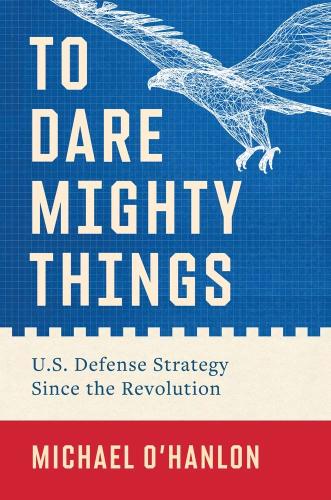
-
Acknowledgements and disclosures
The author is grateful to the Canva Foundation, and the whole Foreign Policy team at Brookings, especially Alejandra Rocha, Natalie Britton, Adam Lammon, Rachel Slattery, as well as Homi Kharas and anonymous reviewers.
The Brookings Institution is committed to quality, independence, and impact.
We are supported by a diverse array of funders. In line with our values and policies, each Brookings publication represents the sole views of its author(s).