This commentary was originally published by Project Syndicate. It draws on insights generated through the 17 Rooms initiative, convened by the Center for Sustainable Development at Brookings and The Rockefeller Foundation.
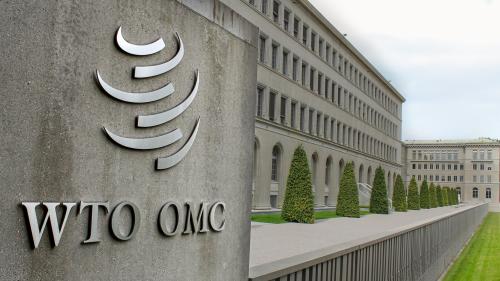
Even before US President Donald Trump upended the global trade system by wielding tariffs as a cudgel to force other leaders to bend to his will, the World Trade Organization was struggling to remain relevant and effective. Amid intensifying great-power competition and deep disagreements over trade rules and priorities, the 166 WTO member nations have found themselves hamstrung by a rigid commitment to consensus decision-making (which in practice means unanimity).
The much-heralded Doha Round of multilateral trade negotiations launched by the WTO in 2001 never produced an agreement, despite more than a decade of work. Similarly, most multilateral negotiations have ground to a halt in recent years (with the notable exception of the 2022 agreement on fisheries subsidies). As a result, major global issues such as food security, farm subsidies, inequality, the impact of trade on workers, public-health cooperation, and climate change have gone unaddressed.
But the international trade system is too important to be abandoned. With other leading experts from around the world, we have proposed a pathway to reconfigure trade for the modern era. Even at a time when multilateralism is under increasing strain, there are opportunities for constructive reform.
As a first step, the trade ministers attending the WTO’s 14th Ministerial Conference in Yaoundé, Cameroon, this week should recommit the trade system to an overarching focus on sustainable development, as prescribed in the WTO’s founding document, the 1994 Marrakesh Agreement.
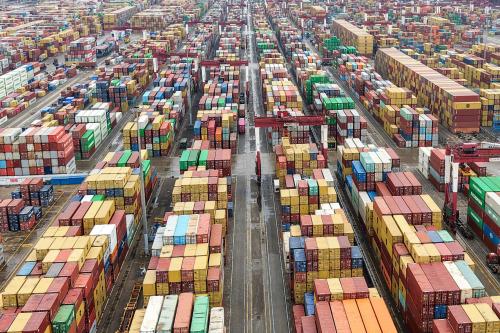
That focus reflects the role of trade as an engine of global prosperity throughout the postwar era. As international trade rose from around $60 billion in 1950 to $35 trillion today, average GDP per capita across the world increased from about $4,600 to more than $21,000, in constant dollars. But these growth benefits have not reached all people.
A revitalized WTO could change that. Crafting more people-centered and sustainability-oriented trade rules can help create jobs and reduce poverty by supporting emerging economies’ global integration. Moreover, updated processes and priorities can accelerate the spread of new innovations for addressing shared threats such as pandemics, and help ensure that the benefits of AI and the emerging digital economy are widely shared.
Trump is not wrong to criticize how the trade system currently operates. But the kind of global cooperation that it was designed to enable is needed now more than ever: climate change, biodiversity loss, resource depletion, and technological disruptions are transnational challenges that no country can successfully address alone. Instead of abandoning the system altogether, we must use the ongoing “rupture” in the world order, as Canadian Prime Minister Mark Carney recently put it, to overhaul how the system is structured.
To jump-start this process, the ministers gathering in Yaoundé must not only reaffirm the WTO’s core principles, but also devise a reform agenda. Equally important, they must begin to rebuild trust among WTO members. That will not be easy in a fractured political environment. But it is essential to create a trade system that delivers more for more people – and the planet.
The good news is that ministers won’t be starting from scratch. Despite the upheaval of the past year, the global trade system has remained resilient. In 2025, more than 70% of the world’s trade took place under WTO rules. The WTO Secretariat and its partner organizations – United Nations Trade and Development and the International Trade Centre – continue to play a critical role in supporting the technical alignment and capacity building that makes international trade possible.
Moreover, ambitious regional integration efforts and bilateral trade agreements are gaining momentum around the world, including the African Continental Free Trade Area, the Regional Comprehensive Economic Partnership between 15 Asia-Pacific countries, and the landmark free-trade agreement recently signed by the European Union and Latin America’s Mercosur bloc. Even more notable is the 2024 Agreement on Climate Change, Trade, and Sustainability among Costa Rica, Iceland, New Zealand, and Switzerland, which serves as a model for a trade system that places sustainable development at its core.
While WTO members agree that reform is necessary, they diverge on what that should look like. It will surely take years to reach a hard-fought consensus. But that is all the more reason for the 14th Ministerial Conference to start the process now by affirming that trade’s primary purpose is to support human flourishing on a healthy planet, and that any reforms should work to align the global trade system with those goals.
Geneva-based WTO negotiators, often constrained by existing rules, past practices, and old divisions, require a political signal to unlock progress. The 14th Ministerial Conference is an opportunity to provide it. The WTO – and the rest of the world – desperately needs to see that most countries are still committed to multilateralism.
This commentary draws on insights generated through the 17 Rooms Initiative, convened by the Center for Sustainable Development at Brookings and The Rockefeller Foundation. The views expressed here do not necessarily reflect those of 17 Rooms, its organizers, or funders.
Related Content
Authors

-
Acknowledgements and disclosures
The views expressed here are the authors’ own and do not necessarily reflect those of 17 Rooms, its organizers or funders.
The Brookings Institution is committed to quality, independence, and impact.
We are supported by a diverse array of funders. In line with our values and policies, each Brookings publication represents the sole views of its author(s).


Commentary
Op-edA new opening for WTO reform
March 25, 2026