News on the sub-prime lending crisis and threats of a recession raise more questions than answers. On December 19 at Brookings, two leading voices on economic policy—former Treasury Secretary Lawrence Summers and New York Senator Charles Schumer—offered concrete policy suggestions to address the twin threats that face this nation’s economic health.

Event Audio:

Listen to the full event >> (mp3)

Back to the event page

Transcript

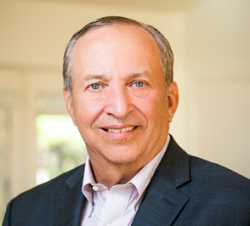
Lawrence Summers:
"I have a chance to speak today about our current economic situation.  I believe that our current economic situation requires a comprehensive program of measures to contain the fallout from problems in the financial and housing sectors and to assure sufficient policy support for economic growth over the next several years. Perhaps because of a failure to appreciate the gravity of our current situation and the problems our political process has in responding quickly and collaboratively to emergent threats, such a comprehensive program is neither in place nor an imminent prospect.

"No economic projection put forward with anything like complete confidence should ever be trusted. The current consensus suggesting that growth is likely to be slow over the next several quarters and that the odds of a technically defined recession are in the 40% range is troubling enough given that it means rising unemployment and budget deficits, likely falls in real family incomes and a downturn in plant and equipment spending.

"For the last year, the economic consensus, and the policy actions that have flowed from it, has been consistently behind the curve in recognizing the gravity of the problems in the housing and financial sectors and their consequences for the overall economy. This continues to be the case. In my view it is almost certain that we are headed for a period of heavily constrained growth, quite likely that the economy will experience a recession as technically defined and distinctly possible that we are headed into a period of the worst economic performance since the stagflation of the late 1970s and recessions of the early 1980s.

"The late Rudi Dornbusch was fond of remarking that in economics 'things take longer to happen than you think they will and then they happen faster than you thought they could.' So it has been recently. The related but distinct patterns of excessive valuations in housing markets and excessive complacency in credit markets were pointed out for years by experienced observers. The cracks took longer to appear than many expected and have now proven to be far more structurally damaging than almost anyone supposed."

Lawrence Summers:
"The most urgent priority for policy over the next several months is containing the incipient economic downturn. I am convinced this is possible without giving rise to either excessive complacency in the future or accelerating inflation. I want to briefly sketch what would seem to me on current information to be the appropriate evolution of policy in a number of areas. Of course as data comes in and alternative measures are debated, any particular combination of policies might look less and less appropriate. I will have served my purpose if I have advanced the debate by contributing an example of an ambitious policy program: Monetary Policies and the Financial System. One former economist official whose advice I sought in preparing these remarks referred to recent events as 'adjusting for raised expectations, the greatest failure of risk management in financial history.' This is too apocalyptic. But it is suggestive of the extent to which major financial institutions are unsure of their own and their counterparts’ creditworthiness.

"In normal times the spread between the rate at which the Treasury borrows and the LIBOR rate at which banks lend each other money for 3 months is typically well under half a percentage point. Currently it is about 2 percentage points. In the United States and Europe large and persistent spreads have also opened between the policy rates of central banks and the lending rates at which banks make credit available to each other and to firms and households. In this environment the dominant risk is a downward spiral in which financial problems curtail credit and spending thereby reducing economic activity, which in turn exacerbates the financial problems, creating a vicious spiral. Once in progress, such a spiral may prove very difficult to arrest. It is much more important to establish credibility that policy is ahead of the credit crunch spiral than to reassure yet again that it is not behind the inflation curve.

"I say this not because I am unconcerned about inflation. The achievement of price stability over the last generation is one of the most important factors contributing to improved economic performance. It is a matter of balancing risks. With workers and firms as insecure as they are today, I see little risk of the kind of wage-price cycle that has set off inflation in the past. Data on indexed and nominal bonds suggest that despite what has happened to oil prices and to the dollar there has been no increase in the expected price level several years out. Moreover, failure to contain a credit spiral could cost the economy years of satisfactory economic performance. If I am wrong and policy creates undue inflation pressures, they can be removed at a much less perilous moment."

Senator Schumer:
“Where’s the money going to come from to refinance these mortgages? Someone on the ground knows how to do it, has the expertise and there to me the place is Fannie and Freddie. They can provide liquidity if you raise their portfolio caps ten percent, you’ll provide $150 billion dollars, you’ll require that money just for one year, don’t raise them permanently, you’ll require that money to go to refinance these foreclosures. Fannie and Freddie don’t really want do this. They don’t make enough money on these loans. Well, Fannie and Freddie, you’re not just a private sector company. And you can’t keep putting your hat on and taking your hat off when you want, and say ‘private, public, private, public.’ You want to be public? Accept private sector only and if your only mission is to increase your shareholders price then don’t take the government guarantee!
 
“But I don’t believe that’s right. That’s really what the administration and even Alan Greenspan wanted. They didn’t want a Fannie and Freddie. I believe there should be a robust Fannie and Freddie, but I believe that Fannie and Freddie’s responsibilities to the public sector are at times like this. And so, Fannie and Freddie—we should raise their portfolio caps, require the money to go into this and you know some of us who have helped Fannie and Freddie in the past ought to jawbone them to do it.
 
“There’s legislation that I introduced along with Barney Frank to do this. We’ve also introduced legislation to raise the conforming loan limits for the GSEs—this does have the support of the administration and Mr. Bernanke. And they would raise the limits of the so-called jumbo loans from the low 400 thousands into the mid 600 thousands so more mortgages would be covered. Jumbos are having big trouble even though they are larger loans with richer people and you give them a Fannie and a Freddie guarantee and it makes sense.”

Senator Schumer:
"The subprime crisis has become a symbol of the Bush Administration’s serious mishandling of so many economic and domestic policy priorities. Just as Katrina sort of became the metaphor for the Administration’s inability to manage government with the ham-handed efforts of FEMA. The housing mess, which has hit homeowners and neighborhoods with too many foreclosures, credit markets with mountains of debt, and the economy with weak job and economic growth, is further evidence that this administration is, all to often, ideologically handcuffed, and cannot step up to the plate to solve major problems.
 
"As our country teeters on the edge of recession for the first time since 1990, the Administration is almost powerless to really roll up its sleeves and involve itself in the problem. And you ask yourself, the question, 'why?' There are very talented people there–Secretary Paulson, Deputy Secretary Steele. And it’s my belief that, as I said, they’ve had ideological handcuffs imposed on them, 'Keep the government out of any solution do whatever you can but keep the government out of any solution.' And the Administration ends up tying itself into a pretzel to come up with solutions that are not direct, and that don’t really hit the bull’s eye in terms of solving the problem and make the crisis worse. And they’re always a step behind for the same reason.

"Now the Administration seem to be unable to get the government moving quickly, decisively and competently to address the most serious economic crisis we’ve had in the last decade. It is this irresponsible inaction, attributable, in my judgment, to their ideological opposition to government action, that has exacerbated housing and economic woes we are facing.
 
"And our housing problems have rippled through the economy. The fact is that economic contagions are difficult to contain–it’s not like a bottle of water. It’s much more like a pond where the ripples move outward, but in this case sometimes get larger. The initial ripple is the foreclosure problem, the very serious problem of foreclosures. but it doesn’t stop at foreclosure.

"The statistics show that every time there’s a foreclosure in a community housing prices decline. And so you’ve had a decline in housing prices, not all of which is caused by the subprime foreclosure crisis but it’s certainly been exacerbated by it and it probably is a leading–if not the leading cause. The ripple goes outward even further. Housing prices decline and the consumer by less. And here we are and we’re getting reports that this Christmas season isn’t a very good one and again there are other reasons as well, there are high fuel prices, for instance, but one of the main the things that the studies show is when housing prices go down the consumer feels less flush and spends less.
 
"And then finally, there’s probably the most outward ripple, which could have the greatest effect, which is the credit crunch. If lenders aren’t lending to businesses and individuals the economy really has a crimp put in it.

"And so, the crisis, the problem, call it what you will, just moves outward and just gets larger and larger and the administration seems unable to aim at the bulls eye, to aim at the problem and help ameliorate it, to help mitigate it and thereby lessen the severity of the ripples that move outward.

"Now, I believe that we could have avoided a lot of this. There’s no doubt that an economic slowdown would have occurred but the administration’s inaction could well spell the difference between an economic slowdown and recession."