U.S. Defense Policy
Tren de Aragua and the Use of Military Force
10:00 am EDT - 11:00 am EDT
Past Event
10:00 am - 11:00 am EDT
1775 Massachusetts Avenue, N.W.
Washington, DC
20036
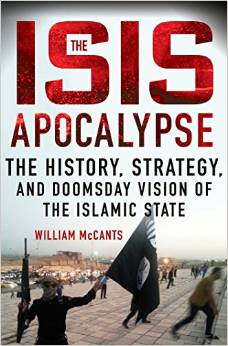
The Islamic State is one of the most lethal and successful jihadist groups in modern history, surpassing even al-Qaida. How has it attracted so many followers and conquered so much land in its relatively brief existence?
In “The ISIS Apocalypse” (St. Martin’s Press, 2015), Will McCants examines the Islamic State’s tactics and goals, and the many ways in which it is more ruthless, more apocalyptic, and more devoted to state-building than any of its predecessors or current competitors. Based almost entirely on primary sources in Arabic—including ancient religious texts and secret al-Qaida and Islamic State letters that few have seen—“The ISIS Apocalypse” explores how religious fervor, strategic calculation, and doomsday prophecy shaped the Islamic State’s past and foreshadow its dark future.
On September 22, McCants discussed ISIS’ strategy and the future of jihadi terrorism. NPR Counterterrorism Correspondent Dina Temple-Raston moderated the discussion, after which McCants took audience questions.
 Join the conversation on Twitter using #ISISApocalypse=”font-size:>