Society & Culture
Social protection, not just legal protection: Migrant laborers in the Gulf
1:30 am +04 - 3:30 am +04
Past Event
1:30 am - 3:30 am +04
Content from the Brookings Doha Center is now archived. In September 2021, after 14 years of impactful partnership, Brookings and the Brookings Doha Center announced that they were ending their affiliation. The Brookings Doha Center is now the Middle East Council on Global Affairs, a separate public policy institution based in Qatar.
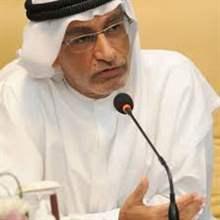
On October 9, 2013, the Brookings Doha Center (BDC) hosted a policy discussion with Abdulkhaleq Abdulla, Professor of Political Science at United Arab Emirates University; Jassim Sultan, General Supervisor of An Nahda Website based in Qatar; and Hussein Shobokshi, a businessman and prominent columnist from Saudi Arabia. The discussion, moderated by BDC Director Salman Shaikh, focused on the Gulf states’ views on the Muslim Brotherhood and, in a wide ranging discussion, the panelists discussed the Brotherhood’s ideology, its failures in government in Egypt, the group’s relation to terrorism, and the Brotherhood’s future. They offered their explanations for the Brotherhood’s loss of power, the reasons for recent arrests of Brotherhood members in the UAE, and their understandings of the flaws in the Brotherhood’s ideology.
Hussein Shobokshi attributed the Brotherhood’s fall from power in Egypt to a rejection of its policies at the popular level. He emphasized that the Brotherhood had failed to adapt to the evolution of Egyptian society and tried to unilaterally force unpopular social changes. When questioned about the Brotherhood’s electoral victories, Shobokshi stressed that the Brotherhood had governed in an exclusionary fashion after its victory, stating “You cannot govern a nation of Copts while refusing to meet them; you cannot govern by dividing yourself from the population.” Jassim Sultan agreed that the Morsi government had placed excessive focus on social and cultural issues. He also suggested that the Brotherhood never accepted the idea of a civil state with equality for all its citizens and instead remained tied to the idea of an Islamist state where minorities were respected but unequal. Still, Sultan was slightly more critical of the Egyptian army’s crackdown on the Brotherhood, describing the current situation as a clash between the Islamic project and militarization. Neither side, he argued, was treating society as capable of its own choices. Sultan attributed the Brotherhood’s shortcomings to a wider failure by Islamist groups to adjust to modern times, arguing that these groups remain convinced that an Islamic state built on Islamic jurisprudence could be implemented today.
Abdulkhaleq Abdulla also suggested that the Brotherhood had gained power because Egyptians “voted their hearts and not their minds.” He said that Egyptians trusted members of the Brotherhood to be pious and good people, and therefore ignored their lack of technocratic qualifications. Arguing that the Brotherhood’s fall was a continuation of the revolution and result of their immoderate government, Abdulla strongly criticized accusations of a foreign conspiracy to oust the Brotherhood. At the same time, he criticized American policymakers who trusted the Brotherhood’s promises of moderation.
Jassim Sultan dismissed the notion that the Brotherhood could gain a political foothold in the Gulf, where poverty is minimal and societies are harmonious. He suggested that the Brotherhood’s views would not make inroads in these societies particularly because Gulf countries are organized along tribal and family loyalties rather than along ideological lines. The only role the Brotherhood can play in the Gulf, then, is a charitable one, primarily active in supporting international causes. Although Sultan noted the Brotherhood’s potential role in the charity sector, he stressed that the idea of Islam as a total governing system, which the Brotherhood’s founder Hassan al-Banna propagated, would not be transferrable to the Gulf.
When queried on the UAE’s recent crackdown on its Brotherhood affiliate, Al-Islah, Abdulkhaleq Abdulla argued that the Brotherhood in that country was almost entirely a political movement, with its charitable and religious activities only a tiny percentage of the organization. He claimed that the Emirati authorities had been forced to arrest Brotherhood members because the organization was a political one, and political groups are forbidden by law. Cases against members of the Brotherhood therefore are, in his eyes, purely legal and not ideological. At the same time, Abdulla suggested the Brotherhood had begun a vicious campaign against the Emirati government, charging that the Brotherhood supported Iran against the UAE and then attacked the UAE when it did not back the Brotherhood in Egypt.
In response to reports of an attempted attack on the head of the Saudi mutaween (Islamic religious police), Hussein Shobokshi stated that there had been escalation, at least in rhetoric, by the Brotherhood in Saudi Arabia after Morsi’s fall, describing their bitter mental state as a “shattered dream syndrome.” He also criticized the Brotherhood’s role in education in the kingdom and elsewhere, describing their teachings as being in opposition to the idea of the state. Shobokshi argued that these teachings made many young people hate their countries and inhibited national development around the region.
During the question and answer period, the panelists faced a diverse array of questions from audience members on issues such as the conflict between secularists and Islamists, potential changes in Islamic jurisprudence, the relationship between the Brotherhood and terrorist groups, and criticism over their disapproval of the Brotherhood. In response to a question about whether the confrontation in Egypt represented a conflict between Islam and secularism, Hussein Shobokshi pointed to the role of al-Azhar University in supporting the military and the protests. He said that Egypt’s rejection of the Brotherhood was popular and went far beyond the secularists. Abdulla agreed, stating that Salafi groups also supported the military’s position. In his view, “I don’t think what’s happening in Egypt is over identity, the religious vs. the secular. What’s happening is everybody has a problem with the Muslim Brotherhood and their methodology.”
In response to BDC Director of Research Shadi Hamid’s question about whether panelists believed that the coup would cause alienated Brotherhood supporters to turn to terrorist groups after the failure of peaceful means, Shobokshi suggested that the Brotherhood’s ideology was already responsible for the development of terrorist groups across the region. Abdulkhaleq Abdulla agreed, suggesting the Brotherhood might respond to their loss of power by encouraging terror, but this would speed the destruction of their movement.
Responding to strong criticism from some audience members over the speakers’ anti-Brotherhood positions and their failure to discuss problems in their own states, Hussein Shobokshi and Abdulkhaleq Abdulla argued that the Brotherhood had proven itself to be incompetent at governance, constantly adopting a narrative of victimization rather than recognizing their own shortcomings.
Jassim Sultan offered a slightly different perspective, calling for a radical reform of Islamic thought. He suggested that the Brotherhood failed to understand that its position in power depended on popular support, as the organization’s believed elections had granted them total legitimacy. Sultan argued against such a “dictatorship of the majority.” Nonetheless, Sultan also suggested the current situation, under military rule, would have negative repercussions, as the military’s heavy handed treatment of protests could recreate the cycle of violence the region experienced in the 1950s and 1960s. He objected to the idea that if the Brotherhood was eliminated all problems would be solved, and he called for a unity government to help restore balance in Egyptian society.