Democracy, Conflict, & Governance
What Gen Z protests reveal about Kenya’s democracy
1:00 pm EDT - 2:30 pm EDT
Past Event
1:00 pm - 2:30 pm EDT
1775 Massachusetts Avenue, NW
Washington, DC
20036
The Libyan crisis has brought focus to the critical and complex issue of the “responsibility to protect” populations from genocide, war crimes, crimes against humanity, and ethnic cleansing. In Libya and beyond, the international community is faced with urgent tests of a hotly debated doctrine about when, where and how nations should respond to populations threatened with the gravest international crimes. Now more than ever, real world events are being discussed in terms of the Responsibility to Protect Doctrine, or R2P, which was adopted by all the world’s governments in 2005 and appeared explicitly in the 2010 U.S. National Security Strategy. United Nations Security Council Resolution 1973, which authorized force in Libya, also invoked the responsibility to protect as part of its argument for action.
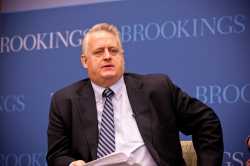
On June 16, the Brookings Institution, in cooperation with the United States Institute of Peace, the United States Holocaust Memorial Museum and Humanity United, hosted a discussion exploring the responsibility to protect and the ongoing crisis and NATO intervention in Libya. Brookings Nonresident Senior Fellow Richard Williamson discussed the dilemmas and imperatives that U.S. policymakers face in the Libyan crisis. Sarah Sewall, the founder and faculty director of the Mass Atrocity Response Operations project, addressed issues related to military preparedness and strategy for civilian protection, and Manal Omar, director of Iraq and Iran programs at the United States Institute of Peace, reported on her recent trip to Benghazi and on how international debates about R2P relate to the situation on the ground.
Mike Abramowitz, director of the U.S. Holocaust Memorial Museum’s Committee on Conscience, moderated the discussion. Humanity United’s Peter Rundlet provided introductory remarks.
After the program, the speakers took audience questions.