The Brookings Institution is committed to supporting inclusion and diversity across all aspects of our work. We recognize that to produce high-quality research that informs innovative, practical policy recommendations, we must strive for a workplace that represents diversity of experience, thought, and personal background. This means ensuring that everyone is heard and empowered to fully participate in Brookings’ mission to equip decisionmakers with nonpartisan research and policy strategies to create a more prosperous and secure country and world.
Since 2018, we have published annually our workplace and Board of Trustee demographics. We remain optimistic that through focus, transparency, and accountability, real progress on diversity and inclusion can be achieved over the long term. These annual reports represent one component of our work toward that end.
Core Commitments
- Supporting and promoting work by Brookings researchers on race, justice, and equity.
- Prioritizing diversity in Brookings events. This includes ensuring that invited speakers and Brookings panelists represent a variety of demographic backgrounds and perspectives on the topics being discussed.
- Providing training opportunities aimed at building both fundamental, shared competencies, and responding to evolving needs. Together, these offerings equip employees to foster an inclusive and respectful workplace.
- Embedding inclusion, equity, and diversity in our human resources practices, including the regular analysis of the recruitment and selection processes.
- Continuing to leverage our jobs framework to ensure equitable and consistent treatment across the Institution.
- Celebrating the diversity of our staff through Heritage Months and other cultural observances and supporting Affinity Groups that provide employee-led programming and engagement opportunities for staff.
Impact Stories
- Mentoring Program
- Echidna Global Scholars Alumni Network
- Heritage Months
- Workplace Norms Working Group
- Building Community Connection
Mentoring Program
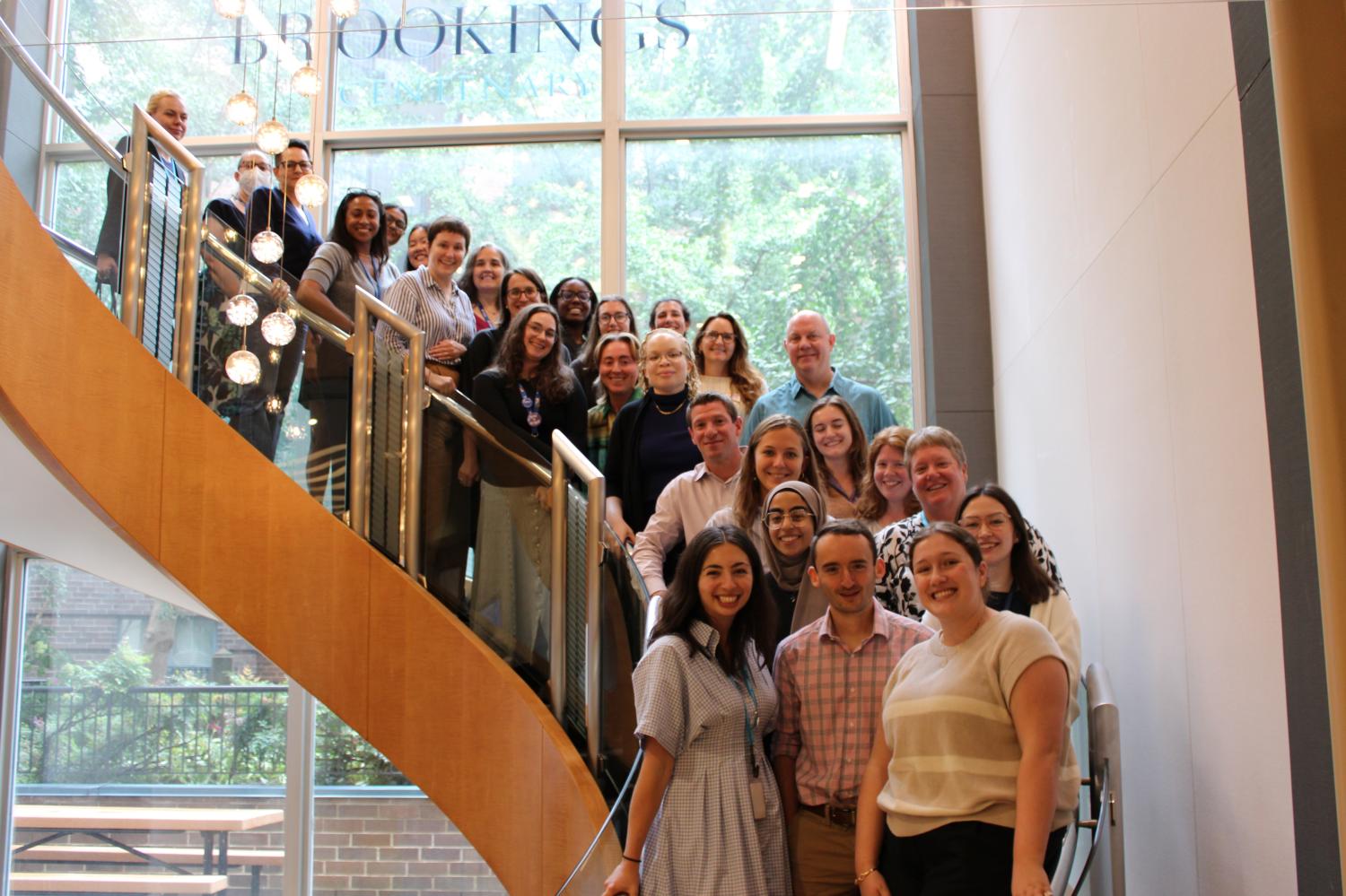
For the past seven years, Brookings employees have shared their experiences, skills, and connections through the Brookings Mentoring Program. The program is a nine-month experience where a mid- or late-career mentor is matched with one to three early or mid-career mentees. Every year, there is wide and varied participation; over 70 employees took part in 2025, which is more than 15% of Brookings’ total employee population. Mentor groups meet monthly to discuss topics like career development and feedback and enjoy all-group programming like networking events and expert panels. The Brookings Mentoring Program provides support and guidance while also fostering inclusivity by building relationships between staff at all levels across the Institution.
Echidna Global Scholars Alumni Network
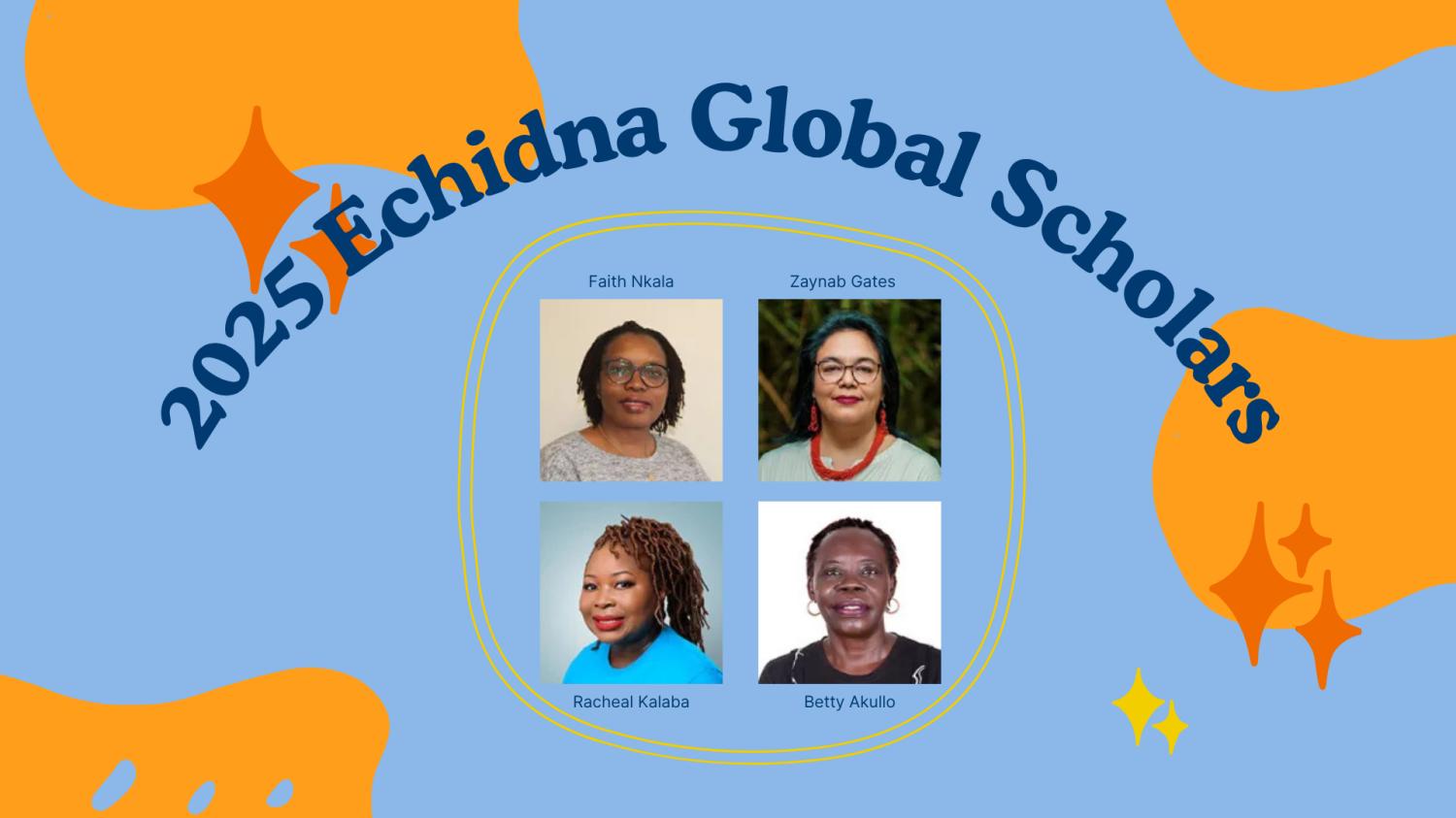
Coordinated by the Center for Universal Education at Brookings, the Echidna Global Scholars Alumni Network (EGSAN), now in its 13th year, is a diverse, intersectional community of educators, activists, researchers, and policy leaders who transform education systems to advance gender equality in and through education. Grounded in lived experiences across Africa, Asia, Latin America, and the Middle East, EGSAN implements a collaborative research and action approach that centers the voices and leadership of girls, young women, and marginalized communities, ensuring they are not only included but actively shape the systems that affect their lives. From influencing women’s labor policy in Jordan, to transforming policy for senior women teachers in Uganda, to supporting adolescent mothers’ schooling in Jamaica, to working with local policymakers to center the agency of ethnic minority girls in Vietnam, EGSAN members have shaped policies that expand opportunities for women and girls worldwide. Their work also seeks to dismantle exclusionary practices and narratives, replacing them with equitable structures, community-driven solutions, and cultures of care.
Heritage Months
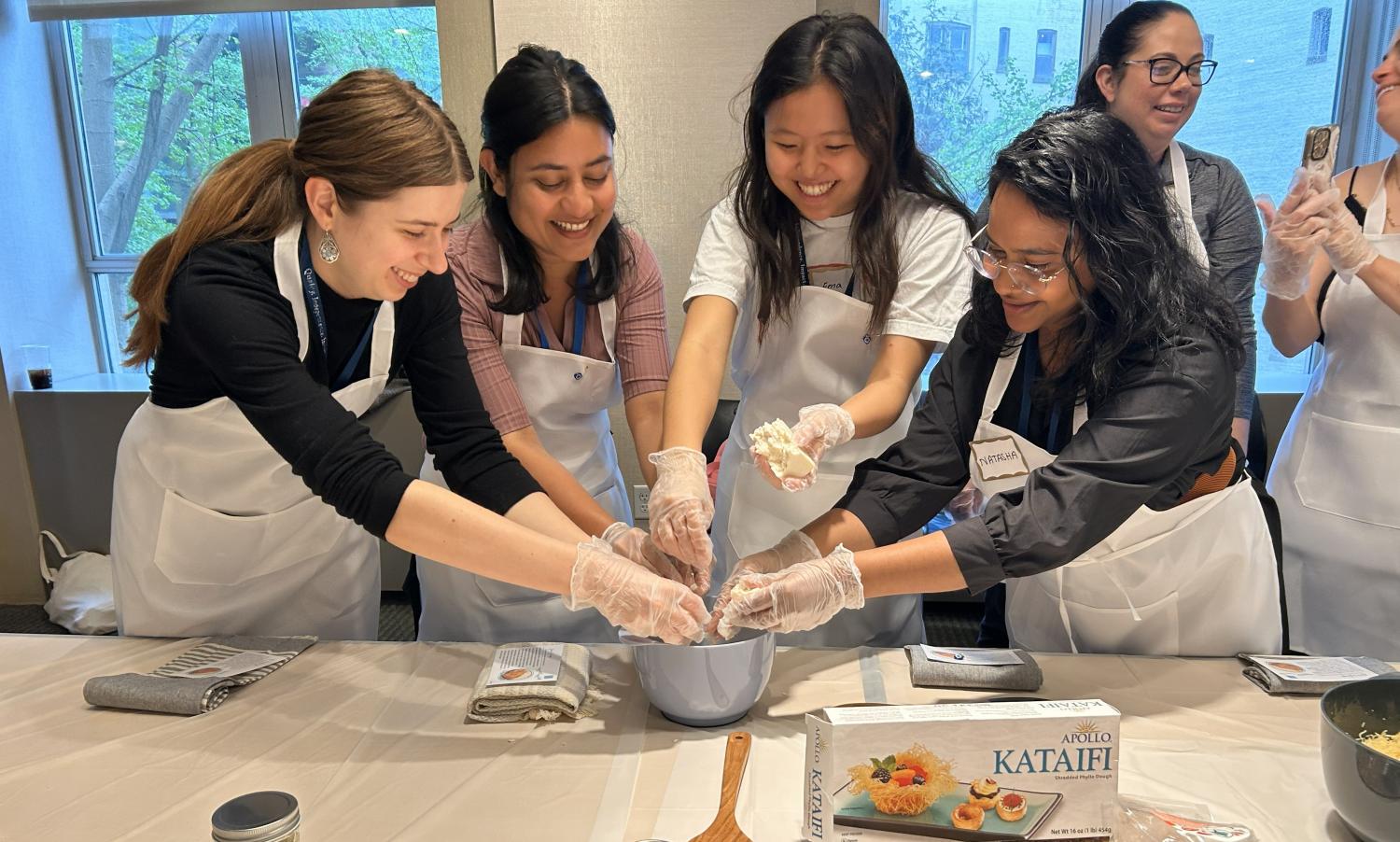
Each year, the Brookings DEI Committee sponsors programming for nine Heritage Months and four employee-led Affinity groups—bringing people together around shared interests and topics. In 2025, we came together and learned through lectures, a poetry reading, walking tours, and more—with food-related events as particular highlights. For example, in celebration of Arab American Heritage Month, Brookings hosted a Levantine cooking class. The guest chef led participants through the hands-on steps for making kunafe while sharing stories about her Damascene Lebanese family recipes. During Asian American, Native Hawaiian, and Pacific Islander Heritage Month, Brookings welcomed a group of prominent local chefs and leaders from Chefs Stopping AAPI Hate to participate in a film screening, panel discussion, and tasting on campus. Facilitated by former Brookings Interim President Amy Liu, the panel discussion covered everything from myths about Asian food to struggles of modern Chinatowns to allyship in the restaurant industry.
Workplace Norms Working Group
The Workplace Norms Working Group (WNWG) is a collaborative, culture-building project that examines how employees “do the work” across the organization. Prompted by an adjustment to Brookings’ hybrid work practice, the working group—intentionally composed of members from every department, with a wide range of roles, tenures, and experiences—embarked on a six-week journey to examine questions related to Brookings’ internal culture. What is working well? What could change? What needs to be adjusted? What best practices can be shared across departments? The WNWG focused on high level topics including understanding the Institution, fostering strong managers and leaders, and employee wellbeing. The pilot concluded with a written proposal and recommendations, which the group shared with Brookings leadership. Over the coming year, many of the recommendations will be woven into Institution-wide planning. Key focus areas are already in the works, such as creating a leadership development program, building a culture of feedback, developing more tools for managers, and hosting trainings on the workplace misconduct reporting process.
Building Community Connection
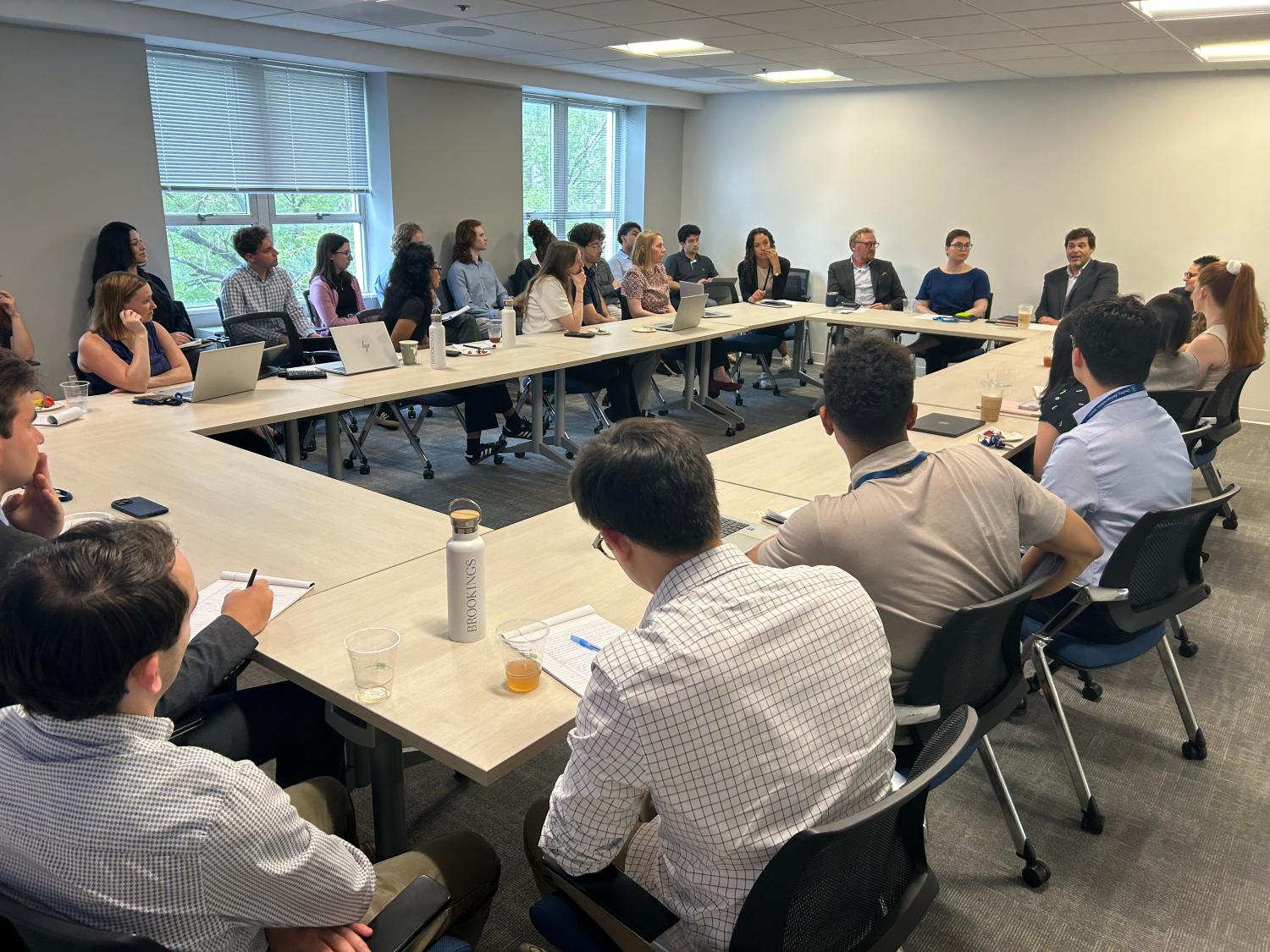
From all-staff events to small-group trips around D.C., to skill-building workshops, building community and making connections across a wide range of interests remain a consistent focus of our employee engagement efforts. Some examples of the many ways Brookings employees engaged throughout 2025 include: small monthly lunches with President Cecilia Rouse to get to know employees across Brookings; an on-site “carnival” to give staff the chance to spend time together, enjoy the warm weather, and have fun with games, a cookout, raffles, and a live DJ; and monthly project management sessions where staff could connect on templates, tools, and techniques with the Project Management Community of Practice. In addition, throughout the year the Brookings Network sponsored clubs for running, soccer, kickball, and softball. Employee- led group programming included women’s history-themed walking tours, an afternoon Diwali celebration, a variety of donation drives, a career panel focused on the value of attending law school, a visit to the Middle East Institute, and much more.
Our Workforce
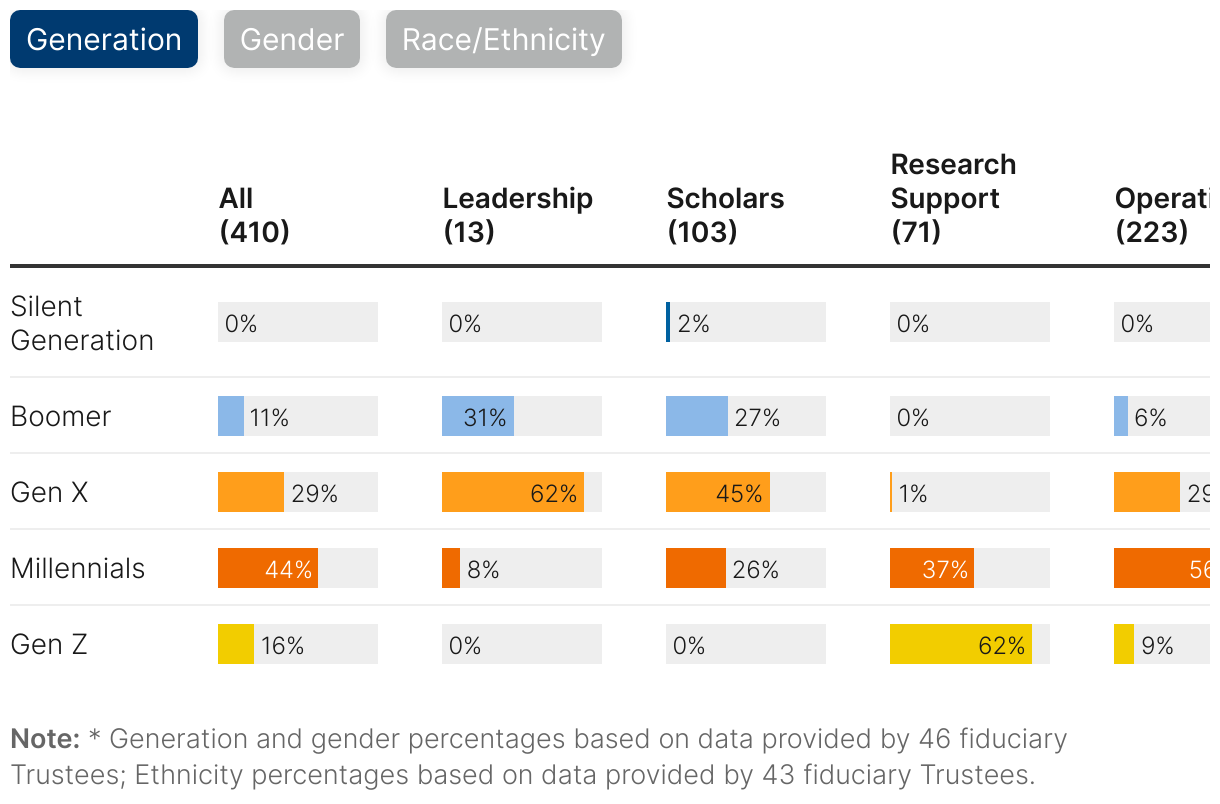
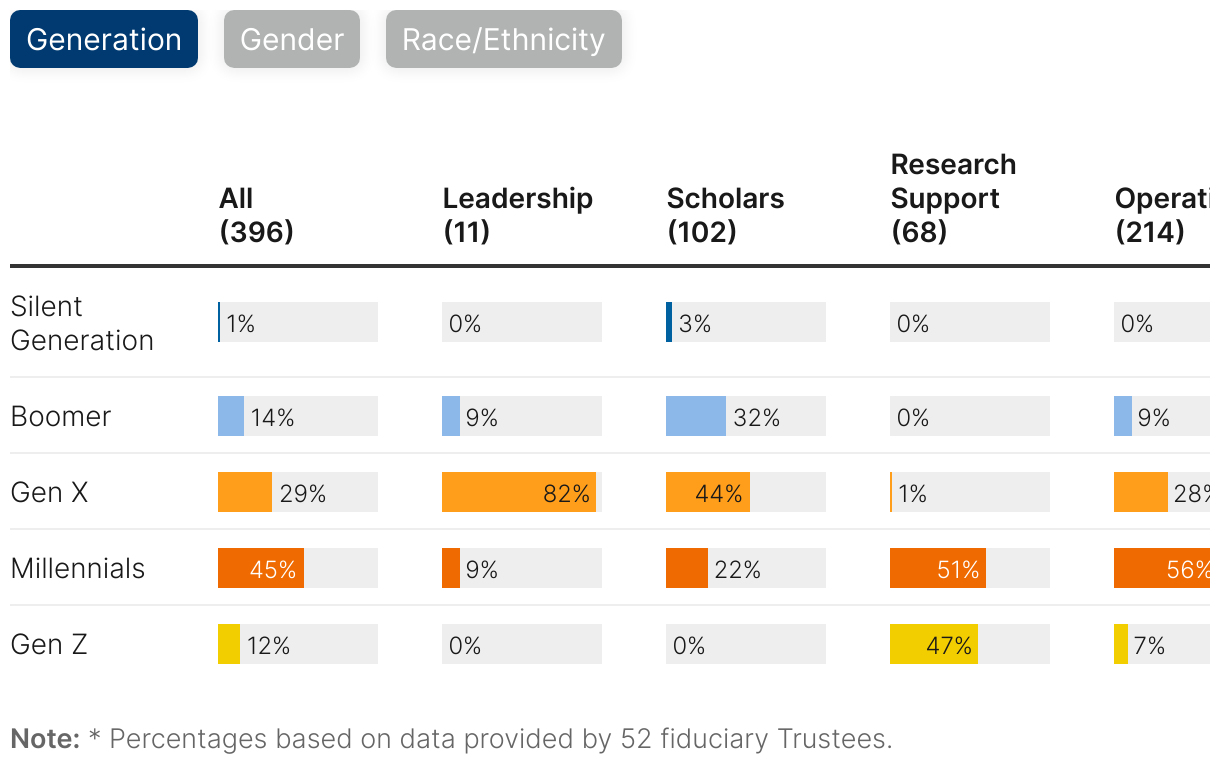
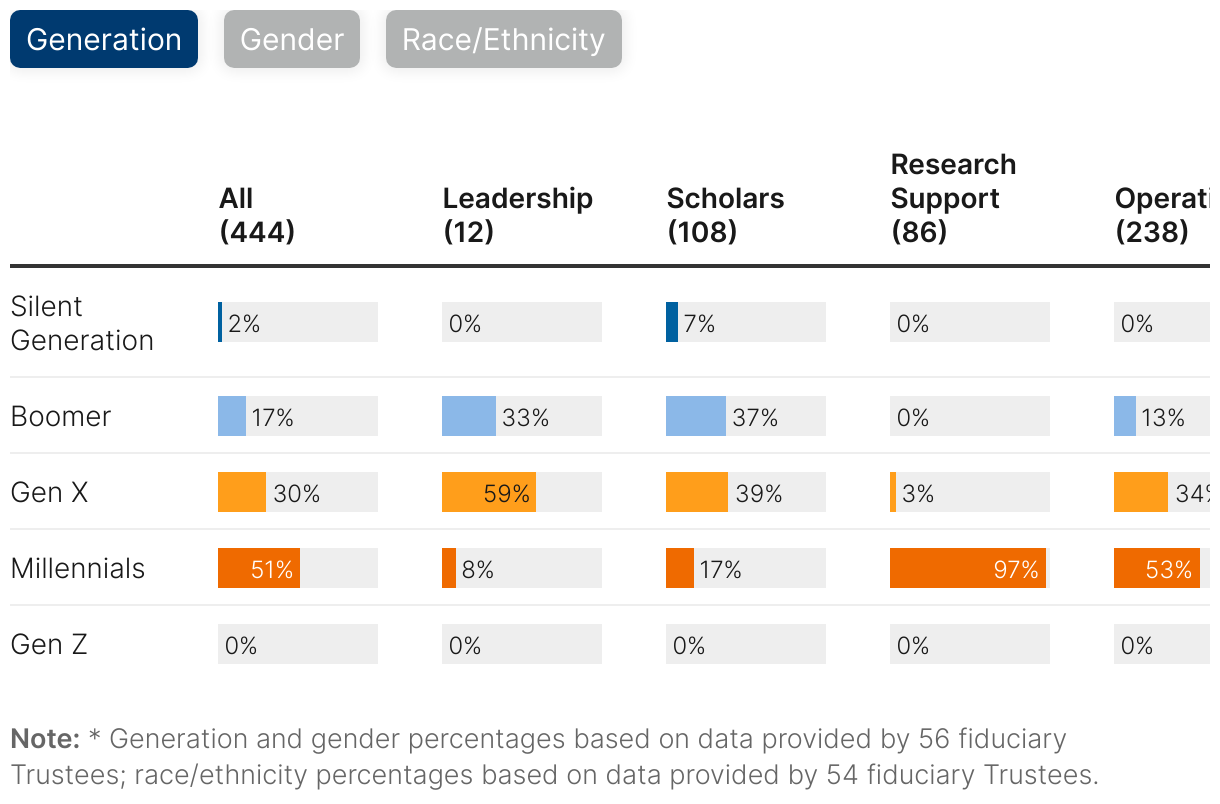
Percentage data may not sum to 100% in some categories due to rounding.


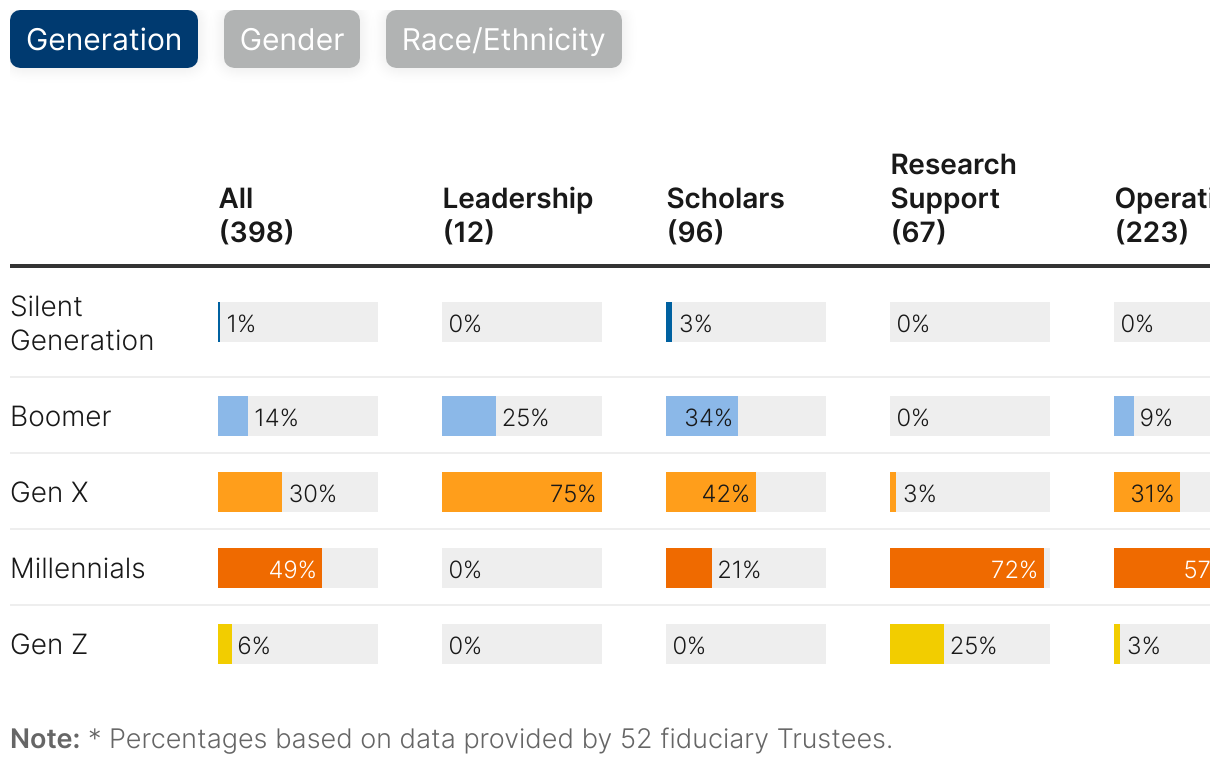
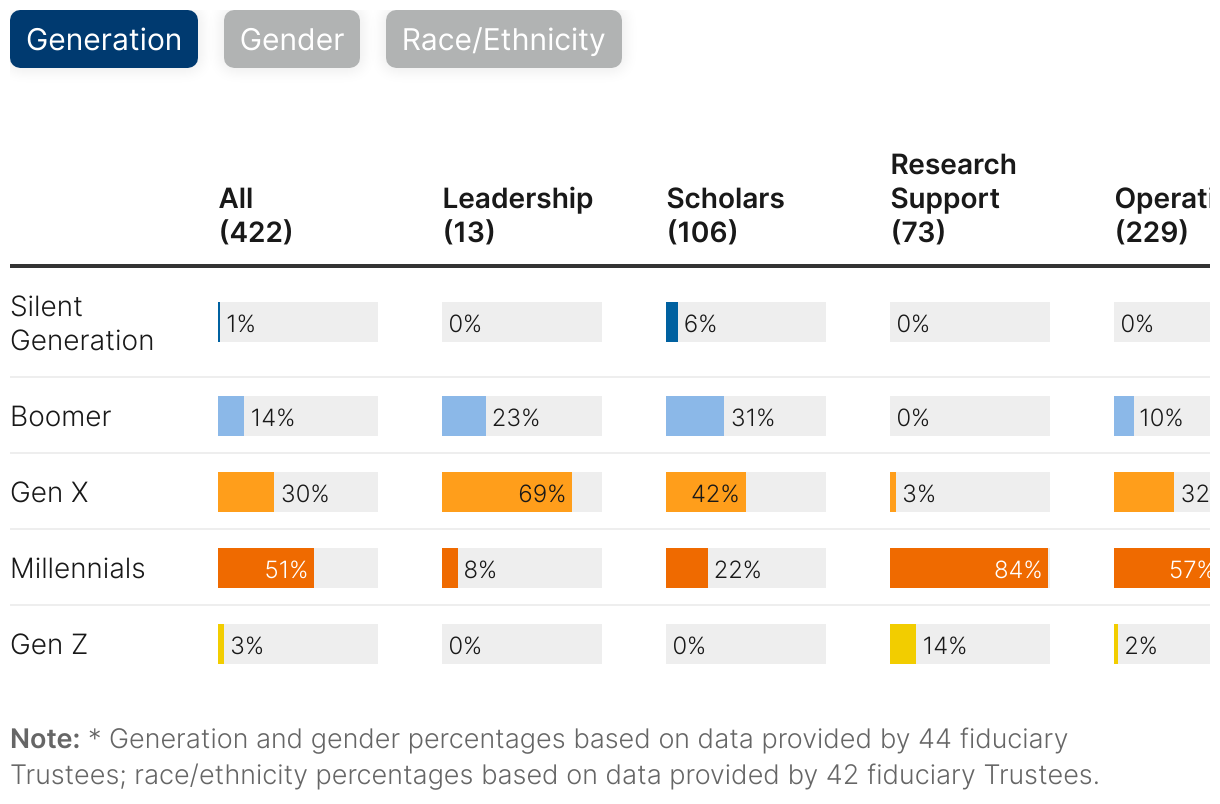
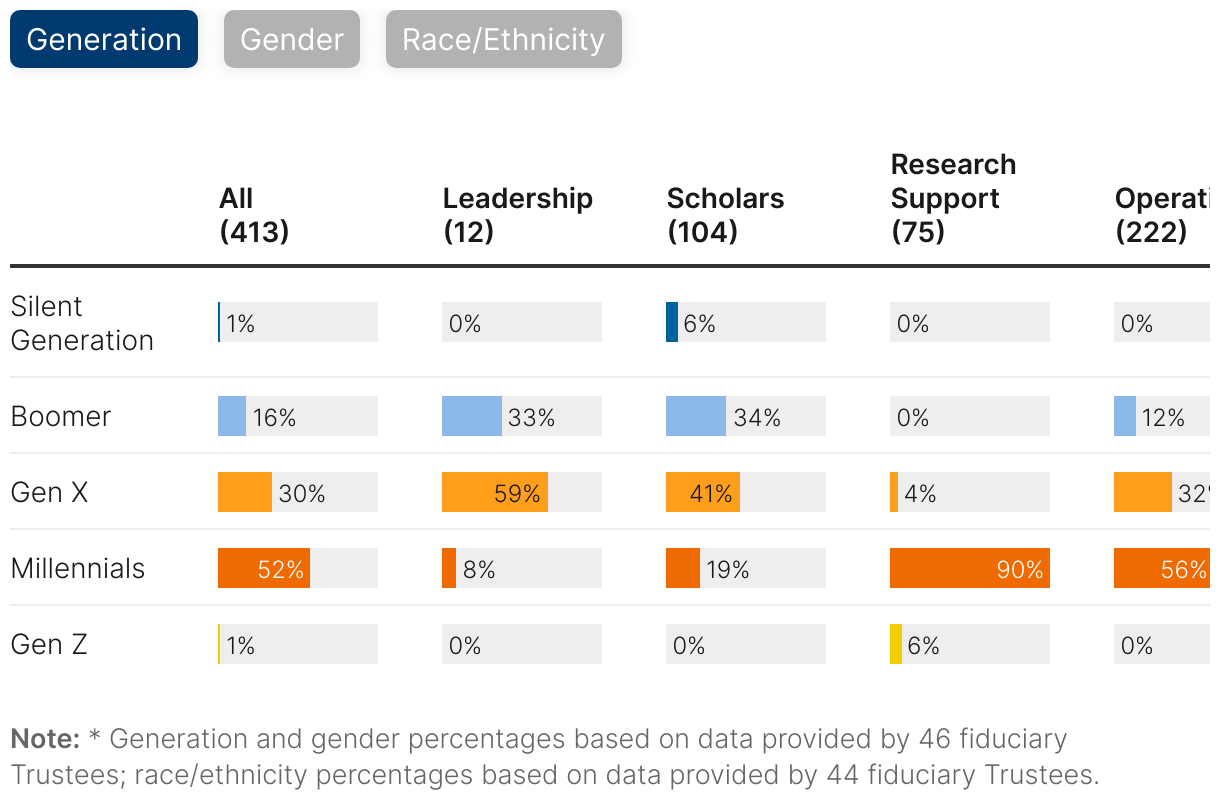
Past Years Data
Due to rounding, some numbers may appear as 0% when there is <0.5% representation in that category.

Our Methodology
How
The source of this dataset is based on a questionnaire completed by all Brookings employees upon hire. The categories for race and gender are determined by the federal government for workforce reporting. The categories used for generation identification come from earlier work by Pew Research Center.
- Generation Z: born 1997 to 2012
- Millennial: born 1981 to 1996
- Generation X: born 1965 to 1980
- Baby Boomer: born 1946 to 1964
- Silent Generation: born 1928 to 1945
Disclaimer: Brookings is required to submit annual workforce demographic data to the U.S. Equal Employment Opportunity Commission (EEOC). As part of this process, employees are invited to voluntarily self-identify their race/ethnicity, age, and gender using the categories listed above, which are defined by the EEOC. Where information is not self-reported, employment records or other available information may be used for reporting purposes. We recognize these categories provide only a limited view of our community; therefore, we consider them alongside other factors in building a workplace that is welcoming to all.
The Numbers
As of July 1, 2025, our staff headcount was 416 employees, who are primarily located in Washington, D.C. This includes:
- Our Leadership Team (12): President and Vice Presidents
- Our Fellows/Senior Fellows (108): Brookings Resident Scholars
- Our Research Support (73): Research Assistants, Research Associates, and Research Analysts
- Our Operational Teams (223): Central and program positions in Management, Operations, Communications, Development, Facilities, Finance and Investments, Human Resources, Library, Legal, and Information Technology
This dataset does not include our nonresident scholars, as they are not employees.