



TechTank, a biweekly podcast from the Center for Technology Innovation at Brookings, explores today’s most consequential technology issues. Moderators Nicol Turner Lee and Darrell West speak with experts and policymakers to share data, ideas, and policy solutions that address the challenges of our digital world.
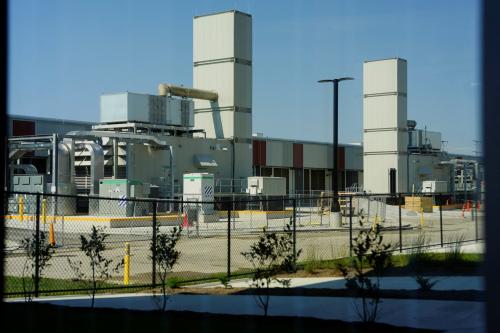
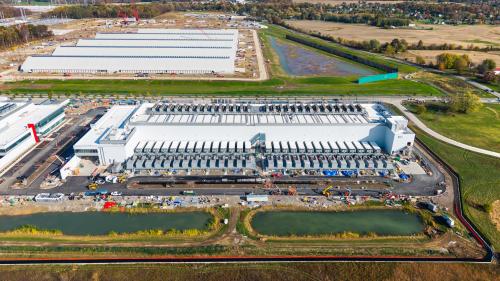
Tech companies are investing billions in data centers to provide the computing power necessary for artificial intelligence (AI). These applications are supported by thousands of file servers and networking equipment, which also require large amounts of energy and water. In fact, water is one of the critical elements needed to ensure data center productivity.
Facilities are opening across the country, and it’s important to examine how resource intensive these buildings are, especially in areas already struggling with infrastructure or water demand. Water is a major limiting factor in AI utilization due to its importance for cooling at the facilities and in the manufacturing of critical software components.
In the first episode of the TechTank Podcast in 2026, co-host Darrell West is joined by Joseph Kane, a fellow in Brookings Metro who authored a recent paper titled, “AI, data centers, and water,” to discuss why water is necessary for these facilities and the policy questions this necessitates.
Listen to the episode and subscribe to the TechTank Podcast on Apple, Spotify, or Acast.
Transcript
[00:00:00] CO-HOST NICOL TURNER LEE: You are listening to Tech Tank, a biweekly podcast from the Brookings Institution exploring the most consequential technology issues of our time, from racial bias and algorithms to the future of work Tech Tank takes big ideas and makes them accessible.
[00:00:26] CO-HOST DARRELL WEST: Welcome to our Tech Tank podcast. I’m Darrell West, a senior fellow in the Center for Technology Innovation at the Brookings Institution. Data centers are generating a lot of attention due to their role in AI and the massive amount of money being invested in them. They are powering the AI revolution and the movement towards a digital economy.
[00:00:48] Yet they also are requiring enormous energy and needing both electricity and water. Today I am pleased to be joined by Joe Kane. He is a fellow in the Brookings Metro program and he recently authored a paper entitled “AI data centers and water” and it looks at the water needs of data centers and how states and localities should respond to those requirements.
[00:01:13] Joe, welcome to our Brookings Tech Tank podcast.
[00:01:16] GUEST JOE KANE: Thanks for having me, Darrell.
[00:01:18] CO-HOST DARRELL WEST: So your paper does a terrific job discussing the resource limitations, facing data centers and the need for new approaches, and there’s so much attention being paid about the need for electricity. One of the things I appreciated about your paper is you focus on water, which is also a very important need for data centers. Now, before we get into your specific recommendations, let’s just talk about the water needs. Why do data centers need so much water?
[00:01:46] GUEST JOE KANE: Yeah, so a great, context setting, Darrell. to offer some additional context, data centers are obviously, growing importance, given the increased demand to store and manage, digital information. doing that requires a ton of servers and other equipment. Which not only takes up space in, in terms of land, but also needs other natural resources, including energy, to power these systems and then water, to cool them down. the specific tech for cooling, can vary widely, which I think we will, we’ll probably get into a little bit more later on, depending on the size location, and function of a given data center. But, in general, air conditioning and evaporative cooling are commonplace, which require sustainable and predictable water resources. So think of chillers, cooling towers, and other infrastructure that need water. and water can come from surface water sources like rivers, streams, reservoirs can also come from groundwater sources or, even be reused in some cases. the devil is in the details of how and how much water is needed, but it’s pretty obvious that the appetite of tech firms, economic development leaders and others, in this space is for more water, to support such developments.
[00:03:09] CO-HOST DARRELL WEST: No, I think that’s a great point. And for these hyperscaler data centers, which are the large scale ones, they often have 5,000 to even 10,000 file servers located in them. you mentioned the need for chillers, cooling towers and so on. Like you have thousands of file server. Operating simultaneously, like the need for water to cool them does become a very important, factor.
[00:03:34] So what scale of water are we talking about here? what, what is going to be required as, data centers and AI starts to move forward?
[00:03:44] GUEST JOE KANE: Yeah, it’s gonna depend. Let’s be clear. Not only is the specific amount of water, needed going to vary from facility to facility as you were describing, but we also have to think of the various and evolving needs for water. I’ve already briefly mentioned it’s purpose for cooling specifically for onsite water usage. For example, a typical data center uses, about 300,000 gallons of water each day. That’s equivalent the demands of about a thousand households. But, large data centers can use an estimated 5 million, gallons of water each day, which is equivalent to the needs of a town of up to 50,000 residents. Moreover, projections show water used for cooling may increase, 870%. That is not a typo, in the coming years as more facilities come online. But, there is also considerable offsite, usage and including water for power plants to generate electricity, and all the water consumed during the manufacturing process to create chips and other equipment.
[00:04:49] And we don’t always have, reliable, consistent data to track this water usage, in real time or even over time. So just as data centers in AI are part of a larger, technological and economic development ecosystem. They’re also part of a larger, natural and built environment. Water is an essential interconnected resource that regional leaders, not just individual firms and developers, need to weigh carefully, in ongoing projects.
[00:05:19] CO-HOST DARRELL WEST: Now the good news is that there are some new technologies, coming on board that may help with this water issue. And in your paper you discussed some of the ways that renewable energy can help, as well as some, new approaches to, cooling, closed loop, cooling systems and so on. So I’m just curious, what are some of the, technologies or new approaches that could help us manage this resource need?
[00:05:45] GUEST JOE KANE: So there are ultimately, bigger planning and, policy dimensions at play here that, we’ll talk about in a bit. But, yes, new technologies are helping alleviate, some of these water demands and obviously for both tech [00:06:00] firms that need this resource and water utilities that provide this service.
[00:06:04] There is a mutual interest in seeking and implementing more sustainable and cost effective solutions. Right now we have a situation of high water consumption since so much water for cooling is lost to evaporation. And then you also have, wastewater that has contaminants and other issues associated with it. but this is where more circular solutions and technologies can come into play, especially. Around water reuse and recycling. for instance, as you had mentioned, closed loop cooling systems may reuse wastewater or even harvest, rainwater, which can reduce fresh water use by up to 70%. Other design improvements such as immersion cooling, where servers can be literally dipped in a special solution, can remove heat and help limit water use too, and taking advantage of renewable energy sources, including onsite, solar can coincide with these upgrades to boost overall sustainability.
[00:07:00] Leaders do need to think about our, water resources alongside, other energy and natural resources, more holistically. And, we already see this in, other parts of the infrastructure space around, the energy water nexus, for example. So, a lot of promise around these different technologies.
[00:07:18] CO-HOST DARRELL WEST: I think one of the nice, things is as part of developing data centers, companies are trying to become more efficient because they need to, and they’re gonna be payoffs in a lot of other areas because water is a limiting factor, not just on data centers, but in many economic development activities and population is, growing. So hopefully there’ll be some, payoffs in some other areas. But in your paper, you also point out the technology alone probably is not gonna solve the water problem. You argue that we need better regional coordination of water resources. So I’m just curious, what should states and localities be doing to address this water issue in regard to data centers?
[00:07:57] GUEST JOE KANE: Great question, and there’s honestly a lot bundled into that. probably too much for just this one podcast. But, I wanna shine more light, especially on the individual, local water systems responsible for providing service. and increasingly. More systems in more places are grappling with data centers, water impacts, and, those of an AI driven world more generally, including significant and ongoing water use. expanded infrastructure costs such as new distribution lines to reach exurban facilities and other regulatory and financial pressures. these concerns are generally out of sight and out of mind when it comes to regional economic development planning. aging pipes, treatment plants, and other systems are weighing heavily.
[00:08:41] On local water systems. but many businesses and households for that matter, do not think about these physical challenges outside of their rising bills or a sudden service disruption. For example, you, can add in climate impacts and, pullbacks in federal and state infrastructure, funding and what is a need for greater capacity to proactively stay ahead of all these needs, technically, financially, manager early and so on.
[00:09:07] CO-HOST DARRELL WEST: So one of the things I like about Brookings is we focus not just on problems, but we also make recommendations. We try and think about what are the possible remedies that could help with whatever issue that we have identified. And I think one of the strengths of your paper is you actually do talk about ways to deal with these, water issues.
[00:09:25] And I know that not every region faces the same type of water, challenges. So I’m just, curious, which localities, face the biggest kinds of problems in regard to water and what are they doing to meet these challenges?
[00:09:43] GUEST JOE KANE: And as I was just describing, there’s an immense scale and variety to all these infrastructure needs. more than, 50,000 local water systems actually operate across the country, which is mind-boggling for a lot of people. So there’s, huge fragmentation and localization to these challenges. Not, just associated with data centers and, AI in, in isolation. It’s those places I’ll say with declining populations and shrinking customer bases and other economic struggles that often have the biggest challenges to planning and, paying for their water infrastructure needs. You think of places like Flint, Michigan, Jackson, Mississippi, cities that have, really struggled for, decades, not just in a year or two, but decades to stay ahead of their needs. And we’re seeing, with the rise of data centers in AI, huge challenges emerging even in economically, growing areas with significant, water constraints. So you think of parts of the west, the southwest areas that have had pretty significant drought and water scarcity challenges amid, housing growth amid, other economic growth.
[00:10:52] This is just adding a, new variable into the mix. So it, is this balance, Darrell of, kind of slower growing, economically struggling places with paying for and staying ahead of their infrastructure challenges, but then also many places too that, that are seeing new pressures, new, triggers that, that are requiring them to fundamentally rethink how they plan and manage their water resources more sustainably.
[00:11:21] CO-HOST DARRELL WEST: And I know one particular idea that you focus on in your paper in, many of your colleagues in the metro program, also focus on this, is just building new infrastructure. And I think you’ve mentioned, the aging pipes, the old treatment of plants, pipes that are leaking. what is it that, cities should be doing to build new infrastructure. How can they handle storm water runoff, questions? How, do these things help, provide possible remedies for the water limitations that some communities are facing?
[00:11:55] GUEST JOE KANE: Yeah, there, there’s the physical sort of capital upgrades of course, [00:12:00] and incorporating new designs and technologies, more, distributed and flexible, water systems when we think of, green infrastructure, for example, which can absorb heat and better manage runoff, but ultimately it, it takes a new approach as well. and so in particular, what I’ve stressed and have heard from many communities across the country is the need for more regional thinking, and planning. doing so can help build capacity and, ultimately seize oc economic opportunity. given, the fragmentation we see of all these small individual systems. it’s, quite literally impossible for them by themselves, many of them anyway, to, handle all of this.
[00:12:45] And, I think, that they’re grappling with that reality increasingly over time, out of necessity. some rural communities, with particularly acute. Capacity constraints, with, really, not even able to find staff to, to manage these systems. they’re considering regional approaches but leaders in larger urban regions too are recognizing the benefits of formal and informal regional collaborations. So we see, for example, joint water investment and economic planning, have evolved for decades in places like Las Vegas. We’ve also seen, emerging. Tech focused efforts, taking root in places like Chicago and the Great Lakes even, climate and, workforce driven, regional plans and partnerships, have evolved in markets, ranging from New Orleans to San Francisco, more, more directly. In terms of, ai, as part of capital plans and budgets, we see data center hubs such as Loudoun County and Virginia right outside, Washington, DC leaders have started to better measure and forecast tech impacted infrastructure needs.
[00:13:52] So, I wanna emphasize there are big sprawling water challenges all over the place, but also a lot of promising collaborations and, efforts unfolding too.
[00:14:03] CO-HOST DARRELL WEST: Yeah, it does seem like regional thinking and comprehensive planning would be a big part of the, remedies because, you mentioned just how fragmented the water management systems are.
[00:14:13] We know governance in a lot of places is pretty fragmented as well. Suburbs often don’t like to cooperate with cities and, vice versa. So any governance improvements that would address those issues certainly would be helpful. In your paper, you also mentioned the idea of spreading the financial risk.
[00:14:31] Like when we talk about upgrading the infrastructure, it probably challenging for any particular locality to deal with this on its own. How can we spread the financial risk in a way that would benefit the entire ecosystem?
[00:14:45] GUEST JOE KANE: Yeah, and this is not a new challenge either, right? it, it certainly, it was heightened. It has been heightened, and, pullback of federal resources. but utilities have had to grapple with, the proactive and reactive nature of staying ahead of their infrastructure needs, including. a changing customer base, having to increase, water rates, which are the traditional, lever if you will, that they have available to them to pay for infrastructure upgrades.
[00:15:18] And then, many places are taking on debt, right? and municipal bonds, for example, are really common in this place. But, places can’t just indefinitely do that. And, individual systems recognize that if they keep going it alone. operationally managerially, it, it’s a real struggle. And as we’re seeing, not, again, not just in the context of data centers and ai, but, that’s a tipping point, for a lot of places of, maybe for example, there have been proposals for, increased water usage and data centers. Should there be. A recalculation or rethinking of the water rates for those users.
[00:15:58] We’ve, seen places also rethinking, agricultural water use, which is a huge, challenge in, parts of California and Arizona, for example. And, so I, think there is a willingness and hunger for, experimentation and breaking free from business as usual, mindsets. But, again, the traditional nature of this sector and again, the sort of the, fragmentation of it. And the regulatory nature of it, a lot of water utilities, they have to comply with the Clean Water Act and the Safe Drinking Water Act. it’s not usually to their advantage to try a bunch of new things, rocking the boat. but, certainly, seeking alternative funding and financing is important and certainly part of the equation we’re talking about here.
[00:16:45] CO-HOST DARRELL WEST: And I think one thing that companies could do is just do a better job at measurement and transparency of what their needs actually are. A few weeks ago, Nicole Turner, Lee and I wrote a paper on the future of data centers and we argued that it would help communities a lot in terms of their planning process and their management, both on electricity as well as water, just to be more transparent about what their needs are so that people understand what the issues are, it then becomes easier to think about possible remedies.
[00:17:16] Are there particular states or cities that you think are doing a good job managing water with data centers?
[00:17:23] GUEST JOE KANE: It’s really across the board, honestly. I think again, it’s because of necessity and, reaction in real time. In most cases where, I, mentioned, parts of Virginia, parts of the west, the southwest areas where they’re already seeing, Data centers, proliferating, if not, projected to increase over time. And so I think those places, have had to adapt and have had to, basically figure out how to address these issues. [00:18:00] and those are the examples I have seen. across the country. But with that said, as, data centers of all different shapes and sizes and varieties emerge, this is gonna be an issue in regions that have, not as much water scarcity.
[00:18:17] They may have a lot of water, but, there could be other uses and use categories they need to consider. there could be. Other, environmental quality and, pollution concerns and all this needs to be balanced as well, with broader sort of land use and, resource, conversations that, water isn’t isn’t just in its own silo, ideally, and that’s, been, certainly a topic for, and a priority for many water utility leaders is, how do they coordinate more effectively as part of the economic development process? they’re not just an offshoot or a tangent to it.
[00:18:59] But they’re actually integrated as part of that. And, I don’t wanna sound Pollyannish, part of that is, is setting the table, literally and figuratively where these leaders can get together. and not just, do it out of necessity, but, ideally do it in advance of, the next project or proposal that could come their way.
[00:19:17] And, so those are the sorts of, efforts and, not so much a specific place or two, but, the, types of efforts I’m monitoring, all across the country.
[00:19:29] CO-HOST DARRELL WEST: And you mentioned Northern Virginia. And of course, that area is the Silicon Valley of data centers just because there’s an enormous concentration of data centers, in, this part of the, world. In part because of the proximity to federal agencies and, the energy sources that we’re available here. And it’s interesting, there’s a new governor who is just elected in Virginia and data centers in rising electricity rates actually were a part of her campaign and she talked a lot about affordability. So I think Virginia will be an interesting place to watch just both on the electricity side as well as on the water side in terms of she’s thinking about this issue. She knows Virginia is a hotbed of activism, community activism, in this area. It’s very much on her agenda. And I think it’ll be instructive for people to watch how she handles, some of these issues.
[00:20:23] The water crisis is occurring at a time when there also is a reduction in federal aid in a number of different areas, as well as staffing reductions that could compromise, the ability to handle some of the issues that we have been talking about. What should the federal government be doing to help states and cities with data centers?
[00:20:45] GUEST JOE KANE: Yeah, absolutely. Darrell, and I think your Virginia example might actually be very fitting here too, but, this is top of mind for so many state and local leaders at the moment involved in economic development, infrastructure, investment, and, just so many other functions. the reality is that most spending, most planning and most of the ownership and operation of all this infrastructure is especially is at a local level. and water systems get that. that’s the reality they have existed in for some time. According to congressional budget office data, the federal government is only responsible for about 10% of all public spending on water infrastructure each year. and most of that support, actually comes in the form of loans, not, even grants. the cavalry really hasn’t been coming for some time, in, the water sector. with that said, of course there’s a continued need.
[00:21:40] And, desire for greater federal resourcing and leadership on our water infrastructure issues. including setting clearer policy and strategic priorities that individual, systems can more easily follow. this has come up for instance around, workforce development needs in this space, affordability needs, and other broader.
[00:22:01] technical assistance efforts, to again, build greater knowledge and capacity at a local level. we saw a lot of this unfold, during the rollout of the infrastructure investment and Jobs Act that did present, historic and, once in a generation funding for our water infrastructure.
[00:22:17] But, we’re still, significant challenges in, in actually implementing that, across the country, which is probably. Its own conversation to me, the, federal government has a role to play as a, convener, a thought leader, a knowledge builder, around these data center in AI issues especially, given the prevailing local fragmentation and capacity constraints we’re seeing, across the country.
[00:22:43] CO-HOST DARRELL WEST: So this water problem also needs to be addressed in the context of the ongoing challenges related to climate change and natural disasters that. Also have their own effects on, water. How should cities coordinate their data center plans with these broader issues, climate change, natural disasters and economic development in general?
[00:23:08] GUEST JOE KANE: Yeah, very timely. I like to say, water policy is climate policy and vice versa. I like to stress that it isn’t just. mitigating future climate impacts, but also, adapting to current and evolving, climate impacts too. And certainly technological shifts, including AI and, data centers are part of that equation.
[00:23:31] there is quite literally a zero sum situation, around water resources in different regions and, places cannot, indefinitely and indiscriminately, keep building more data centers, more housing. And, striving for more economic growth overall without bearing in mind, these fundamental, resource concerns. you add in fire risk, drought risk, freeze risk and more. And, you have a complicated, situation that [00:24:00] many leaders, are having to balance that at the moment. but, again, I think there’s a lot of good happening across the country too, and including even on local and state level climate planning and, water planning and, water investment. And it helps to highlight those efforts and look towards, I think greater scaling and replication of best practices where we can.
[00:24:24] CO-HOST DARRELL WEST: Joe, I want to thank you very much for sharing your thoughts on data centers. you have a terrific, paper. It’s entitled “AI data centers and water,” and our listeners can read it at brookings.edu and our scholars write regularly on AI and data centers.
[00:24:41] CO-HOST NICOL TURNER LEE: And you can, find that work on our Brookings Tech Tank blog. Thank you very much for tuning in.[00:24:53] Thank you for listening to Tech Tank, a series of round table discussions and interviews with technology experts and policy makers for more conversations like this. Subscribe to the podcast and sign up to receive the Tech Tank newsletter for more research and analysis from the Center for Technology Innovation at Brookings.
Related Content

Participants


The Brookings Institution is committed to quality, independence, and impact.
We are supported by a diverse array of funders. In line with our values and policies, each Brookings publication represents the sole views of its author(s).

Commentary
PodcastWhy water is important for data centers | The TechTank Podcast
Listen on
January 6, 2026