The Brookings community mourns the passing of a singular scholar and beloved colleague, Stephen Hess. For more than 50 years, Steve made Brookings his professional home, contributing to the public square in countless ways: prolific author, press commentator, university instructor, devoted mentor, outstanding raconteur, and generous colleague.
An army veteran, Steve spent more than two-thirds of his life in and around our public institutions—as a presidential staffer and external advisor, and as a scholar of the presidency, the press, and American government more broadly. He joined Brookings in 1972 as a senior fellow. More than 50 years later, looking back at his reaction to then-President of Brookings Kermit Gordon’s offer, Steve said his thought at the time was, “This is really what I’ve wanted all my life!” Steve’s initial energy and enthusiasm never waned.
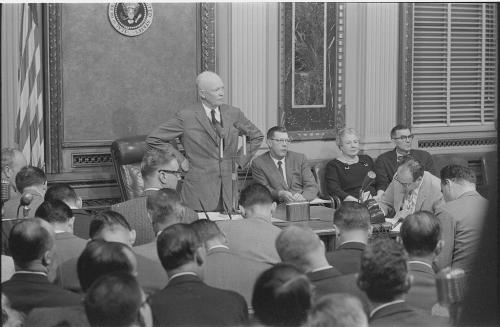
Steve entered Brookings after working for President Nixon and, earlier, serving as a speechwriter for President Eisenhower at age 25 (1958 to 1960). From his perch at Brookings, Steve continued to advise presidents and their staffs, including Presidents Ford and Carter. These experiences translated into unique insights first captured in his book, “Organizing the Presidency,” which would ultimately reach four editions. Until Steve’s contributions, much of the presidency scholarship focused on the experiences of specific presidents, but Steve sought to explain the presidency, its organization and structure—breaking important ground in the political science discipline.
Beginning in the late 1970s, Steve turned his attention to examining the role of the press in American politics—a then-emerging research field to which he, again, made substantial contributions. Conducting interviews, coding news stories, and deploying other creative means of learning about the media, he produced path-breaking studies on the Washington press corps, government press officers, foreign correspondents, media coverage in Congress, and network campaign coverage. His collected works greatly expanded our understanding of the role that the media plays in American politics.
Never idle, Steve was always thinking about his next project, often helping a colleague do the same. Notwithstanding a scholarly seriousness of purpose, he did so with a casual, optimistic demeanor—never taking himself or his work too seriously. This same level of energy also applied to life outside of Brookings: He traveled widely with his wife Beth, cheered for his baseball team, the Washington Nationals, socialized with dear friends, read countless mysteries, and loved to share stories of time with his children and grandchildren.
With a twinkle in his eye and a contagious grin, he sometimes regaled those around him with fond memories of his time with President Eisenhower or unexpected, funny incidents in and around Washington, D.C.
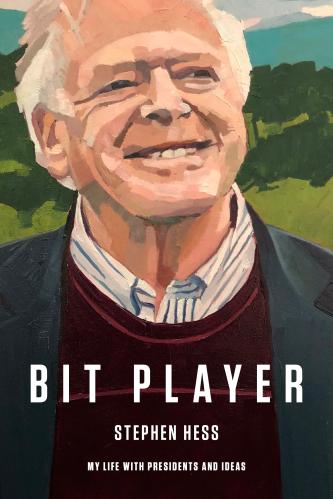
His final book, “Bit Player,” took that instinct to the written word. In recounting a life well lived, he did so with characteristic good humor and humility. Recalling his observations of leading moments over nearly seven decades in Washington, he almost always attributed his own presence to fortuity, discounting his personal qualities—from incisive analytical abilities to a gift with words, that encouraged presidents and others to seek his counsel. Steve’s last gift to Brookings was the podcast, “Quite by Accident,” in which he created an audio account of his life in, and near, politics. To those who knew Steve, he was not a “bit player,” and his tremendous accomplishments were definitely not “accidental.” Steve was, in the words of one of his colleagues, “a national treasure” and his Brookings family will treasure their memories of him for years to come.
Related Content
2018
The Brookings Institution is committed to quality, independence, and impact.
We are supported by a diverse array of funders. In line with our values and policies, each Brookings publication represents the sole views of its author(s).



Commentary
In memoriam: Stephen Hess
January 29, 2026