For decades, the trajectory of clean industry has hinged on reliable public policy. Starting in the 1960s, clear signals from policymakers—delivered, often, by regulatory sledgehammer—forced environmental progress. The imperative of credible, stable policy has also been essential to the rise of low-carbon energy supplies. Solar power, for example, emerged in response to policymakers who required the technology’s use in some settings while also subsidizing innovation. Similar histories explain the surge in electric vehicles, batteries, heat pumps, and nearly all other core technologies central to a lower-emissions economy. The more credible the policies, the more deployment of clean technology.
By many metrics, this model has been a stunning success. Annual worldwide investment in low-carbon technologies rose from barely $50 billion in 2005 to more than $2 trillion in 2024. Policy-created markets attracted private capital, leading to deployment and a green spiral of innovation and improvement. A virtuous cycle of policy, innovation, and investment transformed the economics and politics of cutting emissions. The green spiral helps explain why the world avoided some of the most catastrophic warming projections of the 1990s, which forecast temperatures rising more than five or six degrees Celsius above preindustrial levels by 2100.
That policy-driven model is now breaking down. In the United States, federal climate policy has receded amid polarization and shifting priorities. In Europe, bold plans to cut emissions are colliding with concerns about competitiveness and energy costs. Chinese firms that dominate electric vehicles (EVs), solar power, batteries, and other technologies enjoy massive market shares yet face financially ruinous competition at home. Public finances are strained, trade policy is unpredictable, and many companies are backpedaling from their climate commitments. For clean industry, political and economic turbulence, rather than policy stability, is becoming the norm.
Yet, instead of killing the clean energy revolutions, this chaos is forcing firms, investors, innovators, environmental nongovernmental organizations (NGOs), and governments to adapt and compete. This turmoil is also revealing a deeper reality: across countries, from the United States to China and Europe, clean-technology markets are organized in fundamentally different ways because so are their governments. Multiple industrial organizations of clean have become visible—each with its strengths and weaknesses.
This moment marks the end of a major stage of clean technology development. Cleantech 1.0 ended around 2011 when promising new technologies failed to reach commercial scale. Cleantech 2.0, currently ongoing, has depended on favorable and predictable policy support that in many places is fading. A new phase, Cleantech 3.0, is now emerging and will be marked by technologies and businesses that can survive and thrive even when government policies are flaky and chaos reigns.
Varieties of clean
The shock waves pushing the world into Cleantech 3.0 play out in different ways due to the enormous variation in how technology markets are organized. To help think about these differences systematically, we can use the tools of political economy, which emphasize how industrial organization reflects interactions among technology, government, and competition. Scholarship on “varieties of capitalism” highlights a key insight: some industrial systems rely heavily on the market to organize investment, while others depend on government orchestration.
A “varieties of clean” approach can be sketched by looking at two of the most important dimensions for clean technology markets.
First, what is the role of government in orchestrating new investments? In some countries, government picks firms and even technologies and links them together; in others, government stands back and lets market forces allocate resources. Orchestration can be particularly important when creating industries that require new, shared infrastructures (e.g., EV charging systems or carbon capture pipelines) or when progress in one industry hinges on products and services supplied by another (e.g., new, cleaner fuel supplies to be used in ships and planes). Although the U.S. government has occasionally engaged in such active coordination, the European and Chinese economies offer much fuller examples of highly orchestrated transitions to green futures. Orchestration matters because deep green transitions are disruptive: they affect employment, infrastructure, and well-organized interest groups. Even when the end-state of the process is better for the economy and the environment, highly disruptive transitions often fail without coordination.
Second, what is government’s role in paying for the extra cost of green technologies—the so-called “green premium”? That premium is difficult to measure, since simple price comparisons between greener and dirtier technologies—solar panels vs. coal plants, for example—can gloss over complex differences in how the technologies operate. But the key point is that, for most of the history of the low-carbon energy transition, green technologies have been more costly than their rivals. On top of that, most clean technologies are highly capital-intensive, with long payback periods that make investors reluctant to back them without credible policy support, often provided by government.
Figure 1 summarizes the interaction of these two dimensions, producing four ideal types of clean industrial organization. Analysts often use the label “industrial policy” to describe these kinds of government interventions (especially of the “high, high” types); I find it helpful, as you will see, to unpack the different models of industrial policy—Chinese, American, and European—because the unpacking reveals how political and policy chaos affects the risks that firms face. In turn, those risks affect how firms make decisions about where to invest, how to control supply chains, and other aspects of risk management—with tangible impacts on the rollout of clean technology.

High government orchestration and funding: The Chinese model
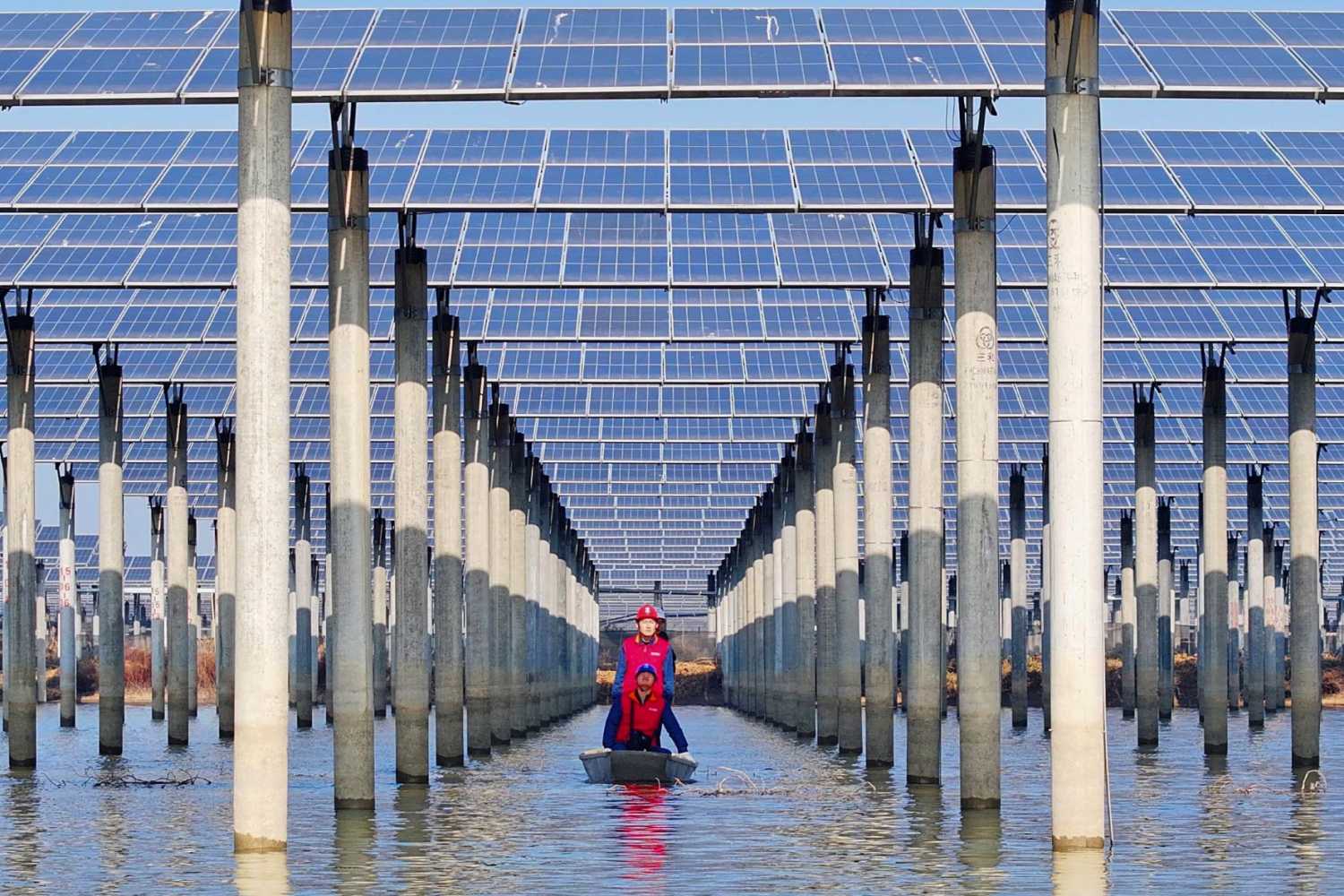
One extreme is China, where government orchestrates and finances the riskiest bets on creating clean industries at scale. About two-fifths of worldwide investment in clean technology today happens in China, which dominates the production of electric vehicles (more than 70% of world output), batteries (77%), and solar panels (more than 80% of every stage of production). For two decades, China has also been the world’s largest builder of nuclear plants, increasing its operational reactor capacity by about a factor of 10. Innovation sits at the center of China’s economic strategy, with green energy embedded in successive five-year economic plans, including the new plan that starts in 2026.
Orchestrated planning and prodigious resources help explain why China does things that don’t happen anywhere else. The Chinese buildout of solar, wind, and nuclear projects—alongside ultra-efficient coal plants—has been partly orchestrated by state-owned electric utilities. These utilities can guarantee emerging clean electricity supply technologies will have paying customers, along with transmission networks that link supply and demand. It has been particularly striking to see China build the massive infrastructure needed to make clean technology usable at scale, including, for example, the world’s longest high-voltage power lines linking China’s renewable-rich regions to its eastern seaboard, where most Chinese industrial demand is located.
This model’s risks are familiar to all central planning: central planners succeed when they back the right bets but entrench incumbent firms or become tyrants when they do not. On top of that, China’s central planning system is, in practice, actually decentralized: the provinces compete to subsidize their own favored projects and firms, raising the risk of excessive subsidy, overcapacity, and the kinds of rapacious competition now evident in batteries, EVs, and other Chinese products. Lower state-backed costs also undercut foreign competitors, provoking trade responses such as Europe’s new barriers against low-cost Chinese EVs. Still, China’s industrial policy has performed well due to experimentation, learning, and innovation, even as the risk of costly mistakes remains large. All of China’s industrial policy investments (including in energy) sum to at least a whopping 4% of GDP, dominated by cash and tax incentives.
Low government orchestration and funding: The new American model
At the opposite extreme lies the new American model: erratic federal funding that targets different technologies in different administrations but none at a high, sustained level, combined with little federal effort to coordinate the energy transition. In solar and wind power, notably, investors used to enjoy substantial tax credits that continued under Republican and Democrat administrations—those are being phased out today but may come back, partly, with future political shifts. Federal funding is dying for EV charging systems and hydrogen. Other technologies, such as nuclear and perhaps carbon capture and storage, still have large federal support; the list of favored technologies and levels of direct support will shift with the political chairs in Washington.
On top of that, today’s Washington is engaged in anti-coordination of green infrastructure. It is attacking offshore wind and sending threats to onshore wind and other elements of green investment. The Trump administration’s decisions in August and December 2025 to cancel permits for offshore wind projects, including one that was nearly already complete, send chilling signals to investors that contracts aren’t sacrosanct—even if investors know they have a chance of winning their contracts back in court. Permitting reform, which could boost all forms of infrastructure investment in the country, is dead despite bipartisan support. Tariffs and onshoring mandates have disrupted supply chains, driving up costs. Although court actions and political shifts, particularly at the state level, might create some more stability and boost spending and coordination for some technologies and projects, the message to investors is clear: Washington is unreliable and has mostly left the clean energy scene.
Despite all this chaos, investment continues. Texas is now the biggest installer of solar power, prompted not by clean energy mandates but by a competitive power market. Investment in EV charging stations, including with previously appropriated federal funding, is now gathering steam as the business models get figured out. Many firms are looking beyond near-term chaos toward the long-term green trajectory—not least to avoid reputational risk.
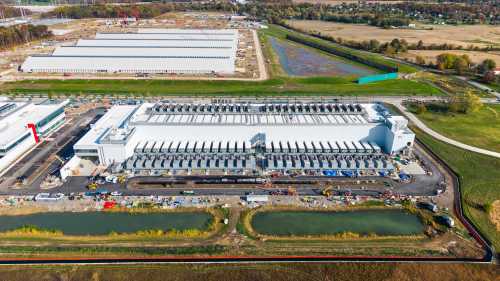
The new American model is most visible in the boom in power-hungry data centers. Companies such as Microsoft and Google are willing to pay hefty premiums for clean power without any regulatory requirement to do so. Similarly, several major U.S. airlines are paying a bit more for cleaner fuel substitutes to cut emissions; some have been running operational trials to reduce contrails, aviation’s main source of climate warming. These developments sharply contrast with earlier U.S. models in which government reliably subsidized clean energy through tax credits, loan guarantees, and other financial breaks. The Biden-era Inflation Reduction Act, for example, offered that model at an epic scale—a scale so large that it, in part, catalyzed its own downfall. In the new Trump era, only vestiges of that earlier model remain—such as nuclear power subsidies—but for the most part, investors and firms are on their own. Yet many are still embracing clean.
Variants of the new American model are widespread globally because governments often struggle to fund or coordinate large, costly projects. In India, a vibrant solar industry has emerged by favoring projects, such as local and off-grid solar systems, that avoid New Delhi and don’t compete with the country’s notoriously inefficient state-owned power companies. In Mexico, a nascent wind and solar industry is thriving despite unpredictable federal policies and financially weak state-owned firms that dominate oil, gas, and electricity. Indeed, private investors are working in states like Sonora and Baja, where governors are market-friendly and skilled at insulating local investors from federal intrusions.
Speed is a strength of the new American model. In just five years, the clean-power industry learned to scale wind and solar projects and then integrate batteries into them. Such attributes explain why the U.S. Energy Information Administration, the government’s energy analysis group, now projects that solar will be the nation’s fastest-growing source of new power. In addition to solar is a remarkable story about the recovery of nuclear power. Microsoft and some other data center suppliers have teamed up with utilities to contract and reopen nuclear power plants. Just last fall, Google signaled yet another phase by announcing it would pay for the country’s first large natural gas plant with carbon capture.
The model’s weaknesses are its inability to back the riskiest, newest clean energy technologies or the most disruptive changes. In many ways, the U.S. clean energy industry is thriving where business models and technologies are mature and thus able to survive on their own, or where support is bipartisan enough to ride through political chaos (e.g., some forms of nuclear investments or electric power grids). However, this model can’t reliably back and coordinate the deployment of wholly new clean fuel systems (e.g., ammonia or methanol for ships) or wholly new infrastructures (e.g., hydrogen).
Government as coordinator, but not funder: The European model
A third model relies on government coordination without large-scale public funding. Europe is perhaps the leading example, although large segments of the Korean and Japanese industrial systems work in similar ways. Customers pay much of the cost of green investments, and they do so because government organizes markets so that customers have no other practical choice. (It is no wonder that so much of the green industry orchestration happens in electric power. This industry is highly regulated by government nearly everywhere and is dependent on fixed infrastructure that makes it easier for regulators to allocate costs in a politically expedient manner.)
Europe has led the global effort to create a clean steel industry by matching buyers, who need to show they are green (e.g., Sweden’s Volvo, an early buyer of carbon-free steel for making trucks), with suppliers (e.g., Sweden’s Hybrit, which makes steel with carbon-free supply chains and hydrogen). In Norway, government has helped orchestrate a major carbon storage project that transports CO2 from factories around the North and Baltic Seas and injects it into an aquifer deep under the North Sea. (The project is underway already, using CO2 sources that are more proximate, requiring less costly and complex coordination of infrastructure.) The Norwegian government is coordinating the project through Equinor, a state-controlled oil and gas company that raises and spends capital like a commercial firm but directs it to projects aligned with Norway’s political guidance. (The Norwegian government has also backstopped the project’s funding to a point, which is a reminder that the industrial organizations in Figure 1 are ideal types—the real world is complex and often blends elements of different ideal types.)
The European model creates the opportunity for scale, but it heavily depends on private investors believing that all the pieces will come together and customers, ultimately, will pay for green. The Danish shipping giant Maersk, for example, purchased 20 ships fitted with engines that can run a blend of conventional petroleum fuel along with liquefied natural gas and methanol. This multifuel approach serves as a hedge against the uncertainty that low-emission fuels (natural and biogenic gas and especially liquid methanol) won’t be available when and where they are needed.
That concern has proven justified: elaborate European plans to make the newest generation of methanol, with the lowest emissions and greatest ability to scale, have faltered. In fact, Maersk’s first bulk methanol supply contract came from China—which has been able to deliver a reliable supply without binding regulations at home to use the fuel. Meanwhile, chaos at the International Maritime Organization, where the Trump administration has blocked rules encouraging the global shipping industry to lower emissions, has cast further doubt on whether European governments alone can coordinate a viable new shipping-fuel industry. Maersk is moving to invest in green technology, but it is also hedging (e.g., with dual-fuel ships) against the risks that are harder to contain.
Another big risk for any government-led transition is shifting political priorities. European industry has long complained that expensive green energy hamstrings competition, and European policymakers are beginning to respond. The new German government, for instance, is more business-friendly and wary of costly green policies. As economic pressures rise, European policymakers will likely soften some of their clean energy policies. How they do so will significantly affect investor confidence in Europe’s broader climate strategy.
While Europe is the most visible example of European policy orchestration, it is not the only one. Singapore is coordinating clean fuels investments at its ports, a strategic move for a trading nation that wants to thrive in a new green world. The United Arab Emirates has blended European and Chinese industrial approaches to build large nuclear and solar projects. Abu Dhabi is now using that clean power to develop export industries serving European customers that demand green products and face tariffs at home if they don’t green their supply chains.
Coalitions of the credible
The chaos in clean energy will harm some investments—especially in countries where government can’t pay the green premium or orchestrate industry. The United States appears to be at the top of that list, and the dangers for the country aren’t just in clean energy but in most areas of innovation.
Yet chaos in government policies has spurred adaptation. Firms have learned to manage risk and innovate despite unreliable policy. Even in the United States, this has produced a newly nimble and vibrant clean industrial order.
That some kinds of clean industry can thrive even in the absence of reliable government policy suggests that some of the most important policies are not those that fall under the label of “climate change.” Instead, policies that affect industry’s ability to reorganize, raise and deploy capital, trade, and access supply chains are particularly consequential.
Moreover, after decades of scholarship about convergence in policy systems—especially around market-based systems—green industry stands out as a leading example of divergence. There is no global policy for green industry, nor even a stable set of best practices, because policies that succeed in one country often fail miserably in others where industrial organization is different.
The growing diversity in clean-tech industrial organization, along with political turbulence in many important countries, raises questions about international cooperation on climate change. These questions are becoming more urgent as the United States withdraws from all international climate institutions, including the Paris Agreement.
Still, amid this chaos, clean industry’s durability suggests that even severe disruption to international climate institutions won’t stop what really matters to cooperation: action to advance clean industry. Institutional chaos will probably undermine the efforts that these institutions have long struggled to achieve—such as large-scale transfers to poorer countries and the creation of adaptation funds that will be needed as climate impacts intensify. But large segments of clean industry are poised to keep thriving, especially where green premiums are small and where industry learned to navigate around policy turmoil. Indeed, that’s exactly what the data show. Investment is thriving in electricity-linked industries, such as wind, solar, grids, and EVs—particularly in China—while industries with higher green premiums and more speculative industrial organization, such as aviation and trucking, are under strain.
The future of meaningful climate cooperation may therefore depend less on formal global institutions, such as the U.N. Framework Convention on Climate Change and even the Paris Agreement, and more on the industries and governments that can demonstrate credible action. What may emerge are what I’ll call “coalitions of the credible”: the governments, industrial firms, and financiers who are capable of showing sustained, coordinated commitment to building clean energy systems despite global discord. In practice, these new coalitions may be highly fragmented—with governments and firms that are active in one area, such as forestry, absent from others. Their currency will be credibility, not formal membership in global bodies. Like Paris, this approach would retain flexibility through nationally determined contributions. But unlike Paris, it would allow more actors—including private industry, bankers, local governments, and NGOs—to join while demanding credible action as the price of admission.
Every year, as the world gathers for another Conference of the Parties (COP) meeting, the odds of a COP failure appear to be rising. When that failure happens, it will be useful to have alternative—and perhaps more durable—forms of cooperation ready to fill the void. While the COP process itself doesn’t create most of the cooperation and action needed to address climate change, it’s extremely important for people to see that a legitimate global process exists.
Living with chaos
Chaos has not killed clean industry. But it has pushed the process of aligning investment with the public and private mechanisms for managing risk to the center of the agenda. The result is a divergence in the industrial models for clean-industry development. Despite this divergence and political disorder, clean industry has never been healthier. More than $2 trillion in capital is now flooding the sector, overwhelmingly concentrated in places where new business models are already working and are poised to scale across all four quadrants of Figure 1. The total investment in clean industry is surging, but huge variations in the patterns of investment—by geography, technology, and business model—have appeared and, if the insights of Figure 1 are correct, will keep diverging.
A deeper understanding of how political and technological turbulence shapes the emerging clean-industrial revolutions is long overdue. Chaos isn’t a temporary condition. It is the environment in which Cleantech 3.0 will evolve.
Author

Related Content


-
Acknowledgements and disclosures
I would like to thank John Deutch and Jeff Ball for comments and Steve Carlson, Adam Lammon, and Samantha Gross for help in production. This essay is based heavily on conversations I have had over the years with Chuck Sabel, Bob Keohane, and colleagues who study the political economy of climate action. Thanks, also, to Atul Arya and Dan Yergin for asking me to reflect on the state of the energy industry in the United States at their annual CERAWeek event in Houston—on their stage, I realized that “chaos” had become the watchword for clean energy (and many other aspects of politics). And with that nudge, I set out to understand how chaos worked.
The Brookings Institution is committed to quality, independence, and impact.
We are supported by a diverse array of funders. In line with our values and policies, each Brookings publication represents the sole views of its author(s).