




Foresight Africa host Landry Signé speaks on the impact of the Trump administration’s restrictions on new visas, which affects nationals of 30 sub-Saharan African countries, and the contributions of African migrants to the U.S. economy. He is joined by Andrew Selee, president of the Migration Policy Institute, and Nicholas Bassey, chief operations and program officer for the African Diaspora Network.
Transcript
[music]
SIGNÉ: Hello, welcome to season five of the Foresight Africa podcast. As always, I am your host, Landry Signé, senior fellow in the Brookings Institution’s Global Economy and Development Program and Africa Growth Initiative. This season, we continue to look behind the headlines to see how new developments are reshaping the U.S.-Africa relationships.
In today’s episode, we ask how new policies restricting U.S. visas for nationals of many African countries are impacting students, skilled workers, entrepreneurs, as well as various sectors of the U.S. economy that benefit most from African human capital. As of January 2026, 30 countries in sub-Saharan Africa face restrictions on entry into the U.S.
For some countries, both immigrant and non-immigrant visas will no longer be issued, while for others only immigrant visas are affected. Nigeria, the top country of origin for sub-Saharan Africans in the U.S., has been subject to a partial ban since June with no visa issues for students, immigrants, or most workers. Ethiopia and Ghana, number two and three respectively, were listed in the January ban on new immigrant visa.
As of 2024, there were 2.5 million people from sub-Saharan Africa resident in the U.S. This figure include naturalized citizens, permanent resident, and non-immigrants like temporary workers, and 65,000 students enrolled that year. While these account for around 5% of the foreign born population in the United States, African presence in the U.S. has been on significant upswing in the past 25 years. African migrants to the U.S. are more likely to be active participants in the labor force than other immigrant groups, and are more likely to have post-secondary degrees than even U.S. citizens. How might new immigration policies impact these trends?
To answer these questions, I turn to our distinguished guests I am honored to have with me in the studio today. Andrew Selee, president of the Migration Policy Institute, a global organization seeking an evidence-based approach to questions on global migration and integration. He was also founder and director of the Woodrow Wilson Center’s Mexico Institute and is an adjunct professor at Georgetown University where he teaches courses on global migration. Welcome, Andrew.
SELEE: Thank you. I’m honored to be here. Thanks for having me.
SIGNÉ: Such a pleasure to have you.
SELEE: It’s good to see you.
SIGNÉ: I’m also joined today by Nicholas Bassey, chief operations and programs officer at the Africa Diaspora Network. The Africa Diaspora Network, or ADN, seek to leverage the entrepreneurial and philanthropic potential of the African diaspora to advance African development. Nicholas has a history of working on human capital between Africa and the U.S., including as deputy vice president of the Millennium Challenge Corporation, and as director of University Programs for Peace Corps.
Welcome, Nicholas.
BASSEY: Thank you Landry It’s my pleasure to be here for this important conversation.
[4:54]
SIGNÉ: Such a pleasure having you. Thank you both for joining me today. To begin with, Andrew, the Migration Policy Institute has been researching global migration for over 20 years. Can you contextualize these new policies in the longer history of U.S. immigration policy?
[5:21]
SELEE: I would like to say there’s no precedent for this, except there is in the United States, which is, you know, we did have a a policy from the 1920s through the mid-1960s that was largely meant to exclude certain groups of people. And it was targeted at the time against Southern Europeans — primarily Italians — East Central and Eastern Europeans and the Irish. And the idea was to limit the number of people who come in from any country that had not been in the U.S. in large numbers in 1890. So that was a way of doing it. So we do have a history of this.
When we reformed the law in 1965, the idea was to get rid of this, and that’s the middle of the Civil Rights movement. It was also the middle of the Cold War. And there was a desire to reach out to allies who had been alienated by this policy. Think of Italy. We also had exclusion of Asians, so Japan and Korea.
And so what they came up with in Congress was an equal quota from every country. Now you could question that too. Some countries have more people coming here, but the idea was to be egalitarian. Every country has an equal access. There’s the same number of people that can come, you know, plus you get extra folks if you have immediate family members.
The first Trump administration did do a travel ban. That was the first time we saw this come through. It survived after three attempts in the courts. And and then it went away, and it’s back again. And this is more extensive than what we saw in the first Trump administration. It is definitely not the intention of the 1965 law, which is still the law of the land, but the courts have upheld the administration’s right to do this. Not on this specific ban, but on the previous one if they can justify it. If they can justify reasons that are not animus alone towards certain countries.
[6:59]
SIGNÉ: Insightful! Nicholas, what kind of work does the Africa Diaspora Network do?
[7:07]
BASSEY: Thank you for that question. So we convene Africans from the continent, descendants of Africa, which includes African Americans as well as Afro Caribbeans, and allies in an ecosystem that is really designed to nurture entrepreneurship and mobilize intellectual financial and other resources for a future that is mutually prosperous, mutually beneficial.
Through strategic partnerships and a host of innovative programs, our goal is to serve as a catalyst for positive change for growth in Africa, growth in its diaspora, growth in global communities.
The bottom line is this, though, if you can’t visit a place, if you can’t spend time there, how are you supposed to invest there?
[7:49]
SIGNÉ: Amazing! How have policy changes impacted your broader stakeholder?
[7:55]
BASSEY: Well, this is a topic that we talk about in the office. And we are not a policy organization, but we can say anecdotally that many people who are interested, who have investor-ready opportunities who are looking for partners, if they are unable to visit their partners, it makes it much more difficult to build on those partnerships to create opportunities that benefits Americans as well as Africans from every country on the continent. So visa challenges have created some some challenges as well.
[8:27]
SIGNÉ: Thank you. Back to you, Andrew. Looking at these lists and the pattern of migration from specific African countries, which countries do you expect to be the most impacted by the visa bans?
[8:42]
SELEE: There’s a huge number of impacts. First of all, let me say, I think the decision, I mean, they argue the decision is about security issues, document security in some cases. In some cases it’s not taking back returns. In other cases, it’s questions of potential terrorism within the countries.
But this is an unusual collection of countries. They don’t really seem to hang together. Right? And I think there’s also a misunderstanding of African immigration, right? African immigrants, you said this at the beginning, are some of the most educated immigrants in the United States. I mean, almost half, about 46% in our latest numbers, of African immigrants have a college degree. And as you said, are much more likely to have a postgraduate degree as well.
So this is a very, not uniformly — there’s no immigrant group that’s uniformly well-educated — but it’s particularly well educated compared to groups from other countries. And Nigerians are the most educated and they’re the most impacted, ironically, because Nigerians are particularly important in medical field, particularly among doctors to some extent among nurses, and as well as in the tech field. Right?
And it is the largest number of of immigrants as well as visitors come from Nigeria. Ethiopia is heavily impacted, as is Kenya, two countries that have a deep relationship and a large diaspora in the United States.
And some people are impacted because they can’t travel to the U.S. so they can’t come and study or they can’t take a job. But the more you have people who are already here, who are immigrants, who are green card holders or U.S. citizens already, the more they’re expecting to be able to to bring in family members as well. And so they’re heavily impacted by this, right? People who have been perhaps waiting to reunite with family members. That’s the expectation. And suddenly this is upended.
[10:19]
SIGNÉ: Amazing. Nicholas, how does the mobility of the African diaspora affect trade, investment, entrepreneurship, and economic prosperity for both African countries on one hand, but also the United States?
[10:35]
BASSEY: Thank you for the question. I think there are a number of impacts. So first, for trade: diaspora communities here in the D.C. area, as well as everywhere else, are are bridges. They connect African businesses to the U.S. and global markets. They help products like food, textiles, crafts, and tech reach new customers. And for the U.S. this also opens up new imports and business partnerships. So that’s first.
Second is investment. Diasporans send remittances to their family members and they invest in African and American startups and businesses and infrastructure. And these investments help to create jobs and fuel businesses as well.
Many diasporans also bring tangible skills and access to global capital, which has follow on effects everywhere you can consider. And at the same time, U.S.-based diasporans invest in businesses that reach African markets, which strengthens cross border ties. So here I think it’s important to note that ADN and other organizations see the importance of moving beyond remittances.
Third entrepreneurship. So diaspora communities, as all of us in this room well know, are hubs of innovation. They’re hubs of ideas. They’re connected to global networks. And so moving beyond remittances is a cornerstone of ADN’s strategic approach because there are and have been diasporans able to access capital across diaspora communities and support that investment in entrepreneurship both here in the U.S. as well as in countries across Africa.
Finally, economic prosperity. So remittances and investment help reduce poverty and build local businesses in Africa. Remittances coupled with knowledge transfer boost human capital and innovation. So diaspora entrepreneurship and cultural networks expand beyond markets. They stimulate economic growth here in the U.S. as well as across the continent.
So in short, the mobility of Africans and the African diaspora strengthens prosperity across both the regions.
[12:38]
SIGNÉ: Insightful, Nicholas. Andrew, from your MPI research, what contributions do African immigrants make to the U.S. and how might these be affected by recent changes?
[12:53]
SELEE: Africans have been one of the the fastest growing immigrant groups in the United States. We have seen enormous expansion since 2000 of African immigrants, particularly, as I said earlier, particularly important in the healthcare field, I mean, both among doctors and nurses. Some countries like Nigeria, among doctors, others like Cameroon are particularly important in the nursing field. But also in high tech sectors as investors, you know.
And as Nicholas says, I mean also they become conduits between businesses on both sides, right? Between Africa and the United States, and so also for Americans that want to invest. There’s a lot of research on this now actually, that immigrant communities played a really important role in actually bridging investment between countries. Right? And and the knowledge base that gives people the confidence to actually invest in another country.
And so, it is part of of as Africa has risen economically, a number of countries are doing quite well. A lot of American companies have been looking towards Africa as well. There’s an opportunity there that we may be missing if we we cut off these ties. So I think that’s, that’s the challenge.
I mean, look, the government can can make the decisions it makes on this. But African countries have been an important source of many key professions.
And then people go into all sorts of other, you know, areas of the economy. I mean, African immigrants tend to have a higher labor force participation rate than average Americans. It’s true of most immigrants, but particularly true of African immigrants. So, we can assume that there’s contributions being made up and down and across the different talent spectrum in the United States.
[14:20]
SIGNÉ: Fantastic, Andrew! Nicholas, given your involvement in the Millennium Challenge Corporation and the Peace Corps, what role have these programs played in strengthening the U.S.-Africa relationship and how might they continue to do so in the future?
[14:40]
BASSEY: Well, thanks for that question as well. My work at the Millennium Challenge Corporation at USAID and the Peace Corps was all about promoting opportunity and mobility, and I’m grateful to have had the chance to serve the American people at these three agencies.
What I think is important to note here though, is the imperative for ADN and other organizations seeking positive social impact in Africa, and a focus on three things.
First is spotlighting the power of diaspora partnership as critical drivers of innovation and economic transformation. Secondly, is fostering new alliances across Africa and the global investment community with a priority focus on skills development, digital transformation, health innovation, and financial inclusion. And third, advancing conversations on responsible investment, knowledge exchange, co-creation, as we all navigate what Andrew has, I think very effectively described as a, shall we say, a complex geopolitical, economic, and technological environment.
Africa has a young, dynamic, tech-forward population that’s poised to shape a new global economic order. Diaspora communities possess both unique cross-border insight as well as the catalytic capital needed to accelerate sustainable development. So as the world faces geopolitical shifts and rapid technological advances, purpose-driven partnerships, which are at the core of the African Diaspora Network’s mission, are even more essential.
[16:13]
SIGNÉ: Fabulous! And is there a role for MCC? Is there a role for Peace Corps?
[16:19]
BASSEY: There’s absolutely a role in the U.S. government playing a role in promoting partnerships, and we at ADN are excited about being part of that conversation.
[16:29]
SIGNÉ: Andrew, why has global migration become such a hotly debated topic, not only in the U.S. but around the world? Are there insights from your research that you feel are missing in these global debates?
[16:49]
SELEE: Yeah, I think there’s two things going on and they, and they reinforce each other. I mean, one is that people are more mobile than ever before, right? People are slightly less poor today than they used to be. They can dream of moving somewhere else. The fact that people have, technology in their hands mean that they can actually learn about other places. They can keep in touch with friends and family who’ve moved elsewhere. And they can even plan a journey somewhere else, right? They can find out about opportunities on how to move. And so there a huge sort of desire for people to move. And if they don’t have a legal way, many people can find other ways as well, right? So that’s one side.
The other is there’s a demographic transition going on. And most of the developed world, the industrial world, is growing older quite quickly, actually. I mean, below replacement rate. The countries that are still growing are largely growing through immigration. Right? And so there’s demand side on this.
There’s supply side on people wanting to move, but there’s also demand side in labor markets in the United States, in Canada, in most of Europe, in East Asia, where countries need workers, right? And they need workers, especially in certain sectors, right? And they need people to be taxpayers. And so there’s both a demand side pulling people in and an opportunity side allowing people to leave that are connecting. And governments are trying to manage that.
And look, it’s complicated, right? We believe there has to be control and order in the process. You don’t want people moving, you know, without any sort of supervision and, and permit across borders. But we haven’t been able to figure out the mechanisms that allow people to move in orderly ways and make it hard for people not to move in disorderly ways, right? In ways that are outside that. And so we’ve ended up with a a huge debate.
Then add to that one more thing, which is, as immigration has always been part of human history, migration, moving is part of our adaptation as human beings. But let’s figure in a time of demographic change and increased mobility the numbers are changing. In the developed countries, we’ve seen about a doubling of the immigrant population since 1990. It’s still low. It’s still 15, 16% for developed countries. It’s around there, about 15% in the U.S. But it is a fast increase over time in a period of 35 years, still a fast increase.
And people worry about things like cultural identity. Right? And that is becoming a flashpoint many places — sometimes it’s jobs, sometimes it’s crime, even if the evidence doesn’t always support that, but often those are the flashpoints. But a lot of it, frankly, is about changing culture, changing communities, and the difficulty in people’s frameworks adapting to that. Right? And I think we have to have some patience with that sometimes. And then some impatience with the most intolerant side of that.
[19:20]
SIGNÉ: Amazing, Andrew. Finally, Nicholas, what are your recommendations for how the African diaspora and organizations like yours can advance the U.S.-Africa relationships?
[19:38]
BASSEY: Thank you for that question, too. So our recommendations lie within our organizational philosophy, which is built on three words: inform, engage, and act. So to inform, we elevate African and diaspora-centered insights through storytelling, via social media, newsletters, thought leadership briefs, et cetera. So we amplify the voices of entrepreneurs, researchers, policymakers, and the investors who are shaping Africa’s growth trajectory.
To engage, we operate several programs, including the program that I mentioned at the top of our conversation, the Africa Diaspora Investment Symposium. We also have impact and innovation forums, which are sector specific conversations that bring together investors, entrepreneurs, corporate representatives, and development partners to explore pathways to solutions on the continent. We curate spaces essentially where ideas become collaborations, and collaborations are poised to become impact.
Finally we act. So to do so, we advance our Beyond Remittances initiative, which is intentionally redefining how diaspora capital flows from traditional remittances to strategic investment, philanthropy skills transfer, and circular knowledge exchange. So we are very intentional about reframing this conversation about brain drain with brain recirculation, because people who have life experience and business experience one place can certainly apply those those experiences and that knowledge in nude ways in another place.
So we believe that it’s important to champion models that build economic resilience, that strengthen innovation ecosystems. So an example of that is our African Diaspora Innovation Fund, which we are really excited about, is a bold initiative that’s aimed to mobilize philanthropic capital to support African as well as African diaspora social entrepreneurs.
So these three areas — inform, engage, and act — are our recommendations. That’s our organizational philosophy. It undergirds our work, and it’s why we were so excited to join this conversation today.
[21:50]
SIGNÉ: Fabulous. And Andrew, looking at the countries you mentioned as most impacted, how can these governments engaged with the U.S. to ensure better outcomes on migration policies?
[22:07]
SELEE: So I think there are practical steps some governments can take. I mean, the allegations in the the executive order have to do in some cases with concrete things like visa overstays, where where it is possible through consular services, to keep better track of people. You can’t force people to return, but you can certainly keep better track.
In terms of return policy, we’ve seen South Sudan is on the list, they’re one of the ones signaled for not taking deportees. They have since taken deportees. So some countries are engaging on the practical sides.
But it’s not clear if that gets you off the list. Right? And there’s some things thrown in there such as violent activity in the north of Nigeria, which of course I suppose someone could say the same thing about some urban and rural areas in the United States too.
So, everyone can sort of decide what level of violence worries them. I think that’s a harder one to get out of, right? I think there’s some of these that are practical and like any government, you know, all governments, by the way, U.S., have done some visa bans, right? They’ve usually done it around countries that refuse to take deportations or did not have certain guarantees in their passports. And it’s usually three or four or five countries, right? So very specific things. Those are things you can do something about and countries would be wise to do it anyway, because they’re probably the right thing to do.
But I’m not sure if anyone’s coming off the list. We haven’t yet seen that. Right? And we have a World Cup coming up. We have the Olympics coming up. And I think one of the questions is, as we head to these international events and the United States is trying to attract tourists, there’s a lot of people in Africa that would love to come across and see the World Cup, and certainly the Olympics, right?
We have a mistaken understanding of Africa, right? I think for many Americans, we still are stuck in a paradigm of 50 years ago, right? Africa is a continent with many poor people, but also many well off people, right? There’s a lot of people who are able to come across. It’s lost opportunity if you’re not allowing people in.
So, I think that may be the kind of thing that eventually gets this to move. Countries being pragmatic on how they negotiate, but also businesspeople in the U.S., people who invest in Africa and are concerned about the the changes, and people are simply trying to attract tourism, right? Trying to attract people to fill seats and and spend money. I think that’s the kind of thing you may see change this over time.
SIGNÉ: What an excellent way to conclude this very important conversation. Thank you so much, Andrew, for your valuable contributions.
SELEE: Thank you. Great to be here, Landry.
[music]
SIGNÉ: I deeply appreciate your thoughtful insights, Nicholas.
BASSEY: Thanks so much Landry. It was a pleasure being part of this conversation.
SIGNÉ: I am Landry Signé, and this has been Foresight Africa. Thank you listeners for joining me today. The Foresight Africa podcast is brought to you by the Brookings Podcast Network. Send your feedback and questions to podcasts at Brookings dot edu.
My special thanks to the production team, including Ike Blake, supervising producer; Fred Dews, producer; Dafe Oputu, Izzy Taylor, Aysha House, and Selah Ilunga-Reed, associate producers; Gastón Reboredo, audio engineer; and Daniel Morales and Teddy Wansink, video producers.
The show’s art was designed by Shavanthi Mendis. Additional promotional support for this podcast comes from my colleagues in Brookings Global and the Office of Communications at Brookings.
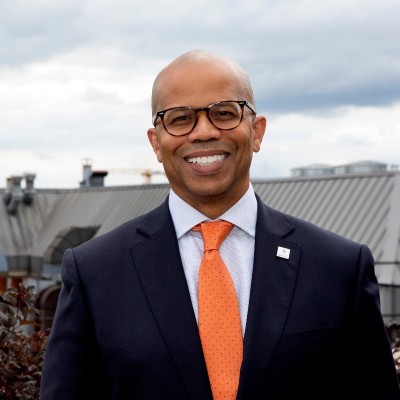
Participants


- Subscribe to Foresight Africa on Apple, Spotify, Afripods, or wherever you listen to podcasts.
- Listen to previous episodes.
- Watch episodes on YouTube.
- Learn about other Brookings podcasts from the Brookings Podcast Network.
- Sign up for the podcasts newsletter for occasional updates on featured episodes and new shows.
- Send feedback to [email protected].
The Brookings Institution is committed to quality, independence, and impact.
We are supported by a diverse array of funders. In line with our values and policies, each Brookings publication represents the sole views of its author(s).



Commentary
PodcastHow American visa bans and migration policies are shaping US-Africa relations
Listen on
Foresight Africa Podcast
March 25, 2026