Rosa Parks is best known for refusing to give up her seat on a segregated bus in Montgomery, Alabama, on Dec. 1, 1955. Her act of defiance initiated the Montgomery Bus Boycott, which lasted for 381 days. In a leader-centric retelling of civil rights history, Parks is known as the “Mother of the Civil Rights Movement.” Yet, she was not alone. Rosa Parks’ leadership in the NAACP and the Women’s Political Council led by Mrs. Jo Ann Robinson, then a professor of English at Alabama State College, successfully mobilized people and resources for sustained civic action that compelled the city of Montgomery, Alabama, to desegregate its buses. Parks was a lifelong activist, champion for voting rights, promoter of women’s rights, and leader for Black equality and social justice. Alongside other Black women, Mrs. Parks harnessed political activism as a mechanism to ignite the community in an effort to fight for Black equality.
Black women civil rights leaders, such as Rosa Parks, Ella Baker, Septima Clark, and Victoria Gray (Adams), connect the movement to the community through amplification, extension, and transformation as “bridge leaders.” As bridge leaders, however, Black women activists were often invisible, as social movement literature tends to focus on male leaders, and feminist scholarship often overlooks the activism of Black women. Therefore, Black women are forgotten agents of change, and inaccurate portrayals of Black women within social movements obscure their role, as both leaders and participants, in a way that serves to undermine justice and gender equity. Black women who toiled for civil rights did so in a multidimensional way.
Learning from Mrs. Rosa Parks: Intersectional social justice leadership
The collective memory of racial justice spaces and the historical legacy of the Black freedom struggle and activism are visible in the leadership of Black women’s movements across various issues. Rosa Parks was an anti-rape activist who used her leadership skills and community networks to advocate for Black women’s bodily autonomy. Fannie Lou Hamer endured sexualized racial violence and forced sterilization because she was a poor Black woman. Turning our attention to present-day social movements, the #MeToo movement, started by Tarana Burke, brought attention to the sexual harassment and abuse inflicted upon Black women. The manifold oppressions faced by Black women produce a space for vulnerability and exploitation that is defined by simultaneous forms of marginalization.
#SayHerName is a social justice hashtag that utilizes the digital space to increase awareness of the historical patterns of violence against Black women in the United States and abroad. The case of Breonna Taylor is a reminder of the human rights violations faced by Black women that often go unnoticed because society is attuned to state-sponsored violence against Black men. #SayHerName publicizes the quotidian violence faced by Black women that denies Black women’s humanity. The intersectional advocacy of, for, and by Black women is evident in their awareness of the #SayHerName campaign, the movement that brought increased awareness to the names and stories of Black girls and women victimized by police violence.
Black women’s social justice-oriented political action today
Black women have long been at the forefront of social justice movements in the United States. Social movement theorists have long recognized the significance of micro-mobilizations as catalysts for engagement in movements. Micro-mobilizations encompass small-scale movements, including online activism through social media campaigns, the emergence of organizations targeting local issues, and informally organized protest actions. Today, Black women follow in the footsteps of their foremothers to engage in social justice-oriented movements for the betterment of Black communities.
To make this connection, we are drawing on data collected from the Collaborative Multiracial Post-Election (CMPS) survey, which includes a representative national sample of Black women, comprising approximately 2,660 respondents from across the United States who were surveyed between April and September 2025. This is one of the largest samples that include Black women’s public opinion and participation collected by academic researchers in recent years. We find that Black women are politically active and seek to raise awareness of social justice issues. Our analysis of the CMPS demonstrates that Black women remain committed to activism and engagement in their local social networks.
Currently, Black women continue to be engaged in micro and mass mobilization, remaining active participants in American democracy. For instance, over 19% of Black women boycotted a company or product for political reasons in 2024. Black Americans are boycotting box-box retailers due to their resistance to diversity, equity, and inclusion efforts, including Target, Amazon, and Home Depot. These efforts began with a 24-hour blackout period calling for no corporate spending; however, the boycott effort has persisted for nearly a year. These micro-mobilizations have created a net loss for corporations that eliminated their diversity, equity, and inclusion (DEI) programs and initiatives, including reducing or eliminating moves against racially progressive hiring and business policies.
In the figure below, we show that Black women’s participation in mass and micro mobilization varies. Some forms of political participation are more costly, as they require more time, effort, and resources to engage. For instance, mass mobilizations require individuals to be influenced by external persuasion, possess internal agency to act, and have the opportunity to become involved. Boycotting, on the other hand, is a less costly act. Posting on social media is also less costly than attending a community meeting. Still, over 8% of Black women attended a protest march, demonstration, or rally in 2024, and 15% of Black women nationwide participated in local meetings.
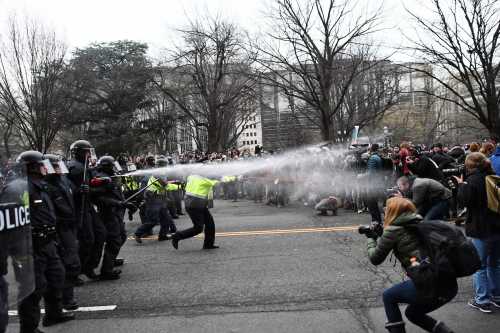
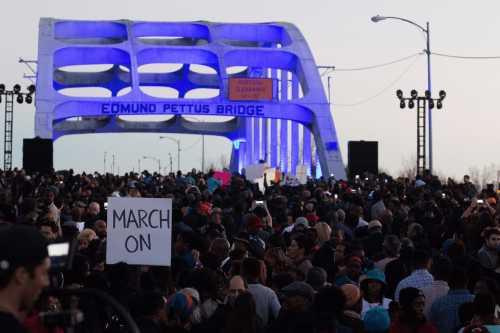
In 2024, many protests were election-related, targeted toward the Israel-Palestine conflict, and focused on retaining women’s reproductive and abortion rights. Mass demonstrations—such as the racial reckoning of 2020—in which Black women participated can move the needle on social and political opinion, building on the legacy of many Black women leaders, including Rosa Parks.
Rosa Parks provided the blueprint for modern Black women leaders and social justice activists to follow as we actively seek to challenge and transform an inequitable society and antidemocratic governance practices. Black women resist and persist in their quest for equity and equality. The strategies, successes, and difficulties of Black women’s participation in social movements provide insights into how this group engages in the American democratic process.
Authors

Related Content
The Brookings Institution is committed to quality, independence, and impact.
We are supported by a diverse array of funders. In line with our values and policies, each Brookings publication represents the sole views of its author(s).
Commentary
Honoring Rosa Parks’ life and legacy: Black women’s roles in social movements and civic engagement
December 8, 2025