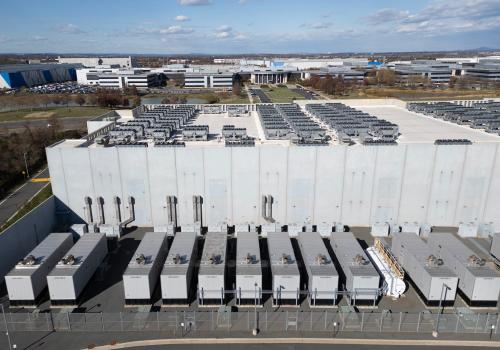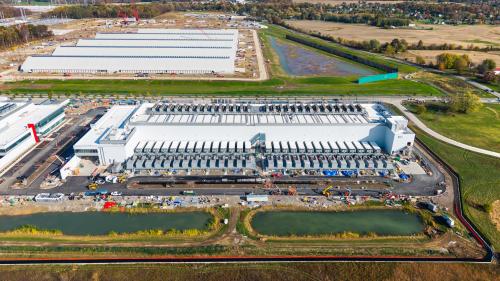
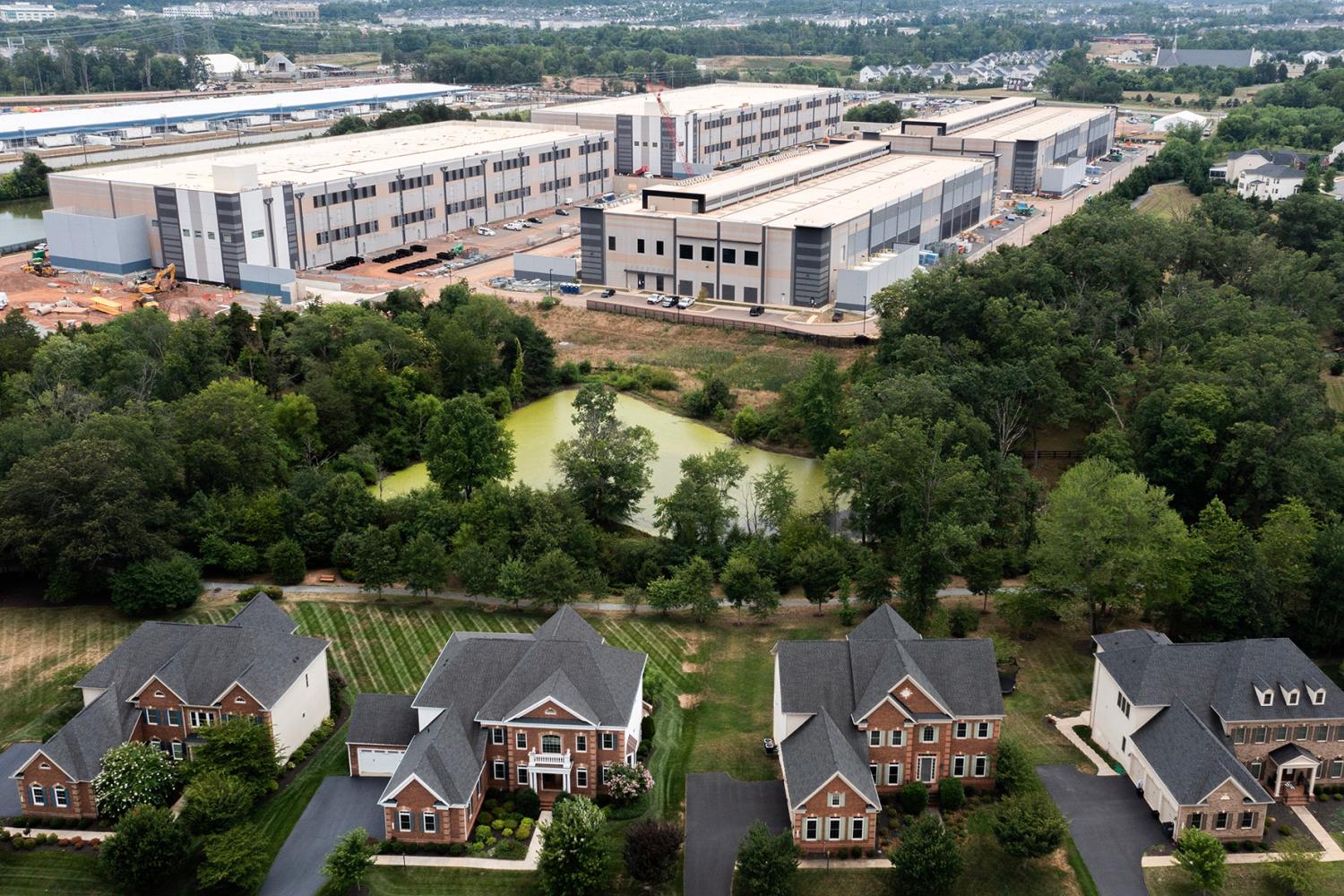
As the artificial intelligence (AI) industry grows, so does the need to build and connect data centers to the energy grid. Tech firms emphasize the importance of these facilities to train and maintain next-generation AI models, and they point to multiple benefits for communities, such as additional jobs, tax revenue, and more. Yet there is rising concern about data centers among national, state, and local leaders—as well as the people who live near them—regarding the pressures they place on the country’s grid and electricity costs. The Trump administration’s recent announcement of a Ratepayer Protection Pledge has shined additional light on the issue, leading to calls for data center operators to cover all energy costs linked to their facilities.
Struggles around affordability are mounting across the country more generally, and the increased electricity costs associated with data centers are only adding stress to people’s budgets. Policymakers and public utility commissions need to better measure and address the impacts of data centers on residents.
There are two main reasons new data centers can push up residential electricity prices. First, data centers are power-hungry, requiring the development of new generation. Despite the massive new generation buildout being undertaken, there is still a projected shortfall of 49 gigawatts (GW)—roughly 5% of total generation in the U.S.—through 2028. Second, in addition to new generation, data centers necessitate the construction of improvements for electricity transmission and distribution, such as new high-voltage lines and substations. The cost of this new infrastructure is passed on to consumers through changing rate designs and deferred from data center operators through special contracts or incentive packages, as corroborated by recent Harvard Law School and Lawrence Berkeley National Laboratory studies.
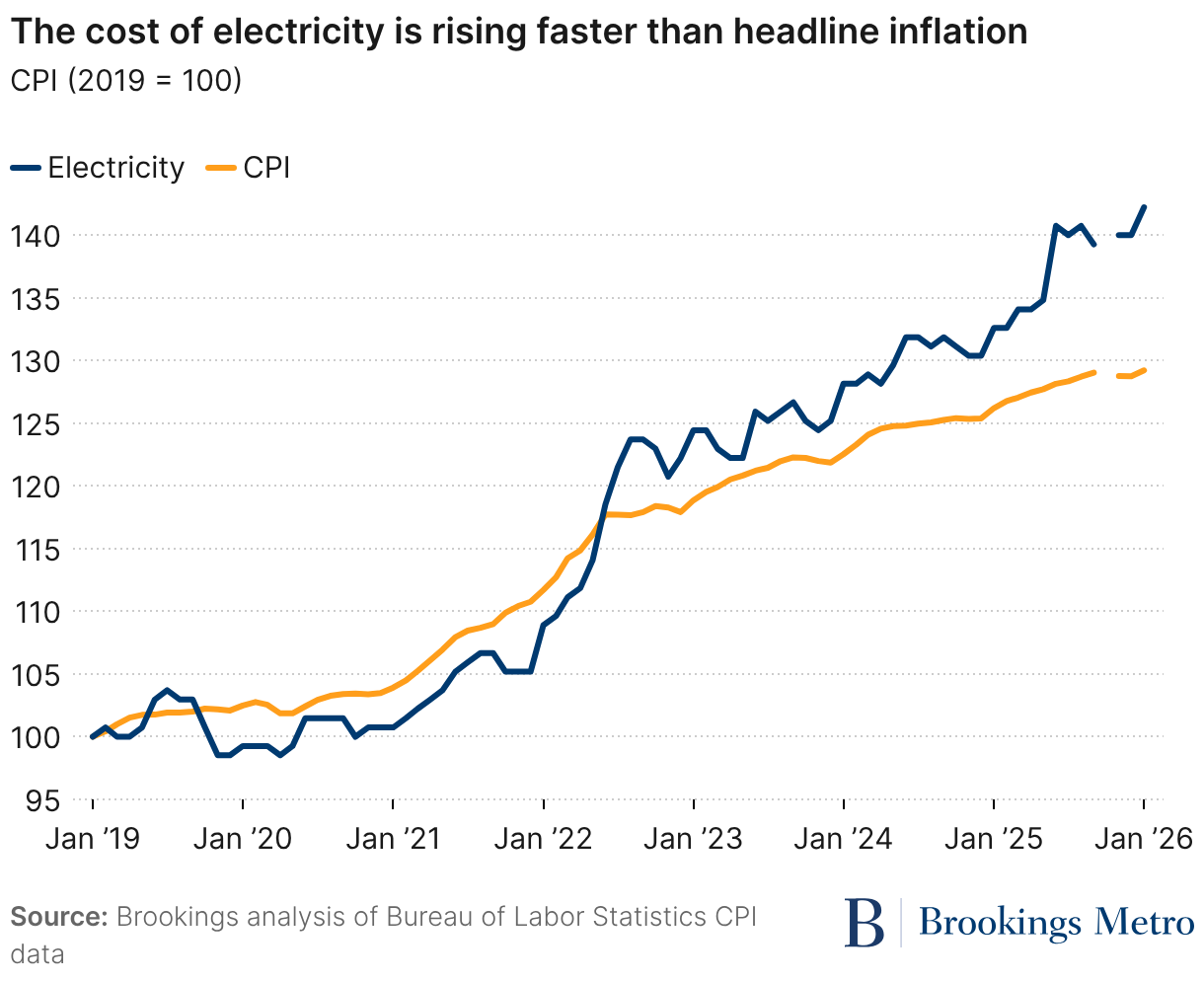
The result is an increasingly costly situation unfolding across the country. The confidential nature of contracts between utility providers and data center operators—alongside the complex process of setting consumer electricity rates—makes it difficult to identify the exact share of data-center-linked grid improvement costs borne by the public. But national data show concerning trends. Electricity costs have outpaced inflation, increasing by 42% since 2019, while overall Consumer Price Index (CPI) has only risen by 29%. Given the varied designs of electricity rates and major regional differences in the size of data center markets, national data such as these may conceal even more pronounced utility-level trends.
In lieu of clear, consistent data on residential rates, one statistic does signal the increased financial pressure hitting households: the number of utility disconnections. A disconnection, in short, is an interruption or limitation of a customer’s service, typically due to nonpayment. Disconnections can lead homeowners and renters to accrue debt to finance utility payments or forgo payments altogether, resulting in uninhabitable home temperatures, and in some cases, mortality. The impacts of disconnections often fall on lower-income households and other disadvantaged customers, prompting the need for a more proactive policy response across different communities.
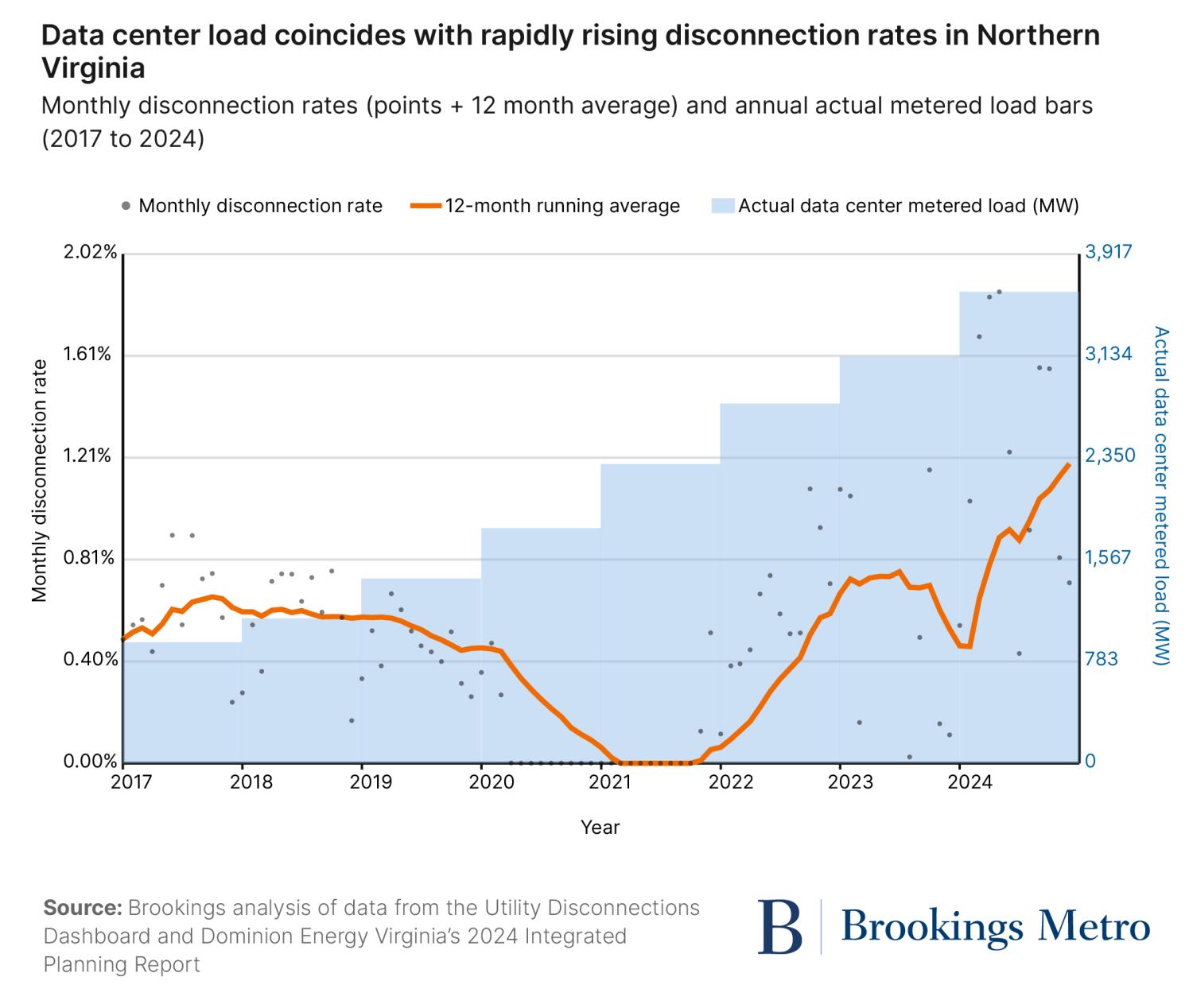
One notable case in this respect—related to data center expansion specifically—can be found in Northern Virginia, where increased energy use is potentially impacting residential electricity rates.
Northern Virginia has long maintained the title of the largest data center market in the world—presently standing larger than the next five largest U.S. markets combined. Based on their 2024 modeling, Dominion Energy Virginia—the primary energy utility servicing customers across the state—expects data center metered load to reach 13,353 megawatts (MW) in 2038, which is a 3.5 times increase from the current load.
As the number of data centers has increased, the rise in load has coincided with more residential disconnections. Since 2022, the 12-month running average of disconnections in Dominion’s service area has increased 1.1 percentage points, while the metered load associated with data centers has increased by 31%. Other variables—including the COVID-19 pandemic, as well as changing customer allocation of costs among commercial, industrial, and residential segments—have likely had impacts as well. But a general point is clear: Disconnections are a signal of decreasing affordability in a market where utility spending is expected to continue rising.
Although Northern Virginia is an outlier in its sheer density of data centers, decisions made in the area could set a precedent for how other regions confront rapid buildouts.
Virginia has taken a few steps to curb rising electricity prices, including the creation of a new rate class for customers using 25 MW or greater annually. Newly elected Virginia Gov. Abigail Spanberger has also been rumored to be adding a chief energy officer to her cabinet to address these challenges and others facing residents.
There are also two bills currently in the state’s legislature aimed at reducing the burden on residential customers. One targets large-load additions themselves, requiring facilities to follow requirements linked to demand reduction, energy storage, and other measures that mitigate the need for “an unreasonable cross-subsidy” across electric utilities’ customer base. The other explicitly bars utilities from passing on costs to residential consumers.
Virginia’s actions represent a starting effort to address the huge and evolving challenge data centers present to the energy grid, but there remain many other outstanding needs for utilities, policymakers, tech firms, and other leaders—with broader national resonance:
- Utilities need to provide clearer and timelier data on data centers. Beyond the sheer data center density in its service area, Dominion also differs from other utilities in its approach to reporting large-load growth. Regulators across the country should require utilities to disaggregate large-load customers in their planning and rate setting, as Dominion does. In the absence of publicly available contracts, these reporting requirements would enable consumer advocates and researchers to more clearly distinguish data centers’ impacts on rate schedules.
- Policymakers—from the national to local level—need to establish more robust and responsive affordability assistance. Federal programs such as the Low-Income Home Energy Assistance Program (LIHEAP) provide targeted assistance to households that may not be able to afford heating or cooling, in addition to state and local programs such as Maryland’s Electric Universal Service Program and nonprofit Fuel Fund. Strengthening these programs—which currently have income caps on eligibility or are only available seasonally—will reduce the number of disconnections when residential rates rise. Large-load customers could finance these programs, which would align costs better with the main beneficiaries of grid improvements.
- Local leaders should feel empowered to take the reins during the dealmaking process. Recent research from Daniel Goetzel, Mark Muro, and Shriya Methkupally argues that asymmetric and secretive dealmaking processes leave municipalities feeling pressured into accepting deals that treat data centers like warehouses—i.e., facilities that provide jobs during construction and small tax revenues over their lifetime, while generating little burden on surrounding communities. In reality, the resource burden of data centers is much more extreme. While local leaders may have felt a need to curry favor to attract facilities in the past, the market is now sufficiently saturated that local leaders should lead in negotiations.
- Municipal and state decisionmakers should coordinate (and negotiate) broader economic objectives with tech firms. Local leaders should treat data center development as a long-term economic opportunity. Utilities, state economic development agencies, and local governments have the ability to work with tech firms during the siting and planning process for data centers. This could bring about partnerships that reduce project risk while creating long-lasting jobs and implementing innovative technologies. The “pay your way” approach, in which the developer bears a more significant burden of costs, is becoming more common—particularly among hyperscalers—and more closely aligns the cost of infrastructure improvement with the customers driving its demand. And even recent announcements from tech firms themselves show that some companies are willing to work with communities to ensure that their AI infrastructure doesn’t increase electricity prices or lead to other resource concerns.
As Northern Virginia and other regions compete to host increasingly energy-demanding data centers, affordability impacts on residents are mounting. But amid these challenges, policymakers, regulators, and utilities—as well as hyperscalers and data center developers—have an opportunity to intentionally steer necessary infrastructure investments in ways that acknowledge these impacts and support broad-ranging economic development.
Authors

The Brookings Institution is committed to quality, independence, and impact.
We are supported by a diverse array of funders. In line with our values and policies, each Brookings publication represents the sole views of its author(s).