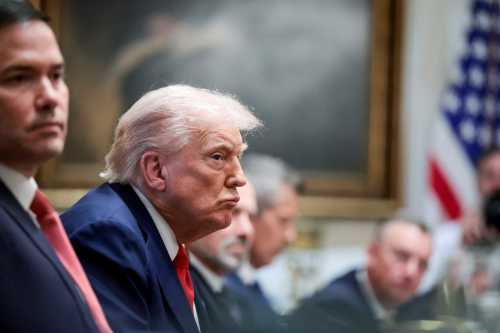
As Donald Trump began his second term in Jan. 2025, he enjoyed broad-based support. More than half of all Americans approved of his presidency, while only 44% disapproved, a figure significantly lower than the 48% who had voted for Kamala Harris. Post-election surveys confirmed that large numbers of Hispanics, young adults, and independents had rallied to his cause, suggesting that a structural alignment in American politics might be underway.
Today, the picture looks different. Approval of Trump’s presidency has fallen by 8 points, to 42.4%, while disapproval has risen by 10 points, to 54.9%. The decline seems to be accelerating; nearly half of this 12-point approval gap has opened up just since mid-October. Moreover, the groups that shifted toward Trump during the 2024 election—especially Hispanics, independents, and young adults—are expressing their disappointment with his performance.
Despite some notable policy achievements—passing major tax legislation, ending the war between Israel and Hamas, and slowing illegal border crossings to a trickle—the beginning of Trump’s second term has not been a political success.
What has gone wrong?
First: The president’s focus has not been aligned with what the American people regard as the most important issues facing the country. Fully 50% of Americans pick one of three issues—inflation and high prices, jobs and the economy, or health care—as their top concern. By contrast, a total of just 21% select one of the issues—immigration, crime, taxes and government spending, or foreign policy—to which Trump has devoted most of his energy and attention. Trump gets relatively high marks for his handling of what most Americans regard as less important issues, but much lower marks for his handling of the most important issues.
Most Americans take a dim view of the economy. Seventy-four percent rate current economic conditions as fair or poor, only 23% think that things are getting better, and just 14% say that they are better off than they were a year ago. While more Americans pick inflation and high prices as their top concern, 71% say that prices have risen since Trump took office, and 43% say that they are “much higher” than they were.
The president’s attempt to blame his predecessor for the current state of the economy is not working. By a margin of more than two to one, voters hold Trump rather than Biden responsible for what they are now experiencing.
Second: Regardless of whether Americans agree or disagree with the president’s objectives, majorities believe that he has gone too far in pursuing them. Key areas of what the people regard as excessive measures include: cuts to federal agencies; reduced funding for universities and research centers; reduced support for federal health care programs such as Medicare, Medicaid, and Obamacare; the expansion of tariffs; and increases in funding for ICE.
Third: Even when Americans approve of the president’s goals, they are skeptical of the means that he is using. For example, despite the relatively high marks Trump receives for his handling of immigration, 63% of Americans oppose arresting illegal immigrants who live in the United States without criminal records, 61% believe that regardless of immigrants’ legal status, they are entitled to challenge government deportation orders in court, and 58% say that ICE officers should not conceal their identity with masks and unmarked vehicles.
To these three explanations for Trump’s political decline could be added a potpourri of actions and statements that most Americans do not like. For example, 54% believe that the president is using his office for personal gain, and 70% reject his recurrent mention of serving a third term.
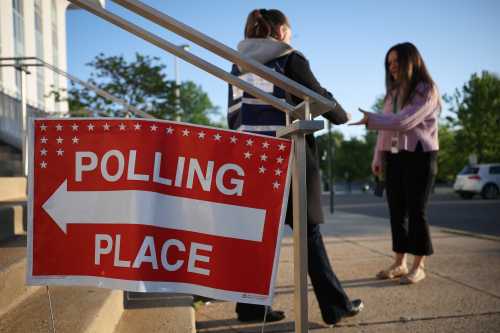
Republicans have reason to worry that the president’s political decline will affect their performance in next year’s midterm elections. In 2024, Republican candidates received 49.8% of the votes cast for the House of Representatives, compared to 47.2% for Democratic candidates, an edge of 2.6%. But today, when voters are asked which party’s House candidates they will support in the 2026 midterms, Democrats hold an advantage of 5.3%.
This figure represents a swing of nearly 8 points toward the Democrats, which is significant because 21 House Republicans won their seats in 2024 with margins of less than 8 points.1 The problem is structural as well as quantitative: Of these 21 endangered seats, only one is located in the South, and it is a contested Virginia swing seat. But the House Republican caucus is dominated by members from safe southern districts who are responsive to the party’s base voters, and the administration’s policies have been directed more toward these voters than toward the swing groups whose movement toward Trump in 2024 made the difference between victory and defeat.
As of now, only 15% of independents, 19% of young adults, and 29% of Hispanics say that they will vote for Republican candidates in 2026. If the president tries to attend more to the concerns of these groups between now and next November, discontent within his party’s base could grow. But if he and party leaders stay on their current course, it will be hard for Republicans to recover the ground they have lost in time for the midterm elections next November.
Related Content
Author

-
Footnotes
- As many analysts have pointed out, the average swing toward Democrats in special elections conducted since Trump’s second term began has been substantially higher than 8 points—in fact, well into double digits. See, for example, the CNN Politics article “Republicans avoided a nightmare in Tennessee. Their electoral picture is still scary.“
The Brookings Institution is committed to quality, independence, and impact.
We are supported by a diverse array of funders. In line with our values and policies, each Brookings publication represents the sole views of its author(s).
Commentary
As President Trump loses support, Republican prospects in the 2026 midterms grow darker
December 4, 2025